
Formal challenges of children’s and young adult books in public schools and libraries have skyrocketed since 2020. Far-right organizations are mobilizing across the United States to ban books by marginalized authors. You and I both know children need more opportunities to to experience and learn from diversity, not fewer chances. Read on to learn about how you can fight book bans as a caregiver or educator, including how to include your kids or your learners.
Table of Contents
- Background on the rising tide of book bans
- How families and kids can fight book bans
- How educators and librarians can fight book bans


This post may include affiliate links. If you purchase items through these links, I may earn a small commission at no additional charge to you. You can read my full disclosure policy here.
Background on the rising tide of book bans
Censoring the books that are available to children and teens has long been a problem. But attempted book bans have reached an alarming height in the past few years.
As you can see in this graphic from the American Library Association’s campaign Unite Against Book Bans, the number of book titles challenged from 2000 to 2020 ranged from a low of 190 to a high of 378. In 2021, the number of titles challenged jumped to 1,858, and in 2022 it rose again to 2,571.

While young adult books represent the largest category of challenged and banned books, there are still many chapter books and picture books for younger readers being challenged.
One of the reasons book challenges are quickly rising is that right-wing crusaders are distributing lists of books to challenge online. An analysis by The Washington Post found that the majority of book challenges in the United States in the 2021-2022 school year were filed by just 11 individuals.
While far-right groups like Moms for Liberty are trying to position themselves as the spokespeople for parents, a recent survey by Book Riot and the EveryLibrary Institute found that 74 percent of parents think that book bans infringe on their parental rights.
Related post: How curriculum censorship hurts children of all races
How families and kids can fight book bans
How can you talk about book bans with your children, and how can your family protect diverse books and fight book bans? Here are few ways to get started:
1. Read books that are being challenged with your children
If you can afford to do so, buy the books to support the authors who created them. Defending their work takes up time and money that distracts these brave authors from their craft!
Below, I share a few of my favorite titles that are showing up on challenged books lists that you might read. Depending on your children’s ages, after you’ve read the book, you could ask them:
- Why do you think some adults don’t want children your age reading this book?
- If a person doesn’t like a book or thinks it’s harmful, do you think they should be able to ask your school or the library to take it off the shelves? Does it depend on the situation?
- Do you think having this book taken off the shelves of your school library would bother kids? Why or why not?

We March by Shane W. Evans (recommended for ages 3 – 7)
This simple and moving picture book is ideal for introducing the youngest readers to the March on Washington.

We Are Grateful: Otsaliheliga by Traci Sorell and Frané Lessac (recommended for ages 3 – 7)
There are countless reasons for gratitude in every season of the year. That’s the message of this lovely picture book, which features Cherokee words and the Cherokee alphabet.
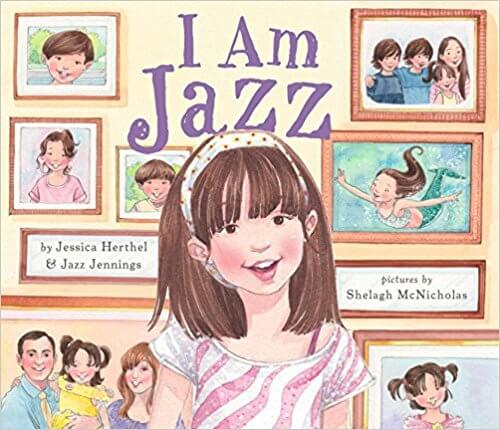
I Am Jazz by Jessica Herthel, Jazz Jennings, and Shelagh McNicholas (recommended for ages 4 – 8)
When Jazz Jennings was thirteen years old, she co-wrote this picture book about her life. This simple, straightforward book will help kids and adults alike to empathize with and understand trans kids.

A Place Inside of Me: A Poem to Heal the Heart by Zetta Elliott. (Recommended for ages 6 – 10).
In this heartfelt poem, a young Black boy explores the complexity of his emotions after police officers kill one of his loved ones. In “a space deep down inside of me where all my feelings hide” there is “joy, sorrow, fear, anger, and a hunger to be free.”

Separate Is Never Equal by Duncan Tonatiuh (recommended for ages 6 – 10)
While most Americans have heard of the Supreme Court case Brown v. Board of Education, far fewer of us know that a lawsuit by Sylvia Mendez’s family nearly a decade earlier paved the way for this historic decision. This important book about race shows how school segregation affected Mexican Americans.
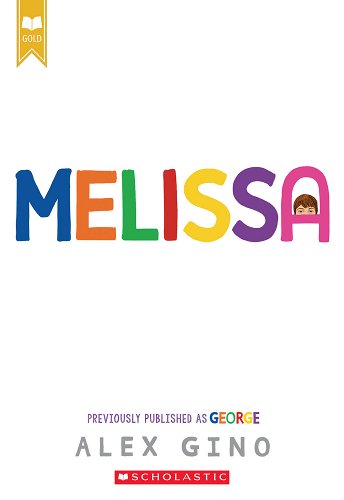
Melissa (formerly published as George) by Alex Gino (recommended for ages 9 – 12)
Many fourth graders have secrets about themselves that they’re afraid to tell others. But 10-year-old Melissa’s is bigger than most. She knows she’s a girl, even though everyone else thinks of her as a boy named George.
2. Proactively communicate with school board officials
You don’t need to wait for book challenges to show up in your school district to speak up; if fact it’s better if you don’t!
Tell officials at the school district level that you are troubled by the attacks that are being directed primarily at authors of color and LGBTQ authors. Share that you expect them to support children’s critical thinking skills and social emotional intelligence by making sure they have many diverse reading choices.
Ask your children if they’d like to add a note to your letter or email. They can even draw a picture that you can attach.
3. Communicate with your children’s teachers
Let them know that you hope the books they’ll be reading reflect the diversity of your community. It’s a tough time to be an educator, so let teachers know that you are here to support them and that you’ll speak up on their behalf if need be.
4. Pre-order books by authors who are facing challenges
Maggie Tokuda-Hall, author of the wonderful picture book Love in the Library, spoke out earlier this year when powerhouse publisher Scholastic said they would license her book if she removed a reference to racism.
Related post: The best anti-bias picture books of 2022
Authors who write stories that reference injustice are under tremendous pressure right now, especially those who are BIPOC or LGBTQ. Pre-ordering their forthcoming books is a powerful way to support them and press publishers to market their books widely.
5. If you have a teen, tell them about the Books for All campaign
The Books for All campaign, led by the New York Public Library, is offering a teen banned book club. They’re offering free digital access to the featured book title each month.
How educators and librarians can fight book bans
1. Have a plan in place if you’ll be using a book that’s been challenged elsewhere
I recently asked anti-bias antiracist educator Liz Sohyeon Kleinrock what advice she has for educators in the face of book challenges and curriculum censorship.
She recommended selecting books that you can show are tied to the curriculum standards you are expected to teach, which puts your administrators in a better position to support you. Liz also suggested focusing on books that have been recommended by well-respected sources like School Library Journal.
2. Talk to your students about the issue of book bans
This article from DC Area Educators for Social Justice shows how 4th grade teachers created a thoughtful and powerful experience for their students around the topic of diverse books as mirrors and windows, as well as the topic of book bans.
The Zinn Education Project has created a pop up display toolkit for teaching about banned books that schools and libraries can use.
Related post: 9 examples of antiracism at school to inspire educators
3. Report censorship attempts
Documenting the pattern of book challenges is a crucial part of fighting book bans. For public libraries and educators, the American Library Association provides confidential support during book challenges.
The National Council of Teachers of English has created a “rationale database” for particular titles. You can search for books you are planning to teach, and/or submit rationales if you are an educators.
