
In the past year, inaccurate and offensive accounts of autism and autistic people from the so-called Make America Healthy Again movement have been splashed across the headlines. Rather than understanding autism as a form of difference in how brains and nervous systems work, leaders like Health and Human Services secretary Robert F. Kennedy, Jr. have portrayed autistic people as broken and tragic.
What is broken are the social systems that make life harder for autistic children and adults and that prevent them from fully thriving. Understanding autistic people’s own experiences and perspectives is essential, so that we know what needs to change.
One way to start this process of understanding with our children, whether they are autistic or not, is to read children’s books written by autistic authors. In this post, I’m sharing some of my favorite picture book, middle grade chapter books, and a riveting graphic novel.


This post may include affiliate links. If you purchase items through these links, I may earn a small commission at no additional charge to you. You can read my full disclosure policy here.
Picture books written by autistic authors
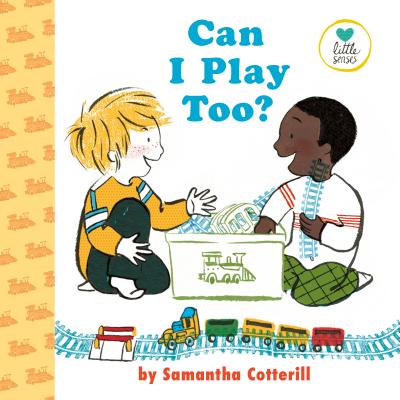
Can I Play Too? by Samantha Cotterill
Purchase from Bookshop.org (supports independent bookstores and my business!)
Can I Play Too? is part of Cotterill’s picture book series that shows everyday experiences from autistic children’s points of view. As two boys decide to build a train track together, things go smoothly at first. But as one child gives all the instructions and does all the track connecting, the other child grows increasingly frustrated. His playmate is so deep in train world that he doesn’t notice the other child’s growing anger.
Once the frustrated kid stomps off, a grownup helps the other child understand that both people and trains give off important signals that we can learn to read. While Cotterill has written this book with autistic kids particularly in mind, there’s a lot that any young child can learn about paying attention to social signals in this short book. (Recommended for ages 2 – 6.)

It Was Supposed to be Sunny by Samantha Cotterill
Purchase from Bookshop.org (supports independent bookstores and my business!)
In this volume of the Sensory Kids series, Laila is excited about her birthday party, which she’s promised her friends will be full of sparkles and sunshine. When a thunderstorm moves in instead, her mother helps Laila work through her disappointment and figure out how to make an indoor party fun.
But when too many things start to go wrong, Laila wants to send everyone home. Can the party continue? (Recommended for ages 3 – 7. Autistic author.)
Related post: Children’s books about disability that challenge stereotypes

A Day With No Words by Tiffany Hammond. Illustrated by Kate Cosgrove.
Purchase from Bookshop.org (supports independent bookstores and my business!)
Unlike many stories about autistic children, this one is told from the perspective of the child, giving us insight into how he experiences the world. The main character is nonverbal and he describes how voices can affect him. While Mama’s voice is like water, and Daddy’s voice like air, other voices can be harsh and overwhelming.
As Mama and child spend a day together out and about, avoiding crowds, Mama uses a tablet to communicate with everyone, just like her child does, from a rude parent to the restaurant cashier. Everything about the day is at the pace that makes him feel happy and seen. (Recommended for ages 3 – 7.)
Related post: 6 ableist tropes to watch out for in children’s books

My Rainbow by Trinity and DeShanna Neal. Illustrated by Art Twink.
Purchase from Bookshop.org (supports independent bookstores and my business!)
In this colorful picture book, trans teen Trinity and her mother DeShanna tell the true story of how a handmade wig helped Trinity feel more like herself. As a trans girl, Trinity felt it was important that she have long hair, but as an autistic child she also found long hair itchy.
When her mother can’t find anything at the wig shop that feels right for a Black girl with Trinity’s bubbly personality, she sets out to make the perfect rainbow for her daughter. The story sensitively captures a supportive, attentive family and a trans child who knows just what she needs. Children of all genders will love the bright, rainbow infused illustrations. (Recommended for ages 4 – 8.)
Related post: Children’s books with transgender and nonbinary characters

Benji, the Bad Day, and Me by Sally J. Pla. Illustrated by Ken Min.
Purchase from Bookshop.org (supports independent bookstores and my business!)
Sammy is having a terrible day, complete with getting in trouble at school and having to walk home in the rain. But Mom doesn’t seem to notice, only letting him know that Benji is in his box. Benji is autistic. When he’s in his box, that means he’s also had a bad day and shouldn’t be disturbed.
The box is only big enough for Benji, but Sammy wishes he had one for moments like this. Or that Mom would do something special to help him feel better, like she often does for Benji after challenging occupational therapy sessions. But when one more thing pushes Sammy over the edge into tears, it’s Benji who notices and comes to the rescue. I love how this book challenges the stereotype that autistic children are not empathetic. (Recommended for ages 3 – 7.)
Shop the entire list on Bookshop.org!
Middle grade books by autistic authors
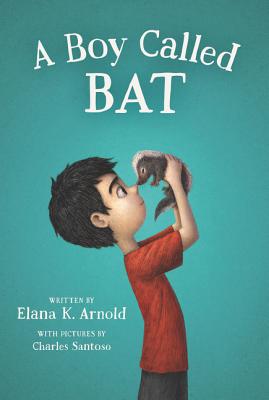
A Boy Called Bat by Elana K. Arnold.
Purchase from Bookshop.org (supports independent bookstores and my business!)
Bixby Alexander Tam, better known as Bat, likes his routines and wants rules to be followed. But sometimes there are good surprises, like when his veterinarian mother brings home a baby skunk that needs to be fostered. Bat has always been an animal lover and knows he’ll be a vet too when he grows up, but the skunk kit captures a special place in this heart.
Even though his mom tells him repeatedly that the skunk kit will have to go to a wildlife shelter in a month, Bat is sure he can change her mind through research and being the best possible caretaker he can be. (Chapter book novel. Recommended for ages 7 – 10.)
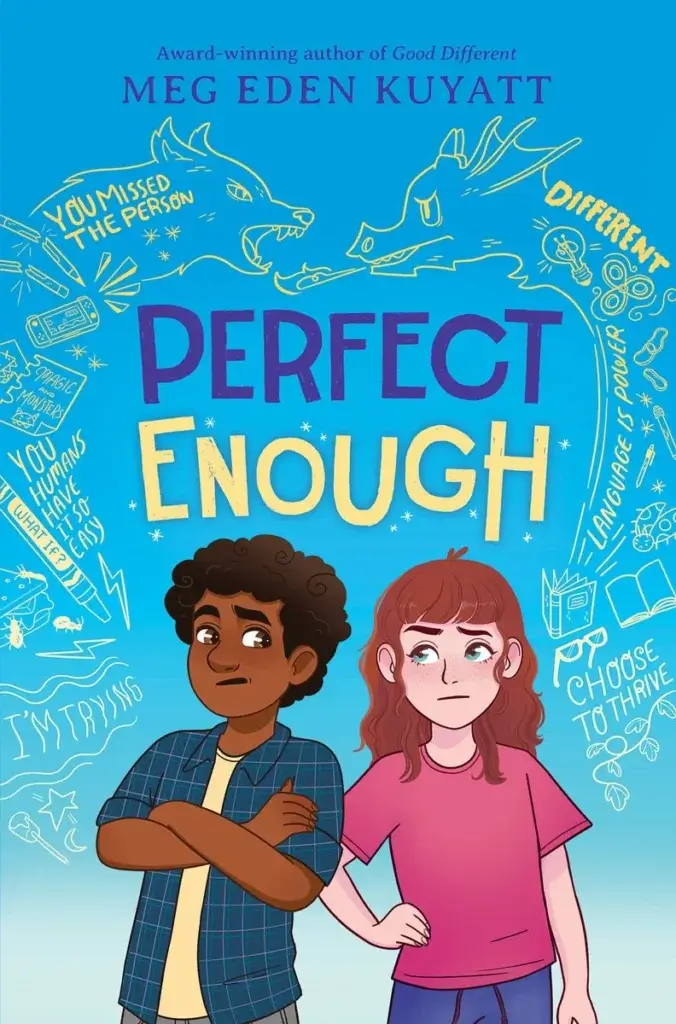
Perfect Enough by Meg Eden Kuyatt
Purchase from Bookshop.org (supports independent bookstores and my business!)
In this followup to Good Different, Selah is thrilled to be attending Writers’ Camp with two new friends, Brooklyn and Rheya, who she met at comic con. While her Mom worries that the three week camp might be too much to try so soon after receiving her autism diagnosis, Selah feels like camp should be easy because she’ll be doing what she loves: writing poetry and magic stories.
However, sharing a room with Brooklyn and Rheya turns out to be extremely difficult for Selah. Brooklyn is noisy and always on the go. Sometimes she even laughs when Selah tries to explain why she needs more rest or quiet. Meanwhile, Selah develops a friendship with Ezra that surprises her. At her old school, she considered him one of her tormentors. When Ezra reveals that he has ADHD and that he and Selah are “brain cousins,” she realizes that he understands her differences a lot better than others at camp.
The lack of rest, multiple projects and friendships, and the pain of not speaking up to Brooklyn about what she needs all mount. Ezra and a camp counselor named Noa who is also autistic keep asking Selah if she is really okay. Selah keeps trying to power through, not realizing how close she is to having a meltdown.
The messages of self-compassion that run through the book will be especially meaningful to many neurodivergent readers, while the challenge of speaking honestly to people you care about is an almost universal issue for tweens. (Novel in verse. Recommended for ages 8 – 12.)
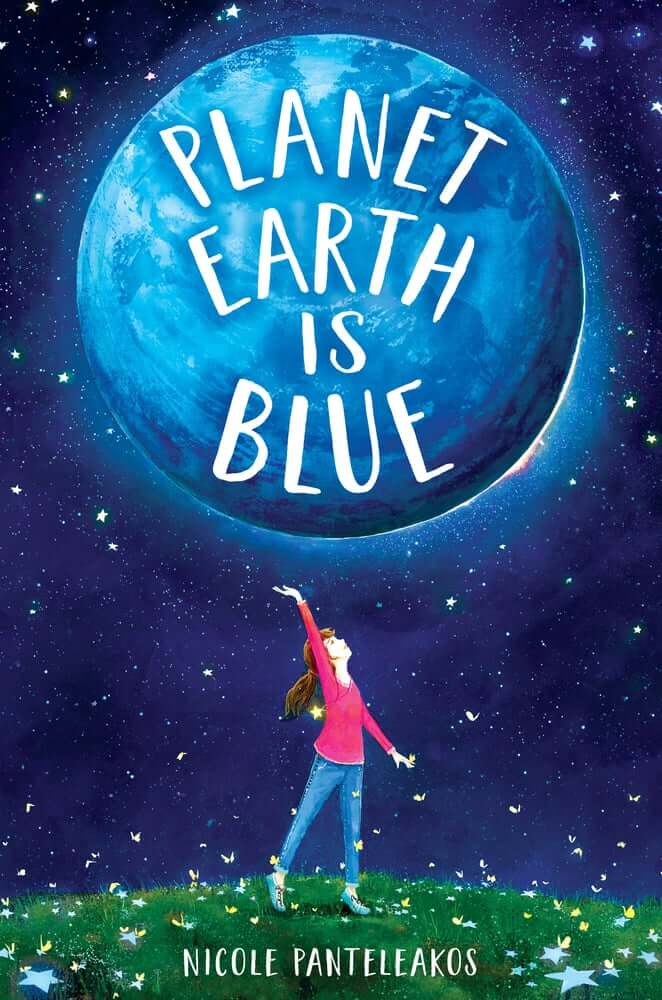
Planet Earth Is Blue by Nicole Panteleakos.
Purchase from Bookshop.org (supports independent bookstores and my business!)
Over the years, 12-year-old Nova has been moved from foster home to foster home. She’s always had her big sister Bridget to take care of her, and Bridget is the only one who really understands Nova. Because Nova is almost entirely non-verbal, other people have called her cruel names, but Bridget knows that “my sister’s not dumb. She’s a thinker, not a talker.”
Now Bridget is gone, but Nova knows she’ll be back soon because it’s almost time for the Challenger space shuttle to launch. There is nothing more important to both girls than space travel, so even as Bridget told Nova she was leaving their last foster home, she promised to find Nova in time for the Challenger launch.
As Nova settles in with a new family, who seems much more caring and interested in really understanding her than previous foster families, she’s still often misunderstood. Through her narration and through letters she writes to Bridget, readers can see that Nova understands far more than people think, and that’s she’s deeply knowledgeable about certain topics, especially space. Without Bridget, is there any way other people can see the real Nova? (Chapter book novel. Recommended for ages 8 – 12.)

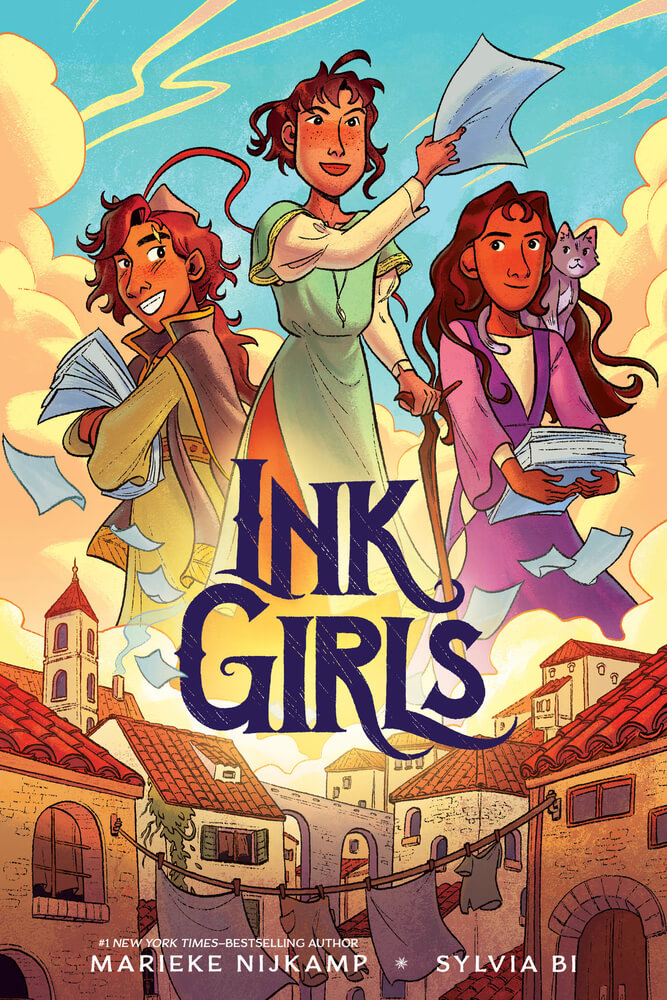
Ink Girls by Marieke Nijkamp. Illustrated by Sylvia Bi.
Purchase from Bookshop.org (supports independent bookstores and my business!)
This graphic novel is perfect for fans of historical fiction or adventure tales starring daring girls.
In her medieval Italian city, Cinzia is a devoted printer’s apprentice to Maestra Aronne. Maestra isn’t afraid to tell the truth in the avvisi she writes, even when it gets Cinzia and her dragged to court. When Maestra is imprisoned, Cinzia runs away, never expecting to run into Elena, the heir to the throne.
Cinzia has heard the rumors that Elena isn’t fit to rule because “she only spends time in that garden of hers. No one has ever seen her laugh or cry.” Yet Elena proves to be a brave and powerful ally who has a deep understanding of what is happening in her city. The two girls set out to find people who will back up Maestra’s claims, with the royal guards right behind them at each move. (Graphic novel. Recommended for ages 8 – 12).
Related post: Diverse graphic novels for middle grade readers
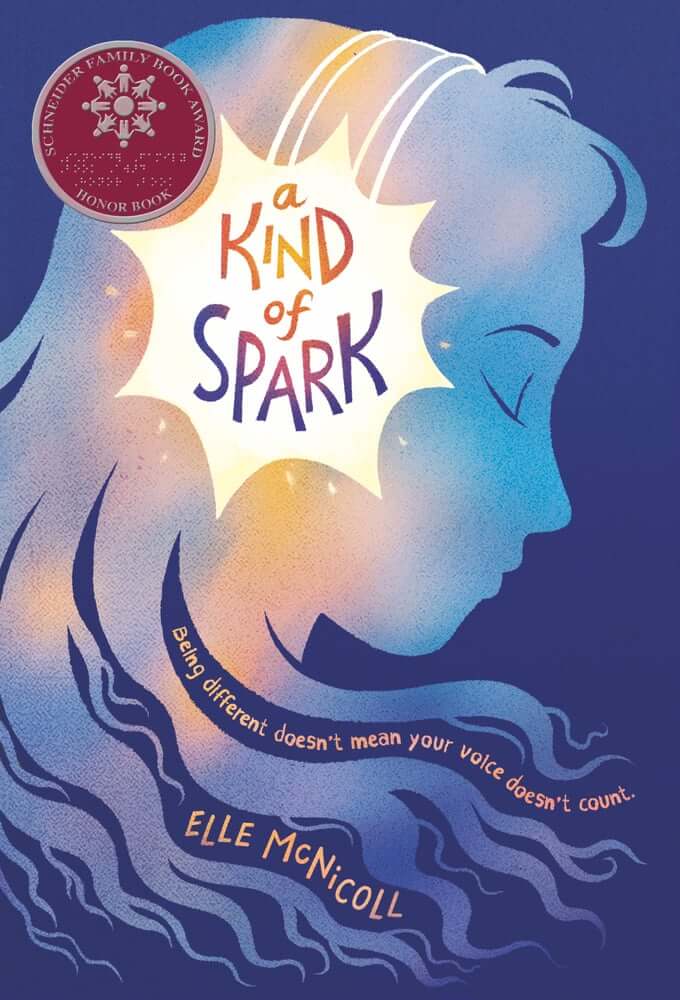
A Kind of Spark by Elle McNicoll
Purchase from Bookshop.org (supports independent bookstores and my business!)
When Ms. Murphy tells Addie’s class that they will be learning about the witch trials that happened hundreds of years ago in their small Scottish community, Addie quickly understands the injustice they experienced. People often make fun of Addie and her older sister Keedie, both of whom are autistic, and even spread lies about them. She decides to go to the village hall meeting to call on the town to erect a memorial to the women labelled as witches.
Few people besides her family and her new friend Audrey understand her passion. As bullying from both Ms. Murphy and a classmate escalates, Addie becomes even more convicted that her village must apologize for the wrongs it committed centuries ago. The book is a clarion call for society to accept and appreciate neurodiversity, rather than expecting autistic people to behave in ways that make neurotypical people comfortable. (Chapter book novel. Recommended for ages 8 – 12.)
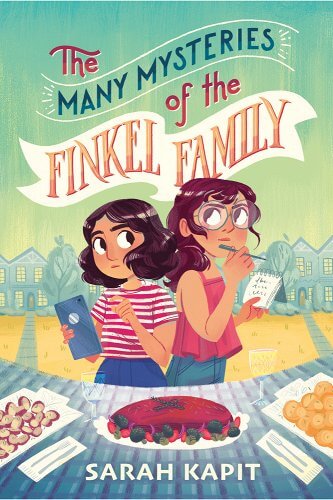
The Many Mysteries of the Finkel Family by Sarah Kapit.
Sisters Lara and Caroline are only 15 months apart, and they’ve always done everything together. But when Lara starts a detective agency, she doesn’t want Caroline involved. After all, Caroline already has her own special talent (art) and Lara is tired of feeling like the only autistic person who isn’t really good at something.
Meanwhile, Caroline wants some distance for her own reason. She’s starting middle school, and she doesn’t need bossy Lara intervening all the time just because she speaks by typing on a tablet. Kapit’s portrayal of this neurodiverse family is full of the hilarious, sticky situations tweens get themselves into, while her portrayal of Ashkenazi and Sephardic Jewish cultures will be accessible to both Jewish and non-Jewish readers alike. (Chapter book novel. Recommended for ages 8 – 12.)
Related post: Children’s books starring Jewish characters
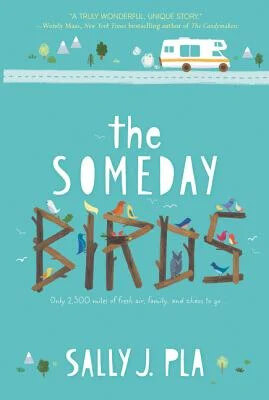
The Someday Birds by Sally J. Pla
Purchase from Bookshop.org (supports independent bookstores and my business!)
Before his Dad sustained a brain injury during a stint as a journalist in Afghanistan, Charlie and his father made a list of birds they’d like to see someday. Now, even though Gram tells Charlie and his siblings to talk to Dad when they visit him in the hospital, he doubts Dad can hear him. When Gram suddenly has to go with Dad from California all the way to Virginia to see a different specialist, the two people who really understand Charlie are far away.
Gram has left Ludmila, an odd young woman who was visiting Dad in the hospital for unknown reasons, in charge. When Charlie’s teenage sister tries to sneak the family away, all of them are soon on a cross-country trip. The meandering voyage presents all kinds of challenges to the routines Charlie holds sacred. Yet is also gives Charlie the chance to check off the list of someday birds, which he hopes that it will encourage Dad to heal. (Chapter book novel. Recommended for ages 8 – 12.)
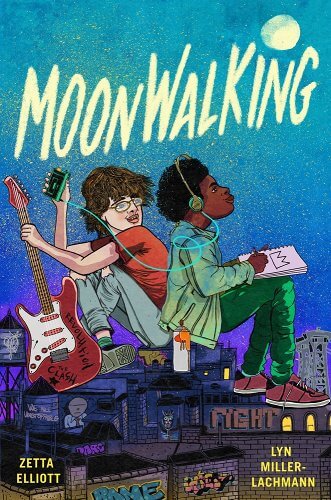
Moonwalking by Zetta Elliott and Lyn Miller-Lachmann.
Purchase from Bookshop.org (supports independent bookstores and my business!)
Set in the early 1980s in Brooklyn and written in two voices, Moonwalking explores the unlikely friendship between two middle school boys facing enormous obstacles at home and at school. Pie is a talented Afro-Boricuan artist obsessed with Jean-Michel Basquiat, who’s constantly underestimated by teachers. At home, he tries to be the man of the house as his mother battles mental illness.
JJ has recently moved to Brooklyn after his father lost his job when President Reagan broke the PATCO union strike. JJ is as quiet as a ghost, doing anything to avoid being noticed at school so he won’t be teased, while also dodging his father’s abuse at home. He’s obsessed with punk rock and the courage of Lech Walęsa and the Solidarity movement in his grandparents’ home country, Poland.
The boys cautiously build a friendship through their mutual love of art and political issues, but this isn’t a typical feel-good tale about cross-racial friendships. The realities of systemic racism and family crises, and their effects on a relationship that was fragile to begin with, aren’t minimized. (Novel in verse. Recommended for ages 11 – 15.)
