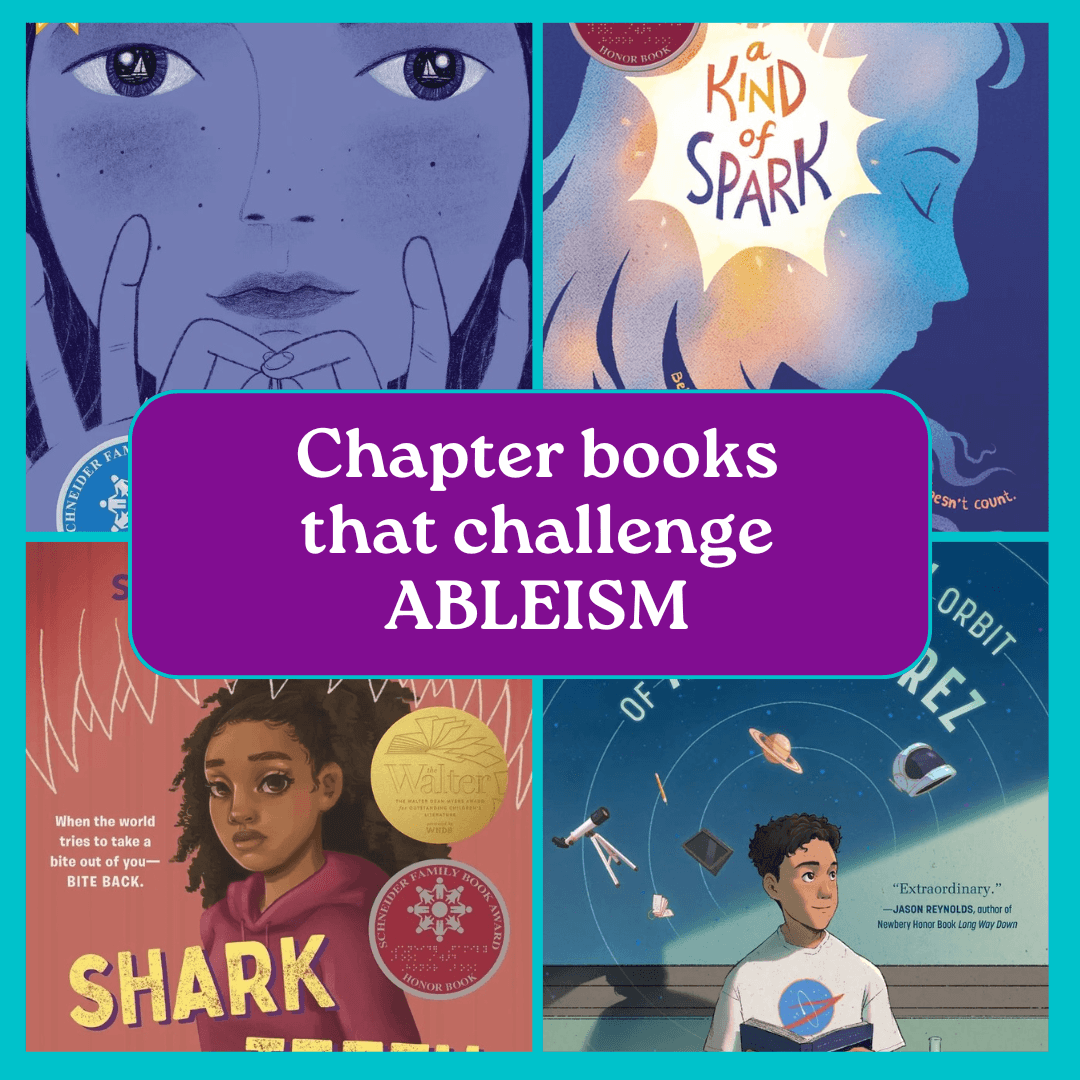
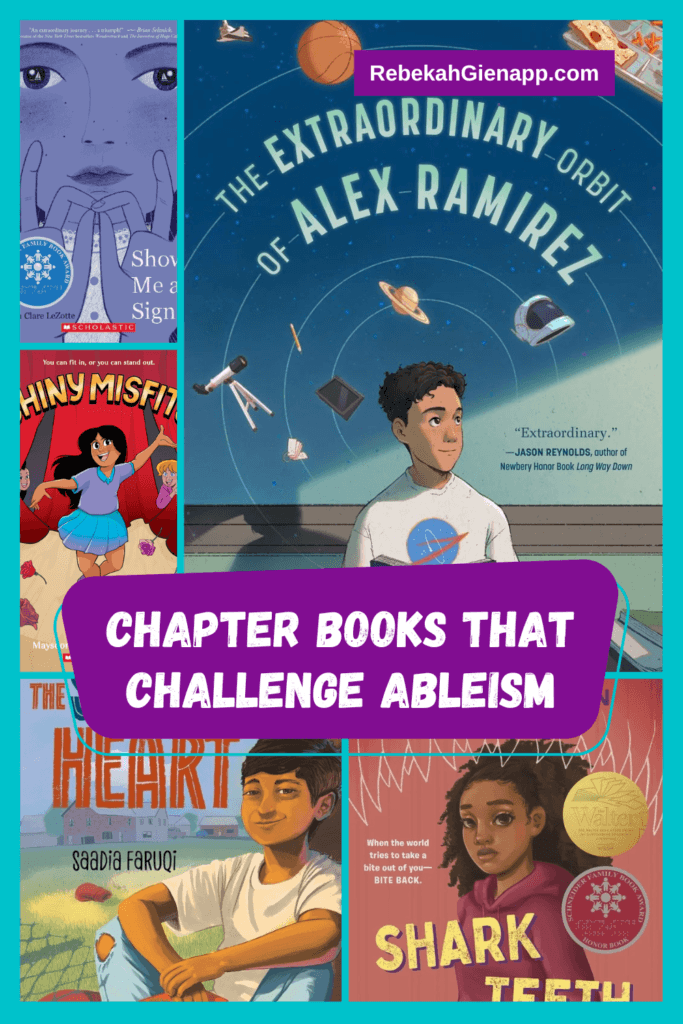
One of my most popular book lists features picture books starring disabled characters. Of course, it’s not just younger readers who need books starring non-stereotypical books about disability. In this post, I’m sharing some of my favorite chapter books for ages 8 – 14 that can help kids unlearn ableism and understand disability.
Ableism is bias and discrimination against disabled people. It’s rooted in the idea that non-disabled people are the norm that all people should be measured against.
I hope the kids in your life enjoy them as much as I have!


Disclosure: For your convenience, this post contains affiliate links. If you make purchases through these links, I may earn a small commission at no additional cost to you. You can read my full disclosure policy here.
Unlearn ableism with these chapter books starring physically disabled characters
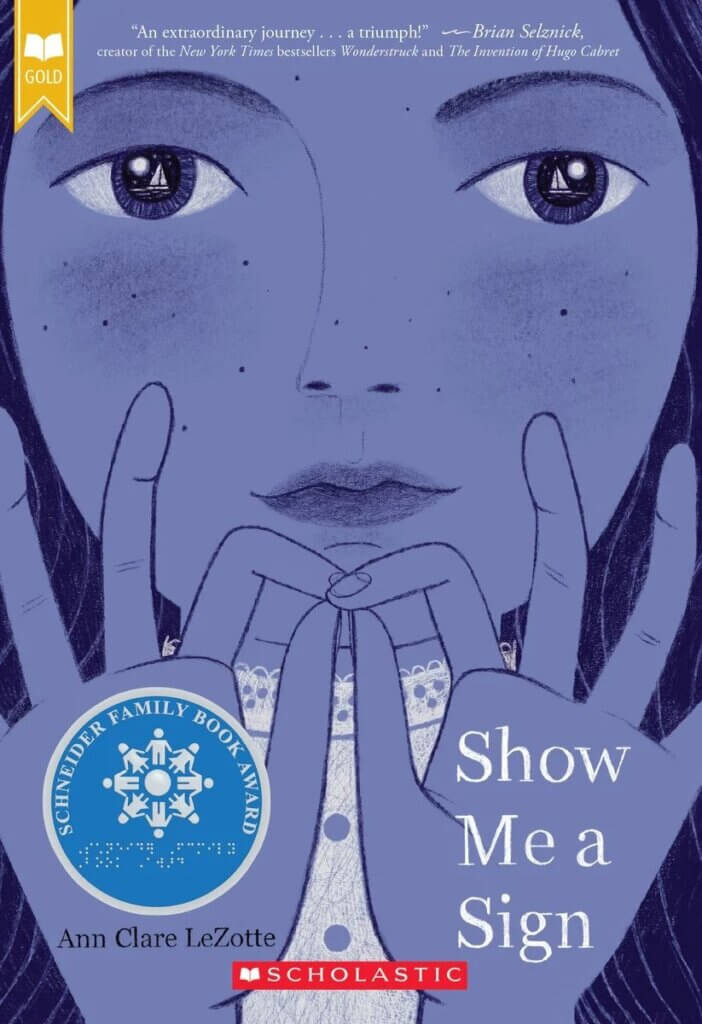
Show Me a Sign by Ann Clare LeZotte (series).
Purchase from Bookshop.org (supports independent bookstores and my business!)
This riveting story is inspired by an actual community in Martha’s Vineyard in the early 1800s where almost all the residents used sign language, and many were deaf. Like most of the families in Chilmark, Mary’s family has both deaf and hearing members, and this has never been seen as a burden or disadvantage. Mary and her father are deaf; her mother and brother (who recently died in a tragic accident) are hearing.
As Mary grieves the loss of George, a scientist arrives in their community who announces that he is there to discover the cause of the widespread deafness on the island. For the first time, Mary becomes aware that hearing people in other places often look down upon those who are deaf.
The scientist’s cruelty becomes apparent when he kidnaps Mary for to be a “live specimen” in his studies. As she is trapped in Boston, she knows her family and community must be searching for her. But how will they find her? Not only is the book outstanding for its anti-ableist message; the author also deftly weaves in the tensions over land and the cultural perspectives of Mary’s free Black and Wampanoag neighbors. (Recommended for ages 8 – 12. Deaf author.)
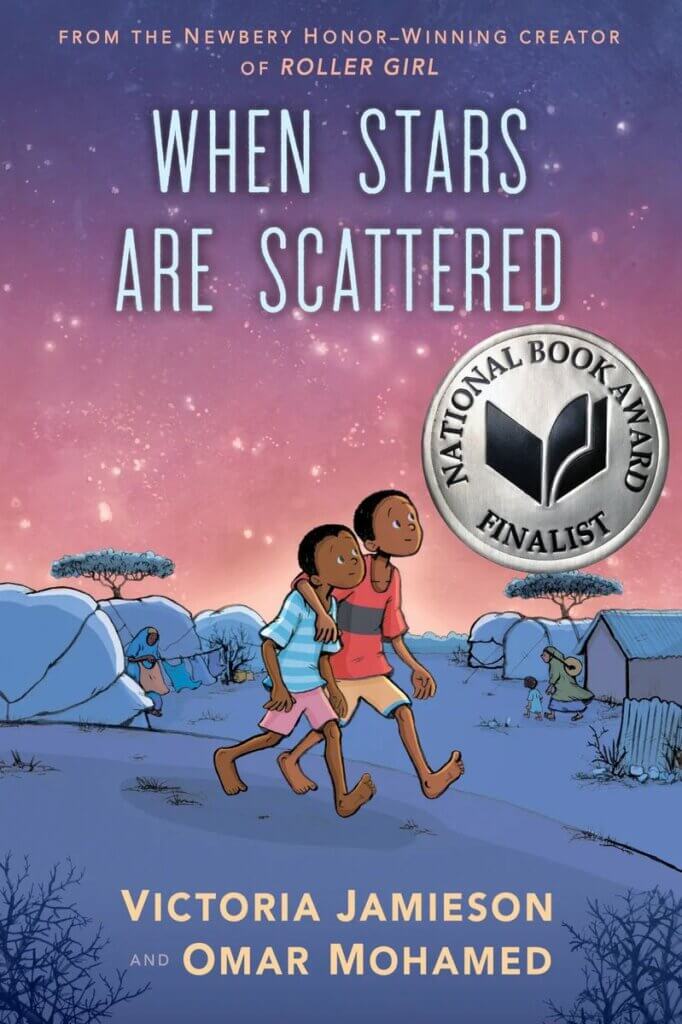
When Stars Are Scattered by Victoria Jamieson and Omar Mohamed.
Purchase from Bookshop.org (supports independent bookstores and my business!)
In this gripping graphic novel, Omar Mohamed joins with award-winning writer Victoria Jamieson to tell his story of life in the Dadaab refugee camp in Kenya.
Omar is so consumed with caring for his younger brother Hassan, who is nonverbal and has seizures, that he doesn’t believe he can attend school. Ever since the brothers became separated from their mother when fleeing the war in Somalia, Omar has felt an intense responsibility to Hassan. After one of the school officials sees Omar’s intelligence and encourages him to attend school, some of his friends help him see that Hassan is more capable than Omar thinks. While Hassan is at first unhappy when Omar is gone for long hours attending school, he eventually begins to thrive.
In some ways, Omar’s life begins to change after starting school. In other ways, every day in the refugee camp feels the same, and the intense waiting for something better is painful. As Omar watches his friend Jeri gets his hopes up about being resettled in America, only to have his dreams fall apart, he wonders if he will ever be able to make a life for Hassan and himself outside of the camp. This realistic yet hopeful and at times humorous book is a must read. (Recommended for ages 9 – 13.)
Related post: Children’s books about immigrants and refugees
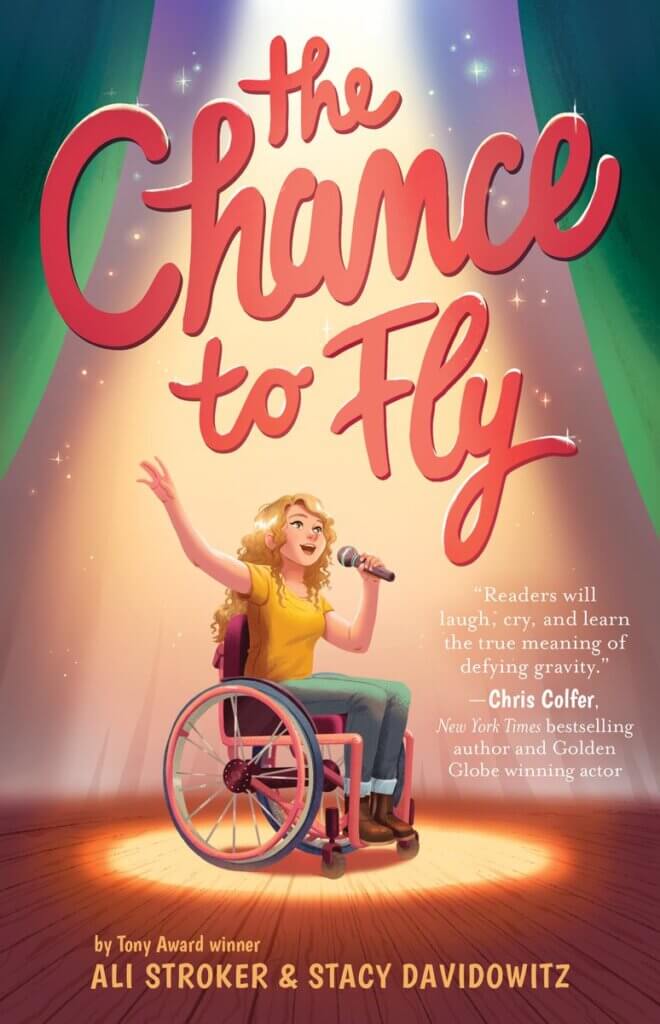
The Chance to Fly by Ali Stroker and Stacy Davidowitz (series).
Purchase from Bookshop.org (supports independent bookstores and my business!)
Thirteen-year-old Nat has an amazing voice and loves to sing in chorus, but her true dream is starring in a Broadway musical. When her family makes a difficult cross-country move, Nat’s Dad is ready to sign her up for wheelchair racing in her new town, just like she did back home.
At the first practice, though, Nat spies a flyer for Wicked auditions that tugs at her heart strings. Despite her overprotective parents’ worries, Nat gets into the chorus for the show. But when the director tells her there’s no need to stay for the parts of the rehearsal that include dancing, Nat is devastated that he didn’t even give her a chance to try dancing in her chair.
Even while Nat is loving her new theater friends (especially Malik, who’s she’s crushing hard on), there are so many ableist barriers that keep her from being able to fully participate. How can Nat show the director and her friends that she can and should be fully included in the show? (Recommended for ages 8 – 12. Disabled author.)

Shiny Misfits by Maysoon Zayid. Illustrated by Shadia Amin.
Purchase from Bookshop.org (supports independent bookstores and my business!)
Bay Ann loves to dance, and she’s also incredibly competitive, so she’s delighted when she wins first place in her school’s Halloween Idol show. But when her crush and nemesis Alyee Maq catches her on stage when she wobbles, he posts the video online. He soon goes viral by humble bragging about how he saved a “special” girl. Bay Ann is outraged that he’s playing into stereotypes about her cerebral palsy and that his “help” has gotten way more attention than her performance.
Soon Bay Ann is ruthlessly obsessed with beating Alyee at anything, so much so that she becomes rude and neglectful to her two closest friends, Michelle and Davey Matt. I’ll be honest – for a good portion of the book Bay Ann is pretty unlikeable. However, this could be a seen as a welcome antidote to “inspiring” stories about disabled characters that stereotype and idealize them. Eventually Bay Ann realizes that her behavior and her focus need to shift. (Recommended for ages 9 – 13. Disabled author.)
Related post: Diverse and inclusive graphic novels for middle grade readers

Song for a Whale by Lynne Kelly.
Purchase from Bookshop.org (supports independent bookstores and my business!)
Iris has unusual hobbies and skills for a twelve-year-old: with the right parts, she can fix just about any old radio. Since Iris is deaf, some may wonder why she’s so drawn to things that make sound, but Iris can feel the vibrations.
At school, there are no other deaf students, so Mr. Charles, her support aide, is often the only person she can have in-depth conversations with. When her science teacher mentions Blue 55, a whale whose language isn’t understood by other whales, Iris quickly becomes obsessed.
With the help of the band teacher, she figures out a way to record a song for Blue 55 and sends it to a sanctuary that’s trying to tag the whale. When a sanctuary scientist says they will play Iris’ song for Blue 55 the next time the whale is near, Iris is determined to be there. The only problem is that Iris lives in Texas and the whale is in Alaska. With the help of her daring grandmother, Iris sets out on the adventure of a lifetime. (Recommended for ages 8 – 12.)
Related post: Children’s books to inspire ocean conservation
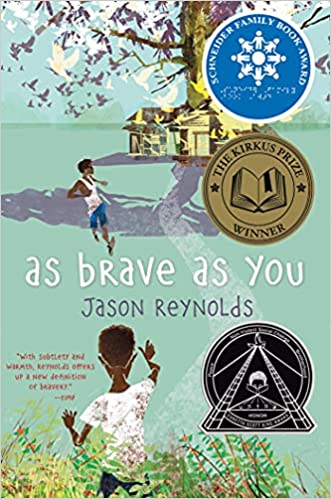
As Brave As You by Jason Reynolds.
Purchase from Bookshop.org (supports independent bookstores and my business!)
It’s hard to do this remarkable book justice in a short review. The title As Brave As You, could refer to any of the main characters: two brothers named Genie and Ernie, or their grandfather.
With their parents on their first trip alone since their honeymoon, New York kids Genie and Ernie will be spending a month with their grandparents in rural Virginia. Genie’s never even met his Grandpop before, and he’s baffled when he finds out Grandpop is blind. How can he cook like he does and pick out his matching clothes. Most of all, Genie wants to know how he hides being blind so well.
As Grandpop gradually opens up to Genie, he finds out about even more secrets Grandpop’s been keeping. One secret in particular turns out to be why Genie’s Dad barely speaks to Grandpop. During their time together, can they help each other find the bravery they need? (Recommended for ages 10 – 14.)
Includes:
- children’s books that teach disability history (includes many books I haven’t reviewed on the blog) + disability experiences (75 books total!)
- kid-friendly glossary of disability terms
- ableist tropes to watch out for in kids’ books
- ways kids can take action
- understanding people-first vs identity-first language
Head here to learn more about the disability resource guide

El Deafo by Cece Bell.
Purchase from Bookshop.org (supports independent bookstores and my business!)
This graphic novel was one of my son’s favorite books around age 7. In El Deafo, author Cece Bell gives children a window into her own childhood. After contracting meningitis at age 4, Cece becomes profoundly deaf. Her struggle to understand, but most of all to be understood by other children, shines through the pages.
While the subject is a serious one, the book is filled with laugh-out-loud humor (including plenty of bathroom jokes that kids will love.) Cece’s alternate identity as a superhero named El Deafo helps her deal with the sense of loneliness that follows her during her first few years of being deaf.
Her annoyance at friends who insist on talking in a slow, exaggerated manner or who refer to her as their “deaf friend” can easily lead to conversations with kids about microaggressions. (Recommended for ages 7 – 12. Deaf author.)

This Kid Can Fly by Aaron Philip with Tonya Bolden.
Purchase from Bookshop.org (supports independent bookstores and my business!)
Note: Aaron now identifies as a transgender woman, so I will be using she/her pronouns to describe the book, even though Aaron was not publicly transgender when she wrote it.
In this humorous and honest memoir, teen Aaron Philip talks about what it’s like living with cerebral palsy in an ableist society that places barriers to her full participation. Aaron shares her immigrant family’s compelling and difficult journey, how she became an artist, and tells how her Tumblr about disability rights eventually made her semi-famous.
This highly readable non-fiction book is a much-needed antidote to “inspirational” stories that are primarily written to make able-bodied people feel better. (Recommended for ages 8 – 12. Disabled author.)
Chapter books about neurodivergence that challenge ableism

The Extraordinary Orbit of Alex Ramirez by Jasminne Paulino.
Purchase from Bookshop.org (supports independent bookstores and my business!)
To call Alex Ramirez space-obsessed is an understatement. He longs to take Ms. Rosef’s science class that the mainstream 7th graders enroll in, but all of his lessons take place in a SC (self contained) classroom. Alex knows he’s ready for something more than the simple worksheets and below grade-level books he’s given to read.
Alex challenges his teacher and his parents, determined to show them that he’ll be a capable student in Ms. Rosef’s class. His SC teacher and his scientist dad are ready to let Alex try, but his protective mother needs more convincing. Adults aren’t the only challenge he faces outside his SC classroom. Leonard, his ex-best friend turned bully, is in Ms. Rosen’s class, and has another friend who delights even more in making fun of Alex.
There are so many reasons I loved this moving novel-in-verse. Alex is a fully formed character who believes in himself and makes a good number of mistakes. He wants to challenge the stereotypes others have about him, yet he also has to battle his own inner doubts. I appreciated that Alex receiving accommodations (both formal ones and the informal support of people around him) was part of his success story. The book is also realistic about the hurt well-meaning parents can cause by overprotecting our children. Finally, Paulino realistically portrays how Alex and his family seamlessly switch back and forth between English and Spanish, without interrupting the flow of the story with clunky translations. (Recommended for ages 8 – 12. Neurodivergent author.)
Related post: Children’s books by autistic authors
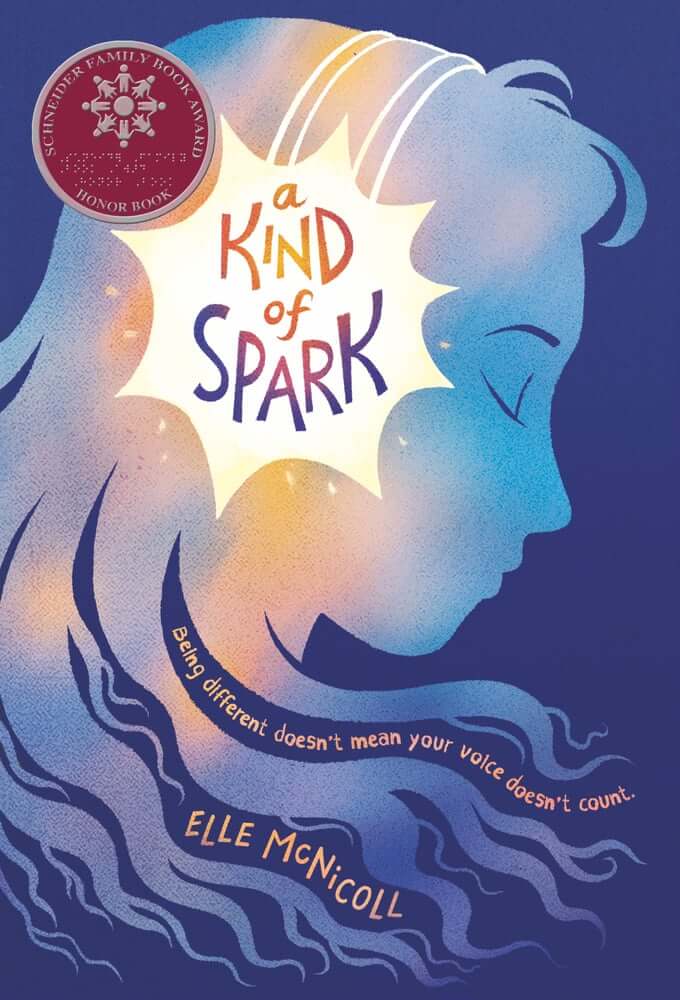
A Kind of Spark by Elle McNicoll
Purchase from Bookshop.org (supports independent bookstores and my business!)
When Ms. Murphy tells Addie’s class that they will be learning about the witch trials that happened hundreds of years ago in their small Scottish community, Addie quickly understands the injustice they experienced. People often make fun of Addie and her older sister Keedie, both of whom are autistic, and even spread lies about them. She decides to go to the village hall meeting to call on the town to erect a memorial to the women labelled as witches.
Few people besides her family and her new friend Audrey understand her passion. As bullying from both Ms. Murphy and a classmate escalates, Addie becomes even more convicted that her village must apologize for the wrongs it committed centuries ago. The book is a clarion call for society to accept and appreciate neurodiversity and reject ableism, rather than expecting autistic people to behave in ways that make neurotypical people comfortable. (Recommended for ages 8 – 12. Autistic author.)
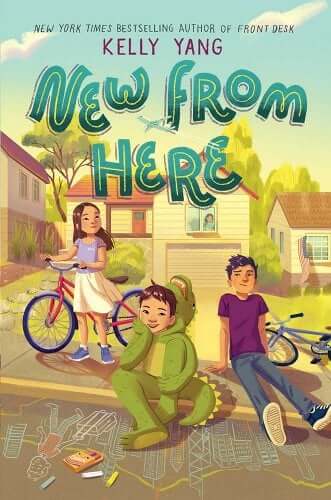
New From Here by Kelly Yang.
Purchase from Bookshop.org (supports independent bookstores)
When COVID-19 arrives in Hong Kong, ten-year-old Knox finds himself moving to the United States with his mother and siblings with just two days’ notice. His father, the only one who understands Knox’s impulsivity issues, stays behind.
As Knox and his older brother Bowen face anti-Asian racism, Knox learns how to speak out, while also speaking up to his family about how they respond to his ADHD. Meanwhile, the children cook up an elaborate plot to get their father to the United States before flights from Asia shut down.
Inspired by the real-life experience of Yang’s family, this important novel doesn’t shy away from how scary and painful the early pandemic was for kids like Knox, yet the deeply engaging story is eventually filled with plenty of laughs as well. (Recommended for ages 8 – 12.)
Shop the entire list of chapter books that challenge ableism on Bookshop.org (supports independent bookstores and my business!)
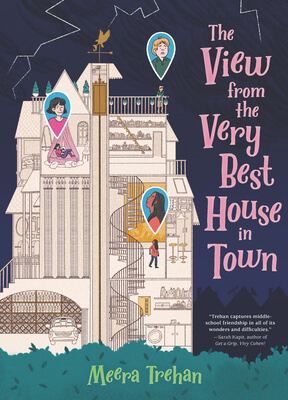
The View from the Very Best House in Town by Meera Trehan.
Purchase from Bookshop.org (supports independent bookstores)
Asha and Sam have been best friends since they were little, with their strengths and interests complementing each other. But all that falls apart when Sam is accepted into the elite Castleton Academy.
After the principal labels Sam an autistic “Miracle Boy” in a first day of school assembly, Sam longs to get through the school day unnoticed. When snobbish Prestyn, Asha’s long-time tormenter, seems to befriend him, Sam leaves Asha behind. What’s worse is that Prestyn lives in Donnybrooke, a mansion that Asha is obsessed with, but forbidden to enter.
The story is told in three voices: Asha, Sam, and Donnybrooke. The house’s perspective gradually changes from superior to more compassionate than the residents of the house are when Sam becomes Prestyn’s next target.
Trehan skillfully navigates how fragile and complicated middle school friendships can be, especially when the added factors of bullying and ableism are at play. (Recommended for ages 8 – 12.)
Looking for simple, straightforward activities to explore different forms of privilege and identity with kids and teens? My activity pack can help!
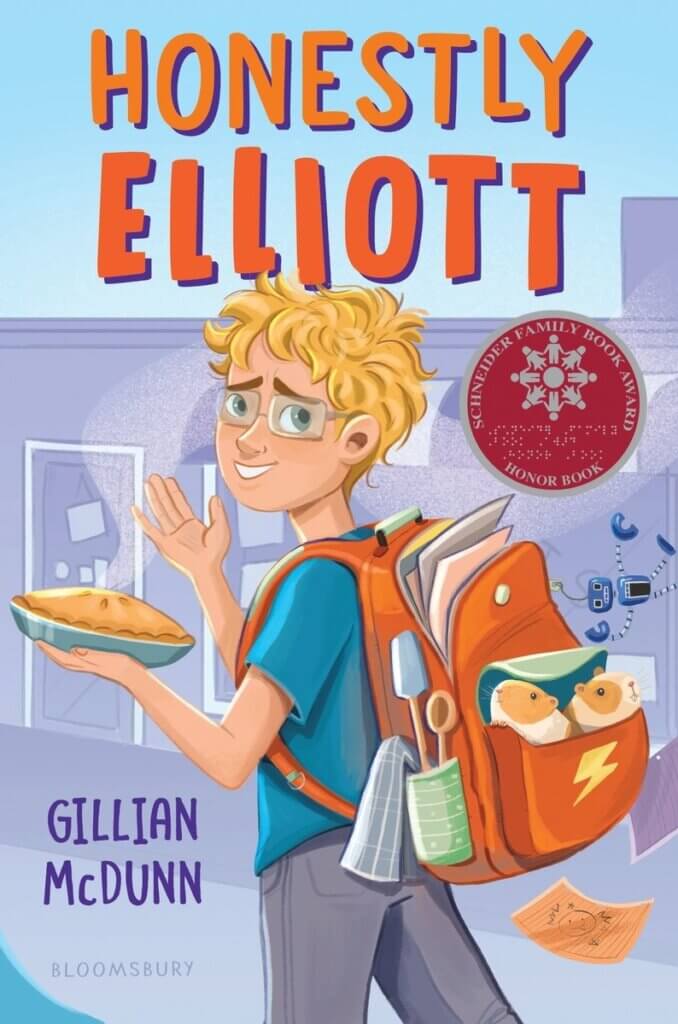
Honestly Elliott by Gillian McDunn.
Purchase from Bookshop.org (supports independent bookstores and my business!)
My son and I happened to read this book together just as we were beginning to realize he had ADHD. Elliott’s journey prompted so many helpful discussions for us.
Elliott’s been feeling lonely and misunderstood for a while. His best friend moved away, and his Dad doesn’t understand how Elliott’s ADHD affects him. Cooking is his absolute favorite thing, and everything falls into place in the kitchen, even when he’s making complex recipes. His Dad doesn’t seem to appreciate his hobby or understand why Elliott he can’t maintain that kind of focus all the time.
When star student Maribel is paired with Elliott for a high-profile school project, Elliott expects her to take over and dismiss his ideas. While the pair gets off to a rocky start, Maribel knows what it’s like to be dismissed too. (Recommended for ages 8 – 12. Author with ADHD.)
Counter ableism with these chapter books about mental health
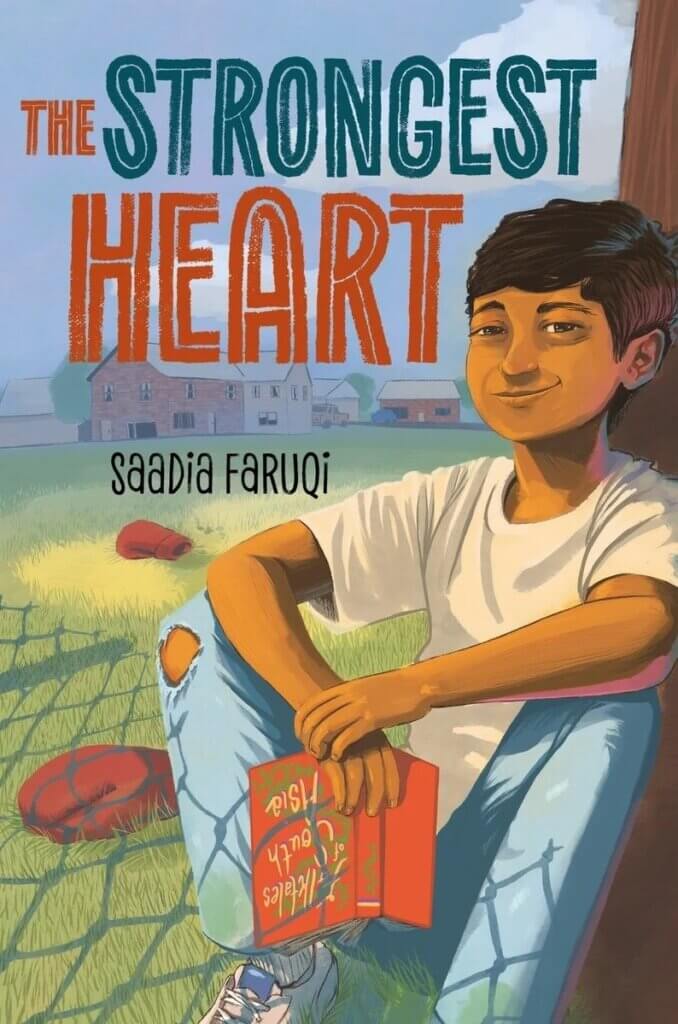
The Strongest Heart by Saadia Faruqi.
Purchase from Bookshop.org (supports independent bookstores and my business!)
When Mo and his father move from New York to Houston to live with his aunt, he focuses on perfecting his tough guy persona. When your father is a “monster” who’s prone to fits of rage and constantly criticizes you, toughness is your only option. Mo can’t rely on either of his parents, especially since his mother moved across the world for a two year fellowship.
Mo’s nurturing aunt provides him with the warmth he’s never received before. Even though he and his cousin/new roommate Rayyan are incredibly different, they develop a close friendship. Yet Mo knows that at any minute, the real Abbu could emerge, shattering any happiness he’s built in Houston. Rayyan tries to tell Mo that Abbu’s schizophrenia means that he doesn’t act the way he does on purpose, but Mo thinks Rayyan can never really understand what a monster Abbu is. When Abbu has one of his worst episodes in years, will it be Mo’s job to handle it once again?
This sensitively written book demonstrates the burden that serious mental illness can place on a family, while also shifting Mo’s perceptions about who his father is. (Recommended for ages 10 – 14.)
Related post: Children’s books for all ages starring Muslim characters
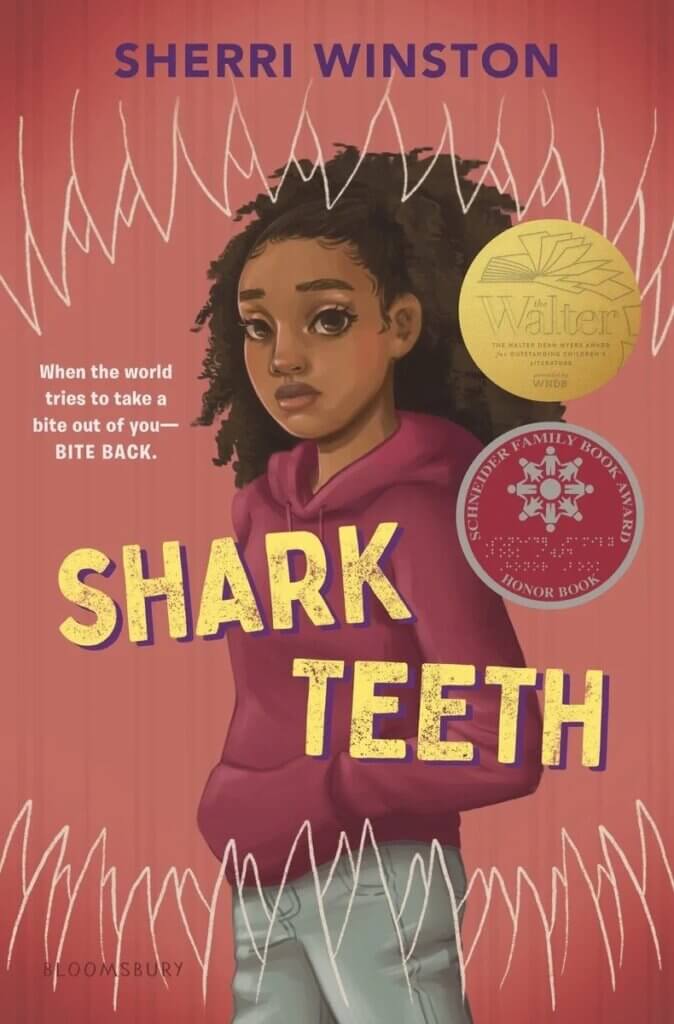
Shark Teeth by Sherri Winston.
Purchase from Bookshop.org (supports independent bookstores and my business!)
Kita is just 12 years old, but she carries more responsibility than many people in their twenties, including her own mother. Kita’s Mama is an alcoholic, and Kita’s been covering for her for years, taking care of her two younger siblings and even paying the household bills. She blames herself for not covering for Mama, which led to social services splitting up the three kids into foster homes last year.
Now that Mama is back and they’re all together again, Kita knows she cannot make another mistake. That also means she can’t tell anyone about the night terrors and sleep paralysis she experiences. After all, Mama has told her that telling the truth could get Kita labelled as “crazy” and locked up in a mental hospital.
Despite all the tumult she’s experiencing at home, Kita is having a great year at school, trying new things like joining the twirling team. As Mama’s old habits start to show up again, Kita’s friends try to convince her that she still deserves to have a life like other kids. How could they possibly understand all Kita’s carrying?
This is not an easy read, especially for sensitive kids, but it’s also incredibly compelling. I read the entire book in one day because I was rooting so hard for Kita. (Recommended for ages 10 – 14.)
