Last month, I shared why what we eat matters in the fight against climate change. There are so many different things that families can do in the kitchen that affect our planet, for better or worse. To help cool down the planet, one of the simplest places to start is by reducing our food waste.
Today, I’m sharing 11 ideas your family can try to cut down on food waste. Some of these are actions for grown ups to take. But a lot of them are things you could ask your kids to help you do.
Related post: How Families Can Fight Climate Change in the Kitchen



Disclosure: This post contains affiliate links. If you make a purchase through these links, I receive a small commission at no additional charge to you. You can read my full disclosure policy here.
11 Ways to Reduce Your Family’s Food Waste
1. Focus on making progress, not on being perfect.
Our family has been making a concerted effort to stop wasting food for the past two months. Despite my best attempts, we still throw away small amounts of food. I could let this discourage me.
But instead I think about how much less food is being wasted in our home compared to the past.
The problem with expecting perfection is that it can lead you to decide that making any effort is too hard. As the old saying goes, “don’t let the perfect become the enemy of the good.”
Subscribe to my free Resource Library using the form below to get my kids’ mini book: 10 ways you can help stop climate change
2. Talk with your kids about why you are reducing your food waste
Our youngest child is passionate about protecting the planet. So we’ve talked about how wasting food hurts the earth.
According to the Food and Agriculture Organization, about one third of all food that’s produced each year gets lost or wasted. That’s over 1.3 billion tonnes of food annually!
Talk with your kids about how when you waste less food, your family has more resources to help people who are hungry. Let them know that a lot of energy goes into producing food, packaging it, and getting it to the store. When we waste it, we’ve put a strain on the planet for no good reason.
This video is somewhat technical, but it can give older elementary kids and teens a good overview of the problem of food waste, and what we can do.
Related Post: How Palm Oil Hurts the Planet (and What Kids Can Do About It)
3. Clean out and organize your refrigerator
This is going to sound weird, but you may need to start by throwing out some food. If there’s anything funky and beyond hope in your fridge or cupboards, toss it. With less cluttered food storage areas, it’s easier to see what needs to be used up.
It’s made a big difference for us to have different sections of the refrigerator (and different shelves of the pantry) for each category of food.
Sometimes you need to buy more of a food before you’ve used all of an older package up. When that happens, it’s especially important to make sure the older produce doesn’t get pushed to the back of the fridge. If I have new mushrooms, for example, those get stored right behind the older box that only has 3 or 4 mushrooms left.
It’s also hugely helpful to get your partner and kids on board with whatever system you set up. Depending on your kids’ ages, picture labels or word labels on shelves could help.
Related Post: 9 Ways Kids Can Protect the Planet
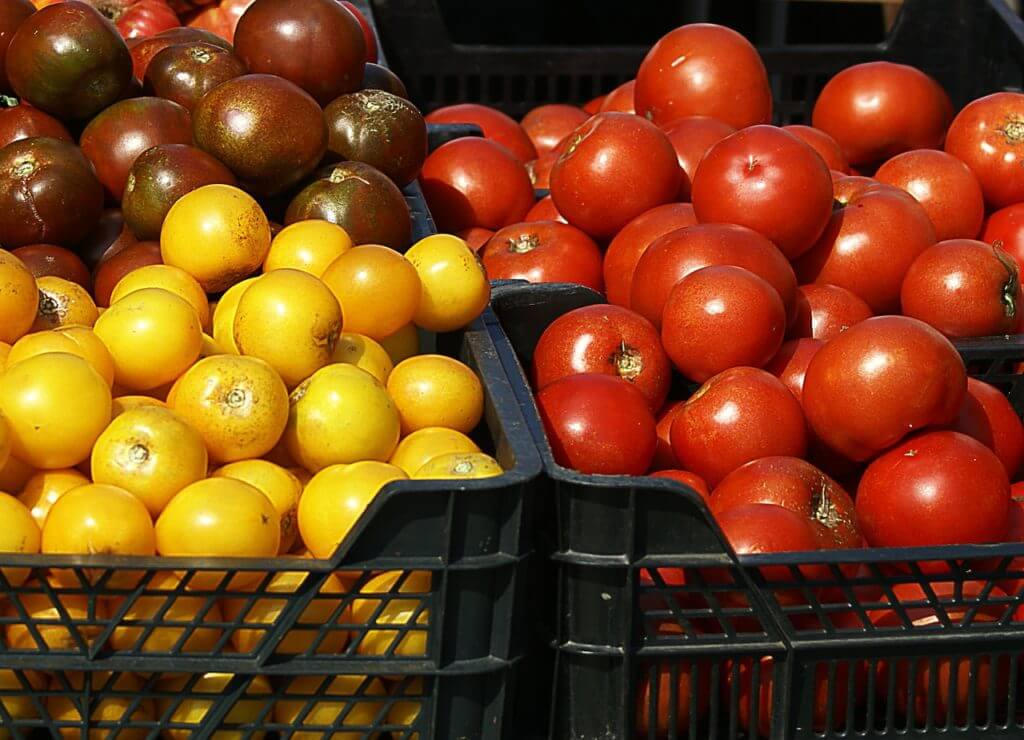
4. Keep moisture away from your produce.
It’s so frustrating when your strawberries or lettuce last only a few days! Moisture is usually the culprit, but you can fight it using these tips:
- Wipe out your produce drawers and bags your produce is kept in on a regular basis. (This could be a great job to give your young kids. My 5 year old loves little chores like this!)
- In the pantry, store your onions and potatoes on different shelves to make the potatoes last longer.
- Oranges and apples are best stored on the counter, not in the refrigerator.
- Reduce moisture in your produce drawers or in baskets on your counters with Freshpaper Produce sheets. We’ve been using these for about a month now, and they seem to be helping.
- For bagged produce, try green bags storage. Since we started using these, our strawberries and herbs in particular are staying fresh longer than they used to.
5. Keep fewer food choices around the house.
This was hard for me at first. Our 5 year old is very particular about what he eats. Fruit that he loved one week can make him cry the next. No parent enjoys that kind of drama. But by having so many options on hand, something was always spoiling before we could eat it.
Having fewer choices requires you and your kids to be less picky. Now, when we’ve run out of grapes, we’ve run out of grapes! The little guy is usually upset for a while, but when he’s truly hungry, he’ll eat something else that I offer him.
6. Make a meal plan before you go to the grocery store.
When I started making our weekly plan based on what was in the freezer and pantry, I was amazed how much less food I needed to buy.
I had been storing stuff up like we were farmers getting ready to make it through the winter of 1894!
If you’re stumped about how to use up certain ingredients, the site Supercook can help you find recipes. Just enter one ingredient, and it will ask you what others you have. Then, you’ll be provided with recipes from all over the internet.
Related Post: 5 Young Activists Who Will Inspire Kids
7. Teach your kids to store leftovers.
Our youngest loves milk, yet usually only drinks a few swallows of it with breakfast. (He does insist that he still needs it!) I used to discover the glasses of sour milk 9 hours later, when I was clearing off the table for dinner.
Now he knows part of breakfast clean up routine is to put his glass in the fridge before the milk goes bad. It later becomes his dinner milk (for some reason he drinks every drop at dinner.)
We also keep storage containers for snacks at a level where he can reach them.
Another one of the problem areas we also had was using part of a package of buns or a loaf of specialty bread. It would then get left out on the counter, assuming we’d use it again soon. Often that wasn’t the case, and it would mold.
Now, partially used breads, buns, muffins, etc go straight into the freezer until they’re needed.
8. Find some flexible recipes that can use up small amounts of foods.
In our house, bruised bananas and avocados that are getting a little spotty go into a chocolate pudding (it’s yummy, I promise!) Smoothies and muffins can absorb all kinds of ingredients.
We sometimes freeze smoothies in these silicone popsicle containers, which works great for school lunches.
Growing up, my mother always kept a container of freezer soup. Small amounts of leftover vegetables went into the container in the freezer. When there was a full container, that became our Saturday lunch.

Another resource I turn to a lot is the Use It Up Cookbook by Catherine Kitcho. It’s organized by ingredient with several recipes for each ingredient.
9. Serve smaller portions to your children
Some of the food waste in our home was because my husband and I wanted our little guy to eat something. We put a big portion on his plate even though he probably wouldn’t eat it.
Sometimes it was because the 5 year old was sure he could eat an entire bagel but got full with just a half.
Start with small servings, assuring your children that they can get seconds if they want them.
10. Make recipes your own (chefs don’t know everything!)
When I first learned to cook in my early 20s, I thought every recipe had to be followed exactly. If it called for 1/4 teaspoon of nutmeg and I didn’t have it, off to the grocery store I went!

Once you’ve been cooking for a while, you learn that most recipes are flexible.
FYI: that’s not always true of baking; some ingredients are scientifically necessaary!
If you have a question about whether x ingredient can be subsituted for y, there’s a good chance someone else has already answered that question. Google it and find out!
11. Motivate your kids by donating your savings to a cause they care about
Kids tend to have big hearts! For your first month or two, tell your children that you’ll be saving a lot money on groceries by cutting your food waste.
Ask them what they’d like to donate those savings to.
Organizations that fight hunger or protect the environment are a natural fit.
But if your child gets to determine where the savings will go, they’ll be more invested in your efforts.
