
Learning about huge problems like world hunger and climate change an make us feel so helpless. Where on earth can we start when the problems are so big?
But what if I told you there’s something that kids and adults do multiple times a day that gives you an opportunity to be part of the solution to global warming and hunger?
Each time we sit down for a meal, we can make choices that will make things better for our planet and its peoples.
For over twenty years, I’ve been fasinated by the connection between what we eat and its impact on world hunger.
Now, parenting a 5 year old who’s passionate about earth care, I’m learning how much food and agriculture also affect climate change.
Knowing that my family and I have a chance to fight global warming and help solve hunger each time we eat is empowering!
So this year on the blog, I”ll be talking a lot about a new project. I’m calling it Cool Food: Families Fighting Climate Change and World Hunger in the Kitchen. (Truthfully we’re going to go beyond our own kitchens to take action, but I needed a catchy title, ya know?)



Disclosure: For your convenience this post contains affiliate links. If you purchase items through these links, I may earn a small commission at no additional cost to you. You can read my full disclosure policy here.
Does what we eat really make an impact on hungry people?
Twenty one years ago, I was a bored college student sitting in my aunt’s living room over Christmas break. I pulled a book off her shelf, Diet for a Small Planet by Frances Moore Lappé, to pass the time. That book changed my thinking and my life.
I had already been passionate about doing my part to fight poverty in my own community and across the globe. As a Christian, I was particularly appalled by how many people suffered from hunger when there was so much plenty in our world.
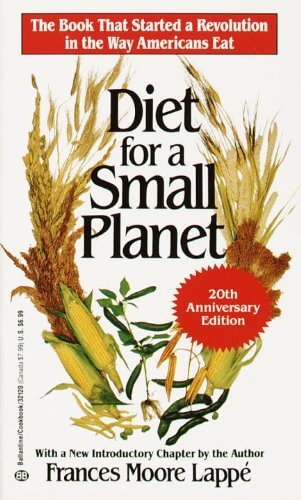
As I struggled to understand how this was possible, Diet for a Small Planet revealed that one big reason hunger still existed is because so much of the world’s agricultural resources go towards producing meat. That’s a very wasteful process compared to a plant-based diet.
Much to my mother’s dismay, I became a vegetarian almostly immediately after finishing the book. While I’m not a strict vegetarian today, I do eat far less meat is typical in American diets.
The book also propelled me into becoming active politically on hunger issues, knowing that the decisions governments and corporations make related to food and agriculture had an even bigger impact.
Today, about half of the world’s agricultural land is used for livestock farming.
Why does that matter?
Because feeding grain to animals, which are then fed to people, is a very resource-intense process. It’s much more efficient to devote more of that land to growing grains, fruits, and vegetables that people eat directly.
Preventing food waste can also have a big impact on hunger. Right now about one third of all food that’s produced gets wasted in some way. That’s about 1.3 billion tonnes of food every year, according to the Food and Agriculture Organization.
Related Post: Three Activities to Teach Kids about Hunger
Subscribe to my free Resource Library using the form below to get my free mini-book for kids: 10 things you can do to help stop climate change
What does food have to do with climate change?
I mentioned earlier that my 5 year old is very passionate about taking care of the earth. So passionate that he might yell at you if he sees you littering. We’re still working on balancing activism with civility, y’all!
So, I’ve been thinking about ways I can bridge my passion for fighting poverty and hunger with his passion for protecting the planet. When I read Diet for a Hot Planet, I realized I’d found the connection: food.
Diet for a Hot Planet is written by Anna Lappé (Frances Moore Lappé’s daughter). She’s a savvy writer and activist focused on the connection between food and climate change.
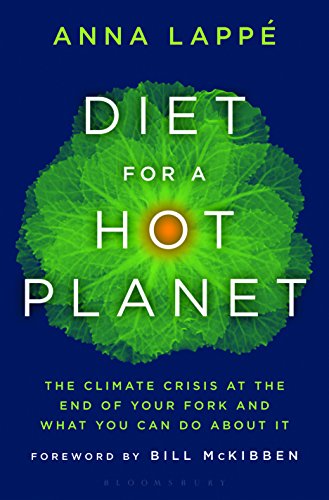
Lappé points out that for a long time, most of our discussion about what we can do to fight climate change has focused on things like using less gas.
While our transportation habits do have a huge impact on global warming, so does what we eat. And that isn’t talked about nearly as much.
Lappé writes that the choices humans make about what food we eat, how it is produced, and what we do with the waste contribute as much as one-third of global greenhouse gas emissions.
That’s because there are so many aspects of food production. Whether we’re eating a plant based meal or an animal based meal makes a difference.
Whether resource intensive pesticides were used matters.
Was the food transported across the country or the world? That mattters too. How much packaging does the food have? That also has an impact on climate change.
Related Post: 9 Ways Kids Can Protect the Planet, on Earth Day and Every Day
Enlisting our kids as allies
The way I see it, there are two ways we can look at all these different aspects of how what we eat affects climate change.
We can be overwhelmed. (“OMG, you’re saying everything I eat needs to be vegan and local and organic and not have any packaging?” Psst…I’m not saying that.)
Or we can be encouraged that there are so many different things we can try.

As the mom of a very picky eater, I find the second option more helpful.
In the coming months, I’m going to be providing you with a menu of food-related ideas to try to fight climate change. Look for more posts and kid-friendly resources as part of my Cool Food project.
I’m testing these ideas out with my own family too, so believe me this is going to be honest and realistic.
Some of them will likely work for your family. Some of them may not be practical for you right now, and that’s ok!
I’ll also be sharing with you how I’m talking to my son about these complicated issues, so that we’re hopefully changing our hearts and minds as we change our habits too.
We’re also going to go beyond our forks, to take action for climate justice and to fight hunger.
Additional posts in this series:
11 Ways Your Family Can Reduce Food Waste
How Palm Oil Hurts the Planet (and What Kids Can Do About It)
