
The best book for talking with children about diversity and inclusion
I believe that all children deserve to see themselves and their families in the books that they read. I also believe that it’s never too early to start teaching kids about diversity, inclusion, and acceptance of others who appear different from them. That’s why I’m so excited to share what I believe is the best children’s book available today for starting those conversations in a child-friendly way: Barefoot Books’ Children of the World.
I’m also including a video where I read an excerpt of this amazing book, plus free activity and discussion guide downloads related to this topic. Let’s get to the good stuff!


This post contains affililiate links. If you make a purchase through these links, I earn a small commission at no additional charge to you. You can read my full disclosure policy here.
The top 10 reasons Barefoot Books’ Children of the World is my favorite diverse book
10. Children will learn that no two bodies are the same.
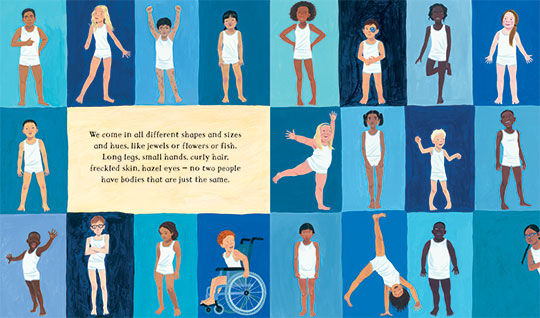
Throughout the book, kids will see children of many different physical abilities, shapes, and skin tones. I haven’t yet picked which of the two page spreads in Barefoot Books’ Children of the World is my favorite, but I think it might just be the bodies spread. Here children learn that “we come in all different shapes and sizes and hues, like jewels or flowers or fish.”
One of the first children my son noticed on this page is a girl who has one hand. It gave us an opportunity to talk about how physical disabilities. I kept it simple, telling him most children are born with two hands, but some are only born with one hand.
9. Many different types of families are represented.
Though many children books don’t acknowledge it, kids lives in many different types of families. One of the page spreads points out that a child’s family may be big or small, with one parent or two. Foster families, families with steprelatives, multiracial families, families with a deployed service member, and families with two moms or two dads are all included in either the pictures or the text.
Related Post: What is Family? Picture Books About Loving Families in Many Forms
8. Kids get subtle clues that there is no one “normal” way to do things.
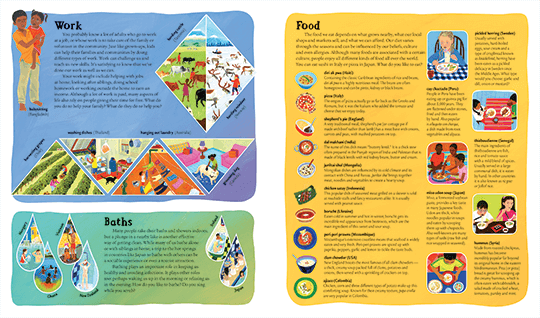
Food is a deeply personal topic that’s rooted in the cultures we come from. On the food spread of Barefoot Books’ Children of the World, readers can see children eating all kinds of foods. Many of the dishes will be unfamiliar because they are drawn from all over the globe.
The wording on this page reminds children that “what tastes good to you might taste strange to someone else.” I love that the text tells kids that their own “normal” may not be someone else’s “normal.”
7. The illustrations spark a playful curiosity about what other children are doing.
Many of the topics covered in Barefoot Books’ Children of the World are serious, but there’s plenty of playfulness too. On a page spread that shows children enjoying their favorite hobbies, my son was drawn to an illustration of a girl from Mauritius who was building a bridge made out of paper and cans. He insisted that we immediately put down the book so that he could build his own bridge.
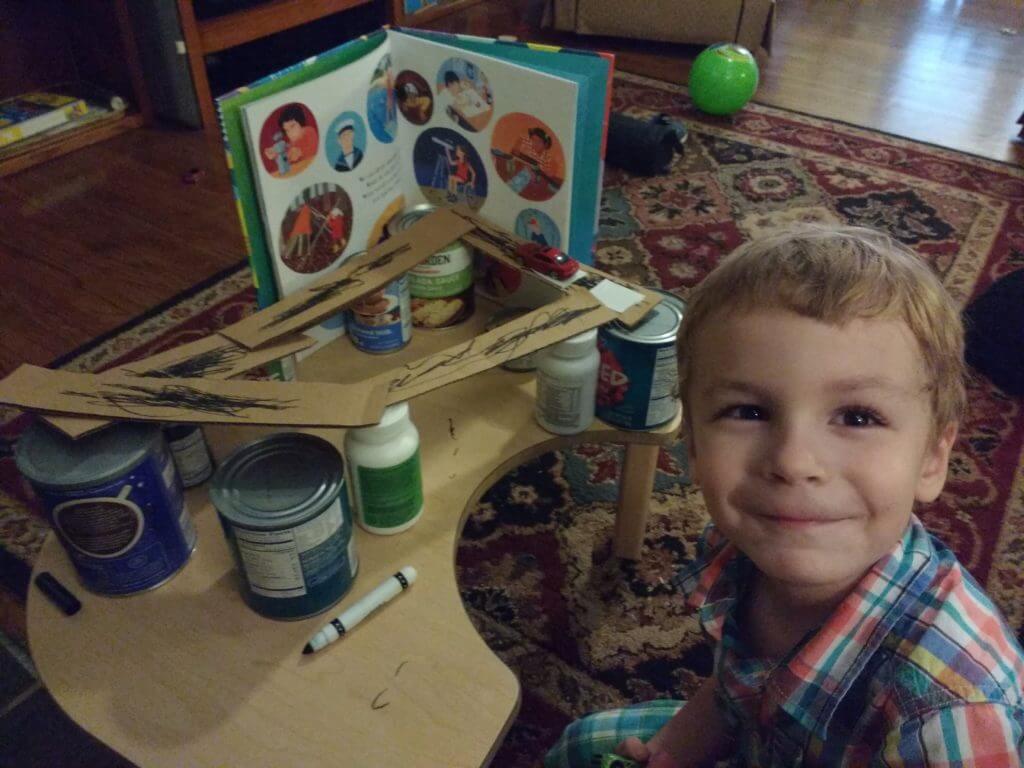
This page asks children to ponder “what would you like to do if you had the chance?”
6. Children are shown practicing many different faiths.
As an ordained minister, I’m always intrigued by explorations of faith in children’s books. Children are shown in worship or practicing rituals from Judaism, Buddhism, Christianity, Islam, and Shintoism. A child is also shown meditating, and other children are shown taking “life as it comes” by enjoying nature.
Our family is Protestant Christian, and I asked my son which picture he thought looked most like how we worship. I was fascinated when he did not choose the Catholic children taking communion, but instead pointed to a Muslim child taking off his shoes before going into the mosque. It reminded me that one of the primary messages of this book is that there is more that draws us together as people than there is that separates us.
5. The book is filled with thoughtful questions that children of many different ages can answer.
In our family, we’re big believers in the Montessori principle of following the child’s lead. As you can see in my video excerpt below, many of the pages ask kids questions about what is happening in their own lives. Before children can understand others, they must start with understanding themselves.
4. The extensive endnotes guide parents and educators in talking about the topics raised in the story itself.
Barefoot Books’ Children of the World has an incredible 15 pages of endnotes that will help adults explore this book with children. For example, one page of the book shows people gathered in Grand Central Station speaking many different languages. When you flip to the endnote page on languages, you can find out what each of these languages is and exactly what the person is saying. Our 4 year old likes to pick out a different person each time we read the book; then we flip to the back to read the translation.
The endnote on bodies talks about the many ways our bodies are different from one another. It includes the statement that “some people feel comfortable in the bodies they were born in, but others might like their bodies to be different.” This can be a way to start an age appropriate conversation with children about what it means to be transgender.
The endnotes also include additional questions you can ask children about the topics covered in the story.
3. The illustrations were carefully crafted, using thousands of photographs of real children and places.
Sometimes our attempts to teach children about diversity or children around the world can actually do harm by perpetuating stereotypes. Illustrator David Dean saved 3,000 images of people, places, and things to ensure that his hand-painted artwork was as true to life as possible.
Authors Tessa Strickland and Kate DePalma also worked with two inclusivity experts as they crafted the book. At our spring Barefoot Books Ambassador conference, we learned that the diversity consultants suggested changing wording that asked children “what can you see and hear and smell from where you are?” Just by changing “and” to “or” in this sentence, children with visual or hearing impairments can still answer that question.
2. Children will grasp that what we have in common is just as important as how we are different.
As a starred review by Publishers Weekly puts it,Barefoot Books’ Children of the World “strikes a lovely balance between celebrating individuality while recognizing the rewards of community.”
I love the page spread that shows children writing their names. While some are in alphabets that my child doesn’t know, he can see that names (and learning to write them, which he’s working on right now) is a precious thing to all kids. On the families page, he can see that there are some families that remind him of his own, and others that are different. But all the children are receiving love and care from their families.
1. The Barefoot Book of Children celebrates the power of story of children’s own stories.
The next to last page spread shows four different children who’ve been featured in the book, going through their days. At the top, we read “Every life is a story. It’s easier to understand someone when you know their story.”
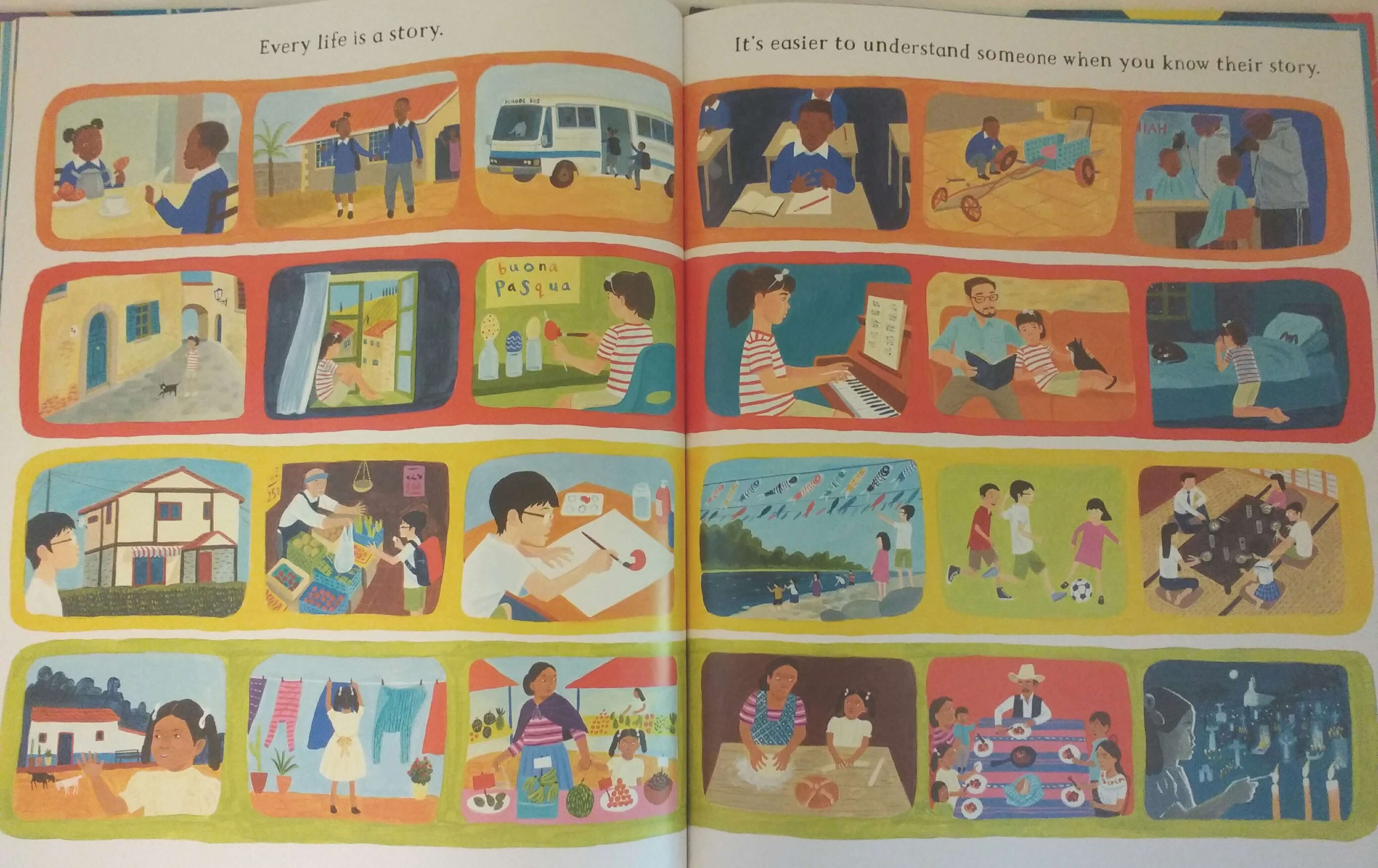
The first time I read the book, these two simple sentences brought tears to my eyes. We live in a world where so many people are crying out for their stories to be heard and understood. I believe with all my heart that when we raise children to appreciate the beauty of their own stories and the mystery of others’ stories, our world will be different.
The final words of the book tell children “You are a part of the world. You are also a world all your own. This is where you belong. What will happen in your story?”
As Dr. Maria Montessori said, “the child is both a hope and a promise” for humanity. I am so thankful for this book that lifts up the hope and promise that children are.

6 responses to “My favorite book for starting conversations with children about diversity”
This is such a wonderful diversity book for kids! Thanks so much for sharing at the Kid Lit Blog Hop linky! I’ll share too!
Thank you Mia! It’s such a unique title.
Wow, this looks fantastic, utterly fantastic. Physical, religious, cultural, economic, family diversity, all in a respectful and positive package!
I have to get this book! I had seen references to it, but this is the first in depth review I’ve read. I’m hoping it will be available in Spanish at some point. Barefoot Books does a Spanish edition of some of their titles. Thank you so much for your review.
Jennifer, it’s 30% off on the Barefoot site through this Wednesday, so a great time to get it. It would not surprise me if Barefoot eventually translates this one, because it’s a very popular title!
I haven’t seen this book before but it looks fabulous, a perfect for starting discussions about diversity.