
Recently an uncomfortable childhood memory surfaced while I was reading Glory: Magical Visions of Black Beauty (one of the most breathtaking books about beauty I’ve seen.) In the introduction, the authors recalled all the comments about Black hair that they made and heard as children.
I recalled that on more than one occasion, Black classmates called my long, straight, shiny hair “good hair.” At the time, I simply took it as a compliment. As a white child, it didn’t occur to me to wonder why, even at my majority Black elementary school, many African American children preferred my hair type to their own. I didn’t realize that Eurocentric beauty standards were to blame.
I also remembered that as an eight year old, I’d puzzled over why one of my classmates was doodling “Black is beautiful” all over her notebook cover. It took many years for me to recognize how important that affirmation was.
Fast forward to today, and there are many reasons to be both encouraged and concerned when it comes to expanding children’s ideas about beauty and appearance.
I’m concerned about how social media is contributing to kids’ worries about their looks at younger and younger ages. But I’m encouraged to see adults modeling for kids that beauty is incredibly diverse. There’s been an explosion of children’s books about beauty that shatter Eurocentric, ableist, and sexist standards, affirming that all bodies are beautiful. In this post, I share 15 of my favorites.
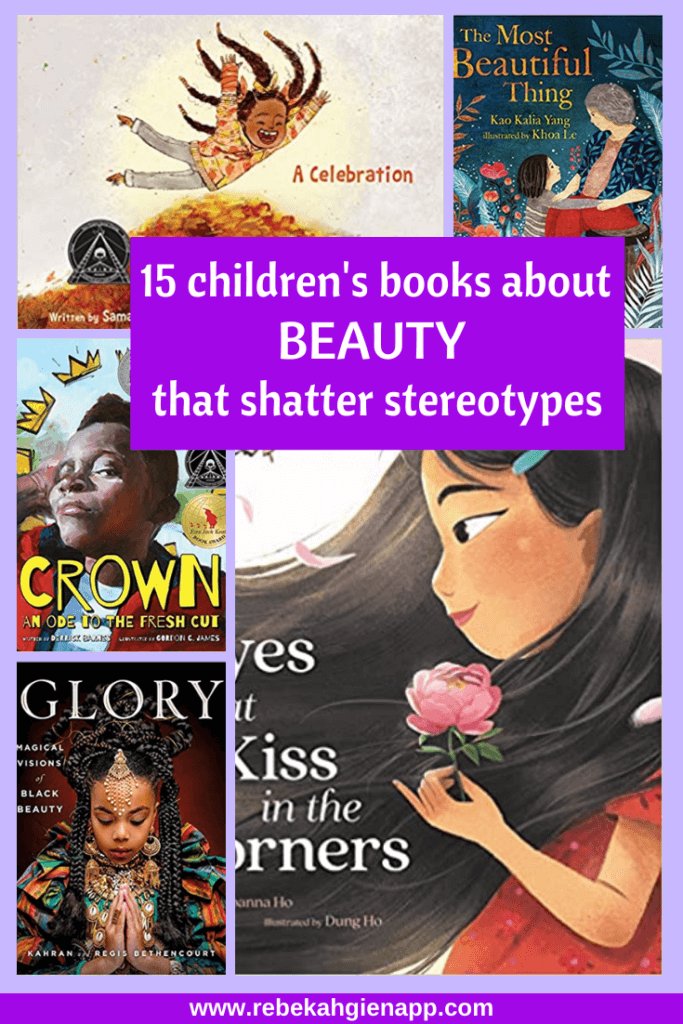
15 stereotype-shattering children’s books about beauty
Disclosure: For your convenience, this post includes affiliate links. If you purchase items through these links, I may earn a small commission at no additional cost to you. I received a free review copy of My Hair is Like the Sun in exchange for my honest review. All opinions are my own. You can read my full disclosure policy here.


My Hair Is Like the Sun by St. Claire Detrick-Jules. Illustrated by Tabitha Brown.
Purchase from Bookshop.org (supports independent bookstores)
This delightful board book celebrates the beauty of natural Black hairstyles through a combination of playful photographs of young children and bold, nature-inspired illustrations. Each page spread reads like an affirming mantra, comparing coils to winding rivers and tight curls to twinkling stars. This book is a must-have for Black families and for early childhood classrooms. (Recommended for ages 6 months to 3 years. Black author.)

Eyes that Kiss in the Corners by Joanna Ho and Dung Ho
Joanna Ho uplifts the beauty of a young Asian girl’s eyes and how they connect her to her family. She does this without repeating hurtful stereotypes about Asian eyes. The child sees how her eyes are like Mama’s, which joyfully “glow like warm tea [and] crinkle into crescent moons” when she cuddles her after coming home from work.
Her eyes are also like her Amah’s (grandmother), whose eyesight has changed but who still holds many important stories in her eyes. They also remind her of her little sister, who looks at her “like I am her best present.” Eyes that Kiss in the Corners is not just a book about beauty; it’s also a book about the deep ties of family love. (#ownvoices, recommended for ages 3 – 7)
Related Post: How to talk to children about anti-Asian racism

Hair Love by Matthew A. Cherry and Vashti Harrison
If you were captivated by Cherry’s short film about a Daddy doing his daughter’s hair, you’ll want to grab this book version of the story.
Today is a very special day, and Zuri’s hairstyle needs to reflect that. She tries to follow a video tutorial, but it’s a little too much. Daddy makes several attempts, but none of them are up to Zuri’s standards. Maybe there’s someone else who can help, even from far away. (#ownvoices, recommended for ages 3 – 7)

The Many Colors of Harpreet Singh by Supriya Kelkar and Alea Marley
Harpreet loves colors, and he especially enjoys using them to express his feelings. When he feels cheerful, he wears a yellow patka (a Sikh turban.) On days he needs courage, he wears red. When Harpreet’s parents tell him they’re moving across the country, he knows he’ll need a lot of courage.
Once school starts, Harpreet wears a white patka over and over, because he wants to feel invisible. Will he ever feel like wearing the other colors again? (#ownvoices, recommended for ages 3 – 7)
Related Post: 12 diverse children’s books about feelings
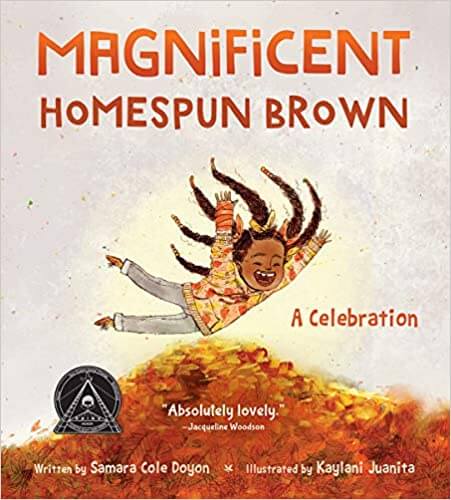
Magnificent Homespun Brown: A Celebration by Samara Cole Doyon and Kaylani Juanita
Reading this book indeed feels like a celebration; it also feels like a warm hug from a loved one while you’re wrapped up in grandmother’s quilt. It proclaims the rich ways that brown shows up in nature, from local honey to to feathery hemlock branches, and how those same shades of brown are in a girl’s lashes, eyes, skin, laughter, and power.
This joyful book affirms the diversity of Black beauty in many ways, including am illustration of a character who has vitiligo. It also weaves together inner and outer beauty with the lushness of the natural world, captivating the reader. (#ownvoices, recommended for ages 3 – 8)

Related Post: 18 thoughtful children’s books about nature and the environment
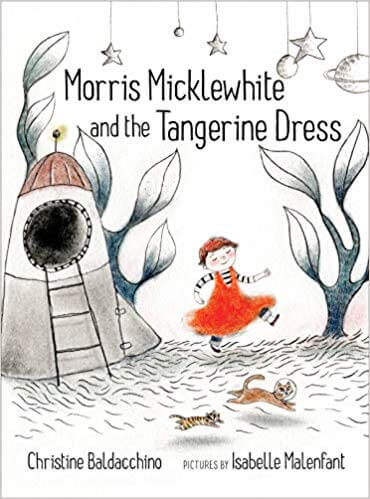
Morris Micklewhite and the Tangerine Dress by Christine Baldacchino and Isabelle Malenfant
When I decide to curate this list of books about beauty, I wanted to include books that expressed how feeling comfortable with ourselves is what makes us beautiful.
Morris loves doing many things at school: painting, doing puzzles, and singing the loudest at circle time. But his favorite thing is to put on the tangerine dress in the dress-up corner. Its color reminds him of tigers, the sun, and his mother’s hair. He loves the swish and crinkle noises the dress makes when he walks.
His classmate Becky tries to pull the dress off of him, insisting that boys can’t wear dresses. The other boys won’t let him ride in their cardboard spaceship because “astronauts don’t wear dresses.” After a few days of this, Morris doesn’t feel so good. His mom lets him stay home from school. Will Morris find a way to be himself, and do the things he loves, when he returns to school? (Recommended for ages 4 – 8)
Related Post: 19 children’s books that defy gender stereotypes

I Love My Hair! by Natasha Anastasia Tarpley and E.B. Lewis
Mama does everything she can to be gentle when she combs Keyana’s hair each night, but sometimes it hurts! Mama wants her to know why she’s so lucky to have the hair she does, which can be made into so many diffrent styles.
Mama’s descriptions of hairstyles are accompanied by imaginative illustrations, with a strand of Keyana’s hair attached to an old-fashioned spinning wheel, and her Afro shining like a planet around her head. The story also discusses how Afros became a symbol of cultural pride and power. (#ownvoices, recommended for ages 4 – 8)

The Proudest Blue: A Story of Hijab and Family by Ibtijah Muhammad, S.K. Ali, and Hatem Aly
The first day of school is exciting for any child, but for Faizah this day is extra special. It’s her big sister Asiya’s first day of hijab. She’s chosen a beautiful ocean-blue fabric, and Faizah feels like she’s walking with a princess on the way to school.
But Faizah becomes nervous when she sees some of the other children pointing and whispering about Asiya. Their mother has told them some won’t understand the hijab and how it’s a sign of strength. What is important is for Asiya to understand that herself. (#ownvoices, recommended for ages 4 – 8)

Barefoot Books’ Children of the World by Tessa Strickland, Kate DePalma, and David Dean
Primarily through its detailed illustrations of children at play, this book challenges stereotypes about gender, physical ability, culture, and family types. One of my favorite page spreads shows dozens of children of different body types, skin tones, and with and without a variety of noticeable physical disabilities. The text tells children that “we come in all different shapes and sizes and hues, like jewels or flowers or fish.”
I can think of few other books that do such a beautiful and subtle job of celebrating the diversity of our world, while also helping children identify what we have in common as people. The illustrations are simply gorgeous, and children will love poring over them! (Recommended for ages 4 – 8)

Not Quite Snow White by Ashley Franklin and Ebony Glenn
Tameika was born a performer, and her favorite place is the stage. The playful illustrations in the first page spread make that quite clear! She’s already played many roles, so she’s delighted to try out for Snow White, the school’s latest musical.
But when Tameika’s overhears classmates comments that she’s too chubby, tall, and brown to play the princess, her confidence begins to falter. Will her parents be able to convince her that she’s “just enough of all the right stuff” to play Snow White? (#ownvoices, recommended for ages 4 – 7)

Sulwe by Lupita Nyong’o and Vashti Harrison
We need more children’s books about beauty that addresses colorism like this one does. Sulwe’s skin is “the color of midnight,” but she longs to have the light brown skin of her sister Mich. Children at school give Sulwe cruel nicknames, and she does everything she can think of to lighten her skin.
Sulwe’s mother tries to convince her of her beauty, but it’s not until a star appears in her window that things begin to shift. The star tells her the story of the sisters Day and Night, who were also treated differently because of their colors. After Night runs away, both she and Day discover how needed and beautiful she is. (#ownvoices, recommended for ages 4 – 8)

The Most Beautiful Thing by Kao Kalia Yang and Khoa Le
This moving story is based on the author’s childhood as a Hmong refugee. Caring for her grandmother, who is so old that no one even knows her age, is a cherished part of her day. Some of her grandmother’s stories about her own childhood, such as looking into the eyes of a tiger, feel almost other-worldly.
Grandma’s life was very hard, especially after she became an orphan. The young girl sometimes struggles with her own sadness at her family’s poverty. In those times, it’s usually her grandmother’s smile that encourages her. But when she becomes dissatisfied with her crooked teeth, she’s impatient with her parents’ explanation that they can’t afford dental work. It’s her grandmother’s wise words that help her transform her ideas about what makes a person beautiful. (#ownvoices, recommended for ages 5 – 9)

Crown: An Ode to the Fresh Cut by Derrick Barnes and Gordon C. James
Reading Derrick Barnes’ author’s note brought tears to my eyes. He writes about the way that the barbershop is a rare place where black and brown boys are affirmed. When they look in the mirror at the barbershop, he says, “they wish that everyone could see what they see: a real life, breathing, compassionate, thoughtful, brilliant, limitless soul that matters – that desperately matters.”
The story and illustrations themselves are filled with joy, showing how the barbershop is a place where Black boys are treated like royalty, where they receive their crowns. The child in the chair sees not only all he is, but the majesty of the other people in the shop as well. (#ownvoices, recommended for ages 6 – 10)
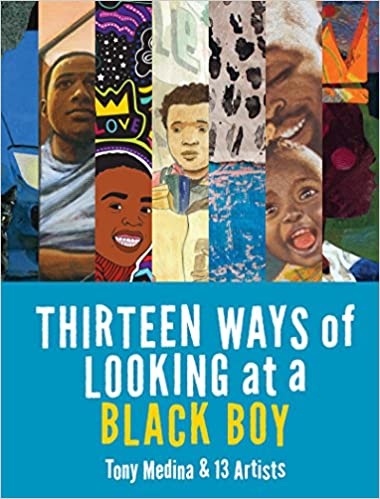
Thirteen Ways of Looking at a Black Boy by Tony Medina and 13 Artists
The illustrated poems in this collection uphold the complex lives of Black boys, who are “three dimensions of beauty” (unlike mainstream media sources’ biased and narrow portrayals.) From a joyous toddler proudly sporting a “fly bow tie like wings” to a kid running to catch the bus he’s chased many times before, these snapshots make the reader feel like they’re standing next to each boy. This book is also a great way to introduce children to poetry and the different forms it can take. (#ownvoices, recommended for ages 7 – 11)
Related Post: 15 books to help children understand Black Lives Matter

Love Your Body by Jessica Sanders and Carol Rossetti
This guide sends girls the message that “all bodies are good bodies” as much through its illustrations as it does through its text. There are girls of many different skin tones, a girl who uses a wheelchair and another with a prosthetic leg, thin girls, fat girls, girls in bathing suits, and a girl in hijab.
Readers are encouraged to admire their bodies for all the amazing things they can do, not just their appearance. There are also numerous suggestions on how to practice self care, especially during times when girls experience negative feelings about their bodies. (Recommended for ages 8 – 12)
Related post: 12 body positive children’s books that celebrate plus size characters

Glory: Magical Visions of Black Beauty by Kahran and Regis Bethencourt
This stunning photography book showcases both the inner and outer beauty of Black children around the world. As I leafed through the pages, Eurocentric stereotypes about how Black children should look were shattered. Through complex natural hairstyles and gorgeous clothing, the children express how they see themselves in a world that often refuses to see them at all.
I also highly recommend the book as a way to introduce children to youth activism, since they’ll meet so many kids who are changing the world. (#ownvoices, recommended for ages 10+ for text, ages 6+ for photographs)