
Even though nearly 19% of Americans are Latine, only 6 percent of the children’s books published in 2022 starred at least one Latine character. These statistics clearly don’t represent equity for Latine children yet, but they do show significant progress over the past decade. (In 2014, less than 2% of the children’s books published were about Latine characters.)
Whether you want to provide Latine children with books that are mirrors of their lives, or give non-Latine children windows into other children’s worlds, read on for our favorite fiction and non-fiction picture books starring Latine kids and adults.
(For an explanation of the use of the word “Latine” versus “Latinx” in order to be gender inclusive, see this article.)
Table of contents (click on the bold text to jump directly to that section)
- Contemporary fiction: Latino/e children’s picture books
- Non-fiction and historical fiction: Latino/e children’s picture books


Disclosure: For your convenience, this post includes affiliate links. If you purchase items through these links, I may earn a small commission at no additional cost to you. I received complimentary review copies of Ways Papi Says I Love You, and Mi Casa Is My Home from their publishers in exchange for my honest review. All opinions are my own. You can read my full disclosure policy here.
Great Latine Children’s Contemporary Fiction Books
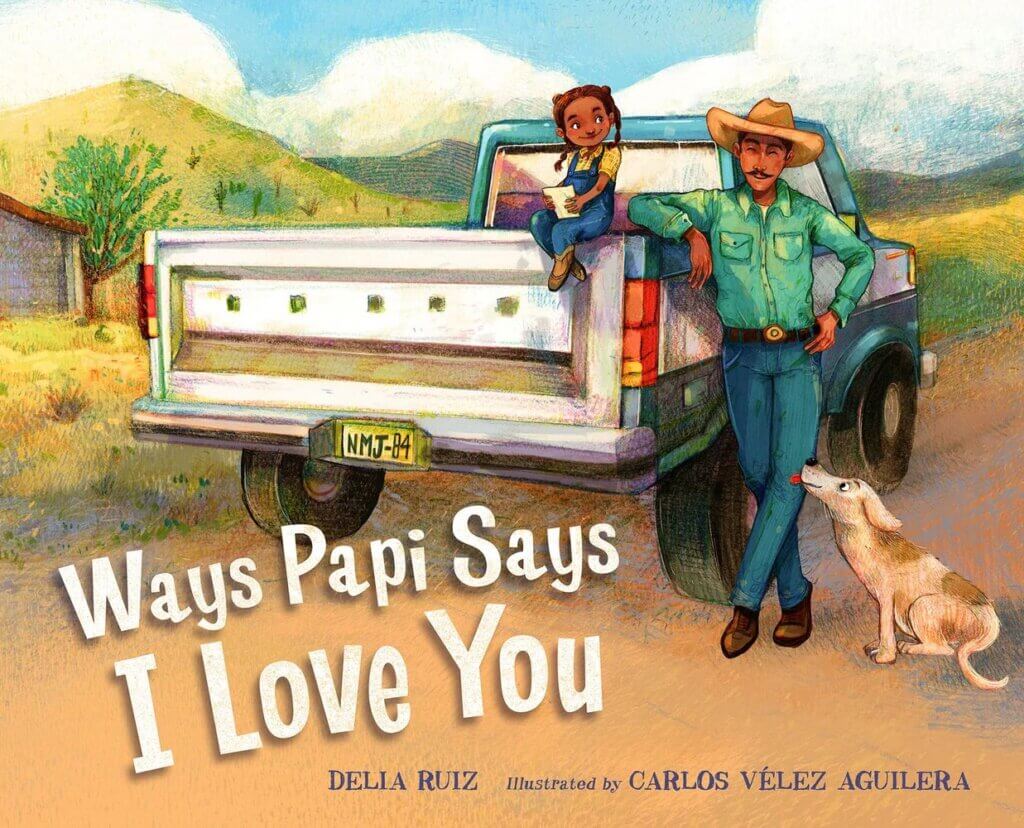
Ways Papi Says I Love You by Delia Ruiz. Illustrated by Carlos Vélez Aguilera.
Purchase from Bookshop.org (supports independent bookstores and my business!)
In this heartwarming story, young readers are reminded that a father’s love can be expressed in so many more ways than just saying “I love you.” Maricruz’s Papi works from sunup to sundown during the week, but on the weekends he turns mundane errands into true adventures for his young daughter.
As they ride through a muddy arroyo, Maricruz is delighted to be splashed with muddy water while the old truck bumps up and down. Papi’s already expressed his love by reminding Maricruz to fasten her cinturón, as well as to agárrate bien (hold on tight!), allowing her to focus on fun without worrying about being hurt.
During their trip through a rural southwestern community, they speak to family members and neighbors and enjoy the beautiful scenery, brought to life by Aguilera vividly colored illustrations. What makes the day the most special is Papi’s quiet encouragement of Maricruz, and his enjoyment of their time together. (Recommended for ages 3 – 7. Mexican American author.)
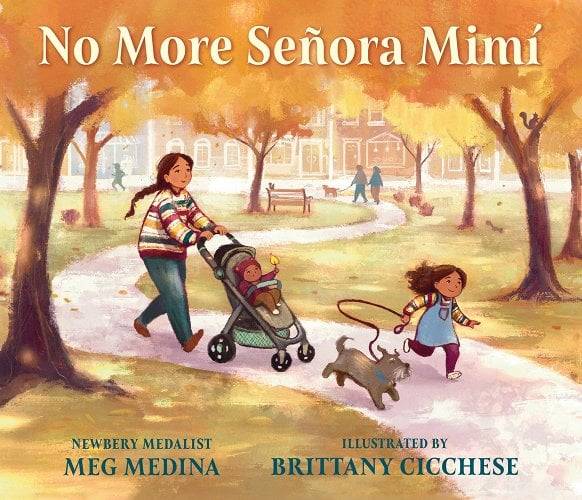
No More Señora Mimi by Meg Medina. Illustrated by Brittany Cicchese.
Purchase from Bookshop.org (supports independent bookstores and my business!)
In this pitch-perfect tale of a young girl’s last day under the care of her beloved babysitter, little Ana is first focused on how wonderful it will be to have her Abuela come live with her. When Abuela is taking care of her, she’ll let Ana play on the walk to school (unlike Señora Mimi.)
But when Ana realizes that Abuela’s arrival means she won’t see Señora Mimi every day, she’s overcome with sadness. Fortunately, Señora Mimi knows how to help Ana process her big feelings – even as she has some of her own about this change in their relationship. (Recommended for ages 3 – 7. Cuban American author.)
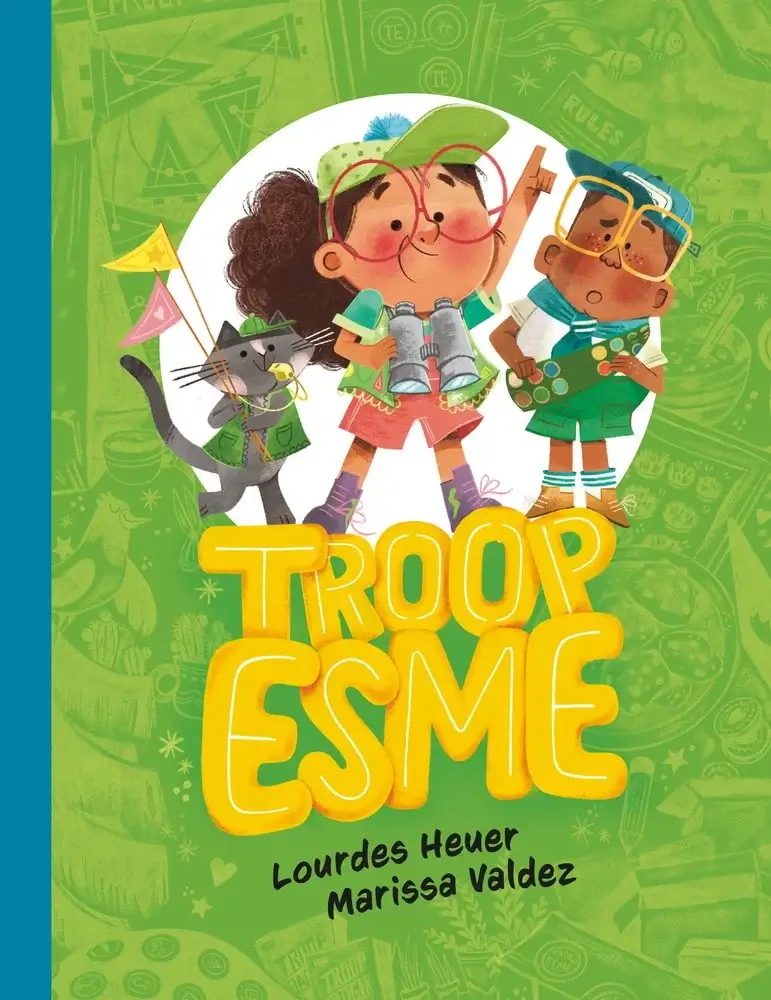
Troop Esme by Lourdes Heuer and Marisa Valdez.
Purchase from Bookshop.org (supports independent bookstores and my business!)
I fell in love with exuberant Esme and her fast-paced problem solving within the first pages of this book. The expressive full color illustrations of Esme, her friends, neighbors, and her poor cat are full of Esme’s energy and positivity.
When Wendall shows up at Esme’s door selling cookies for Troop Badger, he needs just one more sale to get his cookie badge. Esme is determined to help him make a sale in her building, while also coming up with how her own “Troop Esme” will work. While the Badgers’ motto is “dedication, precision, excellence,” Esme thinks that sounds way too time-consuming. Instead, she’s thinking of “stickers, luck, friendship.” But when some of her neighbors decline to buy cookies, Esme and Wendall will have to demonstrate a lot of dedication if he’s going to earn his Cookie Empresario badge. (Recommended for ages 4 – 8. Spanish American author.)
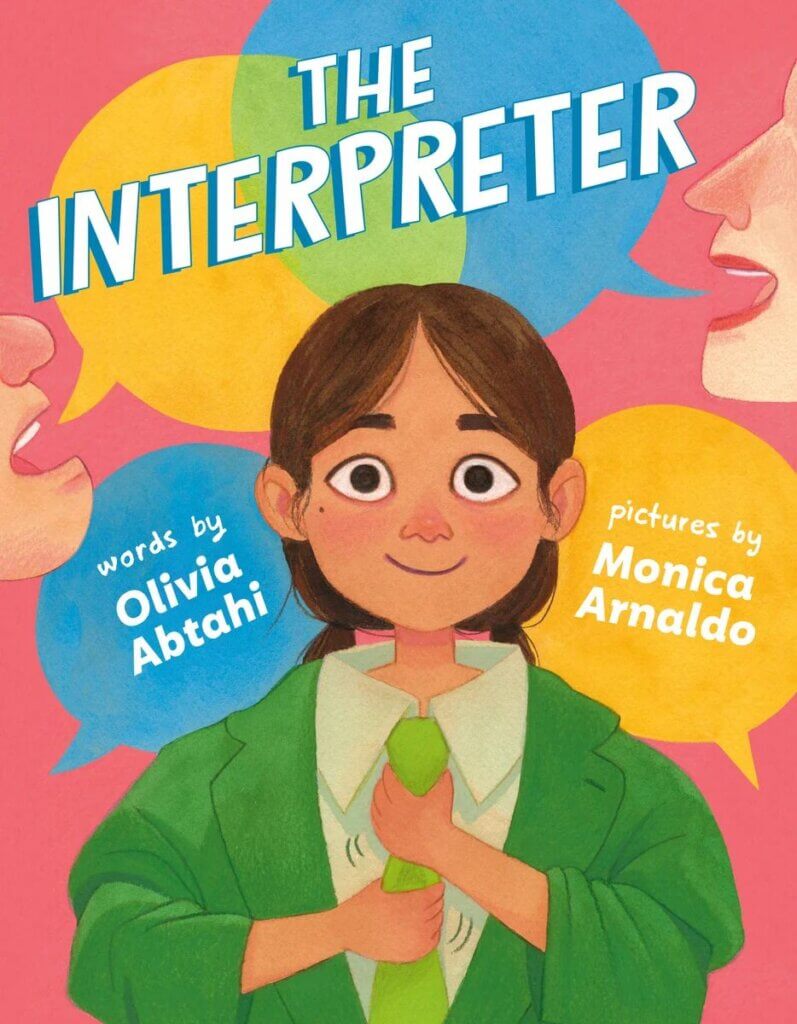
The Interpreter by Olivia Abtahi. Illustrated by Monica Arnaldo.
Purchase from Bookshop.org (supports independent bookstores and my business!)
Most kids have just one job: being a kid. But Cecilia has a second job that no one ever acknowledges: being an interpreter for her parents. Readers get hints that this is a grown-up’s job as Cecilia dons a huge green suit that bunches around her shoes. Still, most of the time she’s happy to support her parents this way.
But other times, she just wants to play soccer and hang out with her friends. When a teacher at parent teacher conferences asks Cecilia how she is doing (not how her parents are doing), her feelings about always having to interpret pour out of her. Will her family be able to find a solution that works for everyone? (Recommended for ages 4 – 8. Iranian Argentinian American author.)
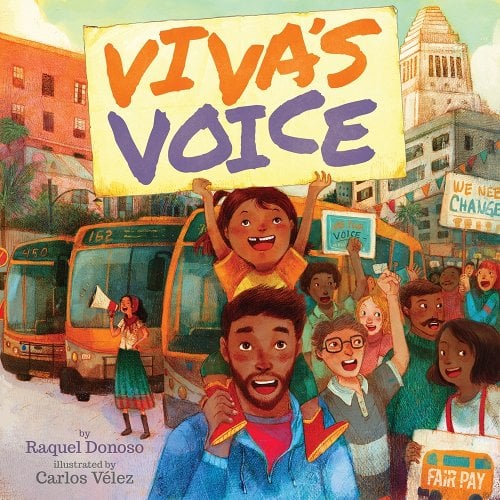
Viva’s Voice by Raquel Donoso. Illustrated by Carlos Velez.
Purchase from Bookshop.org (supports independent bookstores and my business!)
Inspired by the author’s experience of accompanying her father on the picket line, Viva’s Voice stars a child whose voice is always the “mightiest” one in the room. Papi’s voice, by contrast, is almost always quiet.
When summer break begins, Viva can’t wait to go with Papi on one of his bus routes. When she discovers that he is on strike, she begs to go with him to a protest, promising that she won’t be disruptive. He agrees, and Viva finds herself energized by the crowd. After she discovers that Papi is nervous about the big speech he’s supposed to give, Viva is ready to support him. (Recommended for ages 4 – 8. Latina author.)
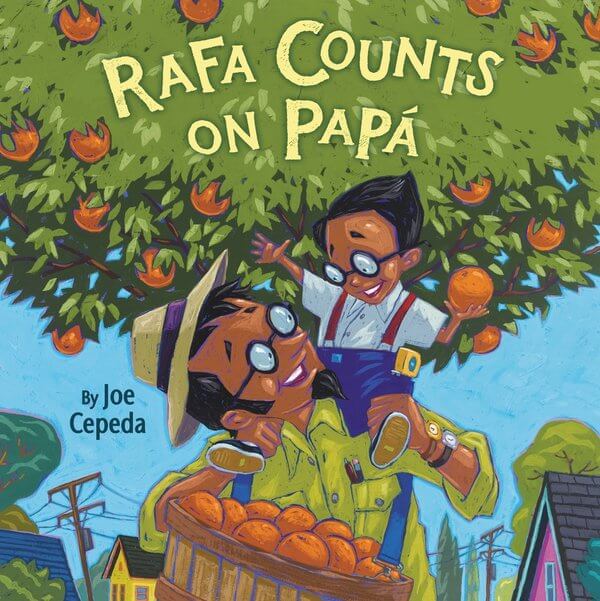
Rafa Counts on Papá by Joe Cepeda.
Purchase from Bookshop.org (supports independent bookstores and my business!)
Rafa and his Papá are happiest when they are measuring things precisely, whether that’s the distance they can run in 22 minutes, or how high their dog Euclid can jump. But when Rafa wants to know if love can be measured, especially the amount of love Papá has for him, how will Papá answer?
As with all of Joe Cepeda’s illustrations, the art in this book crackles with energy and humor. (Recommended for ages 3 – 7. Chicano author.)
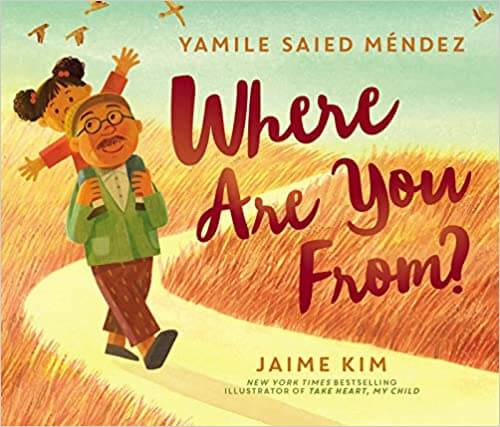
Where Are You From? by Yamile Saied Méndez. Illustrated by Jaime Kim.
Purchase from Bookshop.org (supports independent bookstores and my business!)
A grandchild of immigrants is confused by people constantly asking “where are you from? No, where are you really from?” When she asks her Abuelo the question, his answer is expansive and beautiful, taking her to the open free land of the Pampas and to the warm, blue oceans edged by elegant palm trees. (Recommended for ages 3 – 7. Argentinian American author.)

Grandma and Me at the Flea/Los Meros Meros Remateros by Juan Felipe Herrera. Illustrated by Anita DeLucio-Brock.
Purchase from Bookshop.org (supports independent bookstores and my business!)
Early every Sunday morning, Juanito and his abuela pack up gently used clothing and other treasures to sell at the flea market. He can’t wait to see his friends and explore all the booths. Grandma frequently sends him to other vendors to give them things they need – from healing herbs to a letter to a landlord written in English.
The incredible network of reciprocity that exists between people at the market is slowly revealed, as other vendors tell Juanito what their grandmother has done for him. Many others send Juan back with special items for her: a blanket the color of peacock feathers, a horseshoe belt buckle, and a copper bracelet for her rheumatism. This is a lovely tale of community and finding the beauty in things that are not shiny new on a store shelf. (Recommended for ages 5 – 9. Mexican American author.)
Never struggle to find the right diverse, anti-bias, or social justice children’s book again!

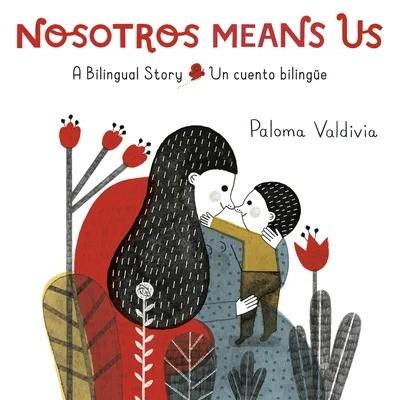
Nosotros Means Us: A Bilingual Story/Un cuento bilingüe by Paloma Valdivia.
Purchase from Bookshop.org (supports independent bookstores and my business!)
A sweet Spanish/English story that celebrates the enduring bond between mother
and child, Nosotros Means Us imagines the pair as bear and cub, mole and
pup living underground, and rabbit and bunny. One day, the bunny hops away so it
can become whatever it wants to be. When the bunny returns, transformed, mother
rabbit has changed as well. Still, none of these changes will affect their love
for each other. (Recommended for ages 2 – 5. Chilean author.)
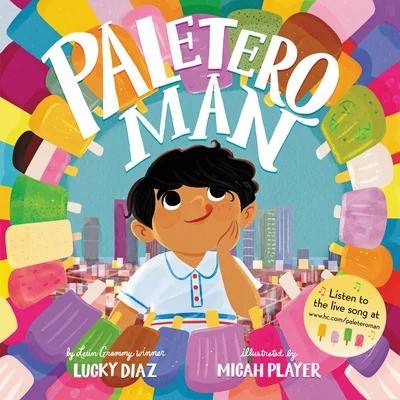
Paletero Man by Lucky Diaz. Illustrated by Micah Player.
Purchase from Bookshop.org (supports independent bookstores and my business!)
Children’s musician Lucky Diaz has written a delightful celebration of Los Angeles in summer, with its inviting sights, sounds, smells, and most of all tastes. In the hottest month of L.A., a child sets out in search of Paletero José, knowing that his icy treats are the only thing he needs. He passes by many other places he might normally stop – the Korean BBQ stand, the bike shop, and the tamale cart. But when he finally locates Paletero José, the boy discovers that his dinero is missing. Will he have to forgo the delicious paleta? (Recommended for ages 3 – 7. Mexican-American author.)
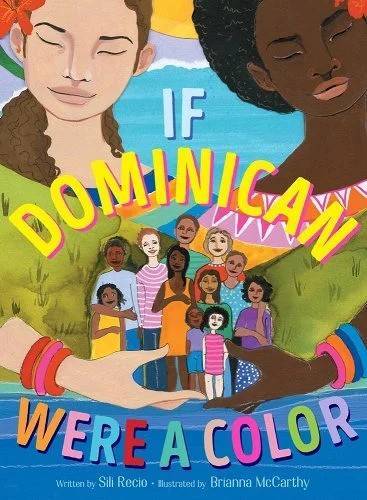
If Dominican Were a Color by Sili Recio. Illustrated by Brianna McCarthy.
Purchase from Bookshop.org (supports independent bookstores and my business!)
Through rhyming text and vibrant illustrations, the many colors of the Dominican Republic and its people come alive. The story alternates between celebrating the colors of nature and culture and the diverse hues of Dominican people.
Recio describes Dominican color as “the blazing red sunset,” “cinnamon in your cocoa,” and the contrasting “mahogany skin” and “yellow tint” of two grandmas. This is both a beautiful book and a necessary antidote to narrow ideas children may have learned about Latine identities. (Recommended for ages 3 – 7. Afro-Dominican-American author.)
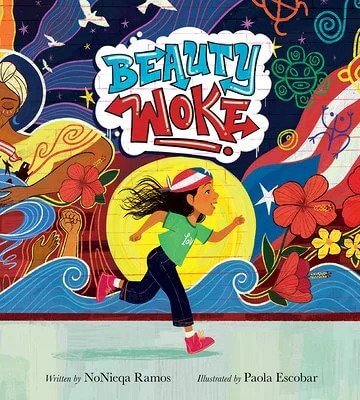
Beauty Woke by NoNieqa Ramos. Illustrated by Paola Escobar.
Purchase from Bookshop.org (supports independent bookstores and my business!)
With striking artwork reminiscent of street murals and magical text peppered with plenty of Spanish phrases, Ramos has taken the tale of Sleeping Beauty in a stunning new direction. When Beauty is born, la doctora warns her parents to “keep Beauty close. The world ain’t woke.” Her entire family and community take every chance they have to fill her with pride that she is Borinquen.
Before the first day of school, Abuela instructs Beauty to lay her hand atop her head and “say Taino Indian, say African. Lay your hand on your heart. Say Boricua.” Beauty feels her strength and the gold that Abuela says runs through her veins, until one day the media’s negative images of people like her pierce her heart. Will Beauty awake from the slumber that the world has placed her in? (Recommended for ages 4 – 8. Puerto Rican author.)
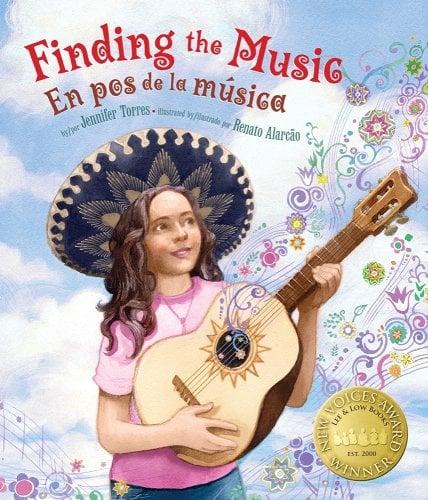
Finding the Music/En pos de la música by Jennifer Torres. Illustrated by Renato Alarcão.
Purchase from Bookshop.org (supports independent bookstores and my business!)
Before she opens her restaurant each day, Reyna’s mamá lovingly touches the vihuela, the instrument Reyna’s abuelito played in his mariachi band. Reyna never had the chance to hear abuelito play, but mama misses it so much. When Reyna accidentally damages the vihuela, she goes in search of someone who can help her repair it. Along the way, she learns more about the people who were touched by her abuelito and his music. (Recommended for ages 5 – 9. Mexican-American author.)

Grandma’s Records by Eric Velasquez
Purchase from Bookshop.org (supports independent bookstores)
“Sometimes,” Eric’s grandma tells him, “a song can say everything that is in your heart as if it was written just for you.”
Listening to records with Grandma each day is Eric’s favorite part of summer break. There’s one song in particular that always makes Grandma close her eyes and put her hand over her heart. He loves to watch her reaction, but he doesn’t really understand why the song moves her so much until her nephew and his band arrive from Puerto Rico to perform in New York. (Recommended for ages 5 – 9. Afro-Puerto Rican author.)
Related Post: 12 middle grade children’s books for Latino/Hispanic Heritage Month

Mi Casa Is My Home by Laurenne Sala and Zara González Hoang
Purchase from Bookshop.org (supports independent bookstores)
Young Lucia welcomes readers into her cozy, friendly, multigenerational home, where Spanish and English are intermingled. Things are very busy in her casa, from the sala where she builds blanket forts to keep out the light (and the hermanos) to the cocina where Mamá performs cooking milagros.
I appreciated that the story didn’t get bogged down with translating Spanish phrases. Lucia just speaks to us like she would a friend as she gives us a tour of her home. Children who don’t speak Spanish will be able to figure out most of the words from clues in the pictures and texts. (Recommended for ages 4 – 8. Puerto Rican author.)
Related Post: 11 fun children’s books that teach Spanish vocabulary

Alma and How She Got Her Name by Juana Martinez-Neal
Purchase from Bookshop.org (supports independent bookstores)
Alma Sofia Esperanza José Pura Candela thinks her name is just too long. She can’t even fit it on a piece of paper! Her father decides to tell her the story of her name, so that she can determine whether it fits.
As Daddy shares the story of each family member that she is named after, Alma sees that each person’s name does describe a part of who she is, or what she wants to do. I love how the playful pictures capture each family member’s essence. In the end, Alma realizes that her name tells a story that she’s eager to share with others. (Recommended for ages 3 – 7. Peruvian author.)
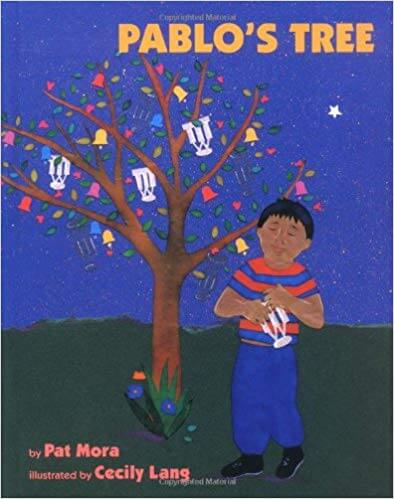
Pablo’s Tree by Pat Mora and Cecily Lang
Purchase from Bookshop.org (supports independent bookstores)
Each year, Pablo cannot wait for his birthday visit with his Abuelito. He can’t stop asking his mother how Lito decorated his tree this year. Pablo plans to sit under the tree all day long and play with his new birthday toys.
Grandpa is eager to tell the Pablo the story of his tree, which Pablo has forgotten. As soon as Pablo’s mother told her father she was going to adopt a baby, Lito bought a tree from the nursery. While they waited for news about the baby, Lito scouted out the perfect spot for the new baby’s tree. When baby Pablo finally arrived, Lito planted his tree while Pablo and Mama watched. (Recommended for ages 3 – 7, Mexican-American author.)
Related Post: 12 Engaging Children’s Books about Mexico

I Love Saturdays y domingos by Alma Flor Ada and Elivia Savadier
Purchase from Bookshop.org (supports independent bookstores)
A little girl shares about her special time with her grandparents that happens every weekend. On Saturdays, she spends time with Grandpa and Grandma, who are white. On domingos, she is with her Abuelito y Abuelita, who are Latinx.
Each page spread tell us parallels about what she does with each side of her family, from the pets she plays with to the family history she learns. The pages about her Abuelito and Abuelita are sprinkled with Spanish words and phrases. (Recommended for ages 4 – 8, Cuban-American author.)
Related Post: Best Children’s Books about Guatemala

What Can You Do with a Rebozo? ¿Qué puedes hacer con un rebozo? by Carmen Tafolla and Amy Córdova
Purchase from Bookshop.org (supports independent bookstores)
For centuries, Mexican woman have know there are so many things you can do with a rebozo (shawl.) In this story, a little girl recounts how her mother and even their whole family use her rebozo in countless ways.
While she and her baby brother play hide and seek with a blue rebozo, her big sister ties a red one in loops through her shiny hair. On her birthday, they use the rebozo to cover her eyes while she swings at a piñata. It can even become a flying cape for a superhero on Halloween! (Recommended for ages 3 – 7. Chicana author. bilingual English/Spanish edition)

Kitchen Dance by Maurie J. Manning
Purchase from Bookshop.org (supports independent bookstores)
Many children suspect that after they go to bed, their parents have a party. In Kitchen Dance, this is kind of true! A little girl wakes up her brother after she hears all kinds of noises coming from the kitchen. They spy their father twirling their mother across the room, as they also put away the dishes.
Papa sings her a love song into a wooden spoon, until they notice the peeking faces in the door. Then the children also become part of the dance and love song. (Recommended for ages 3 – 7)
Related Post: Best children’s books and activities to learn about Brazil

Inspiring non-fiction and historical fiction children’s books that tell Latine stories
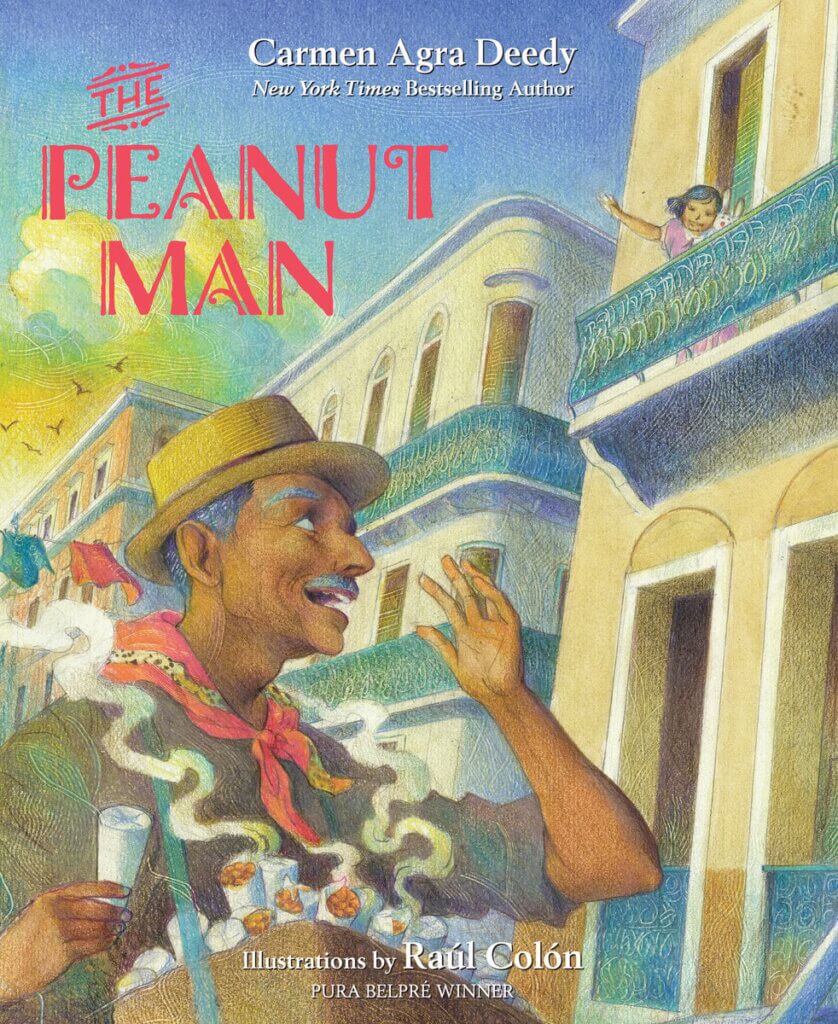
The Peanut Man by Carmen Agra Deedy. Illustrated by Raúl Colón.
Purchase from Bookshop.org (supports independent bookstores and my business!)
In 1960s Havana, Coqui loves playing silly games with Emilio el manisero (the peanut man). But one night, instead of making faces at Emilio from her window, Coqui’s is listening to her mother’s news that they have to leave for the United States. Her father is a man with opinions that the authorities consider dangerous.
The peanut man comforts her by telling her that the States will have both liberty and baseball. Though Coqui is devastated to leave her home, baseball becomes an anchor for her in their Atlanta home. She becomes a huge Hank Aaron fan and is delighted when her father gets her Braves’ tickets for her birthday. Little does Coqui know that something even better than seeing Aaron play awaits her at the ballpark. (Recommended for ages 5 – 9. Cuban American author.)
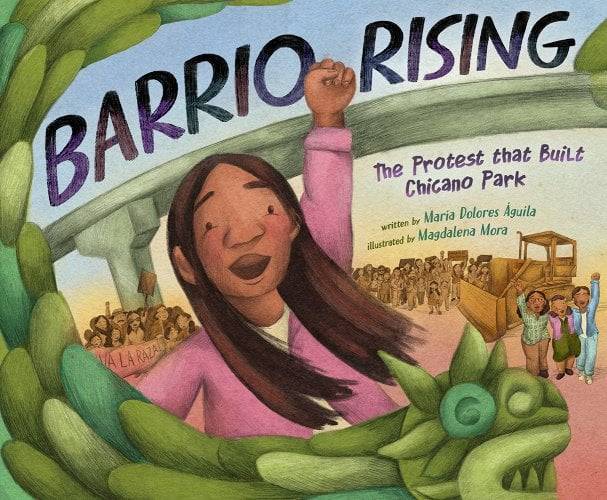
Barrio Rising: The Protest That Built Chicano Park by María Dolores Águila. Illustrated by Magdalena Mora.
Purchase from Bookshop.org (supports independent bookstores and my business!)
In 1970, residents of one of the oldest Chicano neighborhoods in San Diego discovered that construction crews in their neighborhood were not building the park they’d requested for years. They were instead building a police station.
In this moving account of the protests that followed, a young girl, repeatedly encouraged by her mother to “sé valiente” (be brave), joins the crowds of people who form a human chain around the construction equipment. Later they take part in many forms of protest, despite city officials’ scoffing.
Emotion-filled illustrations in shades of green, pinks, and purples bring both the city’s neglect of the neighborhood and the beauty the people create to life. I especially appreciate that unlike many children’s books about social change, this one focuses on the movement itself, rather than choosing one or two heroes to uplift. (Recommended for ages 5 – 9. Chicana author.)
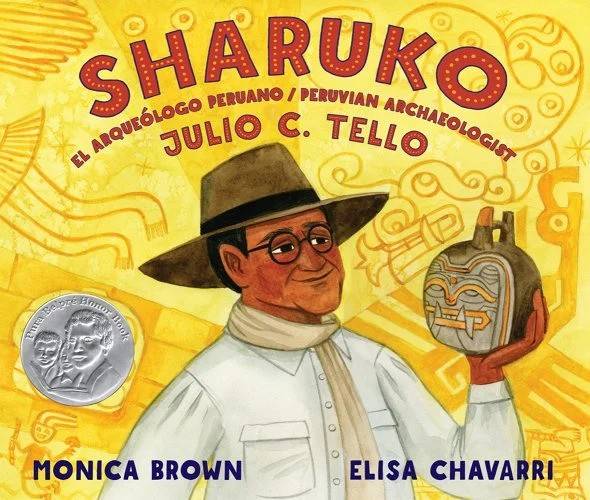
Sharuko: El Arqueólogo Peruano Julio C. Tello/Peruvian Archaeologist Julio C. Tello by Monica Brown. Illustrated by Elsa Chavarri.
Purchase from Bookshop.org (supports independent bookstores and my business!)
At a time when the field of archaeology was dominated by white men who told the stories of ancient peoples as outsiders, Julio C. Tello became the world’s most prominent Indigenous archaeologist. Tello, who grew up speaking Quechua in his Indigenous Peruvian family, began exploring ancient tombs long before he had any formal training.
Sharuko not only tells the story of Tello’s discoveries, but also explains how Spanish exploitation of Peru attempted to destroy Indigenous cultures. After completing his education, Tello (nicknamed “Sharuko” because of his bravery), discovered that ancient peoples in his country completed successful brain surgeries and healed diseases. His work was the first to establish that Indigenous cultures in Peru were much older than previously thought. (Recommended for ages 6 – 10. Peruvian-American author.)
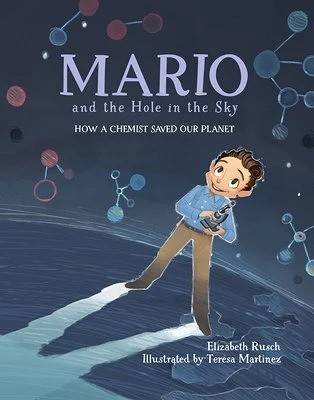
Mario and the Hole in the Sky: How a Chemist Saved Our Planet by Elizabeth Rusch. Illustrated by Teresa Martinez.
Purchase from Bookshop.org (supports independent bookstores and my business!)
Mario Molina’s family may not have always understood their child’s scientific explorations, but they supported them. His parents let him turn an unused bathroom in their home into a lab, and his chemist aunt gave him extra supplies he would need. Mario began his chemistry career at a time when more and more household products had new chemicals in them, and he wondered about their safety.
Molina’s research eventually led to the discovery that CFCs were affecting the earth’s atmosphere. He and a colleague were determined to make the press and elected officials understand that this was a crisis that could endanger the entire planet. Rusch carefully breaks down both the science and politics in Molina’s story while keeping the story engaging and hopeful.(Recommended for ages 6 – 10. White author.)
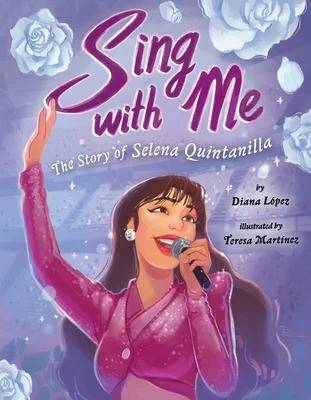
Sing with Me: The Story of Selena Quintanilla by Diana Lopez. Illustrated by Teresa Martinez.
Purchase from Bookshop.org (supports independent bookstores and my business!)
Tejano singer Selena Quinanilla may have had a short career because of her untimely death, but her impact on the world of Latin American music was huge. This engaging biography takes readers back to her first band, Selena y los Dinos, which performed in her family’s restaurant.
As Selena’s music career began to take off, fans often requested Tejano songs that she couldn’t perform because she didn’t know Spanish. Through careful study, she began to learn, only to be told by Tejano musicians that there was no room for female performers. Still, she carved out her own space and by age 12 had already recorded her first song. At every performance, fans knew that she would encourage them to “canta conmigo!” (sing with me.) (Recommended for ages 4 – 8. Latine author.)
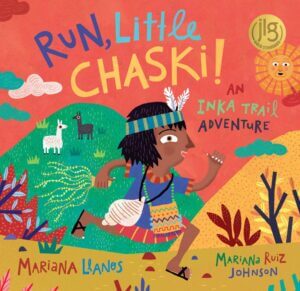
Run Little Chaski! An Inka Trail Adventure by Mariana Llanos and Mariana Ruiz Johnson
Purchase from Bookshop.org (supports independent bookstores)
Follow little Chaski back to the ancient Inka empire, where he’s taken on an important job: being the king’s messenger. The queen gives him his first message to deliver, stressing how important it is that he not be late. Chaski is both a fast runner and steadfast to this mission, but he keeps being delayed because of animals who need his help. (The illustrations in the story practically crackle with action as the boy’s adventure unfolds.)
When little Chaski fears that he has failed his mission, his new animal friends find surprising ways to help him. (Recommended for ages 4 – 8. Peruvian author.)

Drum Dream Girl by Margarita Engle and Rafael López
Purchase from Bookshop.org (supports independent bookstores)
This illustrated poem was inspired by Millo Castro Zaldarriaga, a Chinese-African-Cuban girl. In the 1930s, she broke the cultural taboo that only men could play drums. The illustrations of her dreams of drumming are magical; I wanted to dive right into the pages of the book.
For a long time, the girl must only drum in her dreams, or inside herself as she walks through town. When her gift reveals itself to her family, her father has to decide how to respond. (Recommended for ages 4 – 8, Cuban-American author.)

La Frontera: El viaje con papa/My Journey with Papa by Deborah Mills, Alfredo Alva, and Claudia Navarro
Purchase from Bookshop.org (supports independent bookstores)
La Frontera tells the true story of how Alfredo Alva and his father immigrated from Mexico to the U.S without papers.
When his grandfather becomes too old to make the daily 5 mile trip with his father to work in the pine tree forest, Alfredo and his family start to go hungry. His father decides that he and Alfredo must go to America where he can earn more, while the other children will stay behind with his mother.
During their journey, we not only witness their hardships. We also see how Alfredo’s father encourages him with warmth and humor through their difficult journey. The book includes several pages of illustrated educational notes that help children explore important questions about why people immigrate and what their experiences are like. (Recommended for ages 5 – 10, Mexican-American author, bilingual English/Spanish edition)

Planting Stories: The Life of Librarian and Storyteller Pura Belpré by Anika Aldamuy Denise and Paola Escobar
Purchase from Bookshop (supports independent bookstores)
Who are libraries for? Today, most of us who quickly say “everyone!” But in 1921, when Puerto Rican immigrant Pura Belpré applied for a job at the New York City public library, many Spanish-speaking families did not think the library would welcome them.
As a bilingual assistant, Belpré was eager to share the Puerto Rican folktales her grandmother told her as a child. She filled children with delight as she recounted the tales during library story hours. This creative librarian even began making her own puppets to make the stories even more captivating. Yet when she looked on the shelves of the massive library, there were not any children’s books in Spanish.
She wrote her own children’s book, so that she could keep planting story seeds. Soon she was traveling far beyond the library and even across the country, to tell the stories that were so precious to her. (Recommended for ages 3 – 7. Latina author.)

Funny Bones: Posada and His Day of the Dead Calaveras by Duncan Tonatiuh
Purchase from Bookshop.org (supports independent bookstores)
If you’ve ever been to a Mexican Day of the Dead celebration, you’ve probably seen calaveras. They’re skeletons who perform everyday activities, celebrating the joy and humor of life.
Funny Bones tells the story of the calaveras and of their most famous creator, José Guadalupe Posada. Posada was also an artist, poet, and political cartoonist. His poems and etchings were especially in demand during el Dia de Muertos celebrations.
Tonatiuh produces several examples throughout the book, asking thoughtful questions about what Posada was trying to communicate in the skeleton art. He also shows how Posada used his art to criticize powerful political leaders. My favorite page is the last. It asks what today’s calaveras would look like, showing skeletons on scooters and with drum sets. (Recommended for ages 7 – 11, Mexican-American author.)

Turning Pages: My Life Story by Sonia Sotomayor and Lulu Delacre
Purchase from Bookshop.org (supports independent bookstores) |
As Supreme Court Justice Sonia Sotomayor tells children her life story, she emphasizes the power of the written word again and again. Learning to read in English was not easy for her, but her love of books prompted her to keep trying.
From the poems that her grandmother recited about life in Puerto Rico, to the Bible, to science fiction, “books were lenses, bringing into focus truths about the world around me.” Children slowly see her worldview taking shape, as she realizes that people who get into trouble still deserve to be treated fairly under the law. (Recommended for ages 7 – 11, Puerto Rican author.)
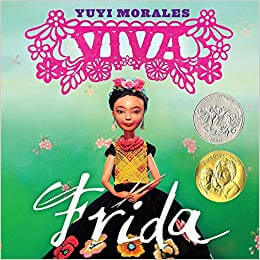
Viva Frida by Yuyi Morales
Purchase from Bookshop.org (supports independent bookstores)
There are several good children’s books about the ground-breaking Mexican artist Frida Kahlo. I chose Yuyi Morales’ book because the artwork, made with stop motion puppets, is riveting for children of all ages.
Where did Frida’s art come from? Morales shows us how it emerged from who she is, how she sees and dreams, and how she lives. This unique book is sure to inspire many children to follow in Frida’s footsteps to become artists. (Recommended for ages 3 +, Mexican-American author. Bilingual English and Spanish edition)

Roberto Clemente: Pride of the Pittsburgh Pirates by Jonah Winter and Raúl Colón
Purchase from Bookshop.org (supports independent bookstores)
As a child growing up in Puerto Rico, Roberto Clemente was so determined to play baseball that he carved his first bat from a guava tree branch and sewed his first glove from a coffee bean sack.
He soon became used to winning at baseball, so being recruited to play for the last place Pittsburgh Pirates was a new experience for him. Though it didn’t take long for him to become a fan favorite, reporters had many racist and disrespectful things to say about this Afro-Latinx player.
Winter and Colón capture not only why Clemente was a remarkable athlete, but also how large his heart was for the people of Puerto Rico, and people throughout Central America. (Recommended for ages 6 – 10)
One response to “31 Engaging Picture Books Starring Latine Characters”
Just wanted to say thanks for all the awesome lists! I’m trying hard to expand my toddlers’ world view as we do not live in a diverse area. I’ve been pleasantly surprised at 1- how many books I’ve never heard of 2- how many are at my local library! I’m currently waiting to preview a bunch of multicultural Christmas books you recommended plus my library was really receptive to purchasing additional books that they didn’t have. White moms gotta do our part to educate the next generation and I rely on lists like yours to know what is quality. Thanks for the great website!!