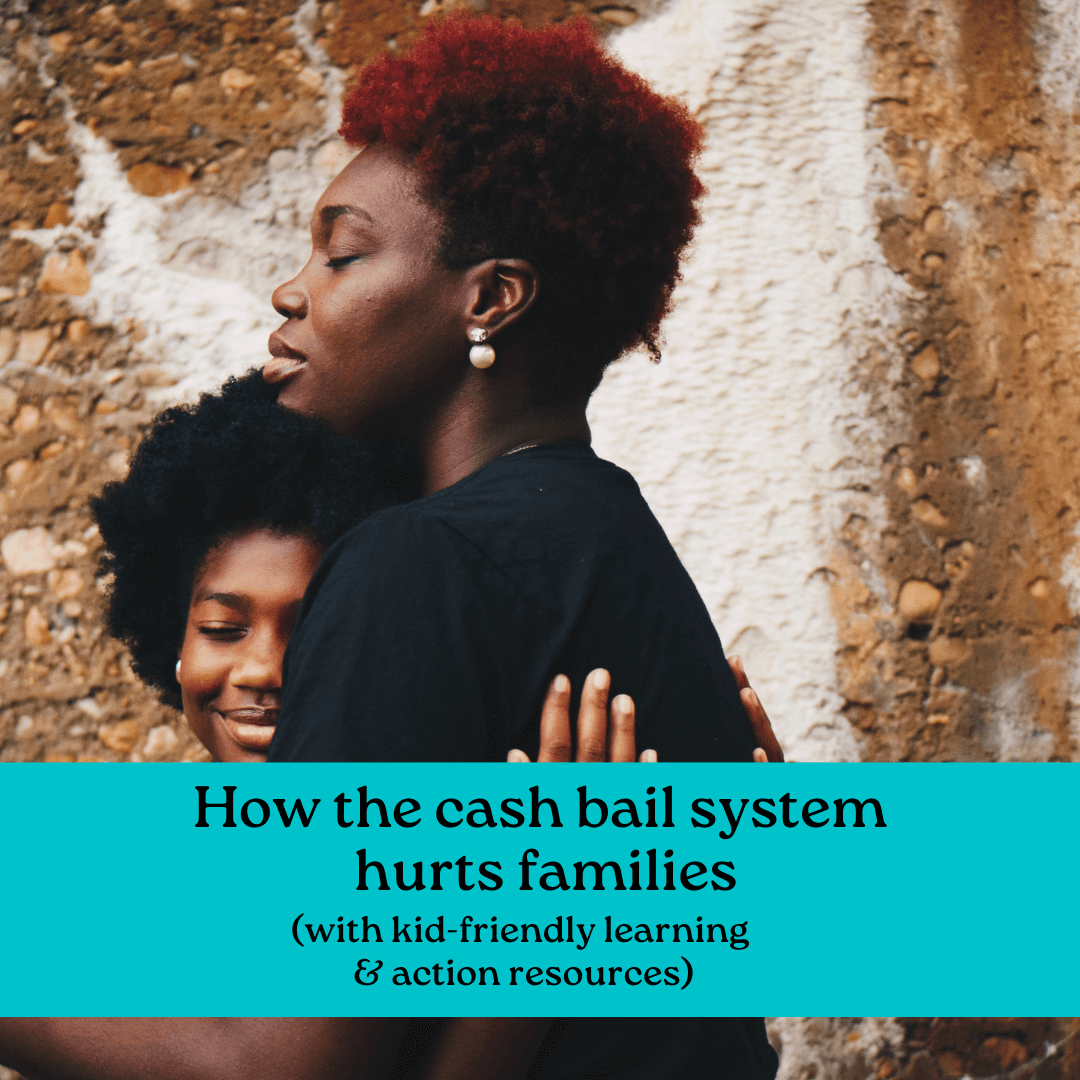
Mother’s Day is right around the corner. I take for granted that I’ll get hugs and cards from my boys. But there are many mothers who won’t be so lucky. That’s why I’m taking the time to talk about how our criminal justice system’s reliance on cash bail hurts children and parents. I’ll also be sharing how you can take action to free mothers from detention in time for Mother’s Day.
Below, I share brief background on how the system of cash bail keeps so many Black, Brown, and poor parents away from their families for months or even years, when they haven’t even been convincted of a crime.
Finally, I offer suggestions for talking to kids about incarceration. It’s important to challenge the idea that being in jail makes someone a “bad guy.” Children whose parents are incarcerated shouldn’t feel ashamed or embarrassed. They need compassion from their peers.

Disclosure: For your convenience, this post includes affiliate links. If you purchase items through these links, I may earn a small commission at no additional cost to you. The publisher of See You Soon provided me a free copy of the book in exchange for my honest review. All opinions are my own. You can read my full disclosure policy here.


The problem with money bail
Several years ago, Josh Spickler, the director of Just City, a local criminal justice reform group, spoke to my congregation. It was then that I started to understand how unjust the cash bail system is.
In our criminal justice system, people charged with a crime are supposed to be presumed innocent until proven guilty.
But the cash bail system locks up poor people before they’ve been convicted of a crime, simply because they don’t have money to make bail.
Spickler shared that often judges use bail to pressure people to plead guilty, rather than waiting for a trial.
Even just a few nights in jail can lead to parents losing their jobs, having their children placed in foster care, or being evicted from their homes. To prevent those things from happening, people will sometimes plead guilty to crimes they didn’t commit.
Spickler shared that often when Just City is able to bail people out of jail, the district attorney’s office drops the charges against them. Once the leverage of jail is removed, it’s harder to pressure people into pleading guilty.
Bail reform is both a racial justice and an economic justice issue.
This report from the Brennan Center for Justice details the many reasons that Black and Brown defendants are more likely to be jailed before their trials.
Black and Latine folks are more likely to be stopped by the police. Once pulled over by the police, Black people are more likely to be arrested than white people, including for minor infractions like traffic citations.
Once they’re charged, Black and Brown defendants are more likely to be detained in jail and less likely to be able to make bail. Even bail set at $500 is out of reach for many poor people and their families.
Related Post: 15 books to help kids and teens understand that Black Lives Matter
Mamas freeing mamas
About a year after I first learned about how the cash bail system can tear families apart, I heard about the Black Mama’s Day Bailout. In my city, it’s led by the Memphis Black Lives Matter chapter.
Each year, grassroots groups across the country, led by Black women, bail out as many Black mothers as they can in their communities in time for Mother’s Day.
The Mama’s Day Bailouts go beyond freeing mothers from pre-trial detention. The groups connect mothers with supportive services they need once they’re out of jail, from transportation to food to housing. They also assign a partner to each mom, who checks in on her in the weeks after she’s released.
Finally, the local and national groups leading these bailouts advocate for the abolition of the cash bail system year round.
I don’t pretend to be able to understand what it’s like to be jailed for a busted tail light or for a crime I didn’t commit.
But as a mother, I have some idea of the panic I’d feel about my children if I were suddenly taken away from them.
My heart aches for mothers who can’t be with their kids, and for children who long for their moms. I’m angry that the cash bail system is just one more way that Black people face the worst of the worst our society has to offer.
Related Post: 7 inspiring ways that kid activists are challenging racism
What you can do to support incarcerated families
1. You can help reunite mothers with their children in time for Mother’s Day by donating to the National Bailout or one of the local organizations they work with.
Donations of all sizes will not only free mothers from jail and reunite them with their children. Your gift will also help mothers re-start their lives through supportive services.
Donate to the National Bailout here.
The National Bailout distributes funds to grassroots Black-led groups across the country for their Mama’s Day Bail Out campaigns. Their Facebook page is a great way to learn about local and state bail out efforts.
2. Support efforts to end the cash bail system in your state
In 2022, Illinois became the first state to eliminate cash bail for people who are awaiting trial. More limited bail reforms have also been made in New York and Alaska.
If you’re not sure which organizations in your state are working to end cash bail, do an internet search for the name of your state + bail reform.
State and local groups can use your support, by contacting legislators, showing up at public meetings, and donating funds, as they work to end the bail system.
3. Read children’s books that challenge stereotypes about people who are incarcerated
Young children are especially prone to thinking that people are either good or bad. So, when you add in the continual messages kids hear about cops catching the “bad guys” and putting them in jail, it’s easy to see how children can develop stereotypes.
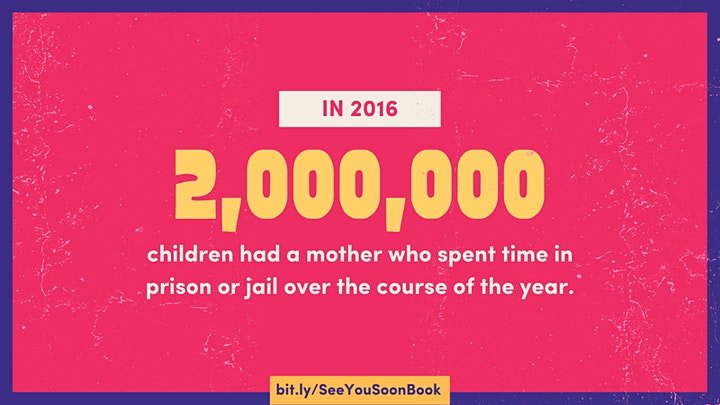
In 2019, Wee the People (a kid activist group based in Boston) organized a fundraiser and teach in for the National Bail Out. Before hearing the story Deena Misses Her Mom, Wee the People leader Francie Latour asked kids why people go to jail.
Most of the children, unsurprisingly, said it’s because they did something bad.
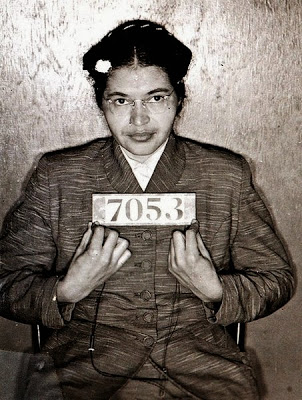
Then, Latour showed the children a picture of Rosa Parks as she was booked into jail. Many of the children knew who Parks was, so when Latour asked them if Parks did something bad, the kids’ assumptions were challenged.
There are several good books available that help children develop empathy towards families experiencing incarceration, and that help children of incarcerated parents feel less alone.

See You Soon by Mariame Kaba and Bianca Diaz
Purchase from Bookshop.org (supports independent bookstores)
Six-year-old Queenie knows that her life is about to change. Her mother has been sick with a drug addiction, but they still have had many good times together when Mama was feeling good. But now, Grandma and Queenie have to say goodbye as Mama reports to the county jail.
Queenie is devastated that Mama will be gone two long years, but when she arrives home a quilt filled with photos of Mama and her covers the bed. It’s just one sign that Mama will still surround Queenie with love from far away. (Recommended for ages 5 – 9.)
If you have a child ages 6 – 10, scroll down for information on how they can join “Queenie’s Crew” to support kids of incarcerated parents.

Missing Daddy by Mariame Kaba and Bria Royal
Purchase from Bookshop (supports independent bookstores)
Mariame Kaba does anti-prison work in her community, and she wrote Missing Daddy to provide a resource for parents and educators that she couldn’t find. They wanted a book that would help kids who have an incarcerated parent deal with their grief and trauma.
A child fondly remembers Daddy, who they haven’t seen since they were three, and struggles to understand why he is in prison. At school, some of the children tease them about their father’s incarceration. Mama works long hours, since she’s the only one to support the family. When visiting day at the prison is near, the child is so excited they can hardly sleep.
This important book not only helps children with an incarcerated parent feel seen and understood. It also helps other children develop compassion and empathy. (Recommended for ages 4 – 7)
Related Post: 18 children’s books about poverty and hunger

Deena Misses Her Mom by Jonae, Jesse, Layonnie, Kahliya of Reach Incorporated
Purchase from Bookshop (supports independent bookstores)
This is one of several picture books written by teens from Reach Incorporated who wanted to see more books for young children that reflected what’s happening in their community.
Deena used to be a calm child. But since her Mom went to jail, anger keeps boiling up inside of her.
Her best friend, Dad, and Grandma all try to support her, but she doesn’t want to talk about how she feels. Her father hopes that a special trip to the carnival will help Deena open up to him. (Recommended for ages 4 – 8)
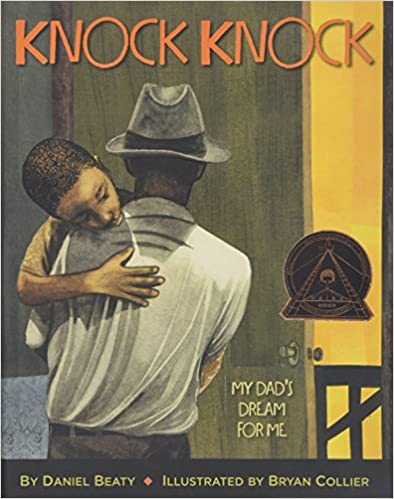
Knock Knock: My Dad’s Dream for Me by Daniel Beaty and Bryan Collier
Although this book does not specifically mention prison, it gets to the heart of how painful it is to have a parent suddenly disappear. (The author was inspired to write the book because of his own father’s imprisonment.)
A little boy loves how every morning, he and his father play a special “knock knock” game, where he pretends to be asleep. But one day, the knock knock no longer comes.
Eventually, he writes a letter asking his father who will teach him all the things he doesn’t know yet. His father writes him back, sharing his dream of all he will become. (Recommended for ages 5 – 9)
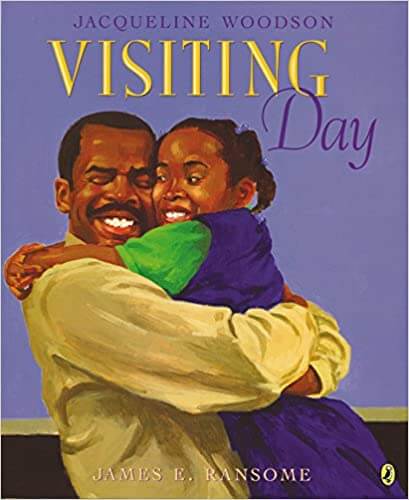
Visiting Day by Jacqueline Woodson and James Ransome
Purchase from Bookshop (supports independent bookstores)
When visiting day at the prison comes, it’s a very special occasion for a young girl and her grandmother. Once a month, Grandma gets up extra early to put on her Sunday best clothes and fry chicken to eat on the long bus ride to the prison. A neighbor who can’t afford bus fare to to visits her own son drops off presents for him that Grandma will take with her.
At the same time, her father is getting ready for their visit. When they arrive, Daddy is so happy to hear all the many stories his daughter has from the past month. At the end of the visit, the little girl is feeling understandably sad. But Grandma reminds her it won’t be this way forever.
This encouraging, reassuring book is full of compassion and love. (Recommended for ages 3 – 8)
4. Kids can join Queenie’s Crew to learn about building communities of care without incarceration
Mariame Kaba, author of See You Soon, has partnered with Project Nia to create Queenie’s Crew for kids ages 6 – 10. This online program provides monthly activities for kids to complete (for which they can earn badges, something my kiddo is very interested in!)
The arts and literacy activities help young children explore how communities can become safer, more caring spaces through alternatives to policing.
Another way that children can support other kids who have an incarcerated parent is to donate to a book drive that will get copies of See You Soon into the hands of kids who need it. (Scroll down to the middle of the linked page to find the donate button.)
Show solidarity on Mother’s Day by supporting the Mama’s Day Bail Out
It would be easy for me to ignore the fact that some mothers won’t be snuggling their children and eating untidy kid-made breakfast plates on Mother’s Day.
But to me, part of being a mom is showing solidarity with other moms who don’t have the privileges that I do.
Let’s share love and solidarity with moms harmed by the cash bail system by donating, advocating, and unlearning stereotypes with our children.
Happy Mother’s Day!

One response to “How the cash bail system hurts children”
I found this on NewsBreak: Act of anger or self defense? Trial underway for murder of Pontiac man by former girlfriend
https://share.newsbreak.com/v1oea358
This my daughter we trying to get her out this week