If someone asked what you can do to end poverty, what would be your first response? I’m guessing it might have to do with making a donation to a particular organization. You probably wouldn’t say shopping fair trade. In fact you might not even know what fair trade means. (Don’t worry, I’ll explain it below).
Giving to nonprofits that are on the front lines of fighting poverty is so important. We should all give as much as we can to organizations that are tackling poverty’s root causes.
But we can also multiply our impact against poverty in how we spend our family budgets. The businesses we choose to support – and the ones that we refuse to support – can make a big impact for people struggling with poverty.
If ending hunger and poverty is something that you’re passionate about, read on to find out how small shifts in your spending can make a difference. Talk with your children about some of these ideas. Let them help you decide what changes you could make as a family.


Disclosure: For your convenience this post contains affiliate links. If you purchase items through these links, I may earn a small commission at no additional cost to you. You can read my full disclosure policy here.
1. Shop fair trade whenever you can, especially for chocolate
Fair trade pays fair prices to the people who produced the goods you buy, usually in developing countries. (There are growing numbers of fair trade products made in the United States too.)
So much of what we buy today is made in other countries. But often, the people who actually make those goods receive only a small fraction of what we spend.
Fair trade certified products were made following strict standards that ensure people receive fair compensation and that they work in safe conditions. Another important principle of fair trade is minimizing the business’ impact on the environment.
Let you children help you search out some fair trade products you can switch to. I’ve got a video in this post that explains fair trade in terms a child can understand.
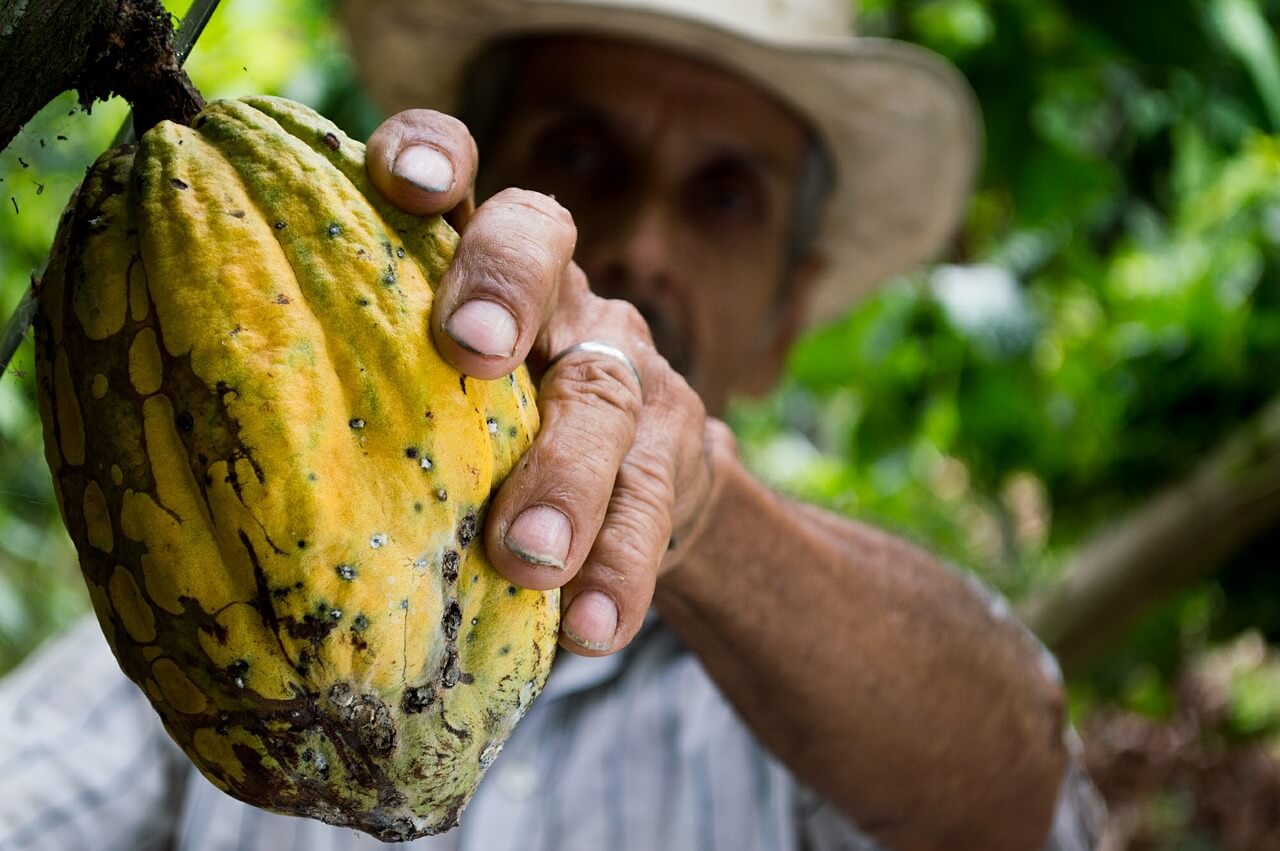
If your family eats chocolate, I encourage you to start there. Much of the world’s cocoa is harvested by child laborers, including children who have been enslaved.
Our Family’s Favorite Fair Trade Products
Equal Exchange Chocolate and Coffee Products: I’ve also seen Equal Exchange chocolate bars in Target and at other retailers.

Ten Thousand Villages makes fair trade home goods, jewelry, holiday items, and toys. They also have retail stores in some U.S. and Canadian cities. Our home is filled with beautiful Ten Thousand Villages items I’ve purchased since discovering them as a college student.
Badger Balm natural sunscreens and skin care products. Not only are their products free of many of the chemicals found in other sunscreens. Workers are also part of a profit sharing plan. The highest paid employee salary is capped at 5 times what the lowest paid workers earn (currently $15 an hour.)
Senda soccer balls are certified fair trade and are made in Pakistan. The company also donates to several soccer related nonprofit organizations serving low-income communities.
To find many more fair trade certified companies, visit Fair Trade USA.
2. Use coops and socially responsible businesses focused on reducing poverty
Worker owned cooperatives are one way that some women are moving out of poverty. Coops are especially effective in jobs that have traditionally paid low-wages. For example, in Oakland, California, groups of immigrant domestic workers formed a housecleaning coop named Women’s Action to Gain Economic Security (WAGES). The women share in the profits and have decision making power over the business.
Ask others in your community if they’ve heard of childcare, housecleaning, home care, or other cooperative businesses that you can support.
You can also look for socially responsible businesses who have alleviating poverty as part of their mission. For example, the Women’s Bean Project offers delicious soup and baking mixes. The business has a social mission to provide job training and employment to women in poverty. Through the project, women who have faced addiction, prison sentences, or domestic violence are able to get a fresh start in life.
My favorite resource for locating socially responsible businesses is Greenpages.org, a project of the nonprofit Green America. You can filter your search by “poverty” to find businesses focused on alleviating poverty.
Related Post: 8 Videos That Help Kids Understand Poverty
3. Lend to a small business person around the world through Kiva.org
You’ve heard of small businesses, but there’s a level that even smaller than that: micro-businesses. People around the world have dreams of starting a very small business that can move their families out of poverty. Traditional banks will not lend to these kinds of businesses. That’s where microfinance organizations like Kiva.org step in.
On the Kiva.org website, you can make a loan for as little as $25 to someone in your own country or halfway around the world. You can filter projects by where they are located or by the type of person who’s seeking a loan. Ninety-seven percent of loan recipients pay back the loans. When you’re repaid for your loan, you can withdraw the money, donate it to Kiva, or lend it again to a different aspiring entrepreneur.
4. Honor worker-led boycotts of companies who treat their workers poorly
We can be proactive in choosing which businesses to support. Another way to fight poverty is to honor boycotts that workers have launched because of poor pay or working conditions. When considering boycotts, be sure to find out whether the workers themselves are asking you not to shop at the business. Otherwise you may be making things more difficult for them.
Right now, the Coalition of Immokalee Workers is asking consumers to boycott Wendy’s. The coalition is made up of mostly immigrant tomato pickers in Florida. Pay and working conditions are often terrible. In some cases slavery has even been uncovered in the tomato fields.
The Coalition has successfully pressured restaurants and grocery store chains that use tomatoes, including McDonalds, Burger King, and Whole Foods to join in their Fair Food Program. Wendy’s has so far refused. Tomato pickers are asking you to boycott the chain until they agree to abide by the Fair Food Program.

5. Shop at your local farmer’s market
Think of shopping at your local farmer’s market as a poverty prevention strategy. More and more, family farmers are being driven out of business by huge corporate-run farms. This has a real impact on rural poverty.
When you shop at your farmers’ market, you’re also supporting families right in your community. They will then go out and spend much of their money – you guessed it – in your local community.
Finally, some of the vendors at our local farmers’ markets are nonprofit programs working in poor communities. You might find at your farmers’ market that there are women’s coops selling prepared food, or a youth community garden group selling produce. Bring your kids with you to the market! They’ll get to meet the people who grew their food and who benefit from your purchase.
6. Move your banking to a mission-driven community credit union
Of all the ideas I’ve mentioned in this post, this one may feel like the most work. Even if you aren’t ready to move all of your banking to a community credit union, consider opening up an online savings account on a CD.
Look especially for a credit union that focuses on offering services in low-income neighborhoods, which banks neglect. For example Hope Credit Union’s mission is to build assets and strengthen communities in economically depressed areas of the Mid-South.
Here’s where you can find a list of socially responsible banks and credit unions, certified by the nonprofit Green America.
7. Donate your birthday to an organization fighting poverty
A child in New York named Lory learned about the water crisis in developing countries. He was troubled that so many children had to walk up to 2 hours each day to get water that wasn’t even clean. So he decided to donate his 6th birthday to Charity: Water. He asked people if they would donate $6 for clean water, one dollar for each year of his life. He raised almost $2,400 – enough to bring clean water to 36 people in Rwanda.
I don’t think you should try to force your child to use their birthday to give back. That could end up backfiring, making them resentful and less compassionate. Talk about the possibilities with your kids, or give them the example of you donating your own birthday.
Charity Water has an online platform that makes donating birthdays very easy to do. Another birthday fundraiser resource that you can use to support any organization is CrowdRise.
