
I’ve been eagerly awaiting the release of The Antiracist Kid, anti-bias educator Tiffany Jewell’s book for ages 8 – 12. I’m constantly recommending her book for teens, This Book Is Anti-Racist, for its practical and informative takes on identity, history, and antiracist activism.
Jewell is a long-time elemetary teacher trained in the Montessori method. She became skilled in exploring concepts like injustice, racism, identity, and power with her learners. That’s why The Antiracist Kid dives deep into concepts of identity and justice, building a strong foundation before moving into discussions of antiracist activism.
Related post: How the Montessori planes of development can support antiracism at every age and stage


Disclosure: For your convenience, this post includes affiliate links. If you purchase items through these links, I may earn a small commission at no additional cost to you. I was provided a free review copy of The Antiracist Kid by the publisher in exchange for my honest review. All opinions are my own. You can read my full disclosure policy here.
The Antiracist Kid: A Book about Identity, Justice, and Activism by Tiffany Jewell. Illustrated by Nicole Miles.
Purchase from Bookshop.org (supports independent bookstores)
Identities of author: Black biracial cisgender woman.
Recommended for ages 8 – 12. Non-fiction illustrated chapter book. 116 pages.
Understanding identities in preparation for antiracist activism
The Antiracist Kid is divided into three main sections: identity, justice, and activism. The identity section comes first, providing kids with lots of background to understand the various parts of their identities. Using three main characters (Ruby, Shawn, and Dani) to provide examples, kids learn how identities come both from the ways we understand ourselves and the ways that others perceive us.
Key terms like “society, race, and ethnicity” are defined in boxes so that kids and adults can refer to them as needed.
Related post: A kid-friendly glossary of basic terms about race
In the identity section of the book, readers will also discover what causes us to have different skin tone, and why this is not the same as what we mean by the word “race.” Jewell describes the origins of the idea of race, tracing it back to ideas developed to justify enslavement.
Children learn that some of their identities will always stay the same as they grow older. They may decide to change other identities. Jewell also emphasizes that “every part of you is the best part of you,” and that no one’s identity is better than another one’s.
Related post: Why social justice education starts with self-identity (with picture book recommendations)
Another key term that I learned from Jewell’s previous book is unpacked in this section: dominant culture. She points out that what we consider “normal” (such as a family that is white, Christian, a mom and and a dad with two kids, and has money) comes from the dominant culture.
In the past, I often used the term “mainstream culture,” but this doesn’t get to the idea of power and control that is conveyed by the word dominant. Jewell explains to kids that some parts of your identity may fit with the dominant culture, while others do not.
Understanding prejudice, racism, and injustice
Adults often use the terms prejudice, bias, discrimination, and racism interchangeably. While the words certainly are related to each other, Jewell take the time to make distinctions. Because of this, important nuances aren’t lost.
For example, she writes that a bias is “a belief about a person, a group of people, a place, or a thing. Everyone has biases.” Biases can be helpful or harmful, and we aren’t always aware of the biases we have.

In contrast, prejudice is “a belief, attitude, or feeling about a person or group fo people. Prejudice comes from not having all of the right information.” Again, everyone has prejudices, but we are usually aware of our prejudices, and most of the time prejudices are harmful.
Related post: 21 powerful books about race and racism for kids and teens
In this section of The Antiracist Kid, children will also discover what it means to have power, and why some groups of people have more power than others. They’ll also learn about colonization (a term I’ve seen very few children’s authors use). A map and accompanying text show the many places in the world that have been colonized by other countries.
Jewell describes a variety of forms of oppression, with examples, including ageism, heterosexism, classisim, and of course racism. Reading this section is an important preparation for antiracist activism. It helps young people understand how institutions, not just individual people, must change in order for racism to end.
There are practical tips on how to advocate for yourself in the face of prejudice and discrimination. Jewell also tends to children’s feelings, with lots of encouraging words to go with these tips. There’s also a section about what you can do to repair things if you have behaved in a prejudiced way.
Understanding and practicing antiracist activism
The final section of the book focuses on activism. It begins with kid-friendly questions about fairness and justice that may inspire their particular path to activism.
Jewell also makes time to distinguish between community service and activism, while emphasizing that both are valuable. Brightly colored upbeat illustrations accompany examples of activism that kids can undertake, including:
- writing letters to decision makers
- boycotting store that discriminate against People of the Global Majority
- and starting an antiracism group with friends.
I especially appreciated her advice on advocating for other people. She asks kids to pause before jumping in and doing what they think is the best solution. She cautions “you will need to take a little time to notice what is happening and to listen to the people around you. The people you want to advocate and stand up for will already have an idea of what needs to be done.”
Related post: 7 examples of kid activists challenging racism
Jewell also doesn’t shy away from the fact that sometimes adults will not want to listen to what children have to say about injustice and racism. With comic strip illustrations, she shows kids how to find support among like-minded peers and other adults in their life who are supportive.
Related post: 15 books to help kids and teens understand Black Lives Matter
Ideas for using The Antiracist Kid with children to encourage antiracist activism and learning
There is so much fantastic content packed into this book that it’s best read a bit at a time, to give space for children to absorb what they’re learning. Here are a few ideas of how to use the book in your family or with your learners:
- Let children look through the picture and comic strips first and offer to read a short section of the book that unpacks what’s happening in the illustrations.
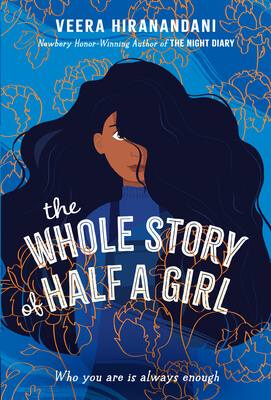
- Pair short readings of The Antiracist Kid with fiction read alouds that deal with racism. For example, if you read The Name Jar by Yangsook Choi, this is an excellent time to read the section of The Antiracist Kid that addresses microaggressions. If you read The Whole Story of Half a Girl by Veera Hiranandani, read the section on dominant culture in The Antiracist Kid.
- In your classroom, read small sections at a time and pair these with antibias, antiracist activities such as making an identity map. Liz Kleinrock’s book Start Here, Start Now: A Guide to Antibias and Antiracist Work In Your School and Community is an excellent resources for these types of activities. If you’re a homeschooler or your child is excited about doing this work on their own, consider getting a copy of Jewell’s This Book Is Anti-Racist Journal as a source for activities.
- In our Montessori-inspired homeschool routine, I’ll be using The Antiracist Kid as a supplement to our history lessons. For example, we’re learning about the 16th and 17th centuries of U.S. history, so unpacking colonization is a key part of our learning.
- As you talk about race with your children, use The Antiracist Kid as a reference guide. When you come across a word that your child doesn’t know, suggest that you look it up together in the book.

19 responses to “Introducing kids to antiracist activism with Tiffany Jewell”
I would love to use this book in my homeschool with my younger kids! We already use This Book is Anti-Racist with the older ones and love it.
I can’t wait to read this! Will share with my 6-year-old (when he’s ready) and use for education at our Unitarian Universalist Congregation. Thank you for highlighting.
I’m excited to learn about this new resource. I think my 8-year-old will get a lot out of it. And eventually, my 2.5 year old will as well!
This will be an add-on to my library that I hope to share with my future students. Thank you.
I work in children’s Faith formation at a Mennonite church and would use the book in that context, as well as at home with my 7 year old, and also to review and share with clients in the antiracism training org I support.
Great reading about this resource! Would love to use it as we introduce concepts of anti-racism with our daughter at home.
Adding this to our library at home. Same with Molly, have it on hand for when my boys (6 and 3) get older. Also plan on sharing about it with the parenting group at work!
We’d love to add this book to our home library and to loan/exchange with friends.
I’d read this book with my daughter, and then probably either pass it along or buy copies for friends.
I can’t wait to read Tiffany Jewell’s latest book with my two kids, ages 10 and 12. Like Tiffany I am a Montessori mom as both of my children have always attended a Montessori school and I’m a Primary Montessori teacher, deeply passionate about social Justice and belonging. Please consider me as a recipient of Tiffany’s new book. I would also use the book with our Unitarian Universalist congregation and the children there as I am a member of the Religious Education group. Thank you!
Hello! I just finished a PhD program in which I wrote a dissertation about how white anti-racist parents use media to prompt race-related discussions with their white children. Unfortunately, it’s common for white families to never talk about race. Let’s figure out how to change that!
If I win Tiffany’s book, I look forward to first learning ideas and then sharing them through my writing.
I would love to win a copy! I’m a teacher and I would use this is my classroom.
Congrats Laura, you’re the giveaway winner! I just sent you an email. Please respond in the next 48 hours with your mailing address or I will choose another winner.
We’d use this book in our home. We’re homeschoolers, part of a community coop.
I would love to read this! I create content and youth programming for a public library, and this book would help to inform the antiracist work that I am trying to do.
I cannot wait to read this with my daughters, ages 3 and 5. I am also a special education teacher so I will absolutely be sharing it with my students as well. Thanks so much!
I’m the Director of Children’s Ministry at our church, and I’m always looking for more anti-racism resources, especially books, to incorporate into our kids’ gatherings!
My 6-year-old unschooler LOVES books!! She is always very excited to hear what’s inside any new book. If we are the winners of this book, we will mostly be using this book within our home. Also, from time to time, I will be volunteering at our local Boys and Girls Club’s after-school program, this program comprises a diverse group of school-aged children of varying age, gender, abilities etc. I will be reading story books, and this is one that I know this group of children will love and enjoy as well. Personally, I have been thoroughly enjoying the booklists and resources continues to curate for community. These resources support me in that I know exactly what to request from my local library and this provides ease and flow.
This book sounds wonderful! I would use it at home with my little ones, but I also think my book club would be interested in reading it together.