
When educating children for social justice, it’s crucial to begin with activities that explore self-identity and help students develop self-love.
That might seem like a puzzling idea. Isn’t social justice about speaking up for others (or at least for all people, not just yourself or your own community?)
Of course, we want children to grow into people who will act for justice with all who are oppressed, not just groups that they identify with. But if children can’t first understand and affirm who they are, they won’t be able to understand and affirm who others are, or stand in solidarity with them.

Disclosure: This post contains affiliate links. If you purchase items through these links, I earn a small commission at no additional cost to you. I was provided a complimentary copy of The Incredibly Busy Mind of Bowen Bartholomew Crisp from EK Books in exchange for my honest review. All opinions are my own. You can read my full disclosure policy here.


The role of self-identity and self-love in social justice education
The National Association for the Education of Young Children lists four goals for anti-bias education. The first is:
Children will demonstrate self-awareness, confidence, family pride, and positive social identities.
Similarly, elementary education professor Bree Picower makes self-identity the first of six goals for social justice education.
Teachers provide opportunities for students to learn about who they are and where they come from. A sense of dignity in their culture, heritage, ethnicity/race, religion, skin tone, gender etc. is cultivated in the classroom. Students learn about different aspects of their identity and history associated with it. Negative stereotypes about students’ identities are deconstructed.
It’s not hard to see why educators would want to foster positive self-identity and deconstruct stereotypes with BIPOC (Black, Indigenous, and People of Color) students. Affirming the community you come from is powerful when society bombards children of color with false messages that they are less than their white peers.

What about self-identity and self-love for white students?
But what about white students? Isn’t self-love and pride a problem for white people in our racist society?
First, remember that students have many aspects of their identity, including but not limited to race. White students can still experience marginalization because of their gender, disability, neurodiversity, sexual orientation, or social class.
Second, true self-love doesn’t involve believing one’s group is better than others. Upholding white supremacy is not self-love.
Third, as Liz Kleinrock points out in her excellent book Start Here Start Now: A Guide to Antibias and Antiracist Work in Your School and Community, avoiding discussions of race and identity with white students harms both them and BIPOC children. Equipping white children to explore their racial identities isn’t about guilt or shame. It’s an important part of realizing the ability each of us has to work for racial justice. Kleinrock reminds us that:
Racial literacy doesn’t mean being able to talk only about the races of other people; it also means recognizing how your own race impacts your perspective and lived experience.
Five activities for exploring self-knowledge and self-love with preschool and elementary children
Before sharing these activity ideas for encouraging self-knowledge and self-identity, let me recommend a couple of crucial resources for teachers engaging in social justice education:
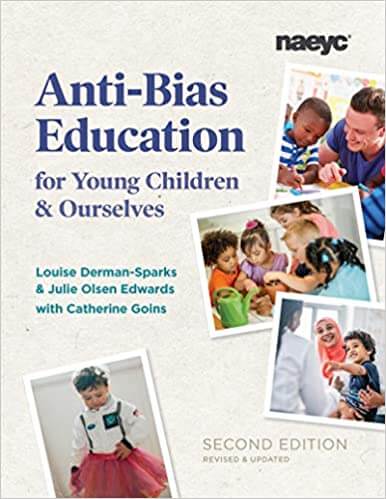
For preschool and kindergarten educators, Anti-Bias Education for Young Children and Ourselves by Louise Derman-Sparks and Julie Olsen Edwards, is a must-have resource. The authors clearly lay out both the why’s and how’s of doing anti-bias work with the youngest learners, with chapters on race, gender, economic class, disability, and more.
Purchase from Bookshop.org (supports independent bookstores)
For elementary educators, Start Here, Start Now by Liz Kleinrock is an incredibly practical resource that covers everything from activities to use with children to advice on fostering difficult conversations to how to collaborate with parents and school administrators.

Purchase from Bookshop.org (supports independent bookstores)
Also, read this article by Bree Picower on the six elements of social justice education. It gives a more in-depth treatment of the principles that her website overviews.
Related Post: 7 ways teachers can deepen their own antiracist learning
1. Make art for the classroom with your students’ handprints or self portraits
One of the changes I’ve been delighted to see in the past couple of years is that art materials in a variety of skin tones are now easy to find. (Before educators often had to order from specialized companies at high prices.)
Derman-Sparks and Olsen Edwards suggest using skin tone paints to make young children’s (and educator’s) handprints. These can be made into a mural for the wall, or a class book of handprints.
Related post: Talking about skin tone with children
Children can also paint self portraits where they mix paints themselves to get the best match to their skin tone. The Brownicity community has an excellent video course that takes children step by step through this activity with an art teacher, along with engaging read alouds of books about skin tone.

Children can also make self-portraits using skin tone construction paper. We did this activity during a children’s Peace Camp I led, and it was wonderful to see the results hung on the church walls. (Since some of the children were fairly young, giving them a head and shoulders template to trace onto their skin tone paper helped the process.)
2. Write “I Am From” poems to explore the many aspects of children’s self-identities
I’ve seen this activity suggested in several places, including Start Here, Start Now. First children read the poem “Where I’m From” by George Ella Lyon as an example. Kleinrock has helpful graphic organizer ideas in Start Here, Start Now that will help children brainstorm what they might include in their own poems about where they come from.
Kleinrock also modeled for her students how she decided what to write in her own poem, which had the side benefit of strengthening relationships with the children.
Related Post: 7 ideas for social justice lesson plans
3. Affirm children’s social class by exploring how “everyone works”
In Anti-Bias Education for Young Children and Ourselves, the authors describe how one teacher was troubled by a four- -year-old student saying that his Mommy doesn’t work. The childcare center mostly served low-income families, and the teacher knew the child’s mother was carrying for an infant sibling during the day, and taking community college classes in the evening.
In collaboration with other educators at her center, the teacher designed a project to affirm the work that everyone does to support their family, whether their work is paid or unpaid. They asked families to use a disposable camera, provided by the school, to take pictures of the daily work of each family member. Knowing that some families might not want others to see their homes, they included instructions that these photos could take place in other locations, like the grocery store or on at the bus stop.
Related post: 6 ways to involve parents in anti-bias teaching
When the cameras were returned, teachers made classroom books titled “Everyone Works in My Family” with the photos.
4. Ask students to make bio bags
This is one of my favorite ideas in Start Here, Start Now. The teacher gives each child a brown paper bag. On the outside, the children write the visible parts of their identities. (One child wrote “athletic” and “a reader” on her bag.) Then inside, students put cards that tell about parts of their identities that you’ll see as you get to know them, or when they’re ready to share it with you. (Find more detail about how children might present the bags in the book.)
5. Read stories that affirm the identities of your students
Because there are so many aspects to children’s identities (family structure, gender, race, class, disability, neurodiversity, sexual orientation, and more), there are hundreds of books you could read that fit this requirement. Remember to look for books that are focus on resilience, strength, and joy, rather than centering the character’s oppression.
Related Post: When discussing racism makes kids of color feel ashamed
Here are just a few ideas of picture books to read:
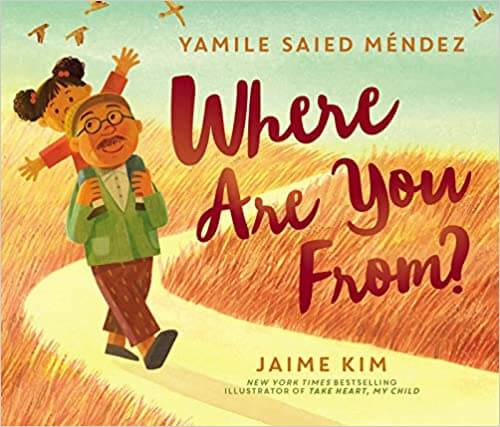
Where Are You From? by Yamile Saied Méndez and Jaime Kim
Purchase from Bookshop.org (supports independent bookstores)
A grandchild of immigrants is confused by people constantly asking “where are you from? No, where are you really from?” When she asks her Abuelo the question, his answer is expansive and beautiful, taking her to the open free land of the Pampas and to the warm, blue oceans edged by elegant palm trees. (Recommended for ages 3 – 7. Argentinian-American author. Korean-American illustrator.)
Related Post: 14 anti-bias books for preschool and kindergarten
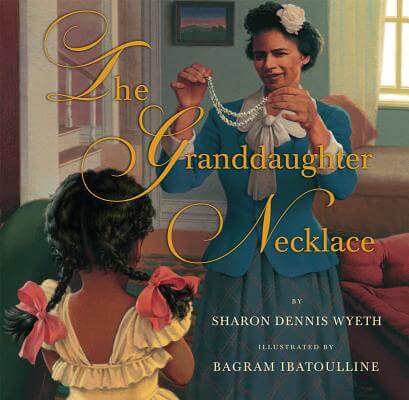
The Granddaughter Necklace by Sharon Dennis Wyeth and Bagram Ibatoulline
Purchase from Bookshop.org (supports independent bookstores)
The women in Sharon’s family have long passed down a beaded necklace, given to the next generation at an important moment in the girl’s life. The women who’ve worn the necklace trace their roots both to Africa and to Ireland, each offering different strengths and facing various challenges. (Recommended for ages 6 – 10. Black author. Russian-American illustrator.)
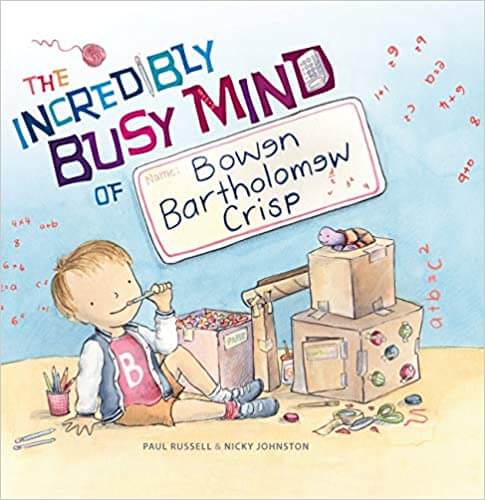
The Incredibly Busy Mind of Bowen Bartholomew Crisp by Paul Russell and Nicky Johnston
Purchase from Bookshop.org (supports independent bookstores)
Bowen Bartholomew Crisp understands the world in much more complex ways than many of his classmates. When the teacher asks “what color is the ocean?” he’s not sure how to answer. After all, during storms the top is green and cresting waves are white. All the way down in the bottom of the ocean it’s pitch black. But the adults in his life often don’t take time to listen to the long answers he has to their questions.
While many don’t understand how Bowen’s mind works, his mother takes time to wonder aloud with him about all his many questions. As Bowen grows, he finds that his unique way of understanding the world can be a gift to others. (Recommended for ages 4 – 8. Dyslexic author.)
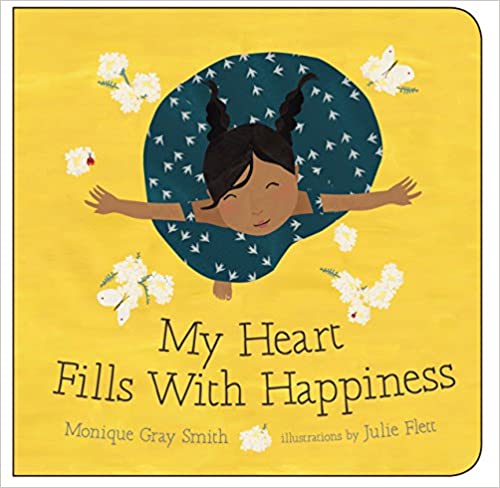
My Heart Fills with Happiness by Monique Gray Smith and Julie Flett
Purchase from Bookshop.org (supports independent bookstores)
A young indigenous girl names the things that bring her joy, from the face of someone she loves to the smell of bannock baking in the oven. This simple but moving book invites young children to reflect on the things that bring their hearts happiness. (Recommended for ages 2 – 5, Cree and Lakota author, Métis illustrator)

Grandma’s Records by Eric Velasquez
Purchase from Bookshop.org (supports independent bookstores)
“Sometimes,” Eric’s grandma tells him, “a song can say everything that is in your heart as if it was written just for you.”
Listening to records with Grandma each day is Eric’s favorite part of summer break. There’s one song in particular that always makes Grandma close her eyes and put her hand over her heart. He loves to watch her reaction, but he doesn’t really understand why the song moves her so much until her nephew and his band arrive from Puerto Rico to perform in New York. (Recommended for ages 5 – 9. Afro-Puerto Rican author/illustrator.)