
Many adults like to think of young children as innocent and unaware of prejudice (unless an adult says openly biased things to the child.) The truth is that children pick up on and express racial bias and other forms of prejudice as young as age three. A key part of addressing and preventing prejudice is surrounding children with anti bias books. Whether you’re an educator, parent, or caregiver of preschool and kindergarten age kids, this list of full of stories that challenge biases about race, ethnicity, disability, gender, religion, and social class.
Disclosure: For your convenience, this post contains affiliate links. If you purchase items through these links, I may earn a small commission at no additional cost to you. You can read my full disclosure policy here.


21 must-have anti-bias books for young children
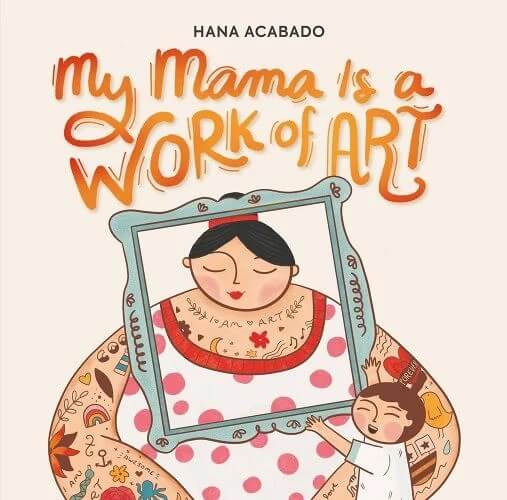
My Mama Is a Work of Art by Hana Acabado.
Purchase from Bookshop.org (supports independent bookstores and my business!)
In this sweet book, a little boy describes to us in rhyming text the ways his mother herself is a work of art. Each of her many tattoos has a special meaning that proclaims she is “proud, out, and unashamed.”
Mama sets the example of being kind to everyone. Though people look different, each of them are also works of art. I also love that Mama is a large woman, though no direct references are made to her size. (Recommended for ages 3 – 7. Filipino-American author/illustrator.)
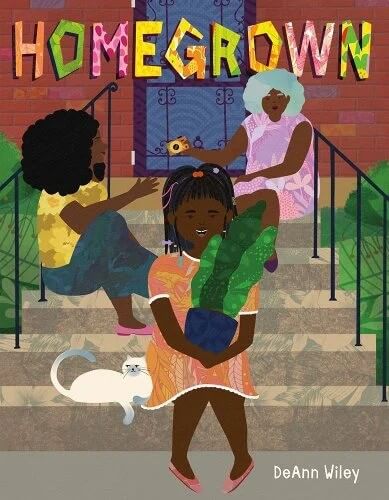
Homegrown by DeAnn Wiley.
Purchase from Bookshop.org (supports indepedent bookstores and my business!)
The topics of home and family are wonderful ones for introducting anti-bias books in preschool, because young children love to tell you about theirs! In this story, a young Black girl learns from her family that “home” means a lot of things: joyful traditions, snack money from grandparents, big family sleepovers, and even Grandma directing chores on Saturday morning.
The bold digital illustrations have the feel of collage art. This would be a wonderful read aloud to introduce an art project about family and/or home. (Recommended for ages 3 – 7. Black, Queer, and Disabled author/illustrator.)
Related post: 12 comforting picture books about home
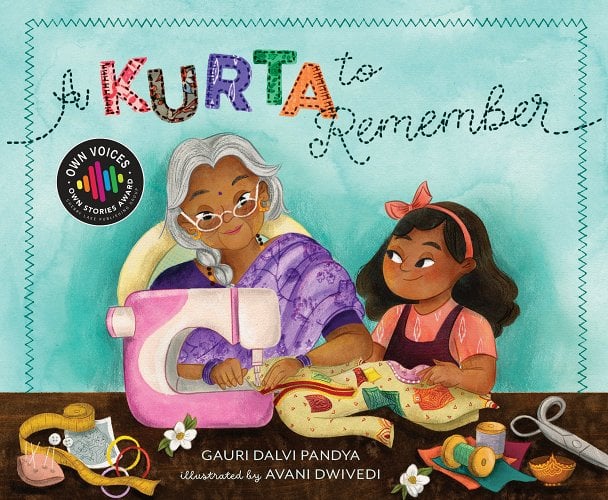
A Kurta to Remember by Gauri Dalvi Pandya. Illustrated by Avani Dwivedi.
Purchase from Bookshop.org (supports independent bookstores and my business!)
A young Indian girl prepares to move to a new country far away from her Aaji (Grandmother) and Ajoba (Grandfather.) While Mumma and Baba pack the essentials, she wonders about all the things they aren’t packing, that her heart needs.
As Aaji sews her a new kurta, with lots of pockets, Aaji assures her there are many things she can take with her to remember home. But the girl worries the bangdya (bracelets) in the pockets might break; she might forget to light the deeva candles held in another pocket. When Aaji realizes the girl is really afraid she might forget them, she comforts her with a song. That song opens her granddaughter’s heart to a another way she can stay connected with her beloved grandparents.
One bonus to the book educators will appreciate: the glossary of Marathi words included at the end includes realistic photographs that will help children recognize important cultural items when they encounter them in real life. (Recommended for ages 4 – 8. Indian-American author.)


My Maddy by Gayle E. Pitman. Illustrated by Violet Tobacco.
Purchase from Bookshop.org (supports independent bookstores and my business!)
A child introduces readers to their beloved parent Maddy, who is neither a boy nor a girl. Maddy and the child explore many different things that are kind of one thing, kind of another, both but not really either one. The color of Maddy’s eyes and hair, the sunrise which is neither day or night, sporks, and rainbows that happen between sun and rain are all highlighted.
The book is a beautiful celebration of people and experiences who are “not one thing or the other, but in between, and kind of both, and something entirely fantastically their own.” (Recommended for ages 3 – 7. Queer author.)
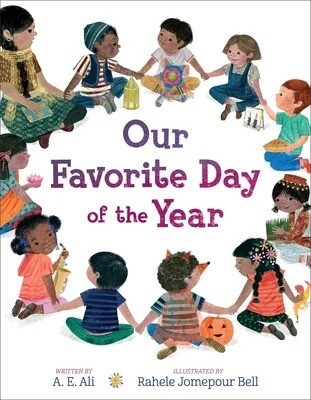
Our Favorite Day of the Year by A.E. Ali. Illustrated by Rahele Jomepour Bell.
Purchase from Bookshop.org (supports independent bookstores and my business!)
On the first day of kindergarten, Mrs. Gupta tells Musa and his classmates that one of the ways they can get to know each other by sharing their favorite day of the year. When their favorite holidays arrive, the children and their families tell the class about why Eid al-Fitr, Las Posadas, Pi Day, and Rosh Hashanah are special to them.
The simple descriptive text is lovely, but the vivid, textured, joy-filled illustrations are the true star of the show in this meaningful book. Tip for using the book in the classroom: follow Mrs. Gupta’s lead and read this book at a time that is not around a major Christian holiday like Christmas. This emphasizes that all holidays are important to learn about. (Recommended for ages 4 – 8. Muslim author.)
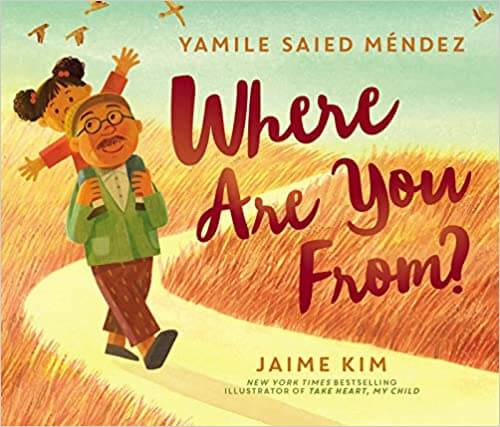
Where Are You From? by Yamile Saied Méndez. Illustrated by Jaime Kim.
Purchase from Bookshop.org (supports independent bookstores and my business)
A grandchild of immigrants is confused by people constantly asking “where are you from? No, where are you really from?” When she asks her Abuelo the question, his answer is expansive and beautiful, taking her to the open free land of the Pampas and to the warm, blue oceans edged by elegant palm trees.
This would be a great story for introducing conversations both about being proud of your culture and about what microaggressions are. (Recommended for ages 3 – 7. Argentinian-American author.)
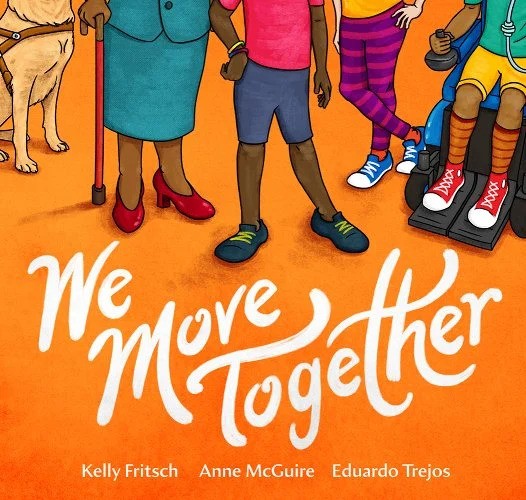
We Move Together by Kelly Fritsch, Anne McGuire, and Eduardo Trejos.
Purchase from Bookshop.org (supports independent bookstores and my business!)
This easy-to-understand story counters ableism in many forms and emphasizes the importance of communities coming together to solve problems.
Children and caregivers will want to spend time poring over the illustrations, which reveal the details of the story, featuring characters with many different disabilties. The illustrated end notes explain ableism, disability arts, accessibility and more in terms that young children can understand. (Recommended for ages 3 – 7. White disabled author (Fritsch) and Latino author (Trejos).

Looking Like Me by Walter Dean Myers and Christopher Myers
Purchase from Bookshop.org (supports independent bookstores and my business!)
The National Association for the Education of Young Children states that one of the four goals of anti-bias education is to nurture children’s personal and social identities. Looking Like Me is a great book for fostering this kind of exploration and confidence.
The jazz-inspired text and collage illustrations show that the author is so many different things: a writer, a brother, a son, a city child, a dancer, a dreamer, and more. For each thing he is, someone puts out their fist so he can “give it a bam!” It’s easy to see how this book would lead into follow up conversations about the many things that make a child who they are. (Recommended for ages 3 – 7, Black author, Black illustrator.)
Related post: How to talk to children about skin tone

Our Skin: A First Conversation About Race by Megan Madison, Jessica Ralli, and Isabel Roxas
Purchase from Bookshop.org (supports independent bookstores and my business)
This look at race is a must have for your collection of anti bias books. It covers so many topics, starting with identifying and loving your own skin tone. Children also learn why we have different skin tones, and some of the racial labels that people use to correlate with all those shades of skin.
What really sets this book for young children apart is how it explains that the made up idea of race was used to fuel racism. The authors talk about racism not as just individual people being mean, but as a way that white people get power. The book gives children relatable examples of racism that are likely to happen in young children’s worlds. Finally, children are encouraged to challenge racism by speaking up, changing unfair rules, and learning. (Recommended for ages 3 – 7, Black author, Filipina illustrator)
Related Post: 42 powerful books about race and racism for kids and teens
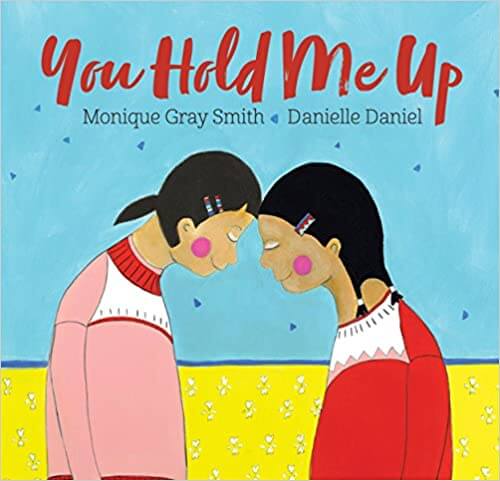
You Hold Me Up by Monique Gray Smith and Danielle Daniel
Purchase from Bookshop.org (supports independent bookstores and my business!)
How do we support each other and show compassion to one another? This simple but profound book shows children all the ways that their loved ones care for them (and how they can, in turn, care for others.)
We see Indigenous children and families sharing a meal, picking flowers, and snuggling in a cozy chair. For too long, children’s books that show indigenous people living in the present day doing everyday activities have been few and far between. This book is a welcome antidote! (Recommended for ages 2 – 5, Cree and Lakota author, Métis illustrator)
Related Post: Do’s and don’ts for teaching about Native Americans in early childhood classrooms

Sparkle Boy by Lesléa Newman and Maria Mola
Purchase from Bookshop.org (supports independent bookstores and my business!)
Young children often want to rigidly categorize people, especially when it comes to gender. This can lead to teasing peers who don’t behave in stereotypically male or female ways. Reading anti bias books that expand children’s concepts of gender is a good way to open this conversation.
Casey loves all things sparkly and shimmery, from his sister Jessie’s beautiful skirt to her glittery nail polish. When Casey wants those things for himself, the adults around are happy to provide them, but it makes Jessie uncomfortable. She’s sure that boys aren’t supposed to wear those things. But an encounter with other children at the library might just change Jessie’s mind. (Recommended for ages 4 – 8, lesbian author)
Related Post: 19 children’s books that defy gender stereotypes

Family Reunion by Chad and Dad Richardson and Ashleigh Corrin
Purchase from Bookshop.org (supports independent bookstores and my business!)
Not all the anti bias books on your shelf should be about prejudice. It’s important to include many books that show children with diverse identities experiencing joy. And nothing could be more joyful than a Black family reunion!
The child at the center of the story isn’t expecting the reunion to be fun (at least not as fun as video games.) He even has to imagine a force field around himself as all the relatives he doesn’t remember want to hug him. Once Pop Pop finds him, things start to improve. Soon, the boy is soaking in all the fun (and food) that only a family reunion can provide. (Recommended for ages 3 – 7, Black authors, Black illustrator).
Related Post: 15 picture books filled with Black joy

Ohana Means Family by Ilima Loomis and Kenard Pak
Purchase from Bookshop.org (supports independent bookstores and my business!)
This book is written in the cumulative style of The House That Jack Built, though its message is more profound. What is needed to prepare for a Hawaiian family lūˋau? A lot more than you might think!
On “the land that’s never been sold,” work to prepare the poi for the lūˋau is done by “hands so wise and old, that reach through the water, clear and cold.” Young children will not only learn about Hawaiian culture, but also develop an appreciation for all the preparation that goes into making a dish that seems simple. (Recommended for ages 4 – 8. White author.)

A Friend for Henry by Jenn Bailey and Mika Song
Purchase from Bookshop.org (supports independent bookstores and my business!)
This anti bias book will help allistic (non-autistic) children understand that when autistic classmates “act up,” it’s often because they are overwhelmed.
On the first day of school, Henry is looking for a friend, but he knows that many people don’t understand the importance of doing things in a certain way. He thinks Vivianne could be a friend, but she gets mad at him when he offers what Henry thinks is a kind gesture. Samuel definitely can’t be that special friend, because he takes Henry’s perfect green carpet square. By free time, Henry is feeling exhausted in his search. Then, an encounter at the fish bowl rekindles his hope. (Recommended for ages 3 – 7)
Related post: 6 ableist tropes that are all-too-common in children’s books

The Cot in the Living Room by Hilda Eunice Burgos and Gaby D’Alessandro
Purchase from Bookshop.org (supports independent bookstores and my business!)
One category of anti bias books that’s sometimes forgotten is books about families from different social classes. In this moving story, an Afro-Latine family regularly welcomes children to sleep on an extra cot while their parents work the night shift. Their youngest daughter longs to sleep on the cot (instead of sharing a room with her sister). She’s also miffed when her parents offer their nervous young guests special privileges that she doesn’t get.
When the cot is unoccupied one night, she realizes sleeping on it is not quite the experience she expected. The next time a guest arrives, the girl has her own solution to make them feel welcome. (Recommended for ages 4 – 8, Dominican American author and illustrator).
Related post: How to talk to children about poverty using a social justice perspective

The Proudest Blue: A Story of Hijab and Family by Ibtijah Muhammad, S.K. Ali, and Hatem Aly
Purchase from Bookshop.org (supports independent bookstores and my business!)
The first day of school is exciting for any child, but for Faizah this day is extra special. It’s her big sister Asiya’s first day of hijab. She’s chosen a beautiful ocean-blue fabric, and Faizah feels like she’s walking with a princess on the way to school.
But Faizah becomes nervous when she sees some of the other children pointing and whispering about Asiya. Their mother has told them some won’t understand the hijab and how it’s a sign of strength. What is important is for Asiya to understand that herself. (Recommended for ages 4 – 8, Muslim author and illustrator)
Shop this list of anti-bias books for preschool and kindergarten at Bookshop.org. Your purchase supports this blog and independent bookstores!
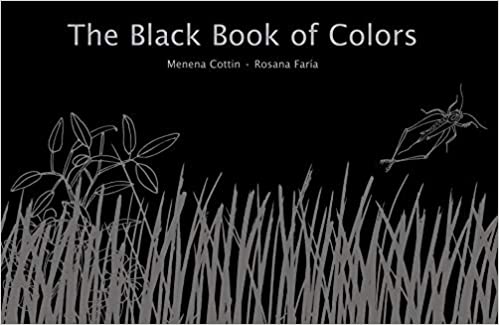
The Black Book of Colors by Menena Cottin and Rosana Faria
Purchase from Bookshop.org (supports independent bookstores and my business!)
How might a sighted child imagine what it’s like to be blind? This unique book encourages children to experience colors through senses other than sight. The text, which is also provided in Braille, describes how a child named Thomas experiences each color.
For example, yellow “tastes like mustard, but is as soft as a baby chick’s feathers.” On the opposite page, feathers float to the bottom. The illustrations are all raised prints on black paper, so that blind children can feel them and sighted children can both see and feel them. An alphabet is included at the end for children who want to learn to write words in Braille. (Recommended for ages 3+).
Related Post: 20 stereotype-shattering children’s books starring disabled characters

Here is the World: A Year of Jewish Holidays by Lesléa Newman and Susan Gal
Purchase from Bookshop.org (supports independent bookstores and my business!)
Another important category of anti bias books is stories from different religions and spiritual traditions. This warm, joyful celebration of Jewish holidays is enjoyable for both Jewish and non-Jewish kids alike. The rhyming text and playful illustrations share the important symbols and traditions of each holiday. For readers who need more background on customs and holidays, additional information is included in the endpages. (Recommended for ages 3 – 7, Jewish author).
Related post: 15 picture books starring Jewish characters

The Night Is Yours by Abdul-Razak Zachariah and Keuturah A. Bobo
This story is full of joy and wonder and is best read to a child at bedtime after a night of summer play. A father lovingly narrates his daughter’s game of hide and seek. It’s slow pace recognizes and cheers all she is learning and becoming. From understanding the shapes that the moon takes to finding emotional strength when she’s frustrated, Amani embraces the night – and herself. (Recommended for ages 3 – 7, Black author and illustrator.)

Uncle Bobby’s Wedding by Sarah S. Brannen and Lucia Soto
Purchase from Bookshop.org (supports independent bookstores and my business!)
Sharing your favorite uncle with someone else is not easy. That’s why when Uncle Bobby announces he and Jamie are getting married, Chloe is the only one who doesn’t join in the celebrating. She suspects this will mean she won’t be able to have as much fun together with Uncle Bobby as before. How can Bobby and Jamie convince her that there’s more than enough fun to go around as the family grows? (Recommended for ages 3 – 7).

Eyes that Kiss in the Corners by Joanna Ho and Dung Ho
Purchase from Bookshop.org (supports independent bookstores and my business!)
Joanna Ho uplifts the beauty of a young Asian girl’s eyes and how they connect her to her family. She does this without repeating hurtful stereotypes about Asian eyes. The child sees how her eyes are like Mama’s, which joyfully “glow like warm tea [and] crinkle into crescent moons” when she cuddles her after coming home from work.
Her eyes are also like her Amah’s (grandmother), whose eyesight has changed but who still holds many important stories in her eyes. They also remind her of her little sister, who looks at her “like I am her best present.” Eyes that Kiss in the Corners is not just a book about beauty; it’s also a book about the deep ties of family love. (Recommended for ages 3 – 7, Chinese and Taiwanese American author, Vietnamese illustrator).
Related Post: 15 children’s books about beauty that challenge stereotypes