It’s always more fun to talk about the parenting moments when we knocked it out of the park than the ones when we failed. But, I usually learn way more from my mistakes than from my successes. That’s why I want to chat with you about some failures and missed opportunities in my journey to be an anti-racist parent.
Some of them are embarassing, and I even feel shame creeping in.
But especially for those of who are white and trying to raise kids who’ll fight racism, we gotta admit this stuff. Because otherwise it has the power to keep us quiet. To keep us from joining the struggle against racism because we’re not already perfectly anti-racist 100% of the time.
Maybe you’ve heard the analogy that racism is like smog. We can’t help but breathe it in because it’s just in the air all the time. And we all become sick, to one degree or another, from that smog. Know what happens when we convince ourselves that our bodies are perfectly healthy while we’re actually choking on smog? We don’t seek out the healing and support that we need.
I share my mistakes today in a spirit of seeking healing: for myself, my children, and a world broken by racism.
Disclosure: For your convenience, this post contains affiliate links. If you purchase items through these links, I may earn a small commission at no additional cost to you. You can read my full disclosure policy here.


5 Mistakes I’ve Made as an Anti-Racist Parent
1. Sending Racist Messages about Safety in the Grocery Store Parking Lot
When our youngest child was around 5 years old, he was soooo slow. Getting in and out of the car was inexplicably a 10 minute process (at best.) When we were at the grocery store, I’d try to hurry him along, eager to get my groceries and purse into the car. After a couple of minutes of grabbing at my giggling child so that I could strap him into the car seat, I’d start feeling anxious. What if someone tried to snatch my purse while I was half hanging out of the back seat?
Around that time, there was an attempted kidnapping of a woman at the grocery store where we shopped. So I told my son on more than one ocassion that we needed to get in the car quickly because “it is not SAFE to hang out in this parking lot where someone could hurt us, do you understand me?!?!”
Months later, I realized what a harmful message I’d been sending him.
Related Post: 7 Ways to Raise Race-Conscious Kids
You see, our grocery store is one of the few places he goes where most of the people are Black. Even though we live in a city that’s more than 60% Black, his school, our church, and many other places we go are overwhelmingly white. The grocery store is also in a neighborhood where homeless folks hang around during the day.
I was letting racialized fear guide my actions in the Kroger parking lot.
Maybe you think I was just being safety conscious. That’s what I told myself at first too. But it’s not true.
You see, a couple of years before that, a teenager was shot and killed at the Target I shop at across town. That store is in a whiter, more affluent part of town.
Even though I knew a young man lost his life there, not once did I consider what time of day I was willing to shop at the Target (something I often thought about when planning my Kroger trips.) I never hurried our kiddo through the Target parking lot because of a fear of crime.

Day in and day out, my now six year old is receiving messages about race. Sadly, way more of these messages reinforce racism instead of fighting it.
The message I was giving him in the Kroger parking lot was to be suspicious and afraid of Black people and of poor people.
I now think much more carefully about what I say about safety, to my kids and to myself. I check in with myself about irrational fears I may be feeling and communicating through my body language.
Related Post: Anti-Racism Resources for Parents and Teachers
2. Not being age appropriate at the Civil Rights Museum
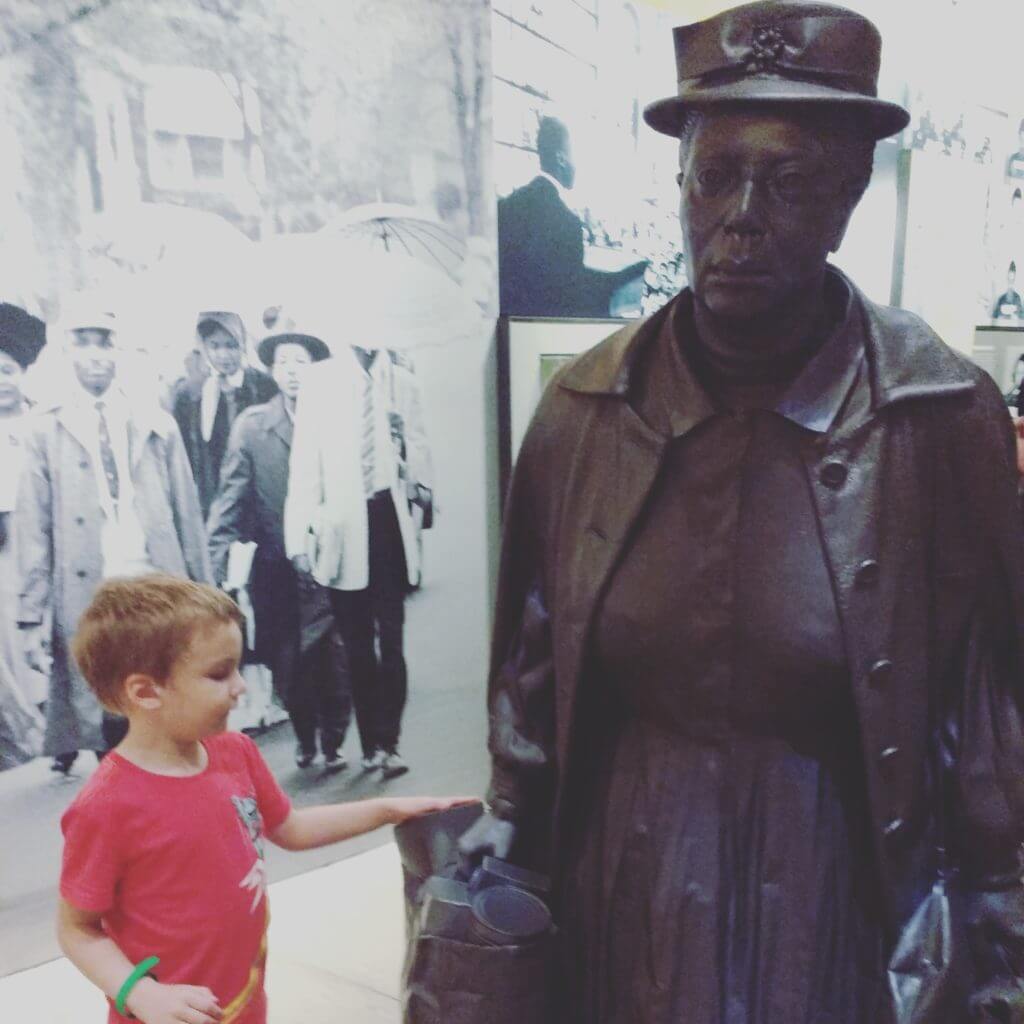
The National Civil Rights Museum is a sacred place. It’s built on the site of the Lorraine Motel where Dr. Martin Luther King, Jr. was assassinated. Between visits to the inside of the museum and social justice rallies I’ve attended on the lawn, I’ve been there dozens of times.
When our youngest was four years old, I decided that it was time for his first visit. As an anti-racist parent, what better place was there in my city for us to visit? The museum had recently been remodeled and there were a lot more hands on, visual elements to the exhibits.
When we got there, he started acting like….a four year old.
There was a map of the United States with buttons you could push. When you did, important events that happened in that city would pop up on the screen. The little guy started pushing every button and giggling. He also tried to sit on a lunch counter stool in the Greensboro student sit-in exhibit, an exhibit that was for looking, not touching.
Related Post: What the word racism actually means (and how to explain it to kids)
I started to feel uncomfortable. For one, I was worried he was getting anything out of this experience because he wasn’t taking it seriously. Then I started worrying about what other people might be thinking about us, especially African-Americans who were going through the museum at the same time.
I began talking to our son about the different exhibits and people who were featured. In more than one exhibit, I stopped to point out courageous people who’d stood up in dangerous situations.
And because I wanted him to understand the magnitude of what they’d done, I told him when particular people had been killed for their action.
Y’all, I am cringing typing this out. By the time we got toward the end of the museum, he whispered to me, “Mommy, I’m too sad. I want to go home now.”
In my haste to make sure he understood the civil rights movement, I failed to keep things age appropriate.
Related Post: Taking about racial injustice with my 6 year old
Am I sorry that I took him? Absolutely not. But I should have let him take the lead in exploring the exhibits. I should have found ways to talk about people’s bravery without emphasizing martyrdom.
Next time we go, I’ll be tuning in more to how he’s experiencing the museum as a 6 year old. I’ll look for points of connection that can stretch and educate him, without overwhelming him to the point where he wants to leave.
3. Not including “everyday stories” about kids of color in our book collection
Many of you know I’m a former community organizer, as well as a children’t book nut. So if I see a (good) children’s book about a social justice hero, you can pretty much guarantee I’ll buy it. Same with a book that encourages kids to challenge racism or prejudice in some way.
Our six year old’s book collection includes books about the Underground Railroad, the Birmingham Children’s Crusade, the United Farm Workers, and much more.
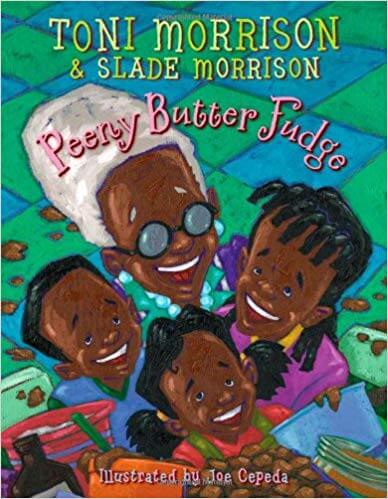
Until recently, what he had way less of were books that tell stories about children of color just being kids. Books like Jabari Jumps (now one of my son’s most requested stories), about a Black boy who learns to jump off the high dive. Or Ruler of the Courtyard, about a Pakastani girl who who overcomes her fear of pushy chickens who want to peck her legs.
Why is it so important that a white kid like mine read a lot of these “everyday” stories?
Because if the only books we read about people of color are “issue” books, it teaches him that the experience of people of color is only about injustice and oppression.
We’re still working on balancing and expanding our book collection, but I’m glad that we’ve started!
Update: Here’s a list of 17 Funny Multicultural Children’s Books we’ve been reading
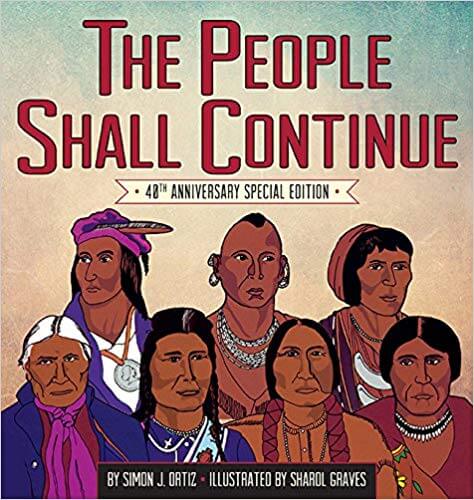
4. Failing to talk about the indigenous people whose land we now live on
I’m passionate about immigrant rights and the Black Lives Matter movement. I talk often to our kids about the racism and oppression that Black and Latinx people face in the United States.
What I haven’t done is teach my kids much about the history, struggles, and culture of indigenous people. So much of the privilege that white people experience today is built upon their suffering. But, I’m ashamed to admit it’s not been part of our family’s conversations.
There are so many ways that the media ignores present day racism against Native Americans.
For example, I just learned from reading Why Are All the Black Kids Sitting Together in the Cafeteria? that Native Americans are even more likely to die at the hands of police than Black people are. As an anti-racist parent, I need to find ways to talk with my kids about the continuing oppression of indigeneous people.
One of my goals for this fall is for our family to visit the museum at the Chucalissa archeological site in our city, where the Mississippian people once lived.
I’ll also be looking for books that help our six year old understand the history, culture, and struggles of Native Americans in the past and today. And I’ll be continuing my own education about this too.
Update! Here are book lists I created for that purpose: 17 #ownvoices children’s books about Native Americans and First Nations Canadians and Learning Native American History with 5 #ownvoices books from Chickasaw Press
5. Assuming my child would become anti-racist just by attending a diverse school
While our six year old attends a predominantly white school, our oldest attended the same majority Black middle and high schools that I did. (Boy is it weird when some of your old teachers are still around, teaching your kid!)
Perhaps because I’m his stepmom and not his mom, or maybe because he’s a quiet kid, I didn’t make as much of an effort to talk to our oldest son about race as I do now with our six year old.
Another big reason we didn’t talk about it? I assumed that being in the racial minority for several hours each day would help him learn most of what he needed to know about race.
Our culture often tells us that diversity is the answer to ending racism. And so much of my own education about racism started from just observing what happened at school.
But diversity by itself doesn’t teach kids or adults to fight racism. (As a recent Facebook post from my former classmate about being a victim of “reverse racism” reminded me.)
Related Post: 6 Meaningful Ways Kids Can Celebrate Martin Luther King, Jr. Day
Case in point: After Michael Brown was shot and killed by Ferguson, Missouri police in 2014, one of our son’s teachers encouraged the class to have a debate about the protests that were happening there.
My husband and I were alarmed when our son said that even though what happened to Brown was wrong, “burning down your own community doesn’t solve anything.”
In retrospect, it’s not surprising at all that he said that. We had not talked about Ferguson specifically or police brutality in general. Most of his friends were white. And he had only heard about the events in Ferguson through brief, mainstream media coverage.
So we had a long talk that night that helped him understand the bigger picture of the protests.
When our local peace and justice center hosted Rev. Osagyefo Sekou, a pastor and organizer from Ferguson, we attended his talk together. Our son was riveted by what Rev. Sekou said. (And let me tell you usually the only things that rivet him are video games and barbeque.)
Lesson learned: No matter a kid’s age or where they go to school, talk about race needs to be explicit and it needs to happen often.