
Are you trying to teach children about U.S. or world history? Sadly, war is a big part of these histories. Perhaps your kids are asking you questions about present-day wars and violent conflicts. If you’re not sure how to respond, these children’s books about war and genocide can help start age-appropriate conversations about these sensitive topics.
Table of contents (click on heading to go directly to section)
- Fiction picture books about war and genocide
- Non-fiction picture books about war and genocide
- Chapter books about war and genocide


Fiction picture books about war and genocide

When Spring Comes to the DMZ by Uk-Bae Lee.
Purchase from Bookshop.org (supports independent bookstores and my business!)
This unusual and touching picture book celebrates the wildlife and natural beauty that thrive in the land between the Military Demarcation Line (DMZ) dividing North and South Korea. Images of razor wire fences frame happy seals who can go where they please, while the people of the two Koreas cannot.
A grandfather often climbs the hill to an observatory in the DMZ so that he can gaze at the northern sky. What he most wants is to be able to fling open the metal gates that surround the DMZ, so that he can experience all of his beloved home country. This story is a wonderful visual celebration of peace and a warning of the long-term consequences of war. (Recommended for ages 4 – 8. South Korean author.)
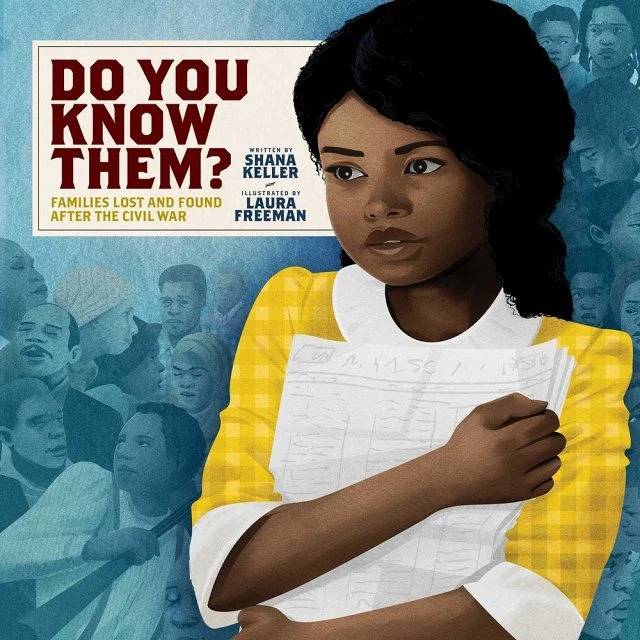
Do You Know Them? Families Lost and Found After the Civil War by Shana Keller. Illustrated by Laura Freeman.
Purchase from Bookshop.org (supports independent bookstores and my business!)
Lettie and her Uncle Charlie, like so many other formerly enslaved people, do not know where their family members are at the end of the Civil War. Lettie’s determined to save the pennies she earns working in Mr. Young’s store so that she can place an ad in the newspaper asking if anyone has information about them.
As she saves, she and Uncle Charlie pore over the other newspaper ads. Lettie begins reading them aloud at church, since many people either can’t read or can’t afford a newspaper subscription. While this moving story is fictional, all the ads that are included in Do You Know Them? were taken from actual newspapers. (Recommended for ages 5 – 9. Black author.)
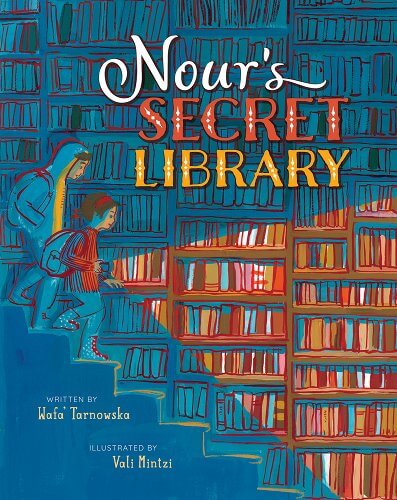
Nour’s Secret Library by Wafa’ Tarnowska. Illustrated by Vali Mintzi.
Purchase from Bookshop.org (supports independent bookstores and my business!)
Nour’s Secret Library is inspired by the true story of young people in Daraya who saved 15,000 books from destruction during the Syrian War.
Nour and her cousin Amir love reading and acting out adventures from the stories they read. As they plan to start a secret club for kids like them, war arrives in their town. Soon the family spends much of their time sheltering in their basement and simply trying to survive.
When Amir goes out to buy food, he starts collecting books he finds scattered in the street. Nour knows they need a secret location to hide the books. Soon others are joining their mission of protecting all kinds of books and spending all the time they can reading in the secret library. (Recommended for ages 5 – 9. Lebanese-American author.)
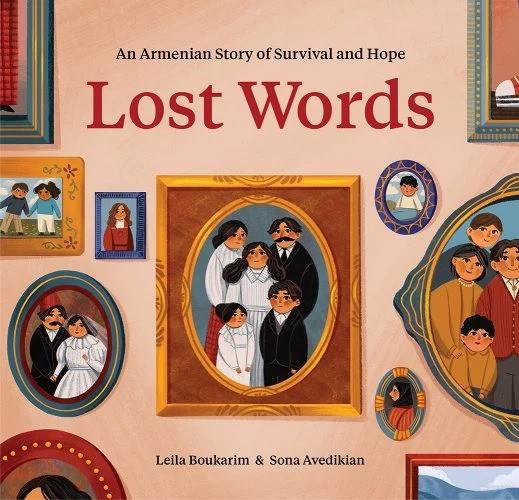
Lost Words: An Armenian Story of Survival and Hope by Leila Boukarim. Illustrated by Sona Avedikian.
Purchase from Bookshop.org (supports independent bookstores and my business)
When Boukarim’s children asked her “where are we from?,” she had the idea to write a book about a child surviving the Armenian genocide of 1915. Her husband’s grandfather was such a child, though he didn’t discuss his experience.
In Lost Words, a mother pleads with her son and daughters to leave with the others who must walk for months across the desert. The children are taken in at an orphanage, whether other children want to know the boy’s story. But without Mama, he finds that he has lost his words.
As he grows older and makes a life and family or his own, the hole that Mama’s absence has left grows smaller, though it’s still there. Yet she’s still present in many experiences, even if he doesn’t have the words to share those memories with others. (Recommended for ages 5 – 9.)
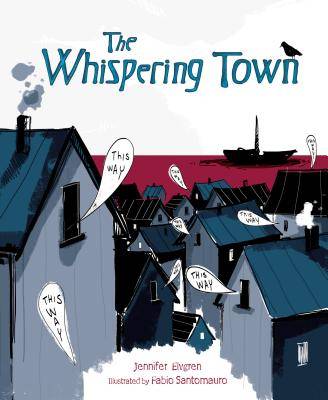
The Whispering Town by Jennifer Elvgren. Illustrated by Fabio Santomauro.
Purchase from Bookshop.org (supports independent bookstores and my business!)
Inspired by a true story of a small fishing village in Denmark, The Whispering Town is a story of communal courage during the Holocaust. Anett’s family is sheltering a Jewish mother and her son in their basement until they can escape to Sweden. As Anett gathers extra food and books for them, neighbors whisper their encouragement.
But when the Nazis hear rumors that someone on the street is hiding Jews, Anett’s parents know that their visitors must make their move now. On a cloudy night with no moonlight, how can the people of the town help them find their way to the harbor? (Recommended for ages 5 – 9.)
Shop the entire list on Bookshop.org
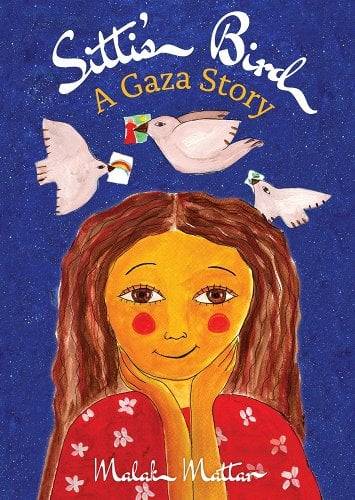
Sitti’s Bird: A Gaza Story by Malak Mattar.
Purchase from Bookshop.org (supports independent bookstores and my business!)
This story is inspired by the author’s own artistic journey as a teen living through the 2014 Israeli assault on Gaza.
Young Malak’s life contains so much beauty as well as fear as she lives through the siege. Watching the beauty of the fish who swim in the sea, eating her Sitti’s maqulouba, and gazing at Sitti’s bird all bring Malak joy.
But when an explosion happens while Malak is at school, she and everyone else must hunker down in their homes for weeks on end. When Malak finds a set of paints she’d forgotten about, she discovers a way to celebrate Gaza’s beauty. (Recommended for ages 6 – 10. Palestinian author.)
Related post: Children’s books about Palestine
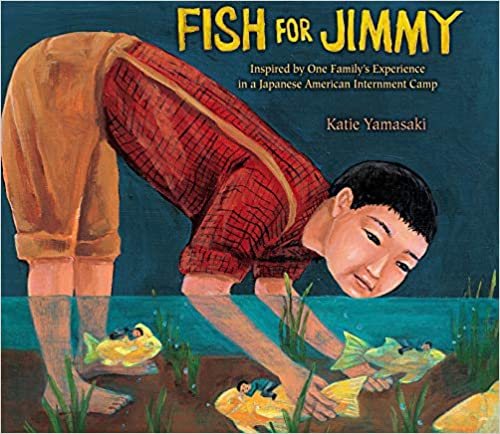
Fish for Jimmy by Katie Yamasaki
Purchase from Bookshop.org (supports independent bookstores and my business!)
Like so many Japanese American people, Katie Yamasaki’s family members were imprisoned in relocation camps during World War II. Fish for Jimmy is based on their experience.
There are few things that young Jimmy loves more than swimming in the ocean with his older brother Taro. Taro entertains him with stories, telling Jimmy that it’s the fish who taught him how to swim.
But when the FBI takes Father to prison and forces the rest of the family into a prison camp, the sweetness of their California life ends. Jimmy refuses to eat, so much so that everyone in the camp is worried about him. Taro is sure that there’s one thing that could lift Jimmy’s spirits, and he’s determined to get it for him. (Recommended for ages 6 – 10. Japanese-American author.)
Non-fiction picture books about war and genocide
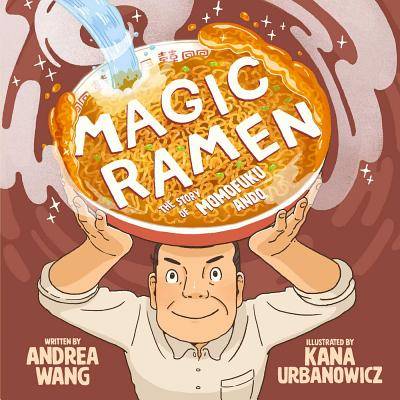
Magic Ramen by Andrea Wang. Illustrated by Kana Urbanowicz.
Purchase from Bookshop.org (supports independent bookstores and my business!)
After World War II ended, many Japanese people experienced extreme hardship and hunger. Momofuku Ando never forgot this, and thought to himself that “the world is only peaceful when everyone has enough to eat.”
Years later when one of his businesses failed, Ando began experimenting with ramen that anyone could make cheaply and easily at home. Mastering the right texture for the noodles took many attempts, as did figuring out how to add flavor to the noodles. Even when Ando figured out how to do these two things, he still wasn’t satisfied because he wanted people to be able to cook the ramen anywhere, even if they did not have a stove. (Recommended for ages 4 – 8. Chinese-American author.)
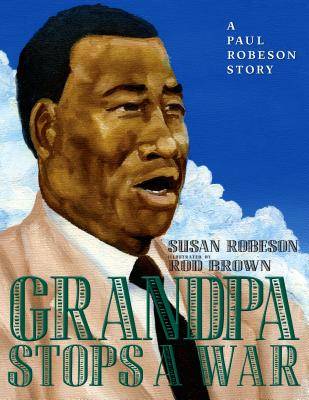
Grandpa Stops a War: A Paul Robeson Story by Susan Robeson. Illustrated by Rod Brown.
Purchase from Bookshop.org (supports independent bookstores and my business!)
In Grandpa Stops a War, the author shares a moving story about how her grandfather Paul Robeson used his talent and fame as a singer to bring hope during the Spanish Civil War.
When war broke out in Spain, Robeson’s heart was troubled by the children and families who suffered hunger and homelessness. He held concerts in London to raise money for them, but he still felt he hadn’t done all he could. Others were puzzled by his decision to go to Spain, since he had no direct ties to the country. Robeson explained that he felt compelled to risk danger because “wherever there is war people suffer, and each of us must do our part to bring peace into the world.”
When Robeson insisted that he must go to the front lines of the war, people close to him were even more alarmed. He knew that the power of music could bring hope and peace in the most desperate places. (Recommended for ages 4 – 8. Black author.)

Walking Toward Peace: The True Story of a Brave Woman Called Peace Pilgrim by Kathleen Krull. Illustrated by Annie Bowler.
Purchase from Bookshop.org (supports independent bookstores and my business!)
As the world recovered from World War II, a wealthy American woman decided to radically change her life to spread a message of peace. Changing her name to Peace Pilgrim and giving away her money, she set a goal of walking 25,000 miles crisscrossing the United States so that she could share her belief that people must abandon war. Traveling only with a toothbrush, a comb, a map, a pen, and copies of her message, she relied on the kindness of others for food and shelter.
From conversations with individuals to talks to school children and sermons in congregations, Peace Pilgrim created a peace movement in her 28 years of walking for peace. (Recommended for ages 4 – 8. White author.)
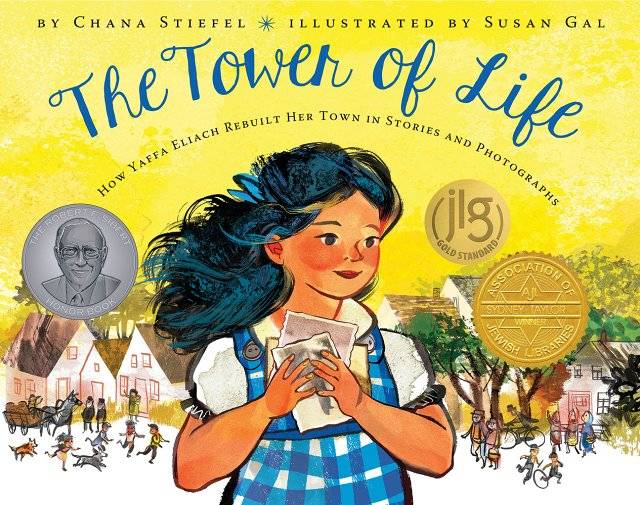
The Tower of Life: How Yaffa Eliach Rebuilt Her Town in Stories and Photographs by Chana Stiefel. Illustrated by Susan Gal.
Purchase from Bookshop.org (supports independent bookstores and my business!)
As a young child, Yaffa had so many happy experiences in her close-knit small Jewish town of Eishyshok, Poland, which the illustrations and words of this book convey in detail. Yaffa’s favorite place was in her grandmother’s photography studio, where people received precious pictures that could mail to friends near and far.
When Germans invaded the shtetl during World War II, Yaffa’s family helped them escape just in time. Still, the 900 year old town was quickly destroyed.
As an adult in the United States, Yaffa became a well-respected historian. When President Jimmy Carter reached out to her about documenting the Holocaust for the new memorial museum that was being established, Yaffa wanted to do something different. She diligently reached out to the former residents of Eishyshok, asking for photographs that would show “heroes, not victims. Dignity, not disaster. Lives lived, not lost.” Today visitors to the U.S. Holocaust Memorial Museum can see Eishyshok’s “Tower of Life” thanks to Yaffa’s work. (Recommended for ages 7 – 11. Jewish author.)
Chapter books about war and genocide
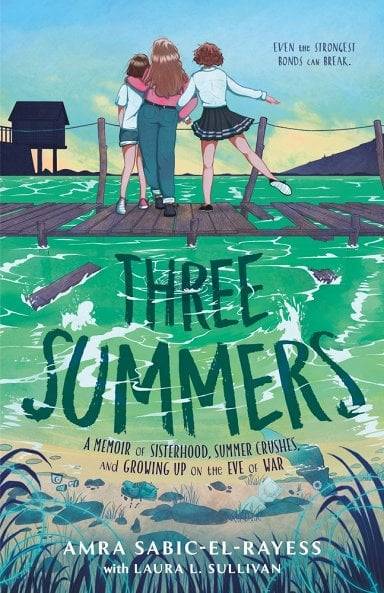
Three Summers: A Memoir of Sisterhood, Summer Crushes, and Growing Up on the Eve of War by Amra Sabic-El-Rayess with Laura L. Sullivan
Purchase from Bookshop.org (supports independent bookstores and my business!)
Sabic-El-Rayess’ childhood contained two very painful periods. The first was the death of her beloved older brother Amar, who she’d watched suffer both physical pain from Marfan Syndrome and cruel ableist bullying. The second was enduring the Bosnian genocide of 1992.
Between these traumatic times, Amra has three golden summers with Žana, her glamorous, high-spirited, boy-obsessed cousin who lives in Serbia during the school year. Amra’s family is Bosniak (Bosnian Muslim), and technically Žana’s mother is as well, but her family, especially her father (who has an important role in the military), only understand themselves as Serbian.
As Žana’s bold and carefree spirit gives Amra the confidence to try new things, make friendships, and even flirt with boys, it seems that nothing could separate the sister-cousins. But when growing discrimination against Bosniaks threatens Amra’s family, she’s unsure if Žana’s father even cares.
The book ends before the war and genocide in Bosnia begin, though there are “where are they now” notes and a timeline at the end of the book that provide details about both topics. (Bosnian Muslim author. Recommended for ages 10 – 14.)

Finding Junie Kim by Ellen Oh
Purchase from Bookshop.org (supports independent bookstores and my business!)
This moving middle grade book about the pain of war and present-day racism was inspired by Ellen Oh’s family experiences. Her mother and aunt endured the hardships of the Korean War as young children, while her own children have dealt with upswings in racist hate at school after Trump’s first election.
Junie is so tired of the racist bullying her classmate Tobias directs at her, but she finds it hard to speak up. When hateful graffiti is spraypainted across the gym, Junie’s friends, who are all girls of color, are ready to do something. Junie doubts they can do anything at all, and her best friend Patrice calls off their friendship because of Junie’s negativity. Neither girl realizes that Junie is falling into a deep depression.
Once Junie’s mental health deteriorates badly enough for her parents to notice, she begins to get the help she needs. As she heals, she expresses her doubts to her grandfather that anything she could do to challenge hate would matter. Once Grandpa begins to talk about what he experienced as a 12-year-old living through the Korean War, Junie’s understanding of her family – and herself- begins to shift. (Recommended for ages 10 – 14. Korean-American author.)
Related post: 11 children’s books about Korean culture

Chains by Laurie Halse Anderson (series)
Purchase from Bookshop.org (supports independent bookstores and my business!)
This emotionally captivating and extensively researched book tells the story of Isabel, an enslaved young teen seeking her freedom as the Revolutionary War begins. Her previous enslaver, Miss Fulton had written Isabel and her little sister Ruth’s freedom into her will. But when she’s on her deathbed, Miss Fulton’s greedy nephew shows up and sells the girls to the Locktons, a wealthy and especially cruel Loyalist couple in New York City.
As war looms over New York City, Isabel meets Curzon, another enslaved teen who’s eager to fight for the Patriot cause. Curzon and his enslaver Bellingham want Isabel to spy on the Locktons and pass information along to them. She doesn’t want to do anything that could make her awful conditions at the Locktons worse. When Mrs. Lockton decides Ruth’s seizures are a sign she’s possessed by the devil, Isabel decides the risk of spying is worth it.
Educators will especially appreciate that each chapter begins with a quote from Loyalist or Patriot documents, shedding light on the complexity and harshness of the Revolutionary War. (Recommended for ages 10 – 14. White author.)
Related post: How should we talk with children about slavery?

The Barefoot Dreams of Petra Luna by Alda P. Dobbs (series)
Purchase from Bookshop.org (supports independent bookstores and my business!)
As battles between the revolutionaries and the federales rage in Mexico, Petra’s father is forced into the federal army that he despises. Petra’s mother died in childbirth, and so it’s Petra’s responsibility to keep her two young siblings and her abuelita safe until he can return.
While their village burns, the family flees north. Petra’s dreams alternate between joining the revolutionaries like the fierce but caring Capitana Marietta, and reaching the United States, where she could finally go to school. On their harrowing journey, Petra feels admiration for her grandmother’s survival skills drawn from her Nahuatl roots. Yet she also feels constricted by abuelita’s ideas that people must make peace with the social class they are born into.
While this book about war is certainly not an easy read, this compelling novel gives children insight into the Mexican Revolution that is hard for a history textbook to match. (Ages 10 – 14. Mexican-American author.)
Related post: 19 chapter books for Latino/Hispanic Heritage Month
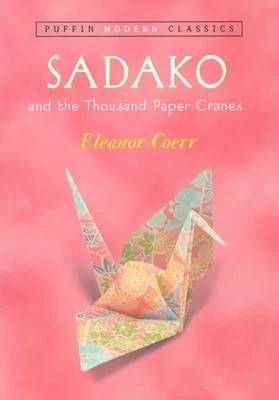
Sadako and the Thousand Paper Cranes by Eleanor Coerr.
Purchase from Bookshop.org (supports independent bookstores and my business!)
As you discuss war with children, it’s important to include books about war’s aftermath, which lasts long after the official fighting has ceased.
Sadako Sasaki was a toddler when the United States dropped an atomic bomb on her city of Hiroshima. When she was twelve years old and preparing to run an importance race at school, she began having dizzy spells. Doctors informed the Sasakis that Sadako had leukemia, or “the atom bomb disease” as many called it.
Sadako knew that some people recovered from leukemia, so when her first hospital stay began she was still hopeful that she could get better. Her best friend Chizuko told her the sacred story of the crane, and how a sick person who folded 1,000 origami cranes would be healed. During her long hospital stay, Sadako folded hundreds of the cranes before she died.
Since the book ends with her death, it’s important for readers to continue to the epilogue, which explains how her friends completed the 1,000 cranes so that she could be buried with them. They, along with many other young people across Japan, began working for a monument to Sadako, which today sits in Hiroshima Peace Park. (Recommended for ages 8 – 12. White author.)
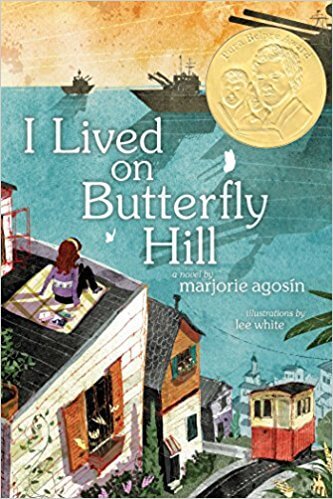
I Lived on Butterfly Hill by Marjorie Agosín.
Purchase from Bookshop.org (supports independent bookstores and my business!)
Eleven year old Celeste Marconi loves her life in the colorful city Valparaíso, Chile. One day, she notices an unusually large number of ships in the harbor. No one will answer her questions about the ships, and she soon sees that the adults in her life are fearful and jumpy.
When the military overthrows the democratically elected President, Celeste’s parents are in danger and are forced in go into hiding. Fewer children are at Celeste’s school each week. She hears rumors of people being “disappeared.” Celeste’s grandmother, who escaped the Nazi regime as a Jewish child, decides that Chile is no longer a safe place for Celeste. She makes the heartbreaking decision to send Celeste to live with her Tia Gloria in Maine.
Arriving in Maine in the frigid winter, Celeste only knows a handful of English words, and her life is turned upside down a second time. Everything is different, from the extreme quiet of her aunt’s isolated house to her unfriendly classmates. (Recommended for ages 10 – 14. Chilean-American Jewish author.)
Related post: 16 books to help children and teens understand antisemitism
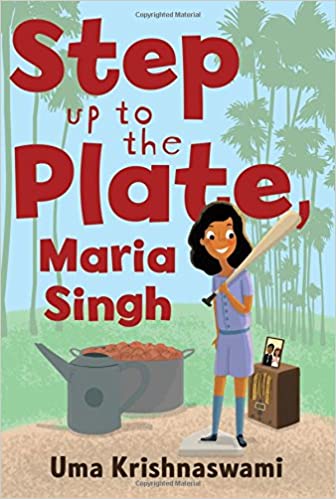
Step Up to the Plate, Maria Singh by Uma Krishnaswami
Purchase from Bookshop.org (supports independent bookstores and my business)
When Maria’s teacher announces that she wants to organize the first all girl’s softball team in Yuba City, California, it’s all Maria can think about. She doesn’t know if Papi will let her play, especially since she’ll need to wear shorts. Papi is from India, and though Maria’s Mexican mother is more open-minded, she isn’t sure if she’ll be able to persuade him.
While Maria’s fixated on playing ball, bigger problems keep appearing. Her friend Janie hasn’t received any letters from her father, who is fighting in World War II, making everyone in the family afraid. Her younger brother Emilio is bullied for being “half and half.”
Most frightening of all, Papi’s landlord is moving away. California law prohibits Papi from buying their farmland since he’s Indian. Maria’s never been afraid to speak up about the wrongs she sees; can she use her voice to help her family? (Recommended for ages 8 – 12. Indian-American author.)

Max in the House of Spies by Adam Gidwitz.
Purchase from Bookshop.org (supports independent bookstores and my business!)
Adam Gidwitz has a unique gift for blending humor and imagination with painful history, and this gift shines through once again in the World War II-themed novel Max in the House of Spies.
As Max’s parents send him to England on the Kindertransport, he’s desperate to get back to Germany. Max has always felt that he’s more able to protect his parents than they are able to protect him, but now he won’t be able to help them navigate the violent antisemitism that’s gripped his country
On the boat to England, Max discovers that he has two new invisible companions on his shoulders: a kobold named Berg and a dybbuk named Stein. These bickering creatures certainly don’t seem to be there to make Max’s life easier, but they still provide him company.
Max discovers that his new foster family is both Jewish and has a connection to the top levels of British espionage. He knows that the only way he can protect his parents is to get UK authorities to send him back to Germany as a spy. (Recommended for ages 10 – 14. Chapter book. Jewish author.)

Fred Korematsu Speaks Up by Laura Atkins and Stan Yogi. Illustrated by Yutaka Houlette.
Purchase from Bookshop.org (supports independent bookstores and my business!)
Fred Korematsu’s life was turned upside down in 1942. He, along with tens of thousands of Japanese Americans, was ordered to report to an internment camp. But Korematsu knew that the internment order was morally wrong, so he went into hiding.
He was caught, jailed, and then sent to the same prison camp where the rest of his family had been forcibly relocated. He continued his resistance to this injustice by suing the government. His case went all the way to the Supreme Court. Korematsu lost, but decades later this social justice activist was a leader in winning restitution for Japanese Americans who were interned.
This book tells Korematsu’s story through a combination of poems, photographs, paintings, and informational text. The book also asks children questions that help them identify with his story. (Recommended for ages 9 – 13. White author – Atkins. Japanese-American author – Yogi.)
