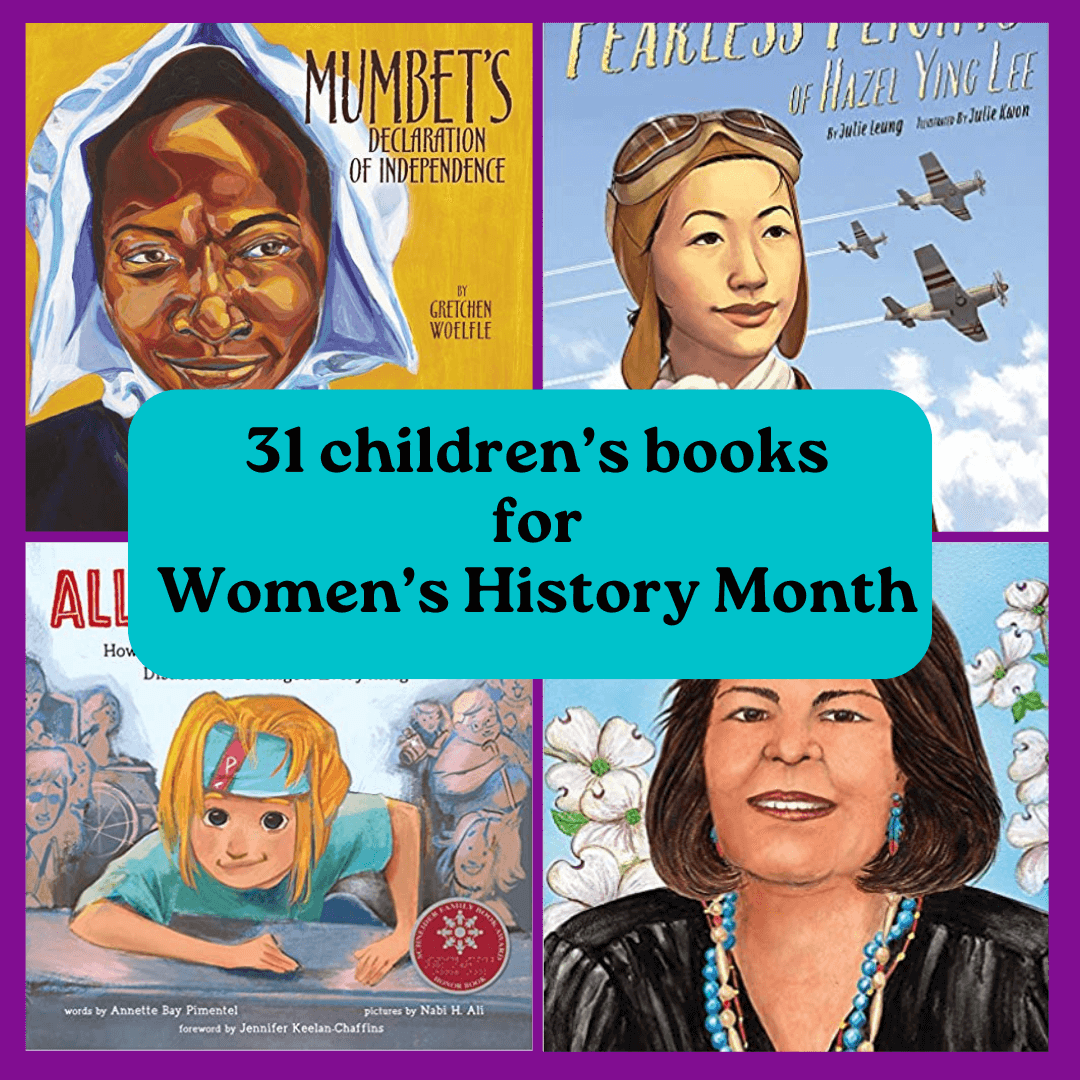
At the end of February, I thought about how I wanted to celebrate Women’s History Month in our family. I knew I wanted my son to learn about women leaders from a variety of fields. I also wanted to learn about women of many races, disabled women and girls, and LGBTQ women, avoiding the white-washed women’s history book lists that children are too often presented.
Read on to discover 31 children’s books – one for each day of Women’s History Month – about American women leaders who’ve made history and stood for justice.

Disclosure: For your convenience, this post includes affiliate links. If you purchase items through these links, I may earn a small commission at no additional cost to you. You can read my full disclosure policy here.


Women’s History Month Children’s Books: 18th and 19th Centuries
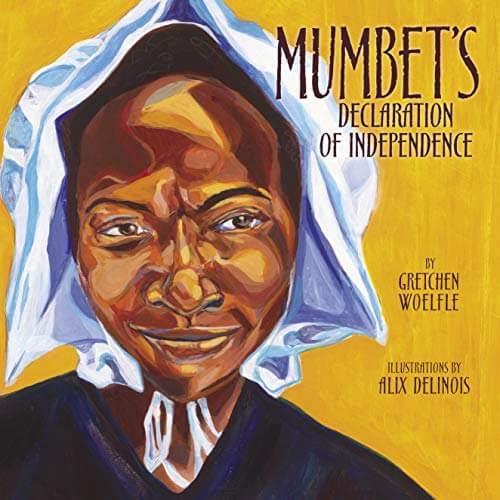
Mumbet’s Declaration of Independence by Gretchen Woelfle and Alex Delinois
Purchase from Bookshop (supports independent bookstores)
For many years before she chose her own name, Elizabeth Freeman lived in slavery and was called Mumbet. Her spirit was as strong as a mountain, and she dreamed of freedom as she endured verbal and physical abuse from her enslavers, the Ashleys.
When the Ashleys hosted men who were working to free the colonies from Britain, Mumbet heard their words about freedom and equality. She wondered how those words could apply to her. Years later, after the war was over, she boldly told a lawyer who supported the American Revolution that she should also be free. Despite his skepticism, Mumbet would not be deterred, and he eventually agreed to pursue her case in court. Her courage and determination made history, with slavery abolished in Massachusetts just a few years later. (Recommended for ages 6 – 10)
Related Post: How should we talk with children about enslavement?

Ida B. Wells: Let the Truth Be Told by Walter Dean Myers and Bonnie Christensen
Purchase from Bookshop (supports independent bookstores)
Activist, educator, journalist, and sufragette Ida B. Wells deserves an honored place in women’s history. She took incredible risks for freedom of Black women and men in the late 1800s and early 1900s. Long before the Birmingham bus boycotts, Wells was manhandled for refusing to move from the ladies’ coach of a train. She even sued the railroad for the mistreatment she received. Later, It is Wells’ activism and journalism about the terrible reality of lynching that earned her both fame and threats. She was also on the front lines of the struggle for women’s suffrage, despite discrimination from white suffragettes.
This biography covers Wells’ amazing life from her childhood through her death. Children everywhere will be inspired by her wisdom and her willingness to speak the truth no matter what. (Recommended for ages 7 – 12).

Finish the Fight: The Brave and Revolutionary Women Who Fought for the Right to Vote by Veronica Chambers and the Staff of The New York Times
Purchase from Bookshop (supports independent bookstores)
I’m so glad there’s finally a book available for tweens and teens that tells the complicated story of women’s suffrage and race. After introducing how racism divided the suffrage movement, each chapter tells the story of a different BIPOC (Black, Indigenous, People of Color) and/or queer suffragette, and how she advanced the fight for women’s rights.
I’ve been learning just as much as my son as we read the stories of Mary Church Terrell, Mabel Ping-Hua, Jovita Idár, and others. Their stories should be given a more prominent part in women’s history lessons. (#ownvoices, recommended for ages 10+).
Related Post: 8 ways to teach children about democracy, citizenship, and voting
Women’s History Month Children’s Books: 1900 – 1949

Mother Jones and Her Army of Mill Children by Jonah Winter. Illustrated by Nancy Carpenter.
Purchase from Bookshop.org (supports independent bookstores and my business!)
Real life hero of the U.S. labor movement Mother Jones comes alive in this first person narrative that captures how unflappable, bold, and persistent she was. Of all the terrible things she saw workers experience, none made her angrier than the exploitation of children in textile mills.
While Mother Jones tried a number of tactics, she eventually called on families to allow their children to march with her all the way to the President’s summer home, a distance of more than 100 miles. Though President Roosevelt refused to see them, Mother Jones emphasizes that the campaign was not a failure. This realistic look at the incredible effort it takes to strike down injustice still manages to inspire and encourage young readers. (Recommended for ages 6 – 10.)
Related Post: Best children’s books about workers’ rights

Planting Stories: The Life of Librarian and Storyteller Pura Belpré by Anika Aldamuy Denise and Paola Escobar
Purchase from Bookshop (supports independent bookstores)
Who are libraries for? Today, most of us who quickly say “everyone!” But in 1921, when Puerto Rican immigrant Pura Belpré applied for a job at the New York City public library, many Spanish-speaking families did not think the library would welcome them.
As a bilingual assistant, Belpré was eager to share the Puerto Rican folktales her grandmother told her as a child. She filled children with delight as she recounted the tales during library story hours. This creative librarian even began making her own puppets to make the stories even more captivating. Yet when she looked on the shelves of the massive library, there were not any children’s books in Spanish.
She wrote her own children’s book, so that she could keep planting story seeds. Soon she was traveling far beyond the library and even across the country, to tell the stories that were so precious to her. (#ownvoices, recommended for ages 3 – 7)
Related Post: 17 engaging picture books starring Latinx characters
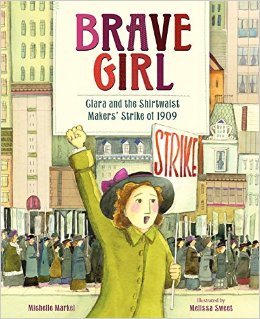
Brave Girl: Clara and the Shirtwaist Makers’ Strike of 1909 by Michelle Markel and Melissa Sweet
Purchase from Bookshop (supports independent bookstores)
Labor history is an important aspect of women’s history. This biographical tale tells the true story of how Clara Lemlich, an Ukranian immigrant to the United States, became a leader of New York City’s garment workers in the early 1900s. As a child Clara goes to work sewing clothes for just a few dollars a month because no one will hire her father.
Clara quickly becomes angry at the terrible treatment she and the other girls face. She hears from some of the men that they’ve been thinking of going on strike, but they don’t think the women are tough enough to participate.
Through tireless organizing that results in Clara being repeatedly fired, arrested, and even beaten, Clara she shows just how brave girls can be. At a huge union meeting, when the men are cautious, it is Clara who stands up and calls for a general strike. (Recommended for ages 5 -9).
Related Post: 15 books to read for Asian Pacific Islander Heritage Month

She Loved Baseball: The Effa Manley Story by Audrey Vernick and Don Tate
Purchase from Bookshop (supports independent bookstores)
Even as a young woman new to New York City, Effa Brooks didn’t believe in accepting things the way they were – if those things were unfair. When she saw that even in Black neighborhoods most businesses were white owned, she helped organize the community. They boycotted stores that wouldn’t hire Black employees.
When she and her husband Abe Manley started the Brooklyn Eagles baseball team, Effa became their business manager. Some thought a woman didn’t belong at the Negro League meetings, but Effa understood the business of baseball. When the Major Leagues began picking off the best Black players without compensating the Negro League teams, Effa refused to accept it. The Eagles were the first team to be paid for a player who was leaving for the Majors. And when the Baseball Hall of Fame ignored the important history of the Negro Leagues, Effa also refused to accept their absence. (Recommended for ages 5 – 9)
Related Post: 16 Outstanding Children’s Books about Black Women Leaders

Little Melba and Her Big Trombone by Katheryn Russell-Brown and Frank Morrison
Purchase from Bookshop (supports independent bookstores)
I love how the text and vibrant illustrations of this book make us feel like we’re living in the world of jazz alongside Melba Liston. While you might not recognize Liston’s name, she was one of the most important jazz musicians of the 1950s and 60s. She was also a sought-after composer. Liston had to break both barriers of race and gender to pursue her passion for music.
My son loved the part of the story where Melba gets her first trombone. She can’t event fully extend the slide because her arms are too short. This doesn’t stop her from putting everything she has into learning the instrument. (#ownvoices, recommended for ages 5 to 10)
Shop the entire book list on Bookshop.org!

The Fearless Flights of Hazel Ying Lee by Julie Leung and Julie Kwon
Purchase from Bookshop (supports independent bookstores)
Julie Leung masterfully weaves together the barriers and discrimination Hazel Ying Lee faced as both a Chinese-American and an ambitious woman, and Hazel’s fearless spirit that refused to abandon her dreams. Hazel worked an “invisible job” as an elevator operator to put herself through flight school. While people told her that no one would hire a Chinese girl pilot, the arrival of World War II changed things.
When the U.S. military started the Woman Airforce Service Pilots program, Hazel signed up immediately. She became the first Chinese-American woman to fly for the military. Though she and the other women weren’t allowed on the frontlines, they risked great danger testing the planes as they came off the assembly line. Though Hazel died in a collision in 1944, her indominable spirit continues to inspire people today. (#ownvoices, recommended for ages 5 – 9)
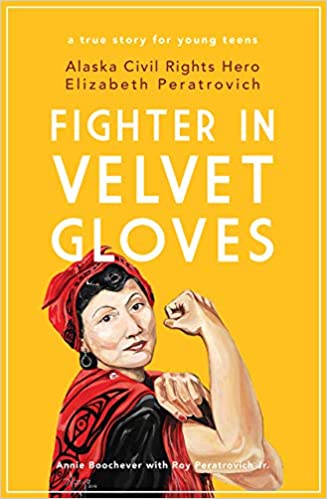
Fighter in Velvet Gloves: Alaska Civil Rights Hero Elizabeth Peratrovich by Annie Boochever with Roy Peartrovich Jr.
Purchase from Bookshop (supports independent bookstores)
Discrimination against Alaska Natives was pervasive in the 1940s. Elizabeth Peratrovich, a Tlingit woman, had dealt with racism all her life. Those experiences led her to make a groundbreaking speech in 1945 to the Alaska Territorial Legislature. For decades, Alaska Natives had been working to change racist policies, and their work culminated in the territory’s Anti-Discrimination Act.
Elizabeth was called a “fighter with velvet gloves” because she stood her ground, while doing so with grace and dignity. Because of her work and others, Alaska outlawed racial discrimination 21 years before President Johnson signed the Civil Rights Act. This in-depth portrayal of Elizabeth’s life draws from her son’s memories and family documents about her work. (Recommended for ages 10+)

Hidden Figures: The True Story of Four Black Women and the Space Race by Margot Lee Shetterly and Laura Freeman
Purchase from Bookshop (supports independent bookstores)
In the years leading up to the space race between the United States and the USSR, “computers” were people who did high level math problems. This engaging picture book tells kids about four Black women leaders whose math skills kept countless pilots and astronauts safe during their missions.
Young readers will also learn how Dorothy Vaughan, Mary Jackson, Katherine Johnson, and Christine Darden had to push repeatedly to break through racial and gender barriers. For example, Johnson wanted to go to research meetings with the other experts on her team. Her boss refused, saying that women couldn’t attend. But Johnson’s dogged persistence eventually won her entry.
Mary Jackson wanted to become an engineer, but officials at aeronautics lab said it was impossible. She would need to take high level math classes at a school Blacks weren’t allowed to attend. Jackson persisted, and became the first African American woman engineer in the lab. (#ownvoices, recommended for ages 5 to 10. For children ages 10+, see the chapter book Hidden Figures.)
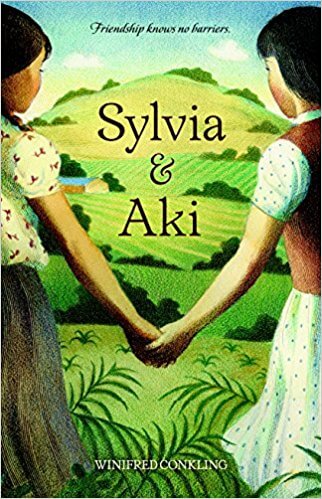
Sylvia and Aki by Winifred Conkling
Find on Bookshop (supports independent bookstores)
This moving chapter book, based on a true story, examines discrimination against both Japanese Americans and Mexican Americans during the World War II era. Like 100,000 other Japanese Americans, Aki Munemitsu was forced from her home into a relocation camp. The Mendez family leased the Munemitsu’s farm while they were interned. The Mendez family tried to enroll their daughter Sylvia in the local school, but were told she had to go the Mexican school. (She became a plaintiff in a ground-breaking desegregation lawsuit.)
Aki, who once attended the Westminster School that Sylvia was being denied admittance to, now must live in a crowded tar-paper building in a camp bordered with razor wire. Sylvia and Aki’s stories are told side by side, including how they became pen pals until the Munemitsu family was released at the end of the war. (Recommended for ages 10+. For younger children, you can read Sylvia’s story in the picture book Separate Is Never Equal.)

Josephine by Patricia Hruby Powell and Christian Robinson
Purchase from Bookshop (supports independent bookstores)
Josephine Baker lived a remarkable and astonishing life as a dancer, comic performer, and even a French spy during World War II. Her determination to be a star led to many headstrong decisions. She once stole the spotlight from the star performer, angering her fellow chorus members but delighting critics and audiences.
As a light skinned Black woman, Josephine often had difficulty finding good places to perform in America. So she traveled to Paris. Josephine soon became famous, and she said that “for the first time in my life, I felt beautiful.”
The book does not shy away from the hard times of Josephine’s life, including towards the end, when she often lived in poverty. Although the illustrations may lead you to think of this as a book for younger children, be aware that there is a brief reference to rape. (Recommended for ages 8+)
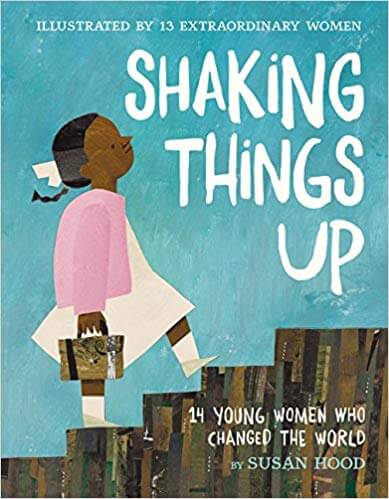
Shaking Things Up: 14 Young Women Who Changed the World by Susan Hood
Purchase from Bookshop (supports independent bookstores)
There are many remarkable women’s history stories told in this book, including several social justice activists. The one I was surprised and delighted to find was Frances Moore Lappé. Lappé is an anti-hunger activist who made a big impact on my life when I was a college student. Reading her book Diet for a Small Planet was one the first things that nudged me into a life of activism.
Hood also tells the story of Molly Williams, the first known woman firefighter in America. A cook for the fire crew, she never expected to save an entire street of homes when the firefighters were sick with the flu. There are also stories of most recent women’s history, such as Angela Zhang’s cancer research that won her awards at the age of 17. (Recommended for ages 6 – 10).
Diverse Women’s History Books: 1950 – Present

The Girl Who Thought in Pictures: The Story of Dr. Temple Grandin by Julia Finley Mosca and Daniel Rieley
Purchase from Bookshop (supports independent bookstores)
As a child, future scientist Temple Grandin saw the world differently than other children. Many people didn’t understand that being autistic made Temple “different, not less.” So her mom decided that time on her aunt’s ranch would give her a much needed break from bullying.
It’s there that Temple first developed her empathy for cows, who were also visual thinkers like she was. Her understanding of the animals helped her advance livestock science to become more humane.
This rhyming book not only teaches kids about Temple’s life, but reminds them to celebrate the many different ways our brains can work. (Recommended for ages 4 – 8)

Dolores Huerta: Get to Know the Voice of Migrant Workers by Robert Liu Trujillo
Purchase from Bookshop (supports independent bookstores)
Dolores Huerta is one of my sheroes, a passionate worker rights activist who is still campaigning for justice in her 90s.
This short chapter book tells the story of why and how she and Cesar Chavez co-founded the United Farm Workers union. Though other labor leaders told them that there was no way they could form a union against powerful California growers, Huerta knew that “si, se puede,” (it can be done.)
As a teacher of farmworker children, Huerta also knew it had to be done. The same workers who harvested crops couldn’t afford to feed their own children.
Young readers will be inspired by Huerta’s courage and vision. (#ownvoices, recommended for ages 6 – 9. For a longer chapter book on Huerta’s life for kids ages 8 – 12, see Dolores Huerta Stands Strong.)

I Am Not a Label: 34 Disabled Artists, Thinkers, Athletes and Activists from Past and Present by Cerrie Burnell
Purchase from Bookshop (supports independent bookstores)
Not all of the leaders featured in this book are women. I included it because it was so difficult to find women’s history resources about disabled women. There are profiles of names you’ll recognize, like Helen Keller, but also many people you likely haven’t heard of. Eliza Suggs, born in 1876, was determined to control her own life despite doctors saying she would die as a child. She wrote a book about her life, and lived to the age of 32.
You’ll meet Catalina Devandas, who traveled from her home in Costa Rica around the world, fighting for the rights of fellow disabled people as a lawyer. Comedian Stella Young has told the world in her honest TED Talk, “I am not your inspiration,” discouraging people from boxing her in. (#ownvoices, recommended for ages 7 – 12).

Shark Lady: The True Story of How Eugenie Clark Became the Ocean’s Most Fearless Scientist by Jess Keating and Marta Alvarez Miguéns
Find on Bookshop (supports independent bookstores)
As a child, Eugenie’s fondest wish was to swim with the sharks she loved so much. In summers when her family would visit Atlantic City, she’d swim to the ocean floor to imagine swimming with the sharks. As a young woman, Eugenie planned to study zoology, even though many people told her that women weren’t smart enough to be professors, or brave enough to explore the oceans. (Though the book doesn’t discuss this, I also wonder if some of the opposition Eugenie faced could have been because she was also Japanese-American.)
Eugenie proved them wrong with her intelligence and bravery. Her research missions dispelled myths about sharks. Humans around the world hunted sharks, believing they were dangerous. Eugenie became the first scientist in the world to train sharks, showing how smart they were. Because of her work, people began to understand that sharks deserved to be protected. (Recommended for ages 4 – 7)
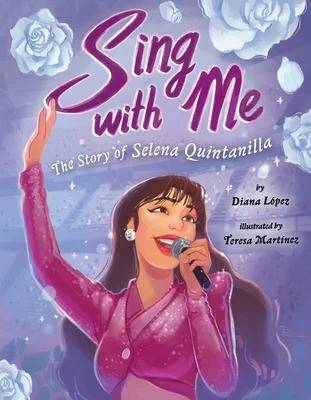
Sing with Me: The Story of Selena Quintanilla by Diana Lopez. Illustrated by Teresa Martinez.
Purchase from Bookshop.org (supports independent bookstores and my business!)
Tejano singer Selena Quinanilla may have had a short career because of her untimely death, but her impact on the world of Latin American music was huge. This engaging biography takes readers back to her first band, Selena y los Dinos, which performed in her family’s restaurant.
As Selena’s music career began to take off, fans often requested Tejano songs that she couldn’t perform because she didn’t know Spanish. Through careful study, she began to learn, only to be told by Tejano musicians that there was no room for female performers. Still, she carved out her own space and by age 12 had already recorded her first song. At every performance, fans knew that she would encourage them to “canta conmigo!” (sing with me.) (Recommended for ages 4 – 8. )
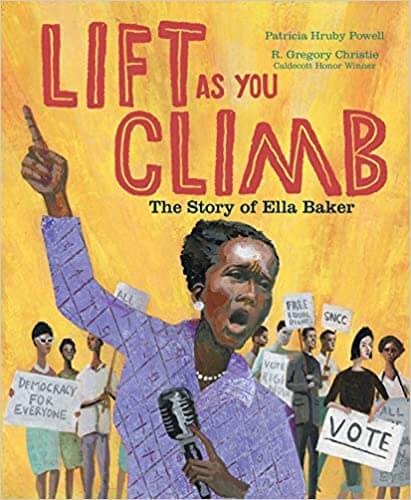
Lift As You Climb: The Story of Ella Baker by Patricia Hruby Powell and R. Gregory Christie
Purchase from Bookshop (supports independent bookstores)
It’s taken far too long, but there’s finally a children’s book about Ella Baker, a civil rights leader whose work had as much to do with the success of the Southern Christian Leadership Conference as Martin Luther King’s did.
Powell highlights Baker’s grassroots approach (which contrasted to the preachers’ she worked with) by using the question “what do you hope to accomplish?” Baker understood that Black people in poverty couldn’t be dictated to by their leaders. They needed to be listened to, so that their needs and dreams could guide the movement. (Recommended for ages 6 – 10)
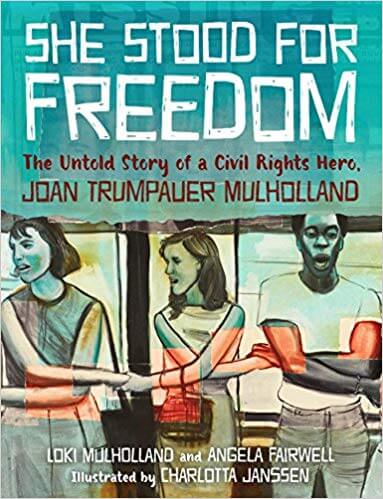
She Stood for Freedom: The Untold Story of a Civil Rights Hero, Joan Trumpauer Mulholland by Loki Mulholland, Angela Fairwell, and Charlotta Janssen
Purchase from Bookshop (supports independent bookstores)
As a white child growing up in the South, Joan Trumpauer Mulholland realized Black people weren’t treated as equals. She promised herself she would do something about that. She joined the civil rights movement while in college, and quickly had to leave segregated Duke University because of it.
Joan knew that many of her family members might cut her out of their lives because of her activism, but she joined the lunch counter sit-ins anyway.
Even after Joan was sent to the notorious Parchman Prison for participating in the Freedom Rides, she continued to speak up and take action. Because her activism spanned so many important events of the civil rights movement, this book is a great introduction to its history for older elementary children. (Recommended for ages 8 – 12)

Someday Is Now: Clara Luper and the 1958 Oklahoma City Sit-Ins by Olugbemisola Rhuday-Perkovich and Jade Johnson
Purchase from Bookshop (supports independent bookstores)
Are you familiar with the major events of the civil rights movement? If yes, you probably know about brave students in Greensboro, North Carolina who desegregated lunch counters in their city.
But did you know an Oklahoma elementary school teacher – and some of her young students – did the same thing in Oklahoma 2 years earlier? As a teacher, Luper frequently told her students that you couldn’t just “sit there on your constitutional rights.” You had to take action.
After Luper took her students on a trip to New York City and Washington, D.C., they felt the insults of segregation even more strongly. She taught the children the four steps of nonviolence: investigation, negotiation, education, and demonstration.
Luper and her students used these four steps to desegregate lunch counters at the Katz drugstore chain, even as white people threw food at them. She worried that her students’ spirits might be crushed by the hatred they had faced on the first day of the demonstration. Instead they came back, bringing more friends with them to protest. (#ownvoices, recommended for ages 7 – 10)

Shirley Chisolm Is a Verb! by Veronica Chambers and Rachelle Baker
Purchase from Bookshop (supports independent bookstores)
Before reading this engaging picture book, I knew Shirley Chisolm was the first Black woman to run for President. But I didn’t know she was also the first Black women elected to Congress, or that she helped initiate important programs for children including WIC and the school lunch program.
The book emphasizes the many verbs that describe Chisolm, and how children can choose their own ways to act, from negotiating to listening to inspiring. Chambers also explains how Chisolm paved the way for other women in leadership, from Hillary Clinton to Alexandria Ocasio-Cortez. (#ownvoices, recommended for ages 6 – 10)
Related Post: 12 children’s books about women in politics

Billie Jean! How Tennis Star Billie Jean King Changed Women’s Sports by Mara Rockliff and Elizabeth Baddeley
Purchase from Bookshop (supports independent bookstores)
When Billie Jean King decided to pursue tennis with all she had, there was a lot riding against her. She was a girl, and most people didn’t think girls’ sports mattered. And her family wasn’t rich; at the time tennis was mostly played by wealthy people.
While she exceeded many of her male classmates in tennis skill, they got scholarships while she had to work two jobs to pay for college. Even after she proved herself by winning Wimbledon, reporters would ask her sexist questions like “aren’t you ready to quit tennis and have babies?” When Bobby Riggs challenged her to a national “Battle of the Sexes,” Billie Jean knew this was a match she must win.
I encourage adults to read the endnotes to this book to their children as well. It highlights the work that King went on to do for women in sports, as well as her work to fight discrimination against queer people. (Recommended for ages 4 – 9)

The Bridges Yuri Built: How Yuri Kochiyama Marched Across Movements by Kai Naima Williams. Illustrated by Anastasia M. Williams.
Purchase from Bookshop.org (supports independent bookstores and my business!)
Written by Yuri’s great-granddaughter, this in-depth yet accessible account of Kochiyama’s life demonstrates that even before Yuri became politically active, compassion and community were guiding values in her life. Like most west coast Japanese-American families, Yuri’s family was unjustly imprisoned in a harsh camp during World War II. Yuri continued to face discrimination and hostility as she tried to find work after she was released.
When Yuri and her husband moved to Harlem, she began to understand both the grave injustices African-Americans faced and the power of community organizing. Yuri gradually became involved in Black-led campaigns for better housing and schools and racial justice, serving in a variety of roles that built on her meticulous organization and writing skills. Yuri and Bill were known for hosting events in their home for an incredible array of activists, including Malcolm X. Malcolm’s words helped Yuri expand her understanding of the connections between global social movements, understanding that “we are all part of one another.” (Recommended for ages 8 – 12. Japanese-American author.)

What Do You Do with a Voice Like That? by Chris Barton and Ekua Holmes
Purchase from Bookshop (supports independent bookstores)
Even as a child growing up in Houston, Barbara Jordan’s voice made people take notice. As a high school student, Jordan decided that being a lawyer was the best way she could use her voice. Not many Black women had done that in the 1950’s, but Jordan believed she could.
Yet once she was a lawyer, she found the political process inspired her far more than practicing law. She believed her voice as a social justice activist would make a greater difference than working in the law office. As a Texas state senator, her voice advocated for changes like better pay for farmworkers.
Not long after she was elected to the U.S. Congress, the Watergate scandal happened. Jordan made a compelling, clear speech about it that captured the attention of the nation. During her years in Congress, she spoke up often for those who had less power.
What might Jordan do next? Run for Senate, or even the Vice Presidency? What people didn’t know is that Jordan was struggling with multiple sclerosis. So she decided that the best place to use her voice was back home in Texas, where she inspired thousands of students as a college professor. (Recommended for ages 6 – 10)
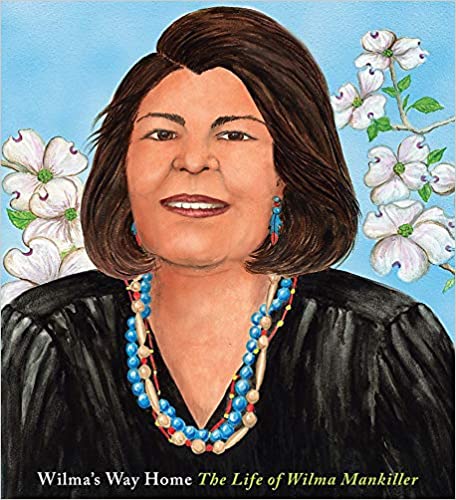
Wilma’s Way Home: The Life of Wilma Mankiller by Doreen Rappaport and Linda Kukuk
Purchase from Bookshop (supports independent bookstores)
One of the most meaningful books I’ve read in the last few years was Wilma Mankiller’s biography, so I was delighted to discover there was a children’s book about her.
It was a long journey from Wilma’s childhood in rural Oklahoma to becoming the first woman Principal Chief of the Cherokee Nation. As a child she saw how Cherokees survived through the principal of gadugi, or helping each other. But soon the U.S. government’s urban relocation program caused her family to move to San Francisco, where they had no community. The difference in daily life was jarring. Not only did the Mankillers miss their family and friends; the better jobs and housing that were supposed to be there didn’t exist.
This carefully researched book details all the major events that led to Wilma becoming an activist for American Indians, her eventual return to Oklahoma, and how she overcome resistance to the idea that a woman shouldn’t be Principal Chief. (Recommended for ages 6 – 10)

Maya Lin: Artist-Architect of Light and Lines by Jeanne Walker Harvey and Dow Phumiruk
Find on Bookshop (supports independent bookstores)
I treasure books like this one that show the connections between an artist’s childhood experiences and the art they create as adults. Maya Lin grew up in a house where she was encouraged to think “with her hands as well as her mind.”
When Maya was still in college, she entered the contest to design a memorial for soldiers who died during the Vietnam War. She envisioned a cut in the earth that would eventually heal to a polished edge, with names engraved from top to bottom. Her design was hung in an airport hanger along with countless others. Many famous architects and artists had also entered the contest, but names were not included with the designs.
After Maya’s name was announced at the winner, people realized that she was a young woman still in school. Some people began to mock her design. Maya refused to change her design, knowing that it was important that everyone who visited be able to touch and see the names of the loved ones they had lost. (Recommended for ages 5 – 9)

All the Way to the Top by Annette Bay Pimentel and Nabi H. Ali
Purchase from Bookshop (supports independent bookstores)
As a child, Jennifer Keelan often couldn’t take part in the basic activities that non-disabled children could because of a lack of accommodations. When she heard about disabled activists who were working to improve access to public spaces, Jennifer and her family joined in. She participated in her first protest in 1987 at the age of six. Soon, she was traveling the country to take part in protests.
Two years later, the Americans with Disabilities Act was proposed, but many members of Congress thought it was too expensive to pass. Jennifer traveled to Washington DC for a huge protest. Because the U.S. Capitol building wasn’t accessible, grown-ups slid out of their wheelchairs to crawl up the Capitol steps. Jennifer knew she had to join them, even though she was young. A photograph of her crawling up the steps was seen around the world.
I recommended reading the end notes with children (which include a photograph of Jennifer climbing the steps.) One of the activist groups I admire the most is ADAPT, which staged the DC protest and many others. Though they’re not mentioned by name in the main story, you can learn more about them in the notes. (Recommended for ages 4 – 9)
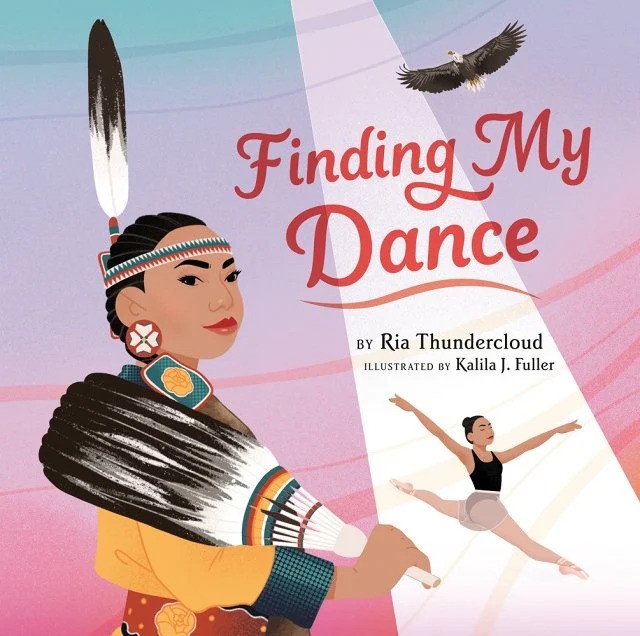
Finding My Dance by Ria Thundercloud. Illustrated by Kalila J. Fuller.
Purchase from Bookshop.org (supports independent bookstores and my business!)
In this visually and emotionally inspiring book, acclaimed dancer Ria Thundercloud shares how traditional Indigenous dance from her Ho-Chunk and Sandia Pueblo heritages have impacted her life.
From a young age, dancing at powwows deepened her ties with her community. She also fell in love with other forms of dance, including ballet and modern dance. At times the perfectionist standards of ballet made Thundercloud feel like an outsider. As the lone Indigenous girl in her classes, she often found affirmation in dance when fitting in at school was hard. (Recommended for ages 5 – 9.)

Rad Girls Can: Stories of Bold, Brave, and Brilliant Young Women by Kate Schatz and Miriam Klein Stahl
Purchase from Bookshop (supports independent bookstores)
Women’s history isn’t just about what happened 100 or even 50 years ago. It’s also being made right now! I love the mix of young women who are profiled in Rad Girls Can.
You’ll find Ruby Bridges, who desegregated a New Orleans school in 1960, but also Black ballet pioneer Misty Copeland, who still dances today. There’s a profile of the group Muslim Girls Making Change, who challenge Islamaphobia, and one on young Sophie Cruz, who began speaking for immigration reform a few years ago as a 6 year old. Children will see that girls can make change happen at any age! (Recommended for ages 10+)

One response to “31 Children’s Books for Women’s History Month”
What an inclusive list! Thank you for including the recommended age ranges, Rebekah. Those are really helpful.