As I tucked our sweet four year old into bed, he looked up and me and said, “Mommy, tomorrow you need to give me a new toy. Okay?” Since this request/demand came on a day when I had just given him a new toy, I bristled a bit at his words. In fact, he’d gotten special treats and surprises several days over the past couple of weeks. “What’s with this kid? Doesn’t he realize that toys and treats are for special occasions?” I thought.
When I paused to think about the events of the past couple of weeks, I realized just how many things he’d gotten. There were several unexpected little splurges while we were out shopping. His Halloween costume arrived in the mail, plus a book order I had placed. His monthly Little Passports subscription package had also been delivered. It’s not surprising that a four year old would soon come to see these “extras” as an everyday occurrence.


Operation Instill Gratitude In Our Child Begins
While we’ve always tried to raise our little guy to be polite, say thank you, and enjoy the simple things in life, I quickly saw areas that needed improvement. Since he had a week long fall break from preschool coming up, this seemed liked an ideal time to focus on gratitude.
You can download my printable 16 ways to help kids develop gratitude. In this post, I’ll share 5 of the things we’ve been focusing on this week.
Disclosure: This post contains affiliate links. If you purchase items through these links, I earn a small commission at no additional cost to you. You can read my full disclosure policy here.
1) Read books that prompt discussions about thankfulness and generosity.
Reading stories together is my favorite way of making abstract concepts concrete for our child. We started off by reading The Bluebird’s Palace by Orianne Lallemand and Carole Henaff. This richly illustrated tale features Natasha, a spoiled girl who keeps demanding more and more things from her father. When he finally refuses her demand to move into a new house, she stomps off into the forest.
There Natasha meets the Guardian of the Forest, an old woman who offers to grant Natasha a wish. When she requests a grand palace that she can add rooms to at any time using her imagination, the old woman warns her that she will have to live there alone. Natasha declares that she won’t mind, but eventually, of course, she feels differently.
The Bluebird’s Palace is probably a bit advanced for our four year old. I loved the story, and I highly recommend it for ages 6 – 10. I’m not sure he grasped the message of the story yet.
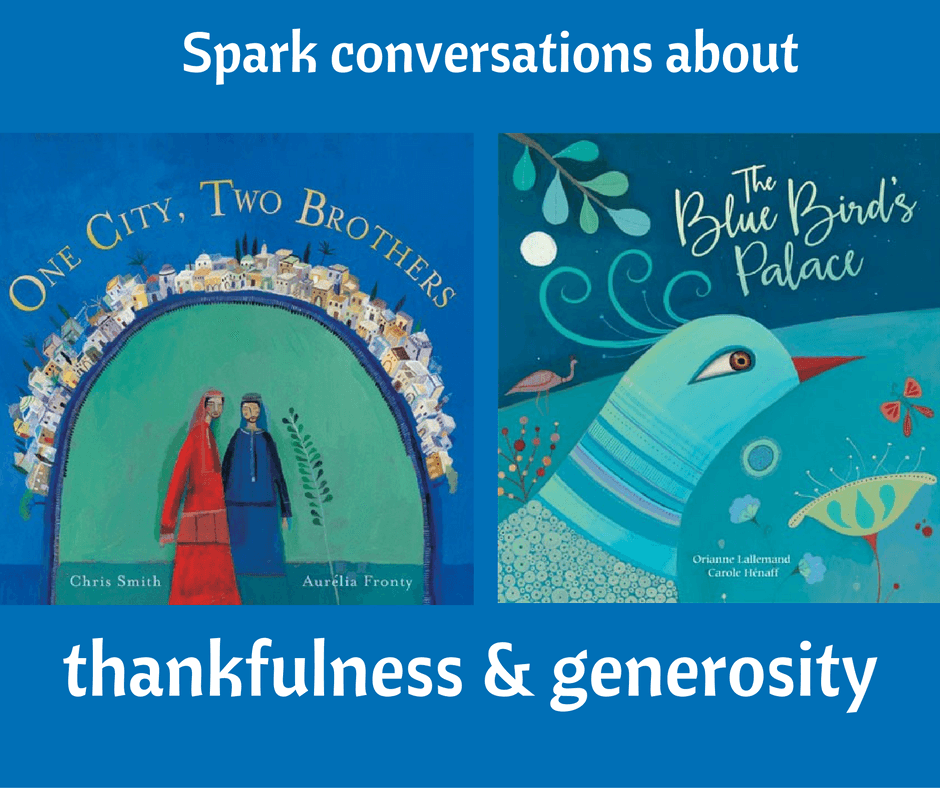
I decided to try another story that I had set aside for him a few months ago, but never read: One City, Two Brothers: A Story from Jerusalem by Chris Smith and Aurelia Fronty. When two brothers appear before King Solomon arguing about their family inheritance, Solomon tells them this tale. There were once two brothers who shared their father’s land, and always split the harvest equally.
Related Post: 18 Children’s Books about Poverty and Hunger
After one particular harvest the eldest brother, who has a family, thinks of his younger brother who lives alone. Knowing that he needs to save for his old age, he slips three extra bags of grain into his brother’s barn. But the next day, the eldest brother’s barn is still full. After several nights of attempting to give grain and finding it restored, the mystery is solved. His younger brother has also been secretly sharing with him, concerned about how the elder brother would provide for his children.
Our son instantly understand the story’s message about sharing and not keeping everything for yourself. I had already told him about a service project we’d be doing (see #2 below), and he brought that up without me mentioning it first.
2) Involve your child in a tangible service project.
The church where my son’s school is located is part of Room in the Inn, a network of congregations that provide shelter one night per week to people who are homeless during the winter months. Last year his class helped to put together clothing and hygiene items for the guests there. I asked the director of the program if they could use snack bags for the guests, and decided making those would be our fall break service project.
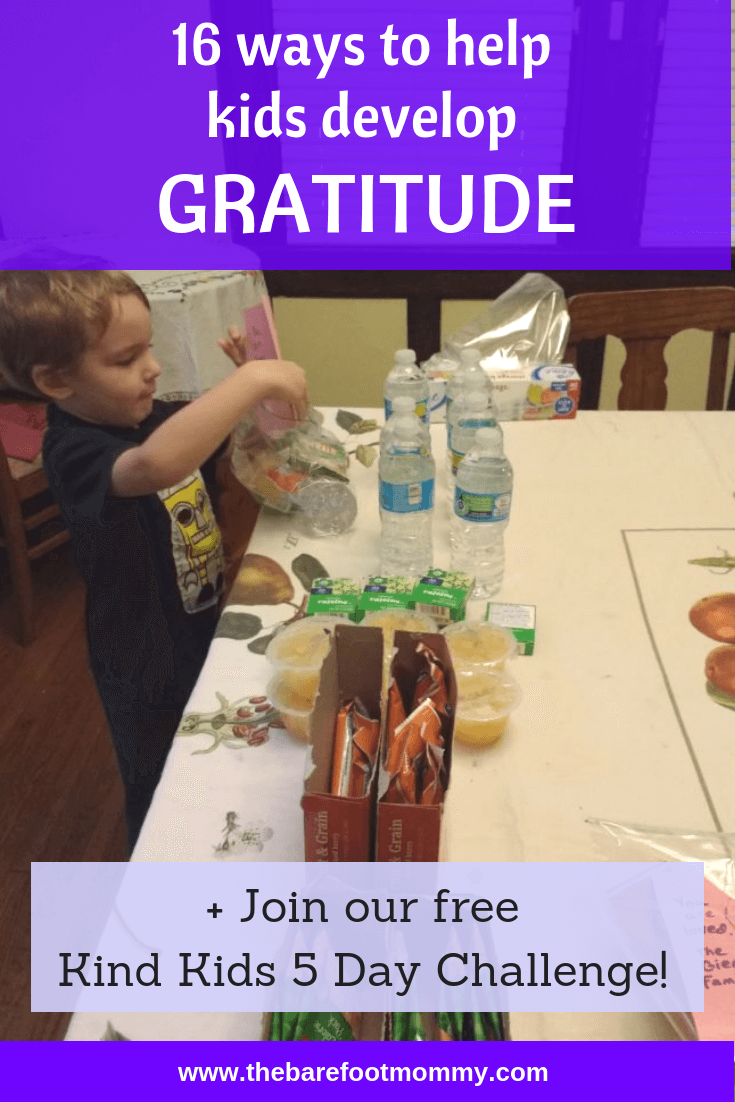
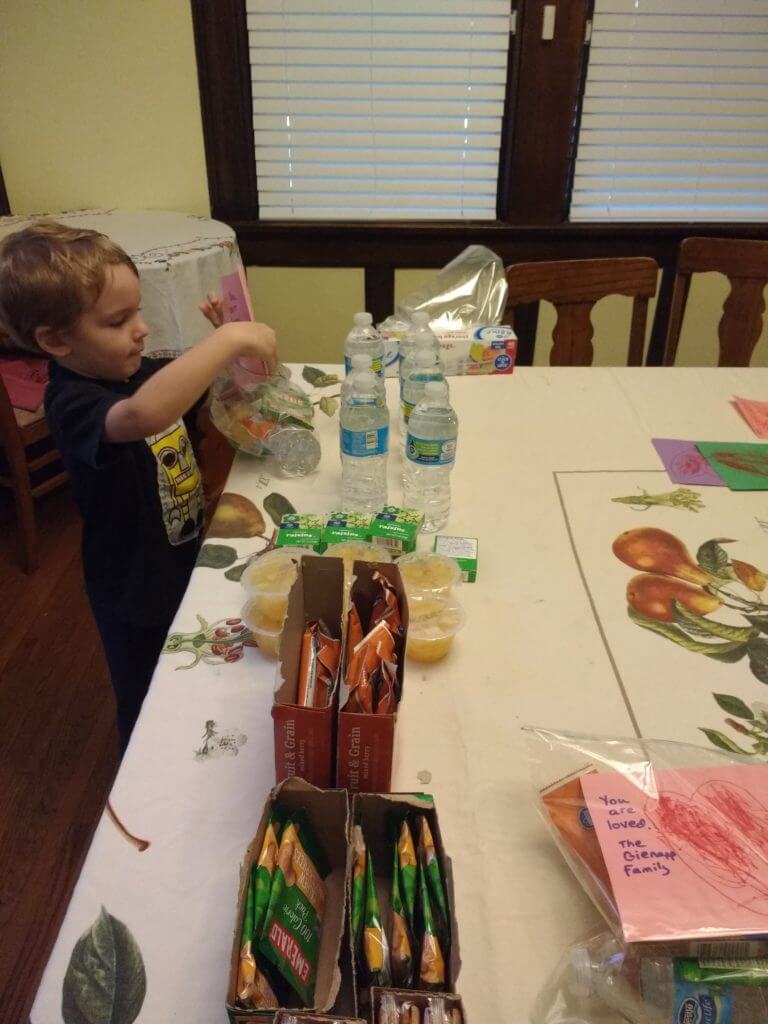
We shopped for the items together, talking about which snacks would last longest and be healthy. We ended up choosing water bottles, fruit cups plus a spoon, whole wheat crackers with peanut butter, cashews, soft cereal bars, and raisins.
Related post: Teaching kids about gratitude with the Haudenosaunee Thanksgiving Address
I also asked our son if he’d like to draw hearts for each guest. I wrote the message “You are loved,” with our family’s name, next to each heart. This was his favorite part of the project. I think it really helped to make it real for him, even more than filling each ziploc bag (which he also loved.) He talked about how “they will be so surprised to get this heart, and they can keep it forever!”
As we made the bags, we talked about how when we don’t spend all our money on ourselves, we have more to help others who need things.
Related Post: Introducing Kids to Community Service: Do’s and Dont’s
3) Reduce screen time and exposure to advertisements.
Recently, the little guy told me he wanted to take a nature walk. Once we got outside, he told me he was actually looking for toys, not nature items. I asked him why he thought there would just be toys laying on the ground. He said that he’d seen this in his favorite unboxing videos on YouTube. These videos drive me crazy, but we’d gotten into the habit of letting him watch these for long periods of time when my husband and I had chores we needed to get done.
I haven’t attempted to cut the videos off cold turkey, but I’ve been reducing the amount he watches them each day. Though he sometimes complains of being bored, he usually finds something to build or play with after a few minutes.
4) Make a gratitude tree.
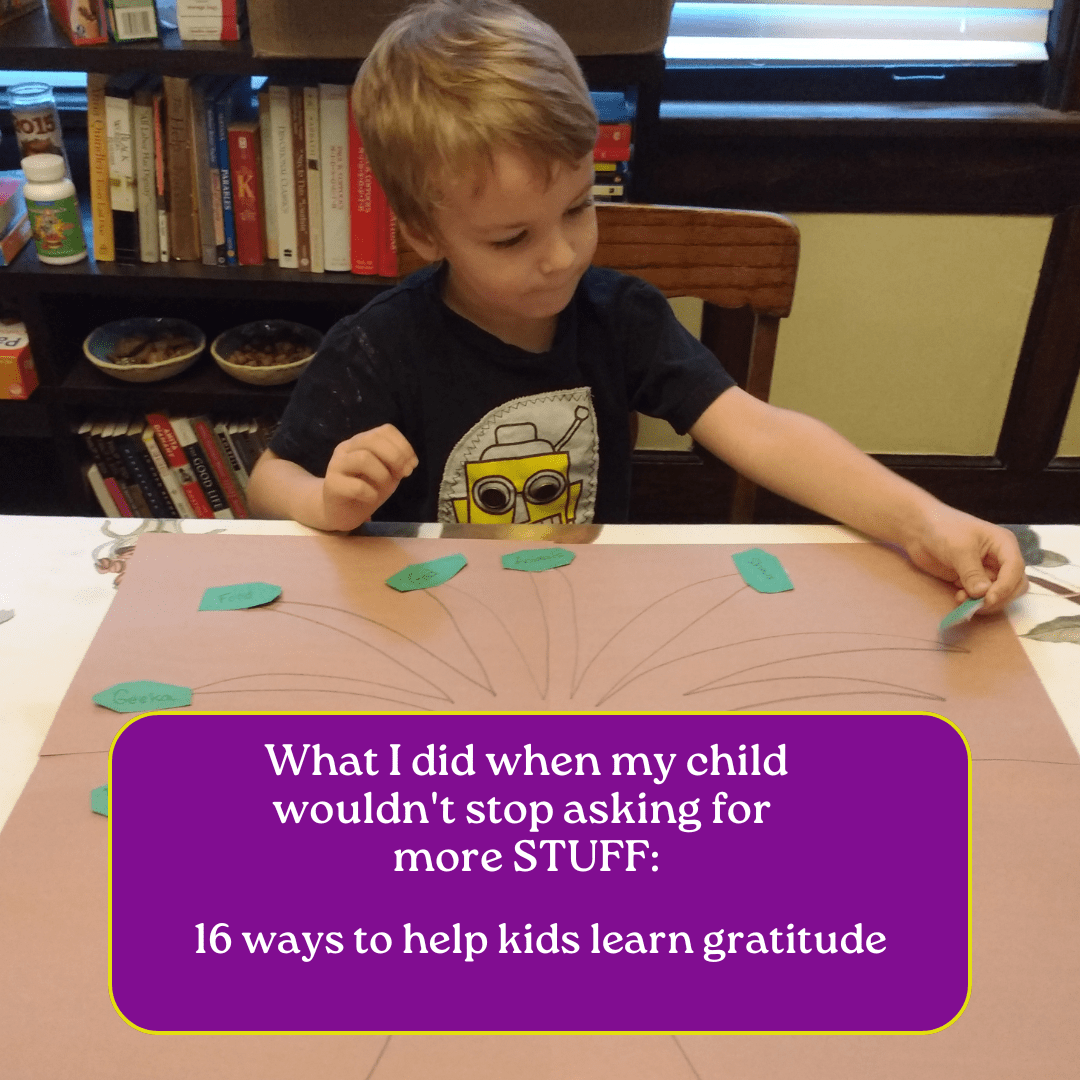
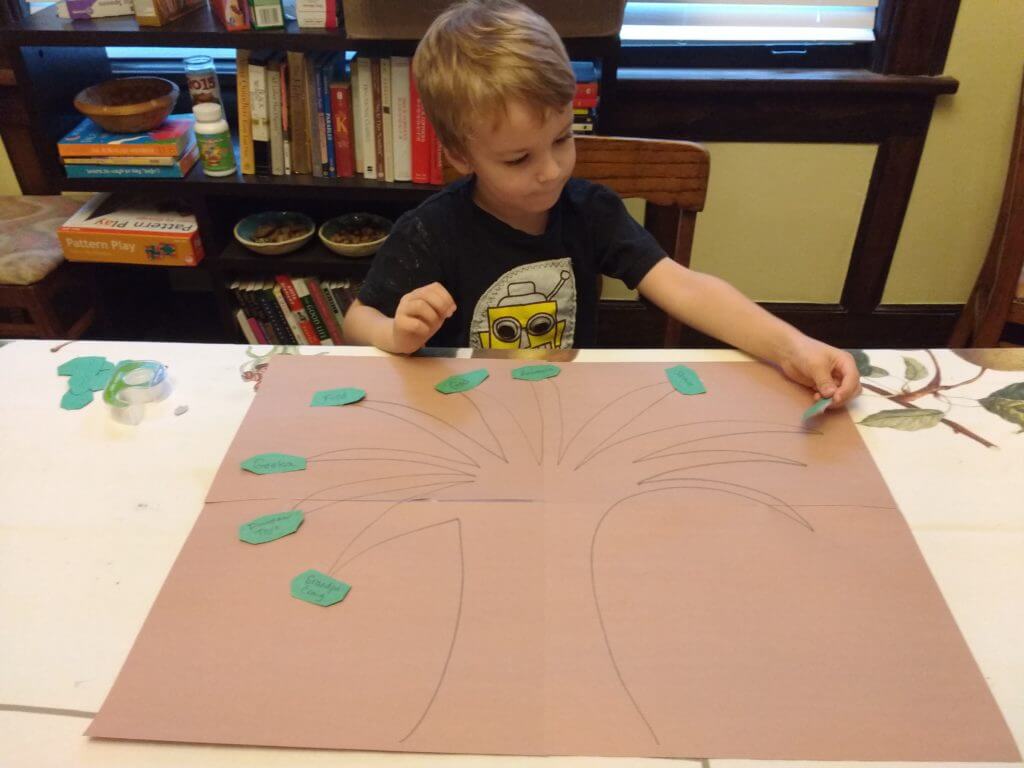
Creating a gratitude tree is a classic preschool activity. We taped several pieces of construction paper together, and I drew a tree trunk on it. I traced leaves on to green paper, which he really enjoyed cutting out. When I asked him to tell me something he was thankful for to write on each leaf, I held my breath a bit. That’s because at age 3, he came up with “mac and cheese,” “French fries,” and “toys.” When I asked if he was thankful for any people, he adamantly said “NO!”
I’m happy to report that at age 4, his leaves were much more varied. They included Grandma and Grandpa (though not Mom, Dad, or teenage brother); food items; our home; God; and silliness, among others.
I’ve left out extra leaves so that he can continue to add more ideas in the coming day.
5) Save toys, surprises, and treats for special occasions.
Normally on long school breaks we’ll do things like go out for ice cream, grab lunch at a fast food restaurant, and get an inexpensive toy from Target. I realized that, right now, these things were not special to him because they were happening so often.
This week, we’re focusing on fun things that don’t cost money, like playdates with friends we haven’t seen in a while. We’re also visiting places that we already have memberships to. I’m making sure that I’m not giving myself extra treats either. It’s making me realize that our kiddo is not the only one that needed a break from impulse spending.
We’ll continue to work on new ways to explore gratitude in the coming weeks and months. He’s still asking for new toys, but the meltdowns when I say no seemed to have stopped for now. I think our efforts are bearing fruit!
Please tell us in the comments: what helps the kids in your life become more grateful?

4 responses to “When my child wouldn’t stop asking for stuff: ways to help kids develop gratitude”
We love our little dears so much that we want to shower them with “stuff” and protect them from the hard realities of life, but your suggestions are spot on. They will be blessed in the long run if they hear the word “no” from time to time, and also have the privilege of giving to others.
Such wise words Michele! Sometimes what seems like something good in the short term actually does harm in the long run.
This is SO important! We have to keep our kids AND ourselves in check! Be grateful for what we have 🙂
I have some related books too. The Giving Tree though is a bit too dramatic- wonder what my son makes of that one!
#practicalmondays
Learning contentment is definitely a process! There are so many great gratitude books out there, but I have to confess I’m not a fan of The Giving Tree. Feels too one-sided to me.