
Many parents assume that kids don’t think about race. Adults, especially white adults, tend to assume that kids are essentially colorblind, and don’t begin noticing race until adults point it out to them. But a huge body of research shows that this just isn’t the case.
Kids think about race from very young ages. Studies have found that many white children even make prejudiced remarks and exclude others based on race while still in preschool.


Disclosure: For your convenience, this post includes affiliate links. If you purchase items through these links, I may earn a small commission at no additional cost to you. You can read my full disclosure policy here.
Findings from 7 different research studies about how kids think about race
1. Babies aren’t colorblind
Dr. Phyllis Katz tested a group of 100 Black children and 100 white children about their race related observations, beginning at 6 months old.
They showed Black and white babies photographs of faces and measured how long their attention stayed on each photo. Looking at a photograph longer meant that a baby’s brain found the face out of the ordinary. They were trying to make sense of what they saw.
The study found that babies looked significantly longer at photographs of a person whose race was different than their parents’ race.
Of course, this study doesn’t mean that babies are prejudiced. It does mean that they are noticing a difference.
Takeaway:
When parents let go of the false belief that young children don’t notice race, we are more prepared to help them make sense of what they are noticing.

2. Children’s racial beliefs are not reliably related to their parents’ beliefs
When we hear someone else’s child say something racist, our first comment is often “they must be learning it at home.”
While there are certainly cases where this is true, white liberal parents also use this idea to comfort ourselves.
Because we are opposed to racism, we feel certain our children will be as well. We assume we don’t need to worry about what our kids think about race.
But Lawrence Hirschfield and other researchers have found that children develop their understandings about race from a wide range of sources.
Even young children are figuring out what society considers normal, and they are motivated to go along with these norms (which are racist.)
In another study, Birgitte Vittrup asked white children, ages 5 to 7, a very explicit question:”Do your parents like Black people?”
The parents participating in the study wanted their children to grow up colorblind, because they believed this would keep their kids from being prejudiced.
But 38 percent of the children answered the question with “I don’t know.” Another 14% responded, “no, my parents don’t like Black people.”
Since these parents didn’t talk explicitly with their children about race and racism, the kids weren’t sure if their parents were racist or not.
Takeaway
Children are influenced by the racist ideas that society surrounds them with. Adults must explicitly, repeatedly teach children to reject racism in all its forms.
Related Post: 18 Powerful Books about Race and Racism for Kids and Teens
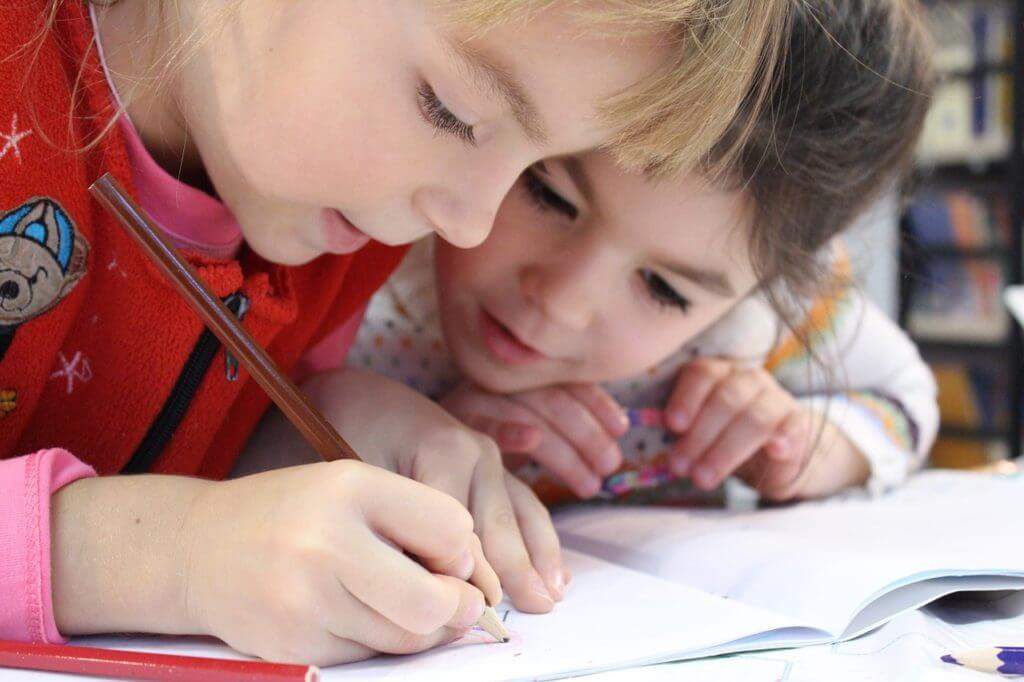
3. Explicitly talking about interracial friendship can improve young white children’s racial attitudes
Another part of Vittrup’s study asked white parents to watch multicultural kids programming and have follow up conversations with their kids about race and friendship. They were given sample conversations they could use to explicitly name race.
Kids in the study whose parents only showed them the multicultural videos, without any followup conversation, showed no improvement in their racial attitudes afterwards.
The same was true of parents who had conversations, but reverted into vague messages that did not name race, such as “everyone is equal.”
But for the small number of white parents who were able to talk openly to their kids about interracial friendship, all of the children’s racial attitudes improved significantly.
Takeaway
Children need adults to be concrete and specific when we talk to them about race.
You can find a sample conversation about interracial friendship that Vittrup used in her study, as well as 4 more conversation starters for talking with kids about race in my free guide: “what’s wrong with saying we’re all equal?” Download it from my Resource Library by filling out the form below.
4. The vast majority of white parents don’t talk to their children about race
A 2007 study in the Journal of Marriage and Family surveyed 17,000 families with kindergarten age kids. Forty-five percent of the families said they never, or almost never, discussed race with their children.
But when the survey results were broken down by race, a clear pattern emerged.
Three out of four white parents said they never or almost never talked about race.
Parents of color, on the other hand, were almost three times as likely to talk about race with their children as white parents.
Takeaway
White parents’ failure to talk to our kids about race leaves them unprepared for cross-racial interactions. Our silence also places an unfair burden on children of color to always be the ones who must speak up about racism.
Related Post: 5 myths about race and kids that white parents must let go of
5. Children as young as preschool age intentionally use racist language
White parents often think they don’t need to talk to their children about race until they are older, in the upper elementary or even middle or high school years.
Too often, young children are already using racist language and excluding others based on race.
When this behavior goes uncorrected because adults are too uncomfortable to address it, children get the message that what they did was acceptable.
In their year-long study of a multiracial preschool, Debra Van Ausdale and Joe R. Feagin spent many hours observing children.
They witnessed young children making subtle and overt references to race again and again. Some of these references were racist.
For example, two white 4 year olds and one Asian 3 year old were playing with a wagon. One of the white children was pulling the wagon while the other two kids rode. The wagon got stuck and the Asian child jumped out to help pull it. Her white classmate told her “No, no. You can’t pull this wagon. Only white Americans can pull this wagon.”
Takeaway
There isn’t an age when kids are “too young” to talk about race and prejudice.
6. The early elementary years could be a key developmental window for developing cross-racial friendships
Since becoming a parent, I’ve gotten really interested in developmental windows.
These are periods in children’s lives where it’s much easier for them to learn something or develop a particular behavior. For example, there are developmental windows for learning language and developing a sense of order.
Now if a child doesn’t master a skill during a developmental window, it doesn’t mean that they can’t learn it later. It just means it will require much more effort on their part, and will not happen as naturally.
So I’m intrigued by the research that Patricia Rooney-Rebeck and Leonard Jason with children in a racially diverse school.
They asked children to complete school projects in cross racial groups that worked together twice a week, for eight weeks.
They found that this group class work significantly increased cross racial friendships on the playground for first graders.
By the third grade, however, this intervention made no difference in who played together.
Takeaway
This research can be discouraging if we fear that we’ve missed our child’s developmental window for more easily making friends across lines of race.
But the study also can give us important guidance. We must be intentional if we want to help kids develop cross-racial friendships.
7. Children having intentional conversations about race and bias can reduce their prejudices
Frances Aboud and Anna Beth Doyle wanted to find out what would happen when children who had higher levels of racial prejudice talked with children who had lower levels of prejudice.
Would one group’s ideas end up affecting the other, and in which direction? Would children end up more tolerant or more prejudiced after their conversations?
White 3rd and 4th graders were given an assessment that measured their racial attitudes about white, Black, and Chinese children. The kids were paired with another child they already knew who had a different level of prejudice than they did.
The children were asked to specifically talk about racial biases with each other, with some particular guidance for their conversation.
Aboud and Doyle found that these conversations fostered greater tolerance on the part of children who had expressed more racial prejudice.
Takeaway
Adults who are afraid that talking about race will “put prejudiced ideas into children’s heads” should pay attention to this study.
First, as other research has shown us, children are far more likely to already hold prejudices than white parents often assume.
Second, explicitly talking about race in a way that challenges stereotypes and prejudices does have a significant, positive effect on children.
Want your kids to think about race is constructive, antiracist ways?
Clearly, kids think about race from young ages. And especially for white children who aren’t having constructive conversations about race with the adults in their lives, a lot of what they think about race is troubling.
The good news is that parents, teachers, and other adults can shape children’s thinking by the conversations that we have.
References:
Babies aren’t colorblind. Learn more about Katz’s study here or in the book NurtureShock: New Thinking About Children (page 54) by Po Bronson and Ashley Merryman.
Children’s racial beliefs are not reliably related to what their parents believe. Hirschfield’s work is referenced in this essay by Erin Winkler. Vittrup’s is described in the book NurtureShock (pages 47 – 51).
Vast majority of white parents don’t talk to children about race. This study is referenced in NurtureShock (pages 51 – 52).
Children as young as preschool intentionally use racist language. Van Ausdale and Feagin’s work is described in the book Raising White Kids: Bringing Up Children in a Racially Unjust America (pages 30 – 31) by Jennifer Harvey.
Early elementary years could be a key developmental window for developing cross-racial friendships: Read Rooney-Rebeck and Jason’s research here.
Children having intentional conversations about race and bias can reduce their prejudices: See Aboud and Doyle’s study here.