
From climate change to gun violence to antiracism, student activists are making their mark. Tweens and teens are speaking up in the media, organizing their peers for marches and walkouts, and much more.
I frequently write posts about kid activism, giving examples of student activists across the U.S. and around the world. You can find a few of these posts here, here, and here.
But what about tweens and teens who want to be activists, but aren’t sure how to get started?
Or student activists who want to sharpen their skills or go deeper in their work, so they don’t burn out?
Today I’m sharing 4 books written for tweens and teens that are excellent guides for student activists. Each has a different focus and/or a different audience. Keep reading to find out who each guide is best for, plus my favorite thing I learned from each book.


Disclosure: I was provided a free review copy of Enough Is Enough from the publisher. All opinions are my own. For your convenience, this post includes affiliate links. If you purchase items through these links, I may earn a small commission at no additional cost to you. You can read my full disclosure policy here.
Four books that show student activists how to change themselves and the world
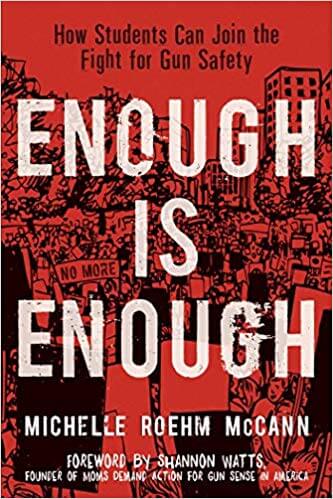
Enough Is Enough: How Students Can Join the Fight for Gun Safety by Michelle Roehm McCann
Best for: Ages 14+, student activists who want to use the political process to make change
Of the four guides I’m reviewing, this one is the most in-depth, and the only one to focus on a single issue: gun violence.
Knowing that preventing gun violence is both urgent and controversial, McCann spends most of the book helping young people understand the extent of the problem. She also provides them with the facts and arguments that will equip them to talk to adults in their lives and elected officials alike about solutions to gun violence.
Although the book is more than 250 pages, many of them are filled with graphics that help bring statistics to life in a way that’s easy to understand.
My favorite parts of Enough Is Enough are the profiles of student activists. Many of them have been personally touched by gun violence, propelling them into the public debate.
Related Post: 4 inspiring groups teaching kids about justice and activism

McCann also emphasizes that gun violence is not limited to mass shootings, which she points out mostly happen in rural and suburban white communities. Gun violence prevention must also address systemic violence, domestic abuse, police brutality, suicides, and more.
The section focused on what students can do is full of nuts and bolts tools, such as how to plug into existing groups organized against gun violence and tips from elected officials.
There are also tools that individuals can use, including a script for calling your elected officials and examples of what to say to a relative who’s opposed to gun control.
Related Post: 12 unsung social justice activists and the children’s books that tell their stories
Nugget of wisdom from Enough Is Enough:
From Naz-Ari Khepra, founder of Project Orange Tree: “For an issue this contentious, progress is likely to be slow. Like other movements – women’s rights, civil rights, LGBTQ+ rights – slow and steady wins the race. Be in it for the long haul. You may not see change immediately, but over time, your activism will make a difference.”

Step Into Your Power: 23 Lessons on How to Live Your Best Life by Jamia Wilson and Andrea Pippins
Best for: Ages 9+, girls who are figuring out how to stand up for themselves and what they believe
Activist and feminist Jamia Wilson has worked with student activists in a variety of roles before writing Step Into Your Power. Her book for teens and tweens recognizes that the journey to activism in the community must start inside of ourselves.
One of the things that held me back in the early years of my activism were my fears about speaking truthfully about what I did and did not want to do. I would have loved to have a book like this as a young teen!
Each lesson that Wilson presents is both encouraging and actionable. For example, in the opening chapter on tapping into your strengths, she asks readers to write themselves a love letter from their older selves.
Wilson draws on relatable examples from her own life, like the time when she told her Grandma she wouldn’t wash the dishes until the boys were told to help too. It’s not easy telling the truth and saying no, but it’s a key lesson girls need to learn.
The section on taking action recognizes that young people usually need community if they’re going to enter activism, and gives tips on how to find that community.
Finally, the section on self-care includes essential advice that many activists in their 30’s and 40’s still haven’t fully absorbed.
Related Post: 5 Young Activists from American History
Nugget of wisdom from Step Into Your Power:
“While being our best self is an important part of growing as a person, it’s important to remember that our inborn worth is not measured by the work we do, or the accolades we get. When we start with a baseline understanding that we are – and always will be – enough, it’s easier to protect our energy, use our time mindfully, and make decisions that help us thrive instead of breaking down.”
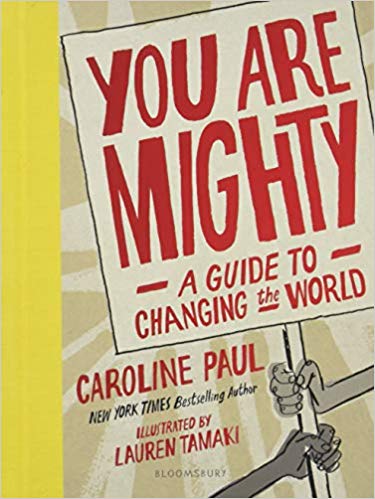
You Are Mighty: A Guide to Changing the World by Caroline Paul and Lauren Tamaki
Best for: Ages 10+, youth who want to understand all the nuts and bolts options they have for making social change
There is a LOT of information packed into You Are Mighty, because it covers so many different tactics for making change. Luckily they’re presented in an easy to read format with illustrations, as well as examples of 1 – 2 student activists who’ve used each tactic.
I’ve seen a lot of the same tactics presented in an earlier (out of print) book for young activists, but frankly it was boring. Paul and Tamaki solve this problem by presenting examples like press releases as eye catching graphics that show only the key points we need to understand.
Each tactic also contains a short workbook of a few questions that will help activists figure out how to apply the tactic in their own world.
Another feature I love are the “activist tips” that are sprinkled throughout the book. They unpack terms like privilege, intersectionality, and direct action in a way that tweens and young teens can understand.
Related Post: 15 Picture Books about Social Justice and Human Rights
Nugget of wisdom from You Are Mighty:
When considering how to best use social media for action, Paul points to the example of Tokata Iron Eyes and her friends who stood up against the Dakota Access Pipeline.
“What the youth of Standing Rock understood was that social media is a powerful ‘amplifier.’…Social media sharing raises the volume of a cause, so that a wider audience can hear it. But like an amplifier needs an electric guitar, social media needs an action. That’s why the Standing Rock kids did more than type on their phones. They initiated that petition, organized that run, and also lived at the protest encampment, using social media to communicate their actions, and the results, to the world.”

Marley Dias Gets It Done and So Can You! by Marley Dias
Best for: Kids ages 9+, young people passionate about literacy and representation
Marley Dias is the student activist superstar best known for her #1000BlackGirlBooks campaign. The book drive not only collected thousands of books with Black girl protagonists to be donated to schools. It also affected the national conversation about diverse children’s books.
Marley Dias Gets It Done and So Can You is part autobiography, part student activist handbook. Although the guide definitely has plenty for kids who don’t want to be in the spotlight, Marley also shares tips for using both social media and traditional media to amplify a cause (something she has plenty of personal experience in.)
You can read a full post I wrote on Marley’s book here.
Nugget of wisdom from Marley Dias Gets It Done and So Can You!:
“Charity is not activism. Don’t misunderstand – I think charity is awesome…But there’s a difference between charity and activism. It’s a difference you should know as you’re deciding which way you want to move forward to make a change in the world.
You can drag old coats out from the back of your closet and donate them to a clothing drive, or even if you give your loose change to a homeless person on the street, you are practicing charity. It’s a one way thing: You give something to someone in need, you hope it helps them, and you go on with your day.
Activism is reciprocal: There’s a give-and-take. It’s about teaching, but it’s also about learning.”
Related Post: When injustice overwhelms you: tips for activist parents