I realized recently that my son will soon be too old for middle grade books, and that made me so sad! To be honest, I often enjoy reading middle grade books better than I do reading books written for adults.
I also need to be honest that my best middle grade books of 2025 list is a bit shorter this year than usual. I spent so much time this year reading books for my guide From the Margins to the Center: A People’s History of the United States Told Through Children’s Books. That left me with less time to read new books published this year. That doesn’t diminish how special the books are that I’m reviewing below.
Also, I’ll share a quick reminder that book challenges and the dismantling of diversity, equity, and inclusion programs are on the rise. That means it’s more important than ever that we support BIPOC, Queer, Disabled, and social justice writers. When you purchase books from my best middle grade books of 2025 list, or request that your library carry them, you send publishers the message that anti-bias books are essential reading for the children we cherish.


Disclosure: For your convenience, this post includes affiliate links. If you purchase items through these links, I may earn a small commission at no additional cost to you.You can read my full disclosure policy here.
Best middle grade books of 2025: Fantasy
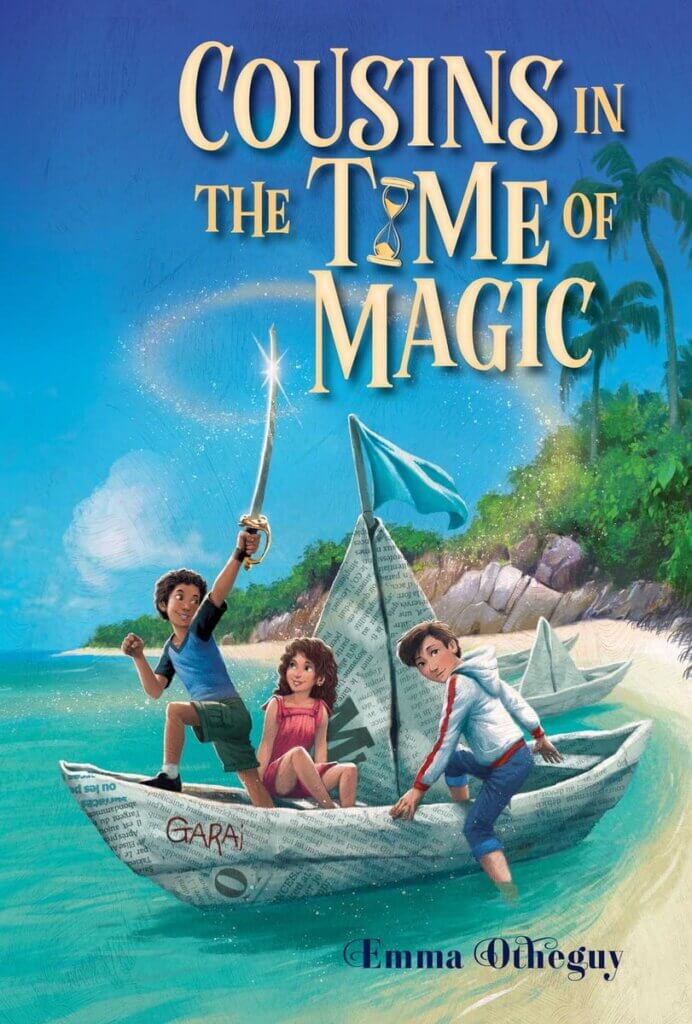
Cousins in the Time of Magic by Emma Otheguy.
Purchase from Bookshop.org (supports my business and independent bookstores!)
In this engaging blend of historical fiction and fantasy, three Miami cousins have always thought their Tía Xia was a bit kooky. When they find themselves time traveling through the giant clay pot in her yard, her flighty and secretive habits take on a whole new meaning. Jorge, Camila, and Siggy soon find themselves in the midst of the U.S. Civil War.
After receiving a panicked message from Tía that’s she in Mexico and in trouble, the cousins (and the new friends they’ve made in 1862 Virginia) must figure out how to reach her. If they’d paid more attention to Tía’s history lessons, they would have realized they’re arriving in Mexico on Cinco de Mayo, the day a battle between the French and the Mexican Republic is about to break out.
Throughout the story, each of the cousins has to take great risks to aid their aunt and nudge history in the right direction. Otheguy skillfully incorporates themes of Latine identity, colonialism, and solidarity across countries while also creating a page-turning adventure. (Recommended for ages 8 – 12. Cuban American author.)
Related post: Diverse fantasy books for ages 7 – 14
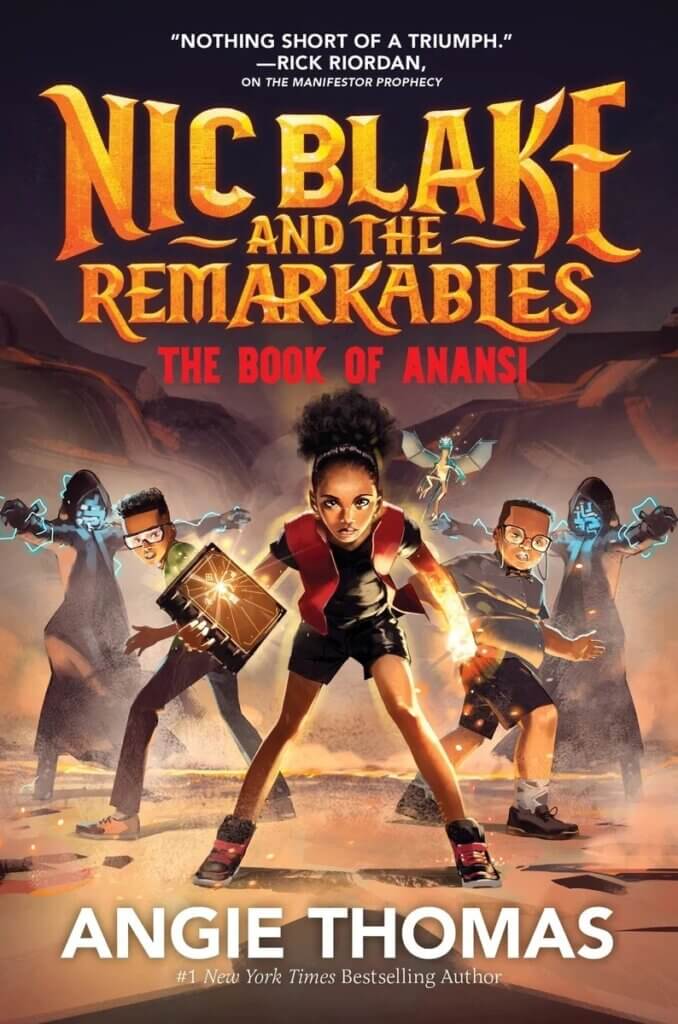
The Book of Anansi by Angie Thomas.
Purchase from Bookshop.org (supports independent bookstores and my business!)
In volume 2 of the Nic Blake and the Remarkables series, Nichole is finally living in the Remarkable world, reunited with the mother and twin brother she didn’t know that she had. The Afro-futuristic technology at everyone’s disposal is amazing, and they don’t have problems like poverty and contaminated water that are commonplace among Unremarkables. Nic is finally going to attend a school with other Remarkable kids that will teach her about to harness and use the Gift she possesses as a Manifestor. Nic knows how badly she needs this, since her powers often seem out of her control.
Even as everyone seems so glad to have Nic “home” in the sanctuary city of Uhuru, she struggles with complicated feelings about the place. Her father is on house arrest for taking her from Uhuru for 10 years, but he was only trying to protect her. If people find out that Nic is the long-prophesied Manowari who could destroy the Remarkable world, who knows what terrible things they will do.
As she learns more about her new homeland, she sees the prejudice and injustice that groups other than Manifestors face, even as Uhuru’s leaders (including the President, her grandmother) say this is for “the greater good.”
While grappling with conflicting feelings and thoughts about her family and home, Nic faces much more immediate threats from powerful Manifestors who threaten to expose her secret if she doesn’t capture the lost Book of Anansi for them. With her twin Alex and her Unremarkable best friend JP, Nic plunges into the task, sure that there’s no one else she can trust with the truth of what she’s experiencing. (Recommended for ages 8 – 12. Black author.)
Best middle grade books of 2025: Contemporary fiction
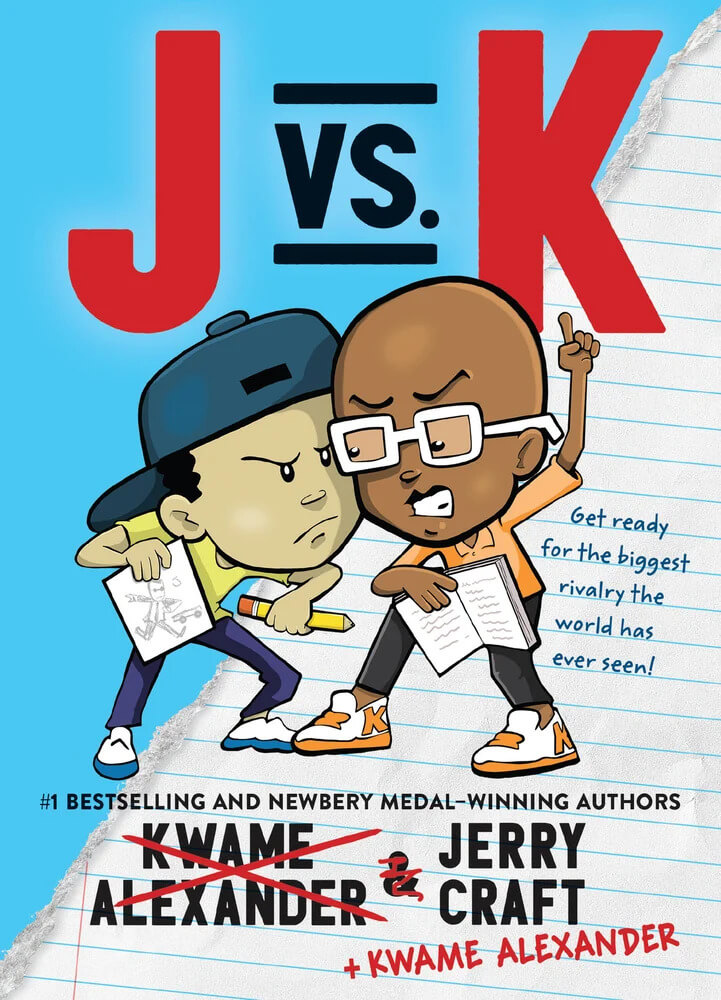
J vs. K by Kwame Alexander and Jerry Craft.
Purchase from Bookshop.org (supports independent bookstores and my business!)
After observing the way that real life author friends Kwame Alexander and Jerry Craft rib each other constantly on social media, I was intrigued by the premise of J vs K.
Two fifth grade boys are both determined to be the youngest kids in their school’s history to win a short story contest. J is an amazing illustrator but never includes more than a few words in his stories. K is an outstanding writer, winning over even hard-to-please first graders, but can hardly draw a stick figure. Both kids decide to trick each other by giving bad advice. (K tells J that the best writers use “sixth person” voice. J plants a fake notebook for K with instructions to “put in mistakes to challenge your readers to pay attention.”)
Frequent illustrations by Craft and a multitude of jokes about the rivals make this a great book for reluctant readers. Both Alexander and Craft slip in lots of writing and vocabulary tips, but in a joking way that doesn’t feel like they’re trying too hard to teach their young readers. (Recommended for ages 7 – 10. Black authors.)
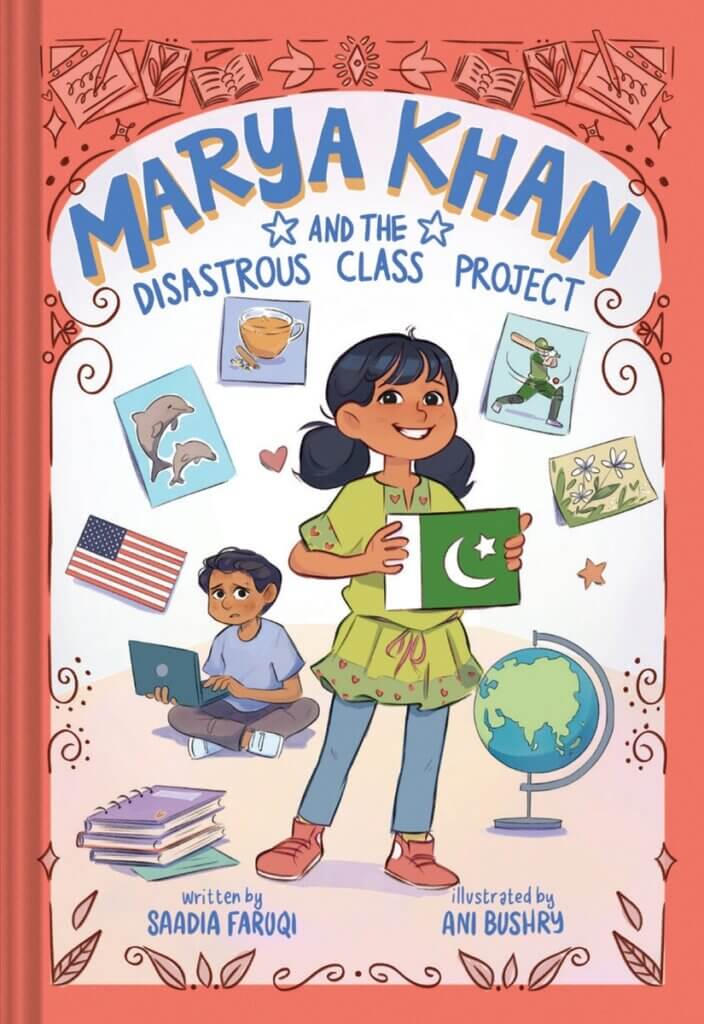
Marya Khan and the Disastrous Class Project by Saadia Faruqi. Illustrated by Ani Bushry.
Purchase from Bookshop.org (supports independent bookstores and my business!)
Third grader Marya Khan has a strong belief that she can shape things the way she wants them to be. If she tells her friends today is going to be exceptional (one of her Word of the Day diary entries), then it is.
So when new student Waleed, who’s just moved to the U.S. from Pakistan, doesn’t respond to Marya’s attempt to offer “awesome hospitality,” she’s confused and a bit miffed. When Miss Piccolo makes Marya and Waleed partners on a class project about Pakistan, it shouldn’t be hard to ace it. Marya’s grandparents are from Pakistan too. But every topic she suggests to Waleed, he either doesn’t want to talk about or he knows more than Marya.
Soon Marya is undertaking two projects: making sure they have the most amazing presentation and succeeding in Operation Make-a-Friend so that Waleed will finally open up. (Recommended for ages 7 – 10. Pakistani American author.)
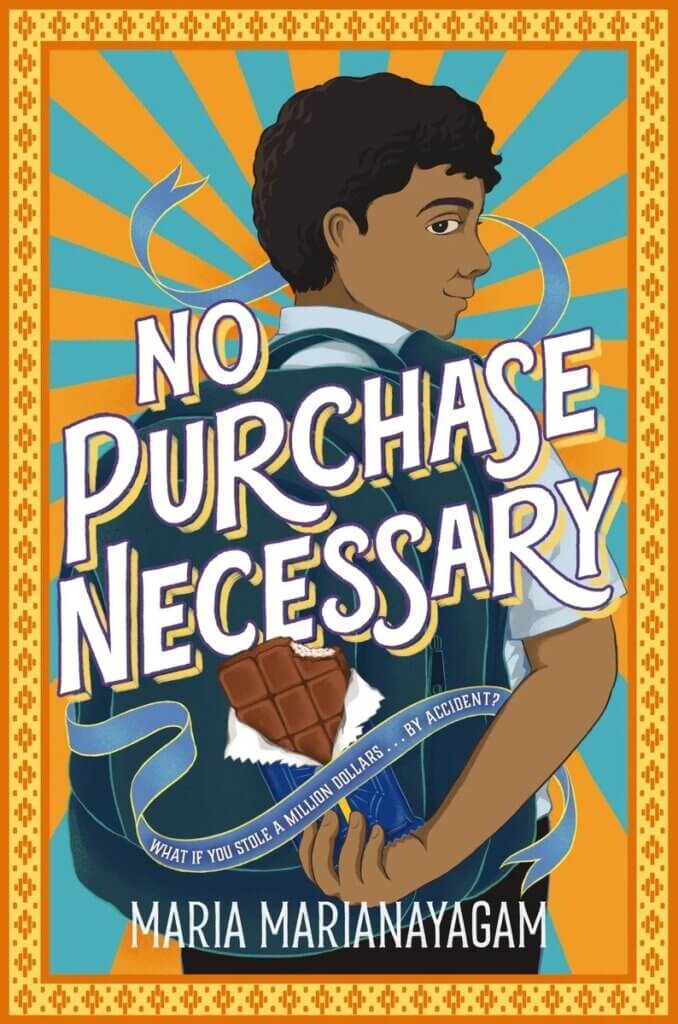
No Purchase Necessary by Maria Marianayagam.
Purchase from Bookshop.org (supports independent bookstores and my business!)
The opening lines of No Purchase Necessary immediately draw the reader in: “It all started with the first mistake, week one at my new school – not surrendering my eraser to Jacob Underson. One thing led to another, and by week three, I had stolen a million dollars.”
The two anchors in Ajay Anthonipillai’s life are his Tamil parents’ incredibly high expectations and his devout Catholic faith. So, he shocks himself when Ajay is soon caught up in a network of lies that all started when a popular kid told him to steal a candy bar from the convenience store across from their school.
It turns out that the stolen bar is the million dollar prize winner in a contest, but how can Ajay turn it in when he stole the chocolate bar in the first place? Hoping he can delete any security camera footage of his theft, Ajay soon finds himself working in the convenience store, where “Scary Al,” the elderly owner, watches him closely.
In this action-packed novel, Ajay is at first simply trying to figure out how he might redeem the prize. His family lives in a cramped, worn apartment and his parents are barely scraping by; the prize would transform their lives. As the story progresses, Ajay is grappling with multiple ethical dilemmas and is filled with terror that his family will find out what he’s done. The book is a great blend of fun, suspense, and nuanced perspectives on success and doing the right thing. (Recommended for ages 8 – 12. Sri Lankan Canadian author.)
Best middle grade books of 2025: Historical fiction
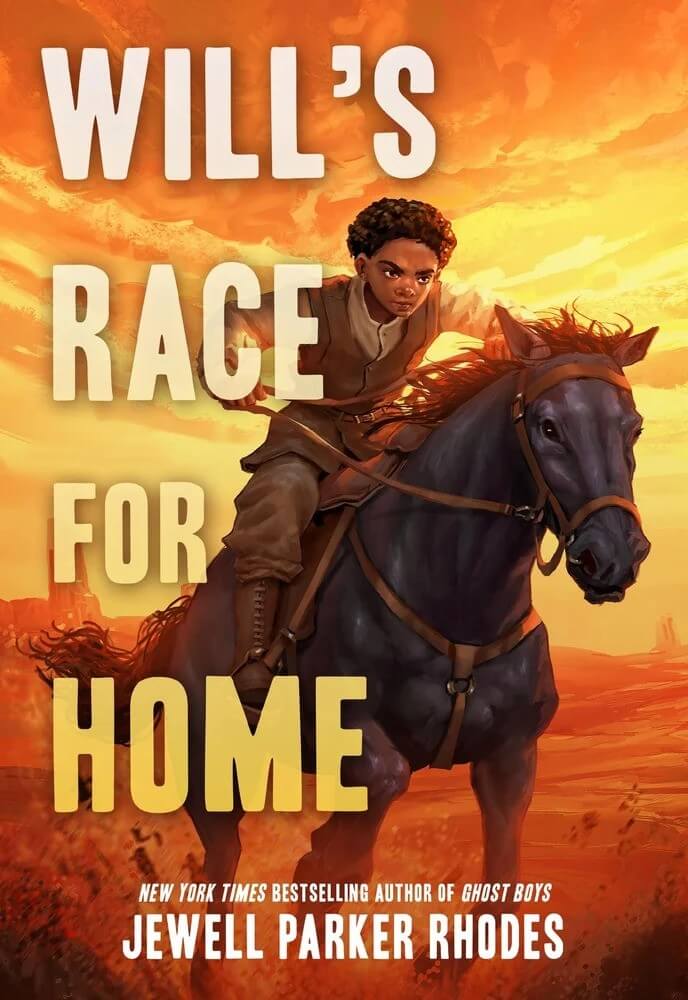
Will’s Race for Home by Jewell Parker Rhodes.
Purchase from Bookshop.org (supports independent bookstores and my business!)
Will’s quiet, hardworking father is mostly a mystery to him. He does know that his father is a “far-thinking man” who is deeply unhappy sharecropping a white man’s land in Texas. When he hears that “unclaimed” lands will be available in Oklahoma to those who can arrive by April 22, 1889, he and Will immediately begin preparing for the long and harrowing journey.
Will’s strength and courage are greatly tested, as is Father’s ability to keep long-held secrets to himself. Just before crossing the dangerous Red River, Will and Father are befriended by Ceasar, a Black Union sergeant whose presence both protects and exposes them in turn.
This is a compelling read about the Land Rush, the centuries-long quest for Black self-determination, as well as a moving coming-of-age story. My one criticism is there is nothing in the story itself that mentions Indigenous peoples or why “unclaimed” land was available. Rhodes does include an author’s note about the topic, which it essential for adults to review with young readers. (Recommended for ages 8 – 12. Black author.)
Related post: 12 alternatives to Little House on the Prairie
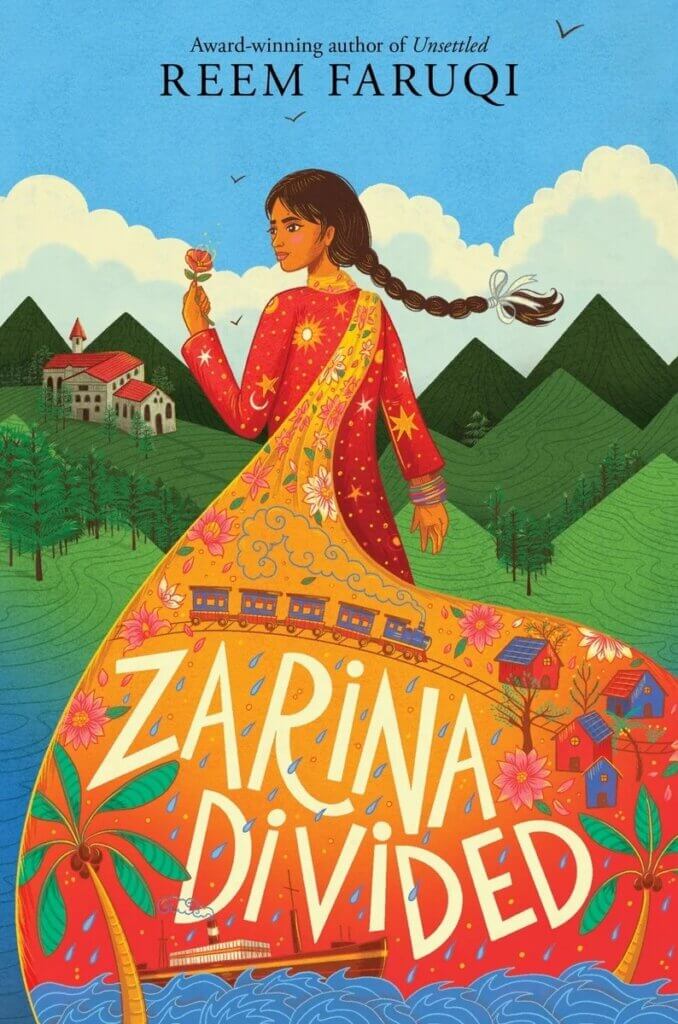
Zarina Divided by Reem Faruqi.
Purchase from Bookshop.org (supports independent bookstores and my business!)
This stirring novel-in-verse is inspired by the experiences of Faruqi’s grandmother during the 1947 partition of British India into Pakistan and India. As Muslims living in Poona, India, Zarina’s parents inform her that they will be moving to Pakistan. Zarina is mystified about why they want to leave. She has two best friends, one Muslim and one Hindu, and they’ve always been inseparable.
But as conditions rapidly change around them, her friend Geeta throws stones at her. By the time the family leaves for Pakistan, they narrowly escape being attacked by a mob. Zarina struggles in their new home, especially since her brothers will soon be leaving for boarding school. Her relationship with her mother is near the breaking point when Zarina convinces her father to allow her to attend boarding school too. Far away from her family and both her old and new homes, Zarina wonders if her mother will ever forgive her. (Recommended for ages 8 – 12. Pakistani American author.)
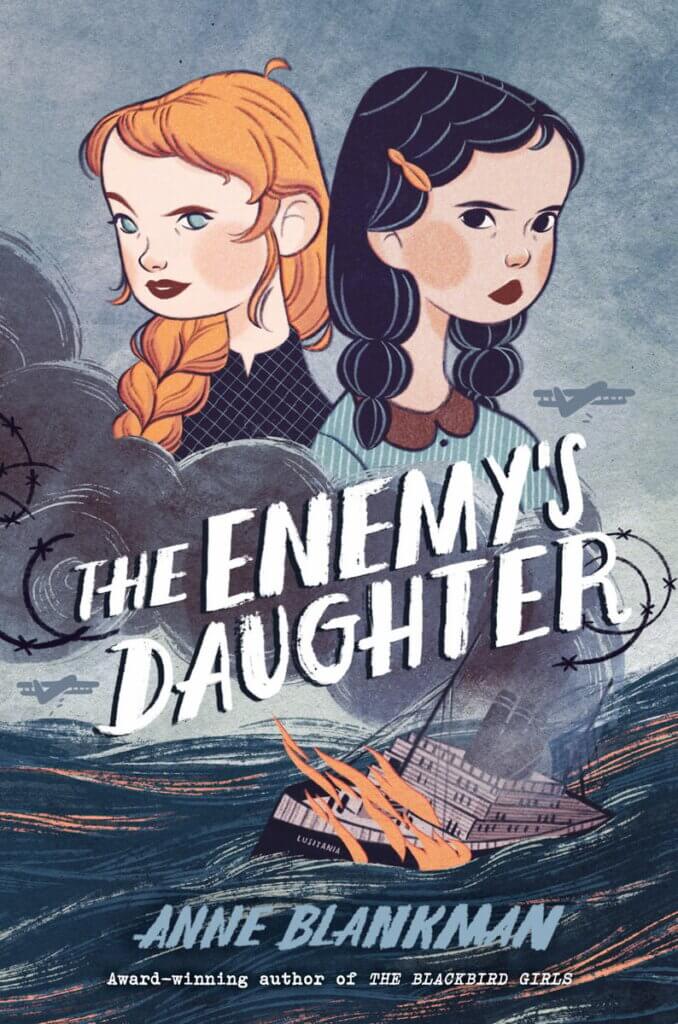
The Enemy’s Daughter by Anne Blankman.
Purchase from Bookshop.org (supports independent bookstores and my business!)
Marta and her father were enjoying a trip from Germany to visit American relatives when World War I breaks out, and they haven’t been able to return home since. When Marta’s brother announces he’s going to lie about his age so that he can enlist, Papa realizes they must return home to dissuade him.
Using their American relatives’ identity papers, they board the Lusitania. Just before the passenger ship is attacked by a German submarine, authorities discover Marta and Papa are German. While Marta survives the tragedy, she has no idea where they’ve taken Papa.
A kindly Irish family takes Marta in, believing her lie that she is Dutch. As Marta and their daughter Clare become friends, Marta struggles to keep her secret, especially as so many English people declare all Germans to be monsters. Living and working with Clare is also Marta’s first exposure to poverty, as well as to the prejudice that Irish people in England must deal with.
Will Clare still be Marta’s friend if she finds out that Marta is German? (Recommended for ages 8 – 12. White author.)

A Sea of Lemon Trees: The Corrido of Roberto Alvarez by María Dolores Águila
Purchase from Bookshop.org (supports independent bookstores and my business!)
In this powerful novel in verse, Águila imagines what it was like for 12-year-old Roberto Alvarez when he became the plaintiff in a 1931 school segregation case in Lemon Grove, California. In what has been named the “Lemon Grove incident,” the local school board attempted to move all the Mexican American students to a separate school, housed in a barn. Alvarez’s parents were key to local resistance to the racist effort. The incident took place in a time when anti-immigrant hostility was rapidly rising, and hundreds of thousands of Mexican Americans, including many citizens, were deported to Mexico.
While I was familiar with all this information before reading the book, A Sea Full of Lemon Trees pulled me in emotionally in a way nothing I’d read before did. Readers see Roberto’s parents trying to shield him from news of raids and anti-Mexican hostility, even while Roberto becomes the plaintiff. The adults in his life tell Roberto that he’s too young to hear the full truth about what Mexican Americans are experiencing. But Roberto already sees the connection between deportation raids and what’s happening in Lemon Grove.
Roberto is confused by the gap between the messages of equality he’s always heard and all that his community has to do to “earn” their equality. He’s frightened by the attempts that white leaders in town make to try to break their resistance. Will the community be able to stay united in the face of threats? (Recommended for ages 8 – 12. Mexican American author.)
Shop this entire list on Bookshop.org!
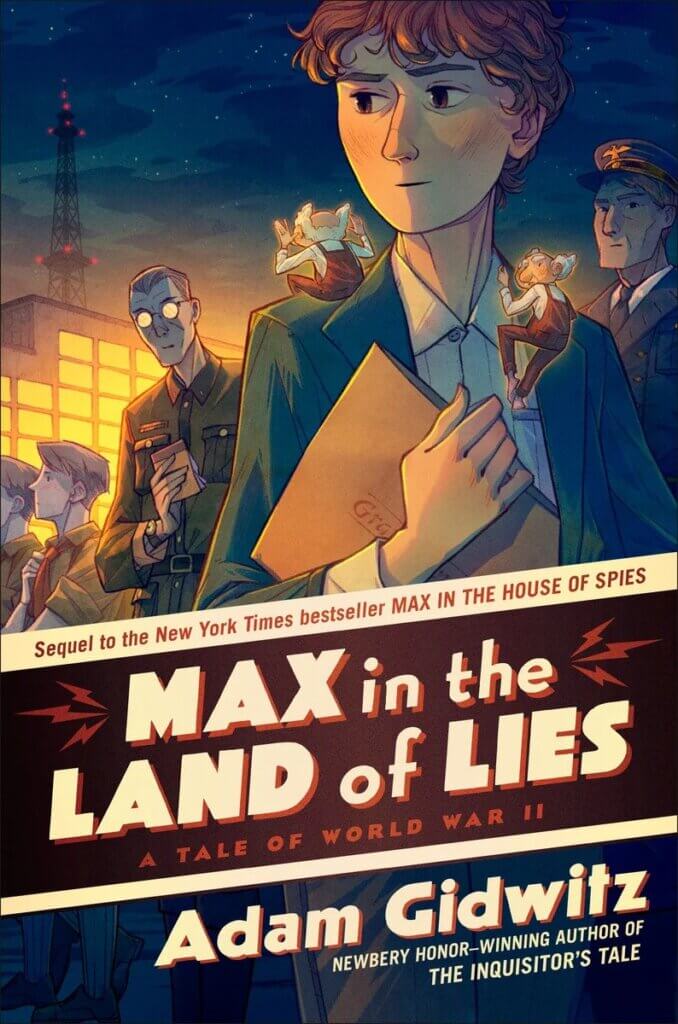
Max in the Land of Lies by Adam Gidwitz.
Purchase from Bookshop.org (supports independent bookstores and my business!)
In this sequel to Max in the House of Spies, Max returns to Germany to carry out a spy mission in the Funkhaus, the center of the Nazi propaganda machine. As a radio whiz, he’s a natural fit for the mission, even though he’s also a 13-year-old Jewish boy. But Max’s second mission (which only he knows about), to find out where his parents are, may prove even more difficult. Luckily the immortal creatures Berg and Stein are still on his shoulders, helping him out while also ridiculing him at any opportunity.
Gidwitz once again uses his gift for raising morally complex questions with young readers as Max’s soul and body face increasing danger on both missions. While we all like to tell ourselves that we would never cooperate with something as terrible as the Nazi machine, the wide variety of characters Max gets to know complicates that comforting narrative. As Max pretends to be a Nazi, at times he struggles not to “lose the truth” as his Uncle Ewen has warned him about.
Note: For sensitive readers, be aware that this sequel is more painful to read than Max in the House of Spies, as it deals more directly with the Holocaust. Also, I highly recommend reading the first book before reading Max in the House of Lies. (Recommended for ages 11 – 14. Jewish author.)
Best middle grade books of 2025: Non-fiction
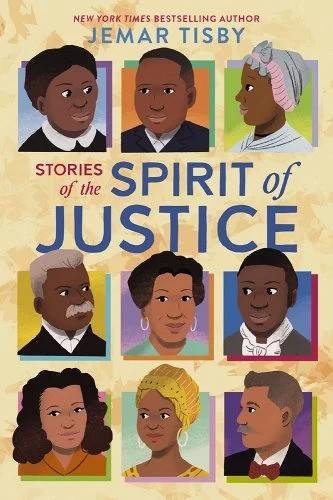
Stories of the Spirit of Justice by Jemar Tisby.
Purchase from Bookshop.org (supports independent bookstores and my business!)
There are a number of Black history biography anthologies out there for older children. Stories of the Spirit of Justice stands out to me for several reasons, and I plan to use it in our homeschool U.S. history lessons.
First, this is a focused collection of biographies, while still covering all the major periods of U.S. history. All of the leaders profiled worked in some way for liberation and justice for Black people, though the ways they did this are incredibly varied.
Second, as a historian who studies the intersection of faith and race, Tisby gives youth thoughtful explanations about how the Christian faith was misused to support racist practices, while also inspiring many African Americans to stand up for their freedom.
Third, Tisby puts the biographies into important historical context (unlike many compilations for youth that simply describe the leader’s life and work.) Each section begins with a short and accessible essay about the important events of that era.
Last, Tisby includes little details about each leader that make the biographies compelling to read, and relatable to youth. (Recommended for ages 10 – 14. Black author.)
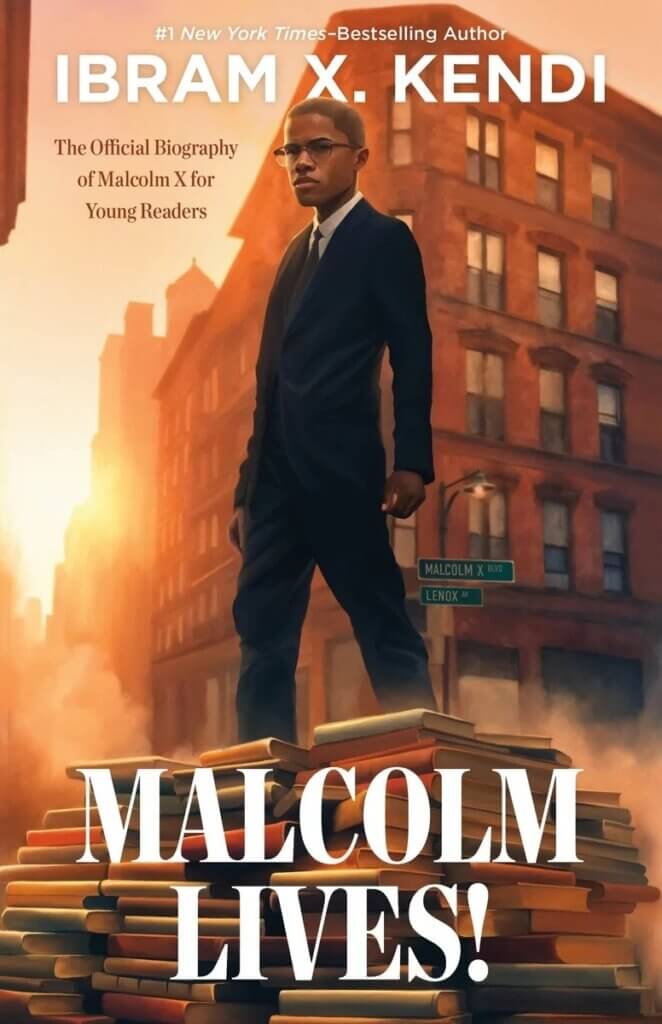
Malcolm Lives! by Ibram X. Kendi
Purchase from Bookshop.org (supports independent bookstores and my business!)
In this biography of legendary-and-often-misunderstood leader Malcolm X, Kendi deftly weaves together the events and ideas that shaped Malcolm’s life with present day issues of racism and injustice.
One of the recurring themes of Kendi’s work is how a person’s ideas about race can shift over time, and Malcolm X’s life and work is an ideal subject to explore this. In short, dynamic chapters that include photographs of primary sources, Kendi demonstrates how a broad array of factors, groups, and people influenced Malcolm. Each period of his life is thoroughly explored, from repeated childhood instances of racism and his father’s suspicious death to his young adult struggles with crime and his desire to both reject and be accepted by white people.
Kendi’s exploration of Malcolm’s gradual disillusionment with the Nation of Islam and move towards Sunni Islam makes it clear how painful this break was for Malcolm. He also describes how this religious shift made his beliefs about race more nuanced. Most of all, the book stands out for its insistence that Malcolm X’s legacy lives on through present-day struggles to end racism and liberate Black people. (Recommended for ages 10 – 14. Black author.)

How the Word is Passed: Remembering Slavery and How It Shaped America (Adapted for Young Readers) by Clint Smith and Sonja Cherry-Paul.
Purchase from Bookshop.org (supports independent bookstores and my business!)
I was eager to read How the Word Is Passed because my 13-year-old has watched many of Smith’s Crash Course Black American History videos in our homeschool history lessons.
The book documents Smith’s visits to 7 sites that are intimately connected to slavery. (Six are in the U.S. and one is in Senegal.) His accounts have two main purposes. The first is to document the experiences of enslaved people at the sites. The second is to capture and question how the history of slavery is discussed, taught, or downplayed.
Some official tours surprise Smith, such as one at Thomas Jefferson’s Monticello that talks bluntly about Jefferson’s intimate relationship with slavery and how it maintained his wealth. At the Whitney Plantation in Louisiana, which has been preserved solely to document the history of slavery there, Black perspectives shape the entire experience. It’s a sharp contrast to Smith’s visits to Angola Prison, where the history of slavery is barely mentioned, perhaps because the prison continues to use a convict lease system that pays prisoners a few cents an hour to do heavy farm labor.
This book is an excellent read for older tweens and young teens who already have some grounding in the history of slavery and the Civil War. Because it is episodic, if young readers aren’t familiar with these areas, it’s best read with an adult to help fill in the gaps. (Recommended for ages 12+. Black authors.)
Related Post: How should we talk with children about slavery?
