
How can we help children cultivate peace in their own lives, with others, and with their communities? Today I’m thrilled to share a conversation I had with Faiqa Khan, elementary guide and school administrator at Midtown Montessori School in Memphis, TN. As she shares about the Montessori method of peace education, you’re sure to find practical ideas for home or in the classroom.
Be sure to scroll to the bottom of the post for book suggestions from Faiqa and me!
This interview has been lightly edited for length and clarity.


Disclosure: For your convenience this post contains affiliate links. If you purchase items through these links, I may earn a small commission at no additional cost to you. You can read my full disclosure policy here.
What does peace education look like in the Montessori world?
There are two types of peace that are the central focus of Montessori. The first is inner peace, and the second is peace outside yourself: peace with others. Like everything else in Montessori, which one we talk about depends on how old somebody is.
First the child has to be focused, calm, and understand their own emotions before they can start getting along with other people. They need to be given instructions on how to identify what they’re feeling and how to communicate that in a basic way. A lot of times, for children six and under, that basic communication is enough.
As children get older, in the elementary years, they now find themselves in a position to make peace in a collaborative and nuanced way. It’s not just enough to say “I’m angry” and move on. Elementary aged children are looking for long-term solutions to their conflicts.
Related Post: Why perfectionist parenting hurts our kids, and 8 ways to break free from it
Peace on the grander scale, in the broader vision of Montessori is world peace. World peace comes from the unity of inner peace and peace with others.
The other thing that’s not so obvious about Montessori peace education is that peaceful co-existence doesn’t necessarily mean not making any waves. We see conflict as opportunity.
As Montessorians, we strive to give them a healthy approach to conflict and strive them tools to resolve it. When we can help children understand the how and why of peace, then we can get at the true purpose of Montessori. This means actively understanding your own time, place and culture, and choosing to be a part of those things in a productive way.
Related post: Why I Prefer the Montessori Approach to Teaching the Alphabet
How did the time that Dr. Maria Montessori lived in influence her method of peace education?
Peace education was critical for her because she lived during the time when the first nuclear bomb was dropped. When Dr. Montessori was alive, all the inhabitants of the earth had this collective experience of facing their mortality at the same time. They realized that we now have a technology that we can use to destroy ourselves within minutes.
She understood that deeply. Her pedagogical approach was not to focus on the problem itself, but to focus on the things that lead up to that problem. We need to go back to the beginning, and the beginning is children.
From the very beginning, you can teach children to collaborate and accept each other. You can show them that human beings are fundamentally the same, and that externalities like the resources we have don’t define who we are. Then we have a shot of making it as a species.
Related Post: Our Montessori Inspired Peace Corner
Benito Mussolini tried to enlist Dr. Montessori to produce his educational system, which would reinforce his politics. But one of the biggest things she emphasized was freedom. She rejected fascism because she believed in freedom and responsibility and humanity’s innate goodness, to choose what is right. So she left the country and went to India.
Dr. Montessori wrote about three things that distinguish human beings from other creatures. The first is our hands, the way we use them to work. The second is our heart, the way that we love. We love people we’ve never met before. We’re moved by the suffering of people we don’t know. The third is our mind, the way that we can imagine a better or worse future. We can travel through space and time in our minds.
Together, these three things are our redemption. They should be used to do the work of peace.
Related Post: Young adult novels that will inspire peacemakers
How do children learn to peacefully relate to one another in a Montessori environment?
It’s a step by step process, depending on whether they’re in the first plane of development (birth to age 6) or the second plane of development (ages 6 to 12.)
In the first plane of development, one of the primary things is that children are in a sensitive period for developing language. So one basic, fundamental piece of peace education is teaching them the words to use, and how to articulate their emotions.
You sometimes see parents falling into the trap of telling a child “say you’re sorry.” But the lesson that has to come first is teaching the child how to explain to another person why they did what they did. For example, “I hit you because you took my toy, and I’m angry with you.” Teaching them to say sorry can come later.
Some things we teach seem arbitrary, like manners to use when you’re eating with another person. But these are visual signals to another person that you respect them. We want to reach children during their sensitive period for this, so that it easily becomes a habit.
Related Post: Best Montessori Toys for 5 and 6 Year Olds
What are some aspects of Montessori peace education for elementary aged children?
In the second plane of development, we’re now talking about nuance. Between ages 6 to 12, children have an emerging sense of justice, of what’s right and wrong.
Students come to me and tell me something another child is doing that they’re upset about. I tell them, “ok, it sounds like you need to have a conversation with your friend about this.” Of course, I’m watching in the background to make sure the conversation doesn’t devolve into something that’s not useful.
I think the second plane of development is about letting children feel empowered to solve problems. Not letting children have problems is actually an obstacle to peace education. In our classroom, we have, at most, two of each material in a classroom of 16 children. That is so they can have problems to solve.
Sometimes our inclination is to bubble wrap our children and make sure they’re not having any conflict. We have to let children, within reason, use the skills they’re learned in the first plane of development to resolve conflict.
Related Post: Six Parenting Lessons I’ve Learned from my Child’s Montessori School

What can families do to incorporate Montessori principles of peace education?
One of the most important things is to teach family members to treat each other with respect. Everyone is a person and no less deserving of your best manner.s. In fact, something we say in our home is that your family actually deserves better manners. You should be kinder to your family than anyone else because they have to love you. And this includes how we as parents treat our children.
Another thing is to be really clear on what your values are as an adult. Make sure that you’re living those values before you ask your children to. That alone will create so much respect in your children.
In helping children relate peacefully to others, parents need to be diverse in their own experiences. Your children will naturally develop that appreciation for diversity when you do this. This means trying new foods yourself. It means seeking out communities that are racially diverse, economically diverse, politically diverse, and having those relationships.
Exposing your children consistently to other cultures, and to people who think differently than you is so valuable. If you’re reading stories to your children that are from other cultures, follow up with real experiences. You need to also eat the food of that culture. Talk about real people from that culture. Read biographies of historical figures from the same country. That way, experiencing other cultures becomes routine for kids, instead of something fascinating or fantastical.

Faiqa Khan is a co-founder of Midtown Montessori School and a proud resident of Midtown Memphis. Starting as an assistant and then a lead guide in a Montessori environment, Faiqa has been learning and growing with children ranging in ages six to twelve since 2012. She received AMI accreditation at the Montessori Training Center of New England in Hartford, Connecticut.
Related Post: Mindfulness for Kids and Why It Matters
Recommended Books for Montessori Peace Education
To explore a series of Montessori peace activities for young children, I recommend Honoring the Light of the Child by Sonnie McFarland. The book includes a CD about peace through music.

If you want to learn more about Dr. Montessori’s method of peace education, Faiqa recommends her lecture series Education and Peace (the Clio Montessori Series).

For a more modern introduce to the Montessori method from a parent’s perspective, Faiqa suggests Montessori Madness by Trevor Eissler.
A few picture books and chapter books that I recommend that fit well with the Montessori understanding of peace education are:

A Little Peace by Barbara Kerley
I’ve seen this lovely photography book in many Montessori classrooms for primary aged children (ages 3 to 6). Photographs from around the world are accompanied by simple messages about how we can all find and make peace.

Peace is an Offering by Annette LeBox and Stephanie Graegin
My 5 year old loves hearing this poem at school and at home. He’s actually memorized it and recites it to me when we pick up the book. The examples of how to find peace in difficult and sad times are beautiful.
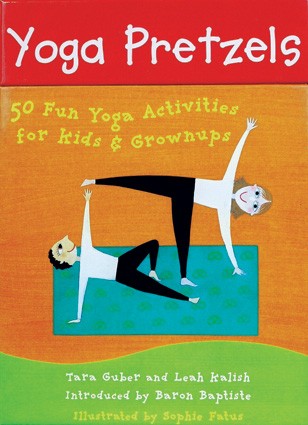
Yoga Pretzels activity deck by Tara Guber, Leah Kalish, and Sophie Fatus
Many Montessori schools, including my son’s, use these yoga pose and breathing technique cards for both group yoga instruction or for a peace corner where children can do yoga by themselves. Each card includes multiple pictures to guide children through the poses.
