
My 5 year old and I recently attended the Memphis Japan Festival. It was such a fun way to learn about Japan!
Today, I’m sharing what we saw there, along with suggested picture books and activities to help kids learn about Japan. This post is our latest edition of the Global Citizen Kids Club here at The Barefoot Mommy.
If you want to explore past editions of the Club, you can learn about Greece, Kenya, China, Colombia, and Iran.


Disclosure: For your convenience this post contains affiliate links. If you purchase items through these links, I may earn a small commission at no additional cost to you.You can read my full disclosure policy here.
What we learned at the Memphis Japan Festival
My favorite part of the Memphis Japan Festival was seeing Masaji Teresawa, also known as the Candyman, perform. Below you can see him helping a child spin a top that is resting on a traditional Japanese fan. A quick google search revealed that Mr. Teresawa travels to many different cities to perform, so you might see him at your city’s Japan festival!
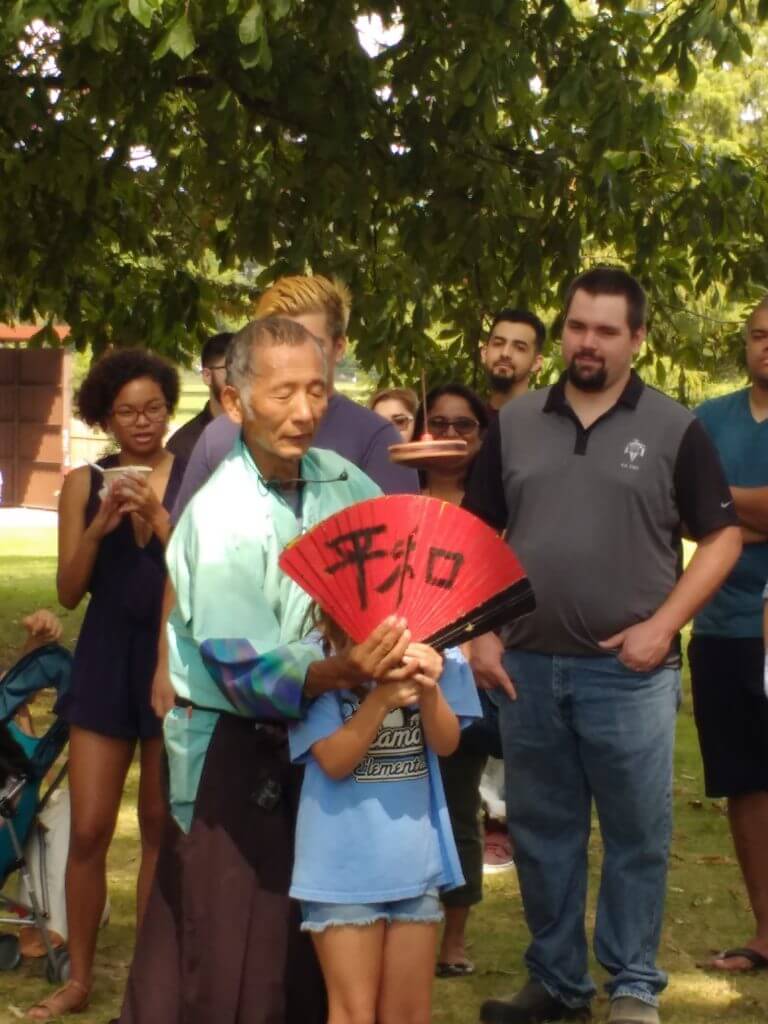
He’s called the Candyman because he sculpts hot candy into amazing animals and other creations. According to this article, he may be the only person practicing the ancient Japanese art of amezaiku in the United States.
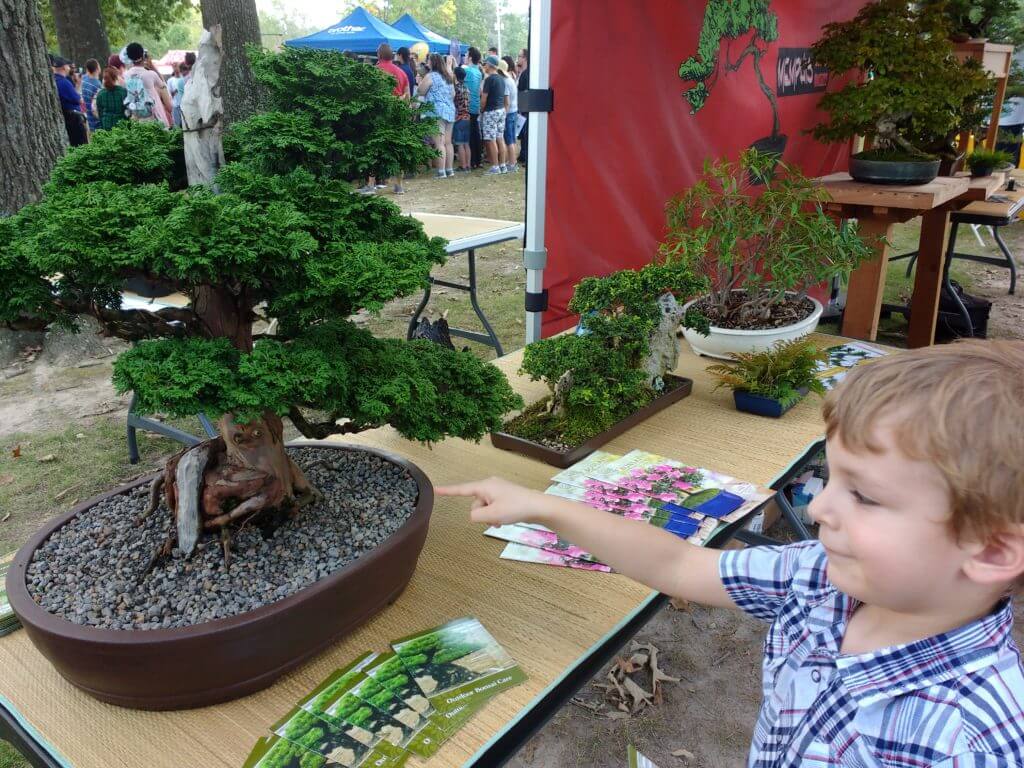
My 5 year old’s favorite booth (besides the one where he could catch plastic goldfish) was the local bonsai society’s tent. He was especially interested in a demonstration where a volunteer was wrapping a tree with wires to shape it. The volunteer explained that this is done because bonsai trees are supposed to look like old, twisted trees found in the mountains of Japan. Their branches lay close to the ground because of heavy snow.
Related Post: 15 Children’s Books for Asian American and Pacific Islander Heritage Month
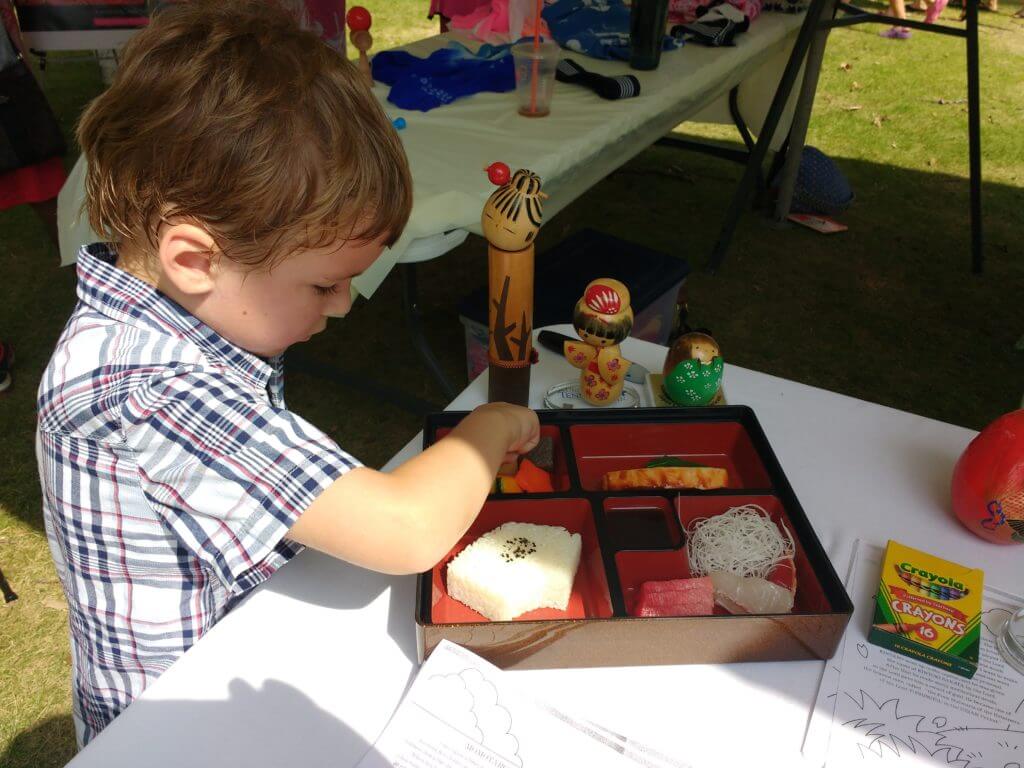
The Japanese consulate was also present at the festival to help children and adults learn about Japan, or plan their next visit. The little guy was curious about their display of popular foods in Japan.
Related post: A summer bucket list for little global citizens
Best picture books to learn about Japan
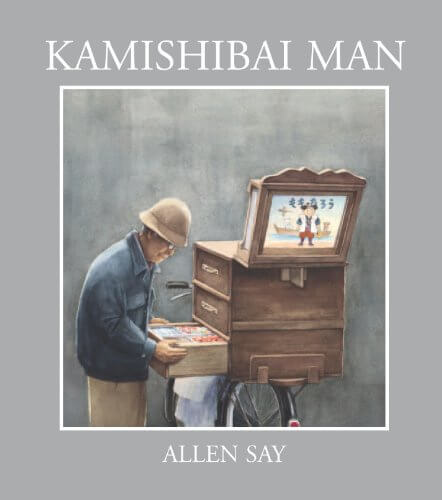
Kamishibai Man by Allen Say
Japanese-American author and illustrator Allen Say has created a lovely tribute the kamishibai man of his childhood, when he lived in Japan. Before television became popular, children were transfixed by the kamishibiai man’s “paper theater” performances. The theater was mounted to the back of his bicycle in a large wooden box. As he told the children cliffhanger stories, he used the quickly changing picture cards as illustrations.
As the years passed and televisions showed up in more homes, the kamishibai man could no longer get the children to come outside for his stories. In his old age, he decides to travel into the city one more time with his theater. He finds that far more people remember him than he ever imagined. (Recommended for ages 5 – 9).
Related Post: 11 Children’s Books about Korean Culture
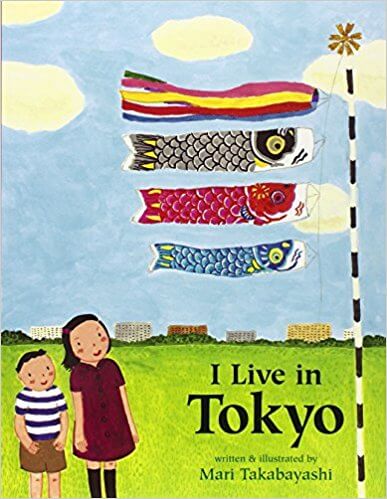
I Live in Tokyo by Mari Takabayashi
If you only have one book in your child’s collection to help them learn about Japan, I would choose this one. With engaging, detailed illustrations, seven year old Mimiko takes us through a year of her life in Japan. Each month we learn about a different aspect of Japanese culture, including how a number of holidays are celebrated.
My 5 year old was particularly taken by the page filled with pictures of colorful wagashi cakes, which Mimiko tries not to gobble up during her grandmother’s lengthy tea ceremonies. (Recommended for ages 4 – 9).
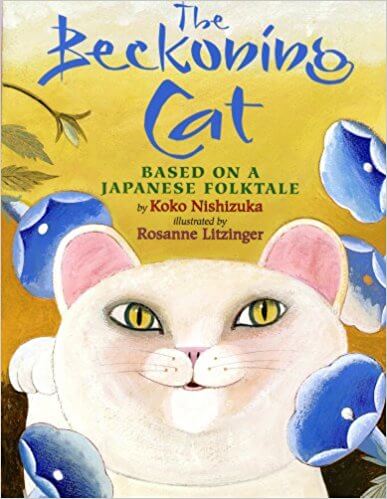
The Beckoning Cat by Koko Nishizuka and Rosanne Litzinger
Have you ever seen a statue of porcelain cat holding up one paw when you’ve visited a Japanese restaurant? This book tells the good luck legend behind the beckoning cat. One night, a hungry white cat visits Yohei, a young, poor fishmonger. Even though he doesn’t have much food, he feeds the cat and loves the sound of her purring.
Soon after, Yohei is called home from the market because his father is ill. How will he sell his fish before they spoil since he can’t leave home? The white cat returns, showing her gratitude by bringing good luck to his business. (Recommended for ages 5 – 9).
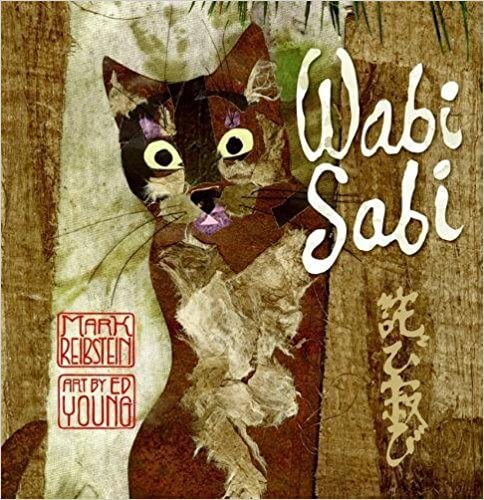
Wabi Sabi by Mark Reibstein and Ed Young
I wasn’t sure if I’d be able to hold our 5 year old’s interest with this story that explains the Japanese concept of wabi sabi through a cat who has the same name. After all, as the cat hears her master say, the meaning of wabi sabi is “hard to explain.” The combination of the rough papercut illustrations and the interesting explanations by the animals kept him engaged.
Snowball the cat tells Wabi Sabi that her name represents a kind of beauty. But Rascal a dog who is “smart, but kind of mean” pities Wabi Sabi because she is so ordinary. It’s only when Wabi Sabi travels to the mountains to meet Kosho the monkey that she truly understands the meaning of her name. (Recommended for ages 7 – 12).
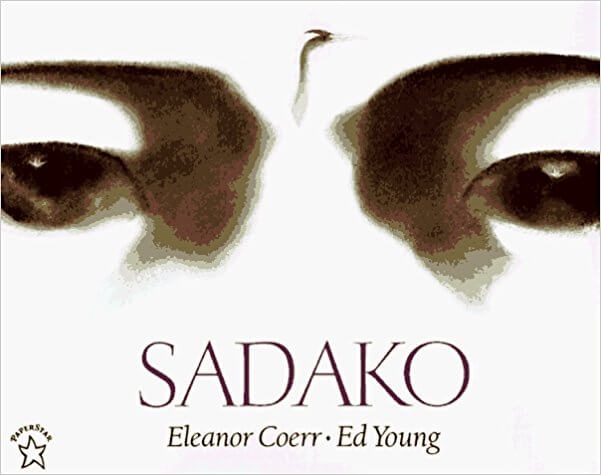
Sadako by Eleanor Coerr and Ed Young
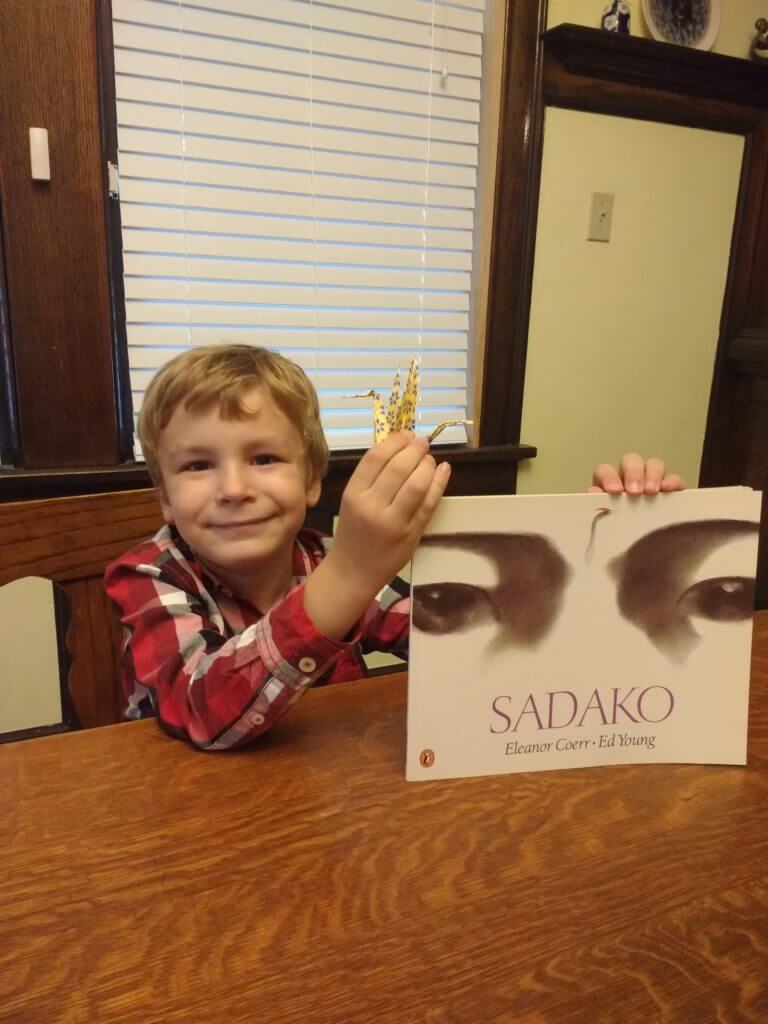
I believe in the importance of teaching children about peace and social justice, so Sadako has been in my children’s book collection for many years. It tells the true story of Sadako Sasaki, a young girl from Hiroshima who developed leukemia in the 1950s as a result of the radiation from the atomic bomb.
Sadako attempted to fold 1,000 paper cranes because of a legend that doing this would heal the sick. She folded more than 600 before she died. Her friends and classmates completing the rest of the 1,000 so that she could be buried with them. Today, there is a statue of Sadako in Hiroshima’s Peace Park. Each year on Peace Day, children hang garlands of peace cranes on the statue.
This story is heart-wrenching. But it’s also written in a way that allows Sadako’s tenacious spirit to shine through the story. (Recommended for 6 – 12. There is also a chapter book titled Sadako and the Thousand Paper Cranes by Eleanor Coerr written for ages 8+).
The Sound of Silence by Katrina Goldsaito and Julie Kuo
Read my review of The Sound of Silence in this post.
Related post: Global Passport: Best Picture Books Set in Asia
Activities to learn about Japan
Make a peace crane
Because I found Sadako’s story so moving, I suggested to my son that we make peace cranes after we read the book. I’ll be honest with you. As you can probably tell by my facial expression in the picture below, it’s not easy for me to make origami.
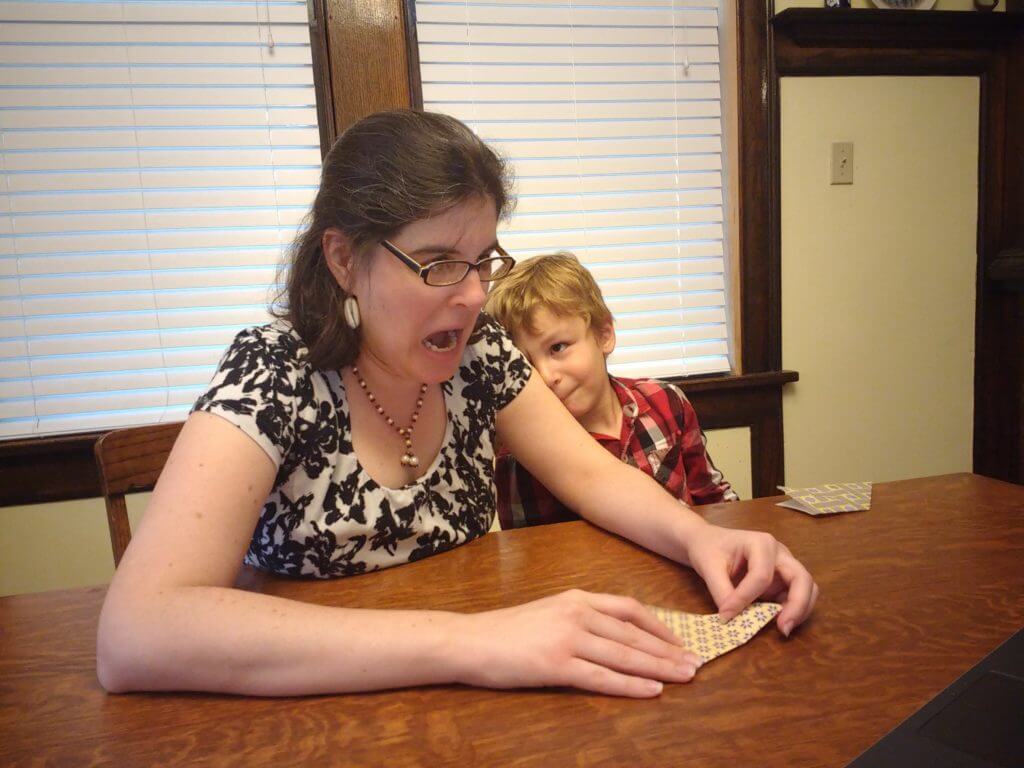
Learn from my mistakes and if you plan to do origami with your child, practice on your own first. In the end, we did end up with a crane, though not as neatly creased as I’d like.
We used this picture tutorial to make our crane. To learn how you can contribute your peace cranes to Hiroshima’s Peace Park, scroll to the end of this post.
How to learn more about Japan and be a friend to Japan
Make a Zen garden
Zen Buddhists have been creating karesansui, or miniature gardens, for centuries. They use them to help with meditation or contemplation. Making one can also be a pleasing sensory experience for a child. Find instructions on how to make your Zen garden + 11 more around the world activities in my free booklet (fill out the form above to get your free copy, which can be found in my resource library.)
Learn Japanese greetings
When developing global friendships, it always helps to be able to greet new friends in their language. The video below teaches basic Japanese greetings, both formal and informal. I appreciate the pace of the video, which allows children to practice several times before moving on to the next greeting.
Learn about Japan with Little Passports World Edition
My 5 year old is a huge fan of Little Passports, a monthly subscription service for kids focused on global learning. We receive the Early Explorers packages, which offers different global themes like art and music for younger children.
But we’ll soon be switching to the World Edition, which focuses on a different country each month for kids ages 6 – 10. One of the countries that’s included in the series is Japan.
After the first month (when kids receive their world map and suitcase), your child will receive souvenirs, activity sheets, photos, stickers for their map and suitcase, and access to more activities online.
Send paper cranes to the Children’s Peace Monument in Hiroshima
Especially if you chose to read the book Sadako and learn about the meaning of her paper cranes, you may want to make paper cranes for the Children’s Peace Monument in Hiroshima. Staff at the Peace Memorial Park in Hiroshima will include your cranes with those contributed by other children at the statue commemorating Sadako Sasaki. Find instructions about where to send your cranes here.
