
In the United States, the label “Asian American” includes an incredibly broad range of cultures, languages, and histories. Often Asian American booklists primarily focus on East Asian cultures, especially Chinese and Japanese culture. When sharing stories with kids, it’s helpful to look at smaller groups within this big category. This post is about some of my favorite children’s books (both picture books and chapter books) starring South Asian, or Desi, characters. Most of these books take place in the United States. Keep in mind that even among South Asian Americans, there’s a lot of diversity in cultures, religions, and languages.
Which cultures fall under the South Asian/Desi umbrella? South Asia includes India, Pakistan, Bangladesh, Sri Lanka, Bhutan, the Maldives, and Nepal. The word “Desi” comes from a Sanskrit word meaning “the land,” and often refers to the three countries that make up the Indian subcontinent (India, Pakistan, and Bangladesh.)
With all that explaining out of the way, lets’ dive into some fantastic South Asian stories!


Disclosure: For your convenience, this post contains affiliate links. If you make purchases through these links, I may earn a small commission at no additional cost to you. You can read my full disclosure policy here.
Picture books starring South Asian characters
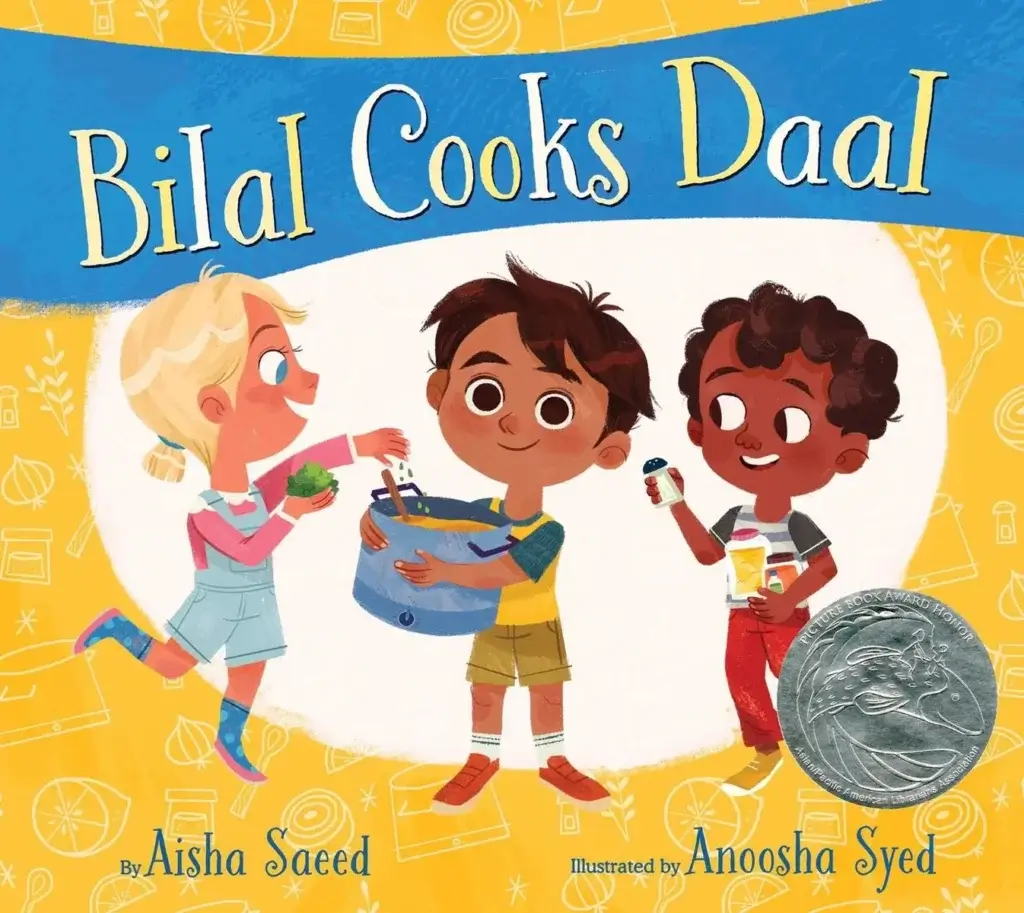
Bilal Cooks Daal by Aisha Saeed. Illustrated by Anoosha Syed.
Purchase from Bookshop.org (supports independent bookstores and my business!)
Abu wants Bilal to help make daal his favorite meal, and Bilal’s friends want to join in the preparations. His friends are a little unsure if they’ll like it, but they’re willing to take a taste. The problem? “Daal takes time.”
While the children play for hours, Bilal answers their repeated questions about whether the daal will be ready yet. The brightly colored, expressive cartoon illustrations capture children’s many different reactions to food in this empowering story about sharing one’s culture with others. (Recommended for ages 3 – 6. Pakistani American author.)
Related post: The 6 building blocks of anti-bias books
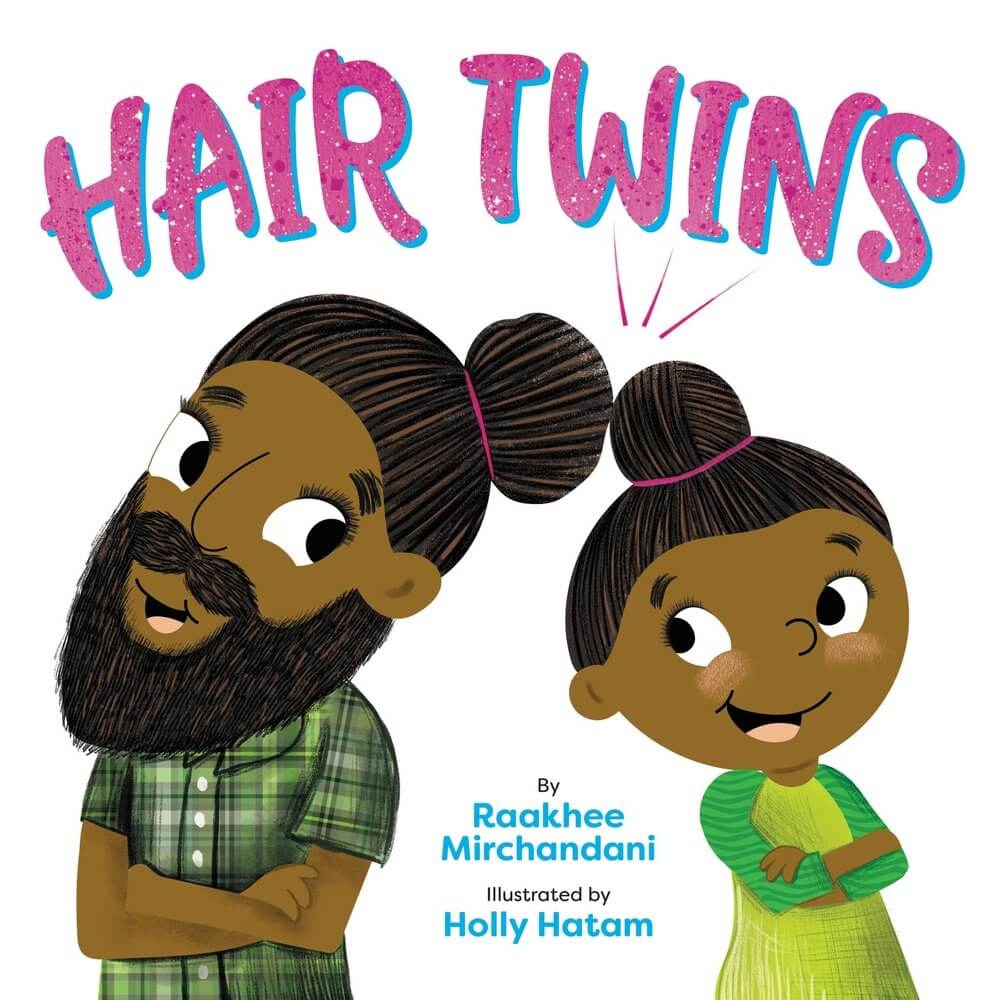
Hair Twins by Raakhee Mirchandani. Illustrated by Holly Hatem.
Purchase from Bookshop.org (supports independent bookstores and my business!)
Each day, Papa lovingly brushes and styles his young daughter’s long hair. Each hairstyle provokes happy memories and flights of fancy, but her favorite style is when Papa places her hair in a top bun, similar to the joora he wears each day. The bright, light-hearted illustrations capture the playful and deep love between a Sikh father and daughter, while celebrating their religious traditions related to hair. (Recommended for ages 3 – 7. Indian American author.)
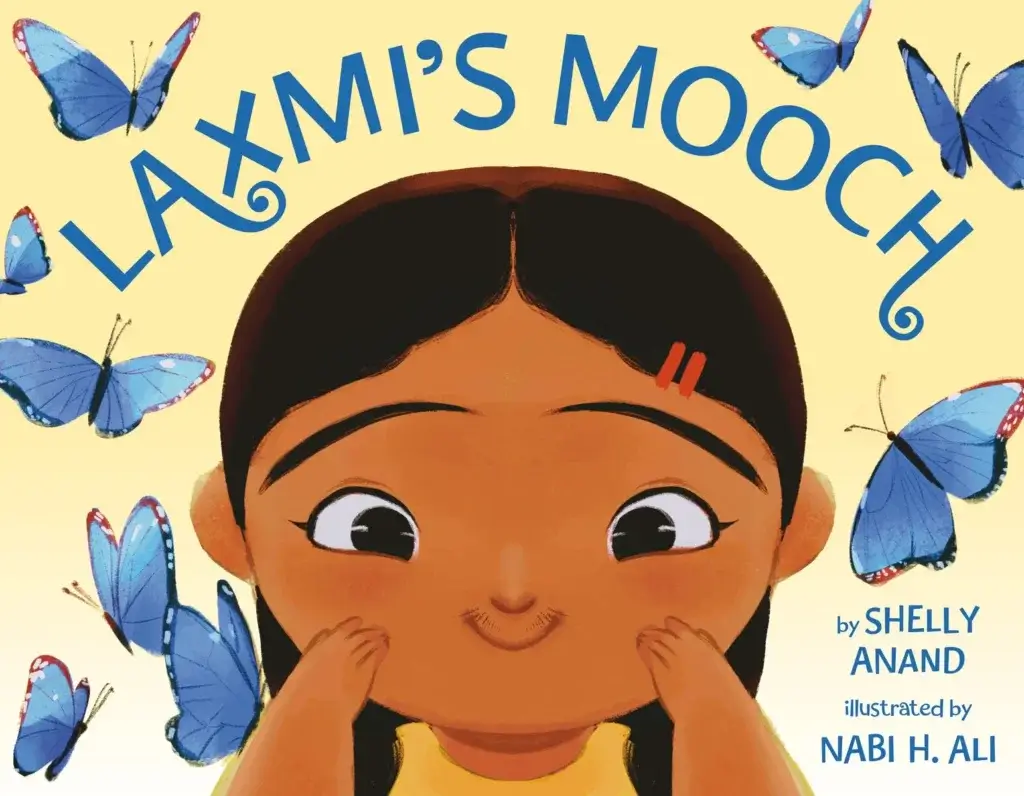
Laxmi’s Mooch by Shelly Anand. Illustrated by Nabi H. Ali.
Purchase from Bookshop.org (supports independent bookstores and my business!)
When Laxmi’s classmate points out that she has “a little mustache like my dad,” she’s suddenly embarrassed, noticing hair on all kinds of places that aren’t her head. Mummy reassures her that she also has a mooch (the Hindi word for moustache), along with many powerful Indian women.
When Laxmi returns to school with a new self-confidence, a mooch trend starts in her class. This light-hearted, playful story encourages kids to accept all bodies as normal and good, and will likely have young readers peering into a mirror to see if they also have a mooch. (Recommended for ages 3 – 7. Indian American author.)
Related post: Children’s books about beauty that defy stereotypes
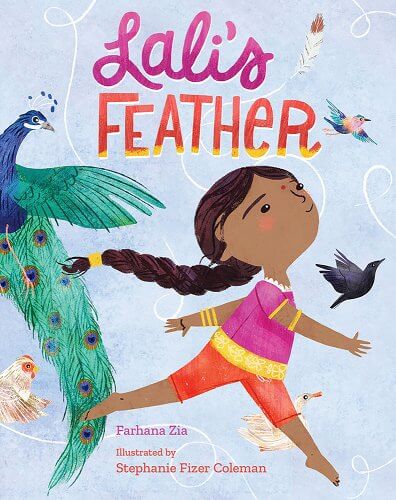
Lali’s Feather by Farhana Zia. Illustrated by Stephanie Fizer Coleman.
Purchase from Bookshop.org (supports independent bookstores and my business!)
This sweet picture book is an ode to wonder. When young Lali finds a lone feather in a field, she offers it all the birds she sees. Rooster, Crow, and Peacock point out how plain the feather is, which means it couldn’t possibly be theirs.
Lali, however, impresses them with all this plain little feather can do. After using it to write, dust, and tickle, a gust of wind steals the feather. Lali is heartbroken, but could there be a way to get the feather back? (Recommended for ages 3 – 7. Indian American author.)
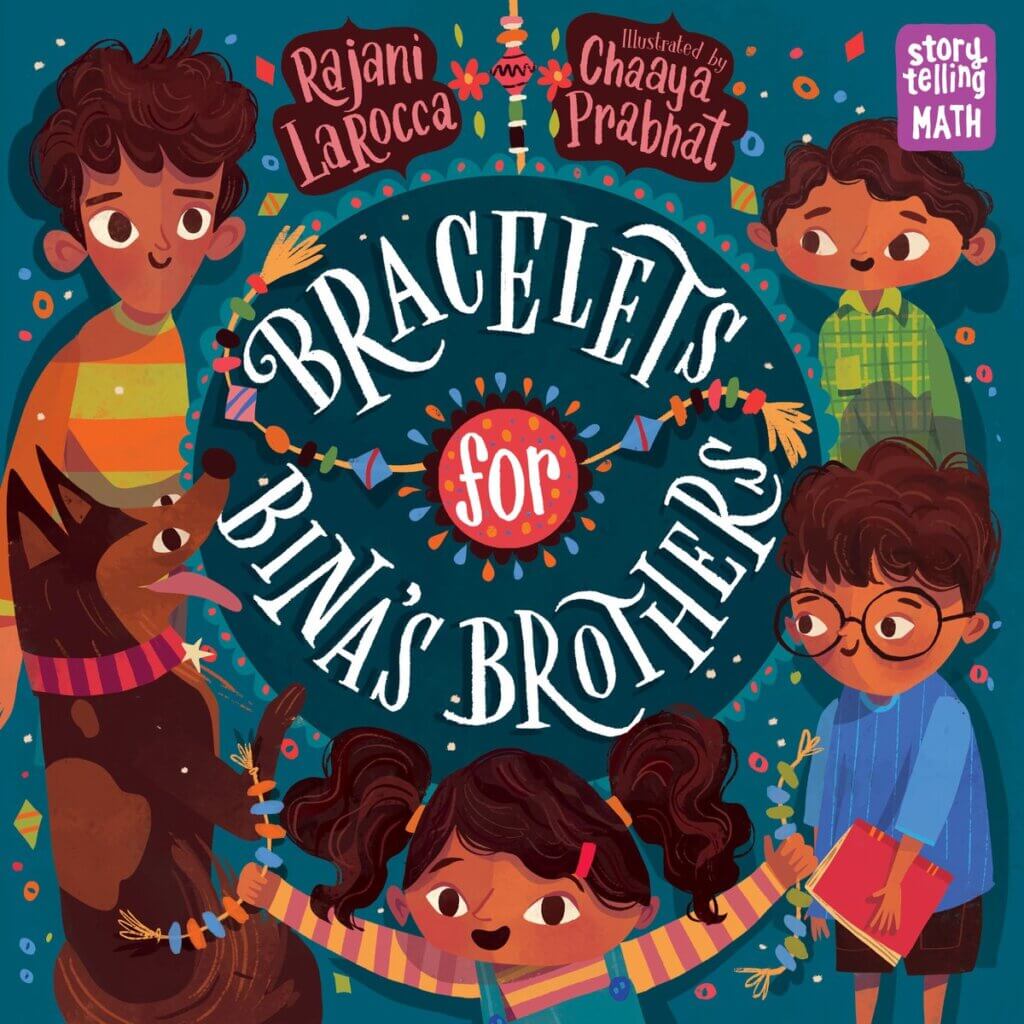
Bracelets for Bina’s Brothers by Rajani LaRocca. Illustrated by Chaaya Prabhat.
Purchase from Bookshop.org (supports independent bookstores and my business!)
It’s almost time for the Raksha Bandhan holiday, which is marked by sisters giving their brothers bracelets as a symbol of protection. This year, instead of buying the bracelets, Bina wants to make her own beaded creations for her three brothers. Each brother has a different favorite color and a color they can’t stand, and Bina wants to make the pattern just right for each one of them. Can she make the perfect bracelets with the three jars of beads she has? (Recommended for ages 3 – 7. Indian American author.)

Dancing in Thatha’s Footsteps by Srividhya Venkat. Illustrated by Kavita Ramchandran.
Purchase from Bookshop.org (supports independent bookstores and my business!)
When Varun attends his older sister Varsha’s Bharatatanatyam dance class, he’s surprised by how the rhythms and movements capture his attention. Varsha tells him that he can’t participate because “dance is not for boys!” But their Thatha tells them how he danced in his village festival in India every year.
Thatha encourages Varun’s interest in dance, but other children tease him. Varun begs Thatha to teach him at home, but his grandfather’s knee pain makes that too difficult. When Varun tries to reject dance, he finds dance following him in his everyday life. Can he find a way to embrace what he enjoys? (Recommended for ages 4 – 8. Indian American author.)
Related post: Kids’ books that defy gender stereotypes
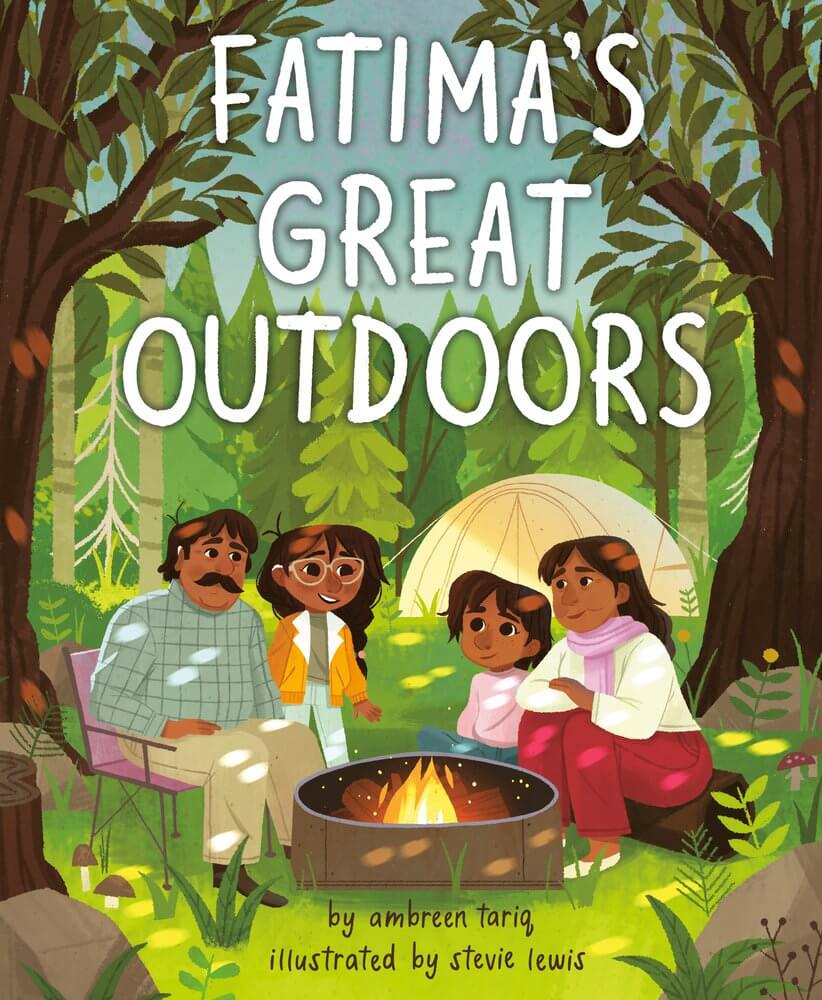
Fatima’s Great Outdoors by Ambreen Tariq. Illustrated by Steve Lewis.
Purchase from Bookshop.org (supports independent bookstores and my business!)
After a long week at school filled with teasing and a bad math grade, Fatima can’t wait for her family to go camping for the first time. When Papa struggles to put together their new tent, Fatima surprises herself by being able to help him. Fatima and her sister experience many of the issues first-time campers face: strange noises, a big spider, and how to light a fire so that they can enjoy the beef bacon they bought especially for the trip. Fortunately, Mama grew up with a woodburning stove in India, so she knows how to build a good fire. This sweet book is perfect for reading before – or during – a camping trip. (Recommended for ages 4 – 8. Indian American author.)

Tomatoes for Neela by Padma Lakshmi. Illustrated by Juana Martinez-Neal.
Purchase from Bookshop.org (supports independent bookstores and my business!)
With gorgeous, detailed illustrations, Tomatoes for Neela reveals the magic of cooking, especially with summer-ripened tomatoes. Neela loves copying down her mother’s recipes, and thinks that her Paati’s recipe book on the shelf looks so important that it could contain magic.
Even though her Paati lives far away in India, cooking heirloom tomatoes with her Amma makes Neela feel close to Paati. Many of the illustrations include black and white drawings of Paati, hovering nearby Amma and Neela’s colorful adventures.
This is a wonderful book to read in summer, especially for children who are interested in gardening and cooking. (Recommended for ages 5 – 9. Indian American author.)
Shop the entire list of children’s books starring South Asian characters on Bookshop.org! (supports independent bookstores and my business)

The Boy Who Tried to Shrink His Name by Sandhya Parappukkaran. Illustrated by Michelle Pereira.
Purchase from Bookshop.org (supports independent bookstores and my business!)
With imaginative metaphors and striking illustrations, The Boy Who Tried to Shrink His Name will appeal to any child who’s wondered if they must shrink themselves to fit in. It’s Zimdalamashkermishkada’s first day at a new school, so he shrinks his long name in the super-hot dryer. He tells his new friend Ellie his name is Zim.
When he asks his mother if he can just change his name to Zim, she reminds him of the meaning of his name and encourages him to give people the opportunity to say it right. As Ellie teaches him, bit by bit, to skateboard, Zimdalamashkermishkada shares a bit more of his name during each lesson. (Recommended for ages 3 – 7. Indian Australian author.)
Never struggle to find the right diverse, anti-bias, or social justice children’s book again!


Home Is In Between by Mitali Perkins. Illustrated by Lavanya Naidu.
Purchase from Bookshop.org (supports independent bookstores and my business!)
When Shanti and her parents move from their Indian village to a town in the United States, things feel confusing. Inside their apartment, Shanti feels like she is in her village, with the food, customs, and language she’s used to. In the town, there’s so much new to learn.
Gradually, Shanti learns to appreciate things about both her village life and her town life, but all the mental traveling between the two realms is exhausting. Will she have to choose one or the other as her home? (Recommended for ages 4 – 8. Indian American author.)
Related post: Children’s books about immigrants and refugees

Fauja Singh Keeps Going by Samran Jeet Singh. Illustrated by Baljinder Kaur.
Purchase from Bookshop.org (supports independent bookstores and my business!)
As a child Fauja Singh’s doctors told his family he would probably never walk, but his mother repeatedly told him, “you know yourself Fauja, and you know what you are capable of.” Through repeated effort over many years, Fauja did learn to walk, even as long as a mile.
When he was 81 years old, he showed courage in a different way, by moving from his rural village in India to England to be with his family. After a period of great loneliness, training for a marathon gave his days purpose and joy. After finishing the London Marathon several times, Fauja decided to enter the New York Marathon, at a time when Sikhs in the United States were facing prejudice and hatred. Could he complete the 26 mile race at age 93? (Recommended for ages 5 – 9. South Asian American author.)
Chapter books starring South Asian characters
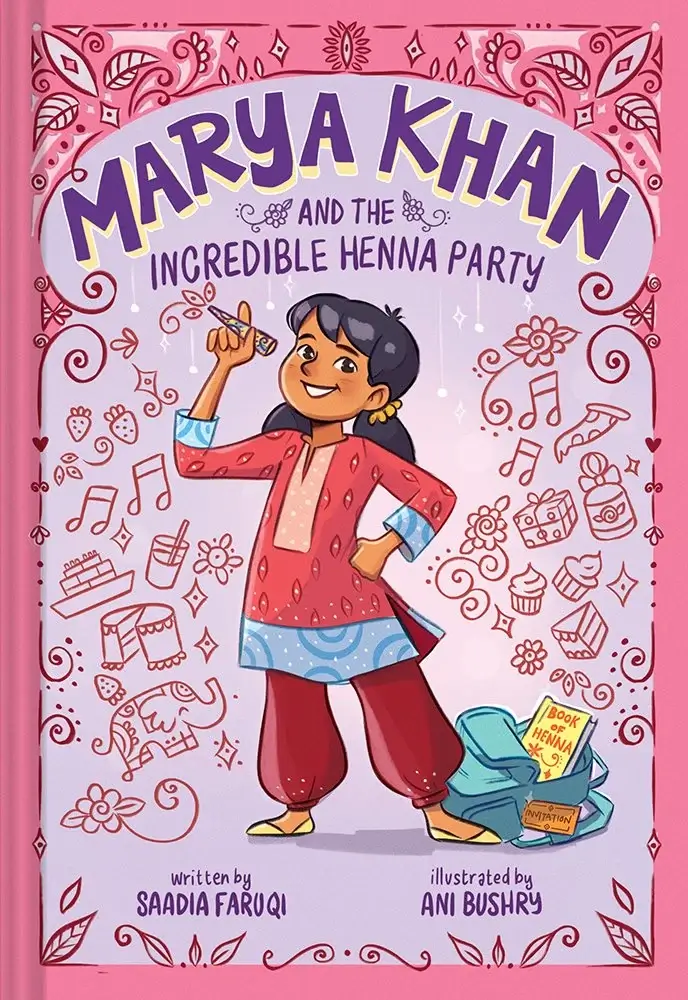
Marya Khan and the Incredible Henna Party by Saadia Faruqi. Illustrated by Ani Bushry. (series)
Purchase from Bookshop.org (supports independent bookstores and my business!)
Lively and impulsive Marya is about to turn eight, and she’s tired of sharing her birthday week with her annoying neighbor Alexa. Alexa’s family always throws her an elaborate party, while Marya is only allowed to invite her best friend Hannah to her family birthday dinner and movie night.
When Alexa is passing out invitations to this year’s over-the-top party, Marya blurts out that she’s going to have a henna party, with fairy lights, music, and a fashion show. Now she just has to convince her Mama and Baba it’s a good idea (even though they already said no to a party.) Marya’s attempts to plead – and eventually to manipulate – don’t go as planned. Will her birthday be ruined? (Recommended for ages 7 – 10. Pakistani American author.)
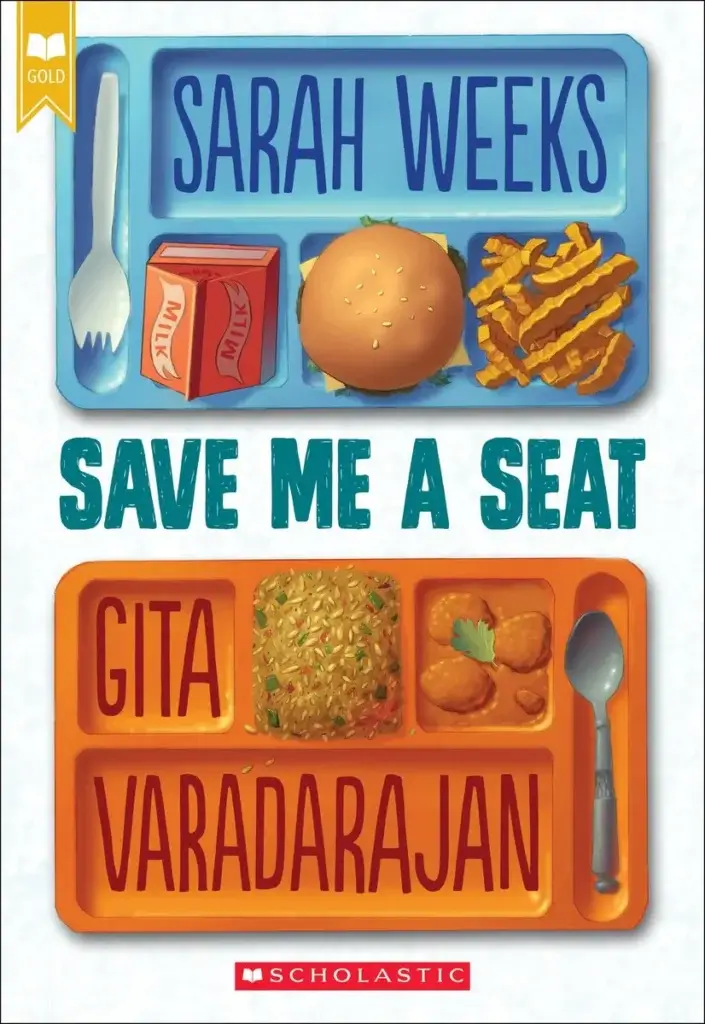
Save Me a Seat by Sarah Weeks and Gita Varadarajan.
Purchase from Bookshop.org (supports independent bookstores and my business!)
Told in two voices, Save Me a Seat describes the eventful first week of 5th grade for two classmates: Ravi Suryanarayanan and Joe Sylvester. Ravi has just moved to the U.S. from India and expects to excel academically and socially just as he did at his previous school. Joe, who has Audio Processing Disorder and spends part of the school day in the resource room, hopes to avoid bullying from his nemesis Dillon Samreen and humiliation due to his Mom’s new job as the school cafeteria monitor.
Because Dillon is the only other Indian student in the class, Ravi is sure they’ll be friends. After all, Dillon’s been winking at him every day. (When we read Joe’s perspective, readers find out this means Dillon is about to mess with someone.) Thanks to Dillon blaming Joe for one of his pranks on Ravi, Ravi immediately dislikes Joe. But as Ravi discovers that so much of what he could rely on in India is different in the U.S., he wonders if there’s more to Joe than he previously thought.
Because of its short chapters and quick pace, Save Me a Seat is also a great pick for reluctant readers. (Recommended for ages 8 – 12. White author and Indian American author.)
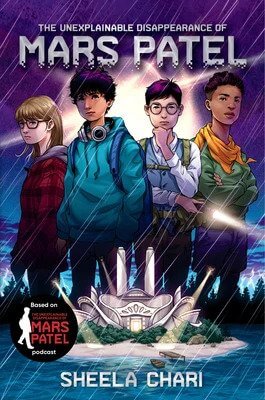
The Unexplainable Disappearance of Mars Patel by Sheela Chari. (series)
Purchase from Bookshop.org (supports independent bookstores)
Sixth grader Manu (Mars) Patel and his friends are all smart yet continually landing in detention for their pranks. When Mars’ friend Aurora suddenly disappears, he becomes obsessed with finding her. When another friend disappears too, Mars suspects it’s connected to reported disappearances of kids around the world. He and his friends are soon following Mars’ hunch that Pruitt Prep, run by tech billionaire Oliver Pruitt, has something to do with these disappearances.
Not only are the friends a racially diverse group; main character JP is non-binary. In addition to a storyline with many twists and turns, young readers will appreciate the modern touches of podcast transcripts and text exchanges that keep the storyline quickly moving forward. (Indian American author. Recommended for ages 8 – 12.)

Aru Shah and the End of Time by Roshani Chokshi. (series)
Purchase from Bookshop.org (supports independent bookstores and my business!)
I’m a bit sheepish that it’s taken me so long to review the first book in this fantastic and popular fantasy series!
Aru doesn’t have an easy time at her posh private school, and she often fibs to cover up her middle class life. When she tells a group of popular kids that she has an elephant and a cursed lamp, they show up at the Indian American history museum Aru’s mom directs. On a dare, Aru lights the lamp to show that it really is cursed, even though she knows her Mom might kill her.
To her horror, Aru’s action releases the Sleeper from the lamp, which means she only has seven days to stop him from ending all time. Her mother was already frozen by her impulsive decision, and now Aru and the sister she never knew she had, guided by a mythical pigeon, must stop the Sleeper from awakening the God of Destruction.
In addition to being a fast-paced adventure with plenty of humor, kids will get a good introduction to a handful of Hindu gods and heroes. (Recommended for ages 8 – 12. Indian American author.)
Related posts: Diverse fantasy books for ages 7 – 14

More to the Story by Hena Khan.
Purchase from Bookshop.org (supports independent bookstores and my business!)
This story of four very different sisters living in Atlanta is inspired by Hena Khan’s childhood love of Little Women. Jameela is obsessed with becoming a journalist someday like her brave grandfather was in Pakistan. To propel her dream forward, she needs to win an award this year, but the editor of the school paper thinks her story ideas are too risky.
Jameela’s Baba has always encouraged her plans. When he has to go to the United Arab Emirates to work for six months, Jameela and her sisters are heartbroken. At the same time, their new connection with family friend Ali shows them how much harder it is to lose your father for a lifetime. (Recommended for ages 8 – 12. Pakistani American author.)
Related post: Children’s books starring Muslim characters
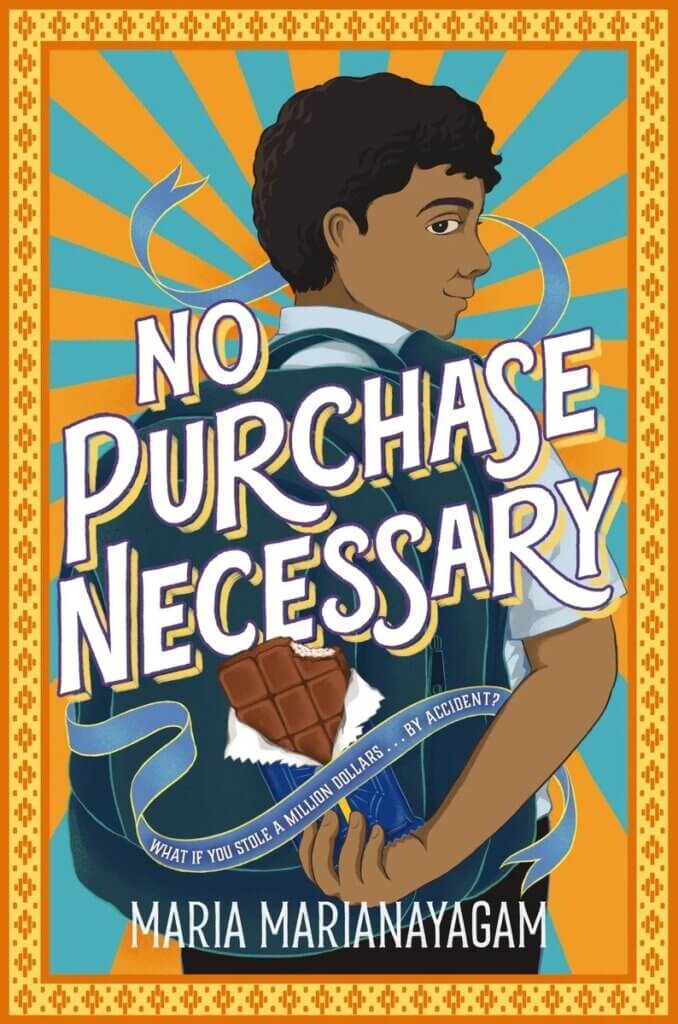
No Purchase Necessary by Maria Marianayagam.
Purchase from Bookshop.org (supports independent bookstores and my business!)
The opening lines of No Purchase Necessary immediately draw the reader in: “It all started with the first mistake, week one at my new school – not surrendering my eraser to Jacob Underson. One thing led to another, and by week three, I had stolen a million dollars.”
The two anchors in Ajay Anthonipillai’s life are his Tamil parents’ incredibly high expectations and his devout Catholic faith. So, he shocks himself when Ajay is soon caught up in a network of lies that all started when a popular kid told him to steal a candy bar from the convenience store across from their school.
It turns out that the stolen bar is the million dollar prize winner in a contest, but how can Ajay turn it in when he stole the chocolate bar in the first place? Hoping he can delete any security camera footage of his theft, Ajay soon finds himself working in the convenience store, where “Scary Al,” the elderly owner, watches him closely.
In this action-packed novel, Ajay is at first simply trying to figure out how he might redeem the prize. His family lives in a cramped, worn apartment and his parents are barely scraping by; the prize would transform their lives. As the story progresses, Ajay is grappling with multiple ethical dilemmas and is filled with terror that his family will find out what he’s done. The book is a great blend of fun, suspense, and nuanced perspectives on success and doing the right thing. (Recommended for ages 8 – 12. Sri Lankan Canadian author.)
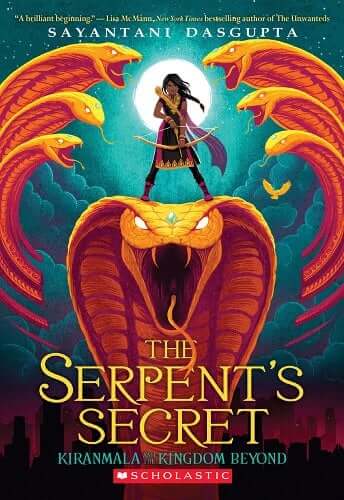
Kiranmala and the Kingdom Beyond by Sayantani Dasgupta. Illustrated by Vivienne To. (series)
Purchase from Bookshop.org (supports independent bookstores)
In suburban New Jersey, Kiran and her parents have always stood out. It’s not just that they are Indian American in a mostly white community. Kiran also feels uncomfortable because her parents are always calling her a princess, while their faded home and worn clothing suggest nothing of the kind.
When Kiran’s parents disappear on her 12th birthday, they leave behind a hastily scrawled note warning her not to let a rakkosh demon into the house, and to trust the princes that will be sent to her. Soon the princes arrive, only to reveal that Kiran is actually a princess, exiled from the Kingdom Beyond Seven Oceans and Thirteen Rivers. As they battle demon creatures so that they can locate Kiran’s parents, Kiran must figure out the strange realm she was born in.
I highly recommend this series not only for its fast-paced adventure and rich cultural content, but also because of its laugh-out-loud, slightly sarcastic humor. (Indian American author. Recommended for ages 8 – 12.)
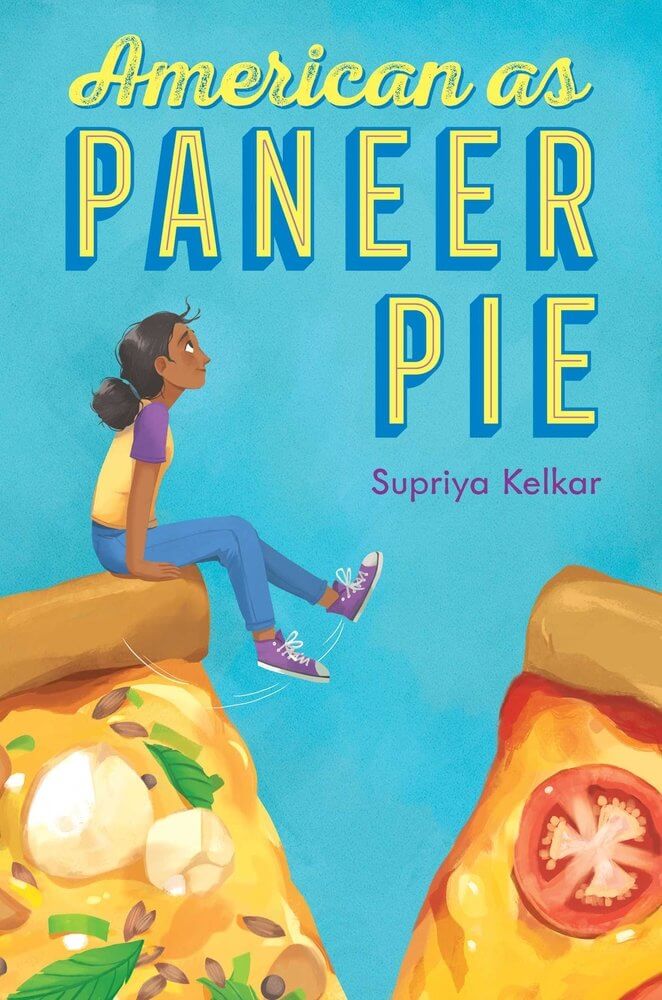
American as Paneer Pie by Supriya Kelkar.
Purchase from Bookshop.org (supports independent bookstores and my business!)
Sixth grader Lekha Divekar feels like there are two versions of herself: Home Lekha, where she’s free to embrace her Indian culture, and School Lekha, where she tries to hide everything she can that makes her feel different from her overwhelmingly white classmates. Only her neighbor and best friend Noah knows both versions. Despite being bullied by a few kids and getting weird questions from other classmates, Lekha feels there’s no point in speaking up. It will only draw more attention to her, which she hates.
But when new neighbors move in, it turns out they are Indian, and they have a daughter Lekha’s age. Lekha soon loses her excitement when she realizes that Avantika is a recently arrived immigrant who has an accent. She dreads the teasing that Avantika (and by extension Lekha) will receive. To Lekha’s surprise, Avantika is proud of who she is and easily claps back at people who say mean or ignorant things.
Lekha longs to be more like Avantika, but she’s so busy trying to fit in with her new swim team that being outspoken goes to the backburner. But when racist events in the community begin to affect her family, Lekha is pushed to grow as she never has before. (Recommended for ages 10 – 14. Indian American author.)
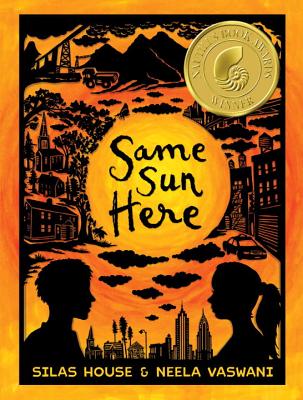
Same Sun Here by Silas House and Neela Vaswani.
Purchase from Bookshop.org (supports independent bookstores and my business!)
Written entirely as letters between pen pals who become best friends, this novel is both laugh-out-loud funny and heartbreaking. Meena lives in a crowded apartment in New York City’s Chinatown with her Indian immigrant family, while River lives in rural Kentucky in a coal mining community.
On the surface, the pair would seem to have little in common, but their ability to speak honestly to each other brings River and Meena comfort through difficult circumstances. Both children’s fathers are working far from home and only get to see them periodically. Meena’s parents are studying hard for their long-awaited citizenship test, though the greatest stress in their lives is whether they will lose the rent-controlled apartment they are illegally subletting. River faces harassment at school from kids and a teacher alike because of his Mamaw’s outspoken environmental activism.
When mountaintop removal causes a tragedy in his town, River understands his Mamaw’s actions at a deeper level. At the same time, Meena struggles with a loss in her family. The way these two friends who have never met comfort each other is deeply moving, yet their letters are filled with plenty of odd and humorous questions and observations one would expect from children their age.
Content warning: The anti-gay slur f***ot is used several times in the book, always within a context that makes it clear this word is harmful. (Recommended for ages 10 – 14. White gay author; Indian American author.)
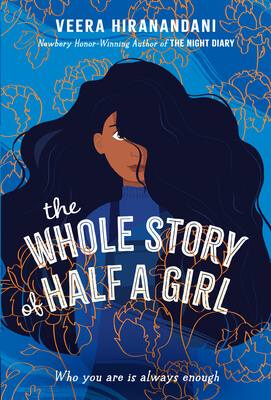
The Whole Story of Half a Girl by Veera Hiranandani.
Purchase from Bookshop.org (supports independent bookstores and my business!)
When Sonia leaves her tiny laid-back private school for public school, she wrestles with her identity in a way that she’s never had to do before. Everyone at school seems to be Black or white, and she’s Indian. Or is she part Indian? And is she Jewish, or part Jewish?
At home, her family is struggling to deal with her father’s job loss and his deepening depression, and Sonia’s mother seems alarmed about her new friends and the sport they’ve led her to: cheerleading. Sonia’s struggles around ethnic and religious identity, shifting friendships, and a completely new school environment are at times painfully realistic, yet this authenticity is what will make the novel so appealing to young teens. (Recommended for ages 10 – 14. Indian American Jewish author.)
Related post: 13 children’s books about courage
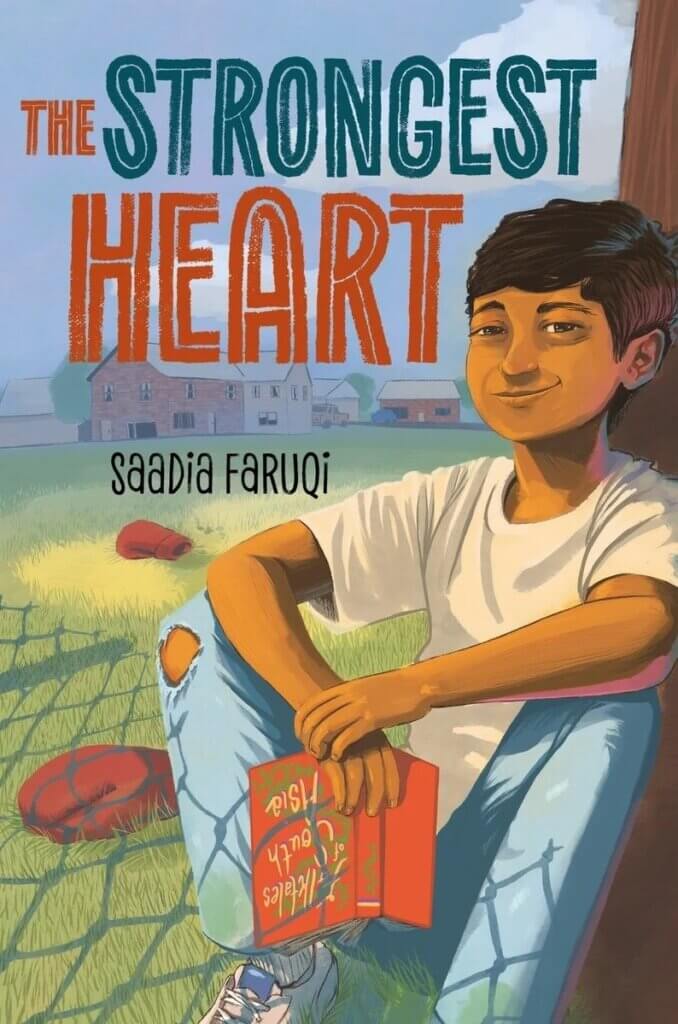
The Strongest Heart by Saadia Faruqi.
Purchase from Bookshop.org (supports independent bookstores and my business!)
When Mo and his father move from New York to Houston to live with his aunt, he focuses on perfecting his tough guy persona. When your father is a “monster” who’s prone to fits of rage and constantly criticizes you, toughness is your only option. Mo can’t rely on either of his parents, especially since his mother moved across the world for a two year fellowship.
Mo’s nurturing aunt provides him with the warmth he’s never received before. Even though he and his cousin/new roommate Rayyan are incredibly different, they develop a close friendship. Yet Mo knows that at any minute, the real Abbu could emerge, shattering any happiness he’s built in Houston. Rayyan tries to tell Mo that Abbu’s schizophrenia means that he doesn’t act the way he does on purpose, but Mo thinks Rayyan can never really understand what a monster Abbu is. When Abbu has one of his worst episodes in years, will it be Mo’s job to handle it once again?
This sensitively written book demonstrates the burden that serious mental illness can place on a family, while also shifting Mo’s perceptions about who his father is. (Recommended for ages 10 – 14. Pakistani American author.)
Related post: Chapter books that challenge ableism
