
You know what makes my heart happy? When I’m scrolling through Facebook and come across cool organizations that teach kids about justice, antiracism, and activism. These groups are helping kids learn about social justice and use their voices for change through art, storytelling, movement, music, and kid-led protest.


Wee the People (Boston) teaches kids about social justice activism and resistance
Of the groups featured in this post, I’ve been following Wee the People the longest. The group was started in 2015 by two Black mothers with a vision for using visual and performing arts to engage kids with justice issues and activism.
They offer free interactive workshops for young children on topics including Black Lives Matter, building bridges (not walls), gender identity, and reclaiming the legacy of Dr. Martin Luther King, Jr. Other workshops teach older kids about justice by breaking down what goes into an effective protest, and different ways our bodies can be sites of protest. Many of these workshops include storytelling with children’s books about activism.
Wee the People also helps families engage in protest and solidarity through kid-friendly activism. Last May, the group organized an event called Wee Free Black Mamas to raise bailout funds for Black mothers awaiting trial.
Over the summer, they organized families to participate in the national Lights for Liberty protest against immigration detention. Kids were invited to a “solidarity scoot for detained children,” where they biked, scootered, and skated around a local pond.
Peace Camp teaches kids about justice through storytelling and the arts
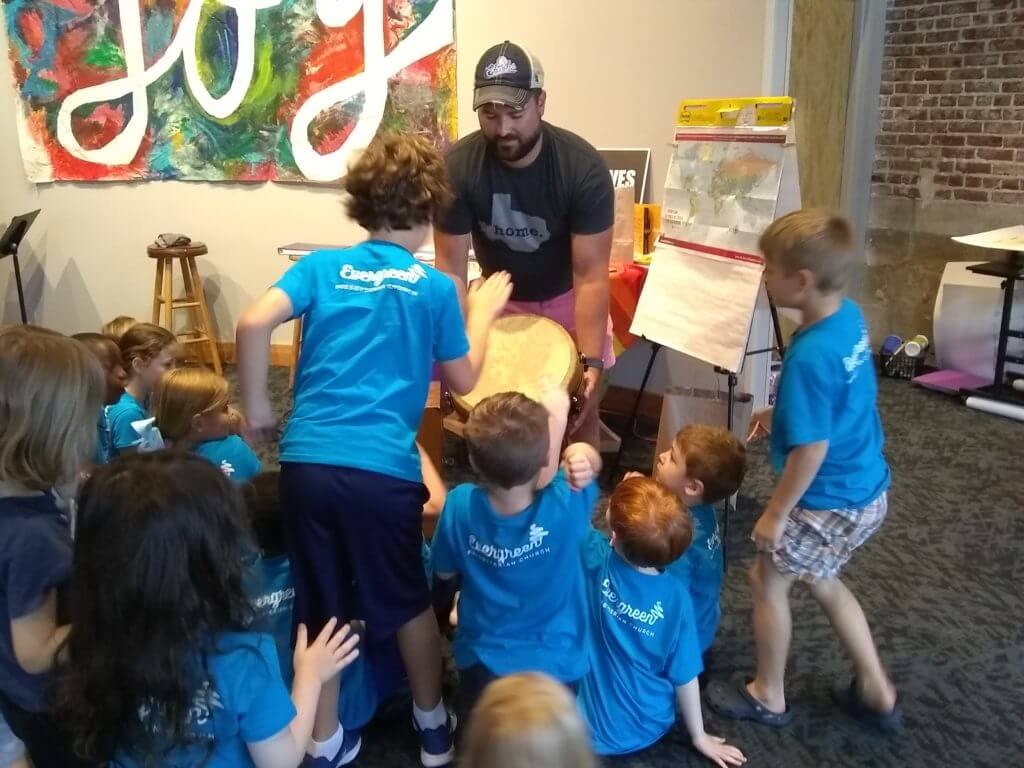
Full disclosure, I am the lead teacher and curriculum developer for Peace Camp, sponsored by Evergreen Presbyterian Church in Memphis. So I’m a little biased when I label this group as inspiring!
This small but mighty congregation is deeply invested in community organizing. They dreamed of developing a justice-themed summer camp that would be an alternative to traditional Vacation Bible School. It’s important to the church that kids of all faiths and backgrounds be all to participate, so the camp is rooted in storytelling from picture books rather than drawing on Bible texts.
The first camp was held in 2019, and used engaging children’s books, music, visual art, movement, and drama to explore justice issues. The kids ages 4 – 12 learned about a variety of issues including racism, gender identity, poverty, workers rights, and the environment. They learned about kid activists who’ve taken a stand on all these issues.
Want to swipe some of the ideas from Peace Camp? You can download four of the creative arts, music, and drama activities we used at Peace Camp to teach kids about justice and activism when you sign up for my free Resource Library. (Use the form below.)
We Stories equips white families in St. Louis to talk to young children about race and racism
In the months after the Ferguson, Missouri protests against police brutality and racism, two white St. Louis moms of young kids started talking about the need for white families to talk about race.
Their conversations eventually grew into the organization We Stories. The group engages white families in antiracism work, starting with a 12 week series. Families receive children’s books about race, a parent curriculum, action opportunities, and chances to connect with other families engaging in this work.
Participating families are encouraged to think about not only how they can talk about topics like racism and segregation in St. Louis with their kids. They’re also asked to look at what they can do so that their children don’t grow up in a “divided, inequitable city.”

we are uses storytelling-themed camps to engage North Carolina kids in antiracism
we are (which stands for working to extend antiracism education) trains educators year round on teaching through an antiracism lens. But they first caught my attention through their antiracism summer camps for 1st through 5th graders.
Each day of camp is organized around a particular children’s book that address racism and resistance, with plenty of hands on activities for kids to explore the story’s meaning. Ronda Taylor Bullock, educator and we are’s executive director, knows that children’s books powerfully shape children’s identities and how they understand race.
Whenever possible, camp leaders try to pull teachers from local schools into the camps, so that they can take what they learn back into their classrooms. Campers also bring home a daily handout that helps parents continue their antiracism learning at home, and parents are invited to join camp on the last day to see what their children have learned.
