
“I have to be a part of this!”
That was my first thought when I heard that a church in my city was leading its first ever Peace Camp for children. With a tagline like “teaching love in action to our youngest activists,” how could I not want to join in?
I texted the pastor of Evergreen Presbyterian Church as soon as I heard about the camp. Our kids go to Montessori school together, and we’d talked about kids and social justice several times. Did they need any volunteers?
Turns out, they needed a teacher to develop the camp curriculum and to teach one of the two age levels.
I’m honored that they chose me as the Peace Camp’s lead teacher.
I’ve been part of several church sponsored Vacation Bible Schools, but this was a different kind of camp.
For one thing, our camp day was 5 hours, longer than the typical VBS. ‘
But more importantly, it grew out of a “deep desire to engage our kids in the work of justice and peacemaking,” Evergreen’s pastor, Rev. Lucy Waechter Webb told us.
We believed that kids were capable of having brave conversations while also having lots of fun.
Here are my big takeaways from leading Evergreen’s first ever kids’ Peace Camp.


Six key lessons from designing a children’s Peace Camp

Disclosure: For your convenience, this post includes affiliate links. If you purchase items through these links, I may earn a small commission at no additional cost to you. You can read my full disclosure policy here.
1. There are age appropriate ways to introduce young children to “tough topics”
Our camp included kids ages 4 to 12. We spent some time in the morning on art and music with all ages together.
Most days, this was followed by a story that was short enough to hold the preschool children’s interest. The story also needed enough depth to keep the older children from tuning out.
After that, we split into two classrooms so that we could dive deeper into the day’s topic in age appropriate ways. The 4 – 6 year olds were in one classroom. The 7 – 11 year olds in the other group.
Many adults would think of the camp themes as “tough topics.” After all, we talked about things like gender stereotypes, LGBTQ pride, race, and immigration.
But what I discovered is that most of the time, these topics were not that tough for the kids to talk about.
Grownups may get nervous things about how to have those conversations, but the kids didn’t seem nervous.
They haven’t yet accumulated all the baggage we as adults have packed on. This also means they’re more willing to admit when they don’t know something, or when they were wrong.
Ok, so back to being age appropriate.
The very first day of camp, we talked about gender stereotypes and LGBTQ issues.
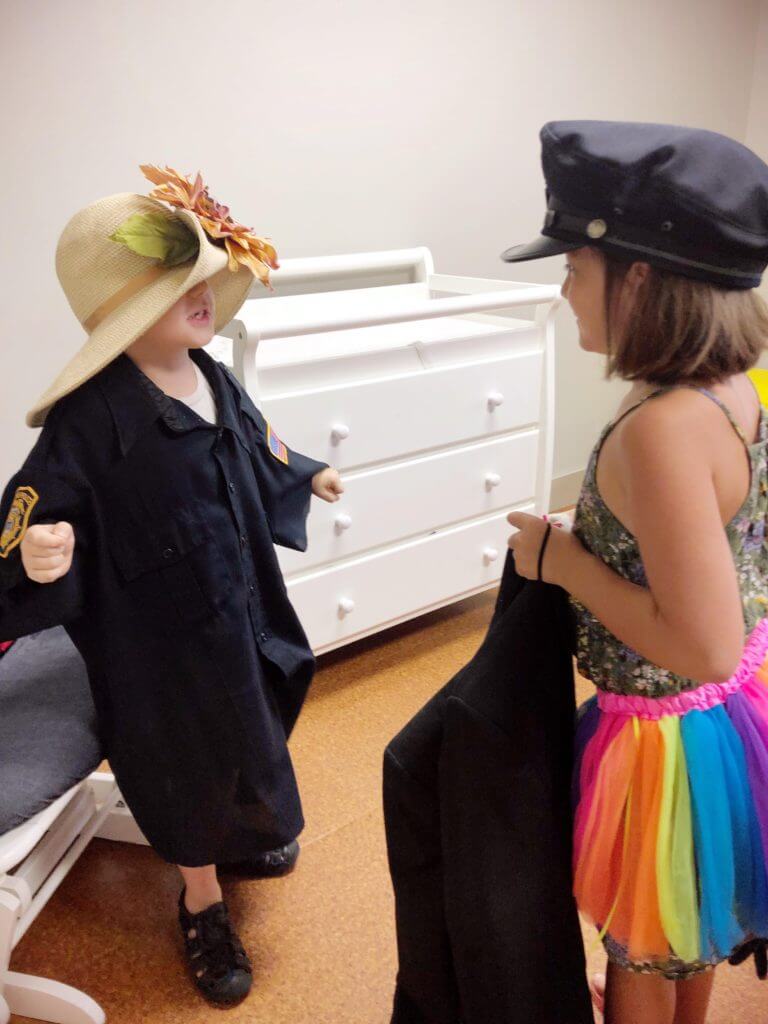
The youngest group did activities like playing dress up. It was so interesting to see how their outfit combinations busted gender stereotypes (as you can see in the pic below.)
They delved into LGBTQ pride by talking about families and reading the book Stella Brings the Family.
Related Post: 12 LGBTQ affirming picture books for children
With our older group, we got more specific in our discussions.
I was incredibly lucky to have a staff member from OUT Memphis who is transgender come speak with the older kids. One of our volunteers for the week also uses they/them pronouns.
As we did a couple of roleplays and games about gender, our conversations flowed very naturally into what it means to be trans, and why some people use they/them pronouns.
The kids weren’t afraid to ask their questions. We as adults all showed our comfort in answering them.
And while some adults fear that talking about sexual orientation with elementary kids will lead to having to talk about sex, that’s not the case. We did talk about attraction (crushes) briefly. But mostly we talked about accepting and celebrating people for who they are.

2. Summer camp isn’t school – it needs to be fun
Obviously, school can be fun too! But kids expect a higher level of fun at camp, and their attention spans are shorter in a camp space than in a traditional classroom.
The last thing I wanted kids to walk away thinking is “social justice is important, but it sure is sad and boring.”
The high energy level on the first day of camp showed me that I needed to go straight home and re-vamp a few of the activities I’d planned.
I focused on incorporating more physical movement, using small groups, and making sure we had plenty of time for art.
Whenever we finished an activity that had required a lot of thinking and talking, we did a energizer to release all that pent up physical energy.

One of the things that made the camp the most fun for kids of all ages were the chants Pastor Lucy led us in every day. She’d learned how invigorating these are from working at the Children’s Defense Fund’s Freedom School.
The chants were all very memorable and the kids would break out in them spontaneously as they had lunch and free play.
A friend reported that her daughter did our anti-racism chant at home “literally 500 times while she took a bath.”
Peace Camp also had two high energy music leaders who were used to working with kids. The songs introduced the kids to our daily theme.
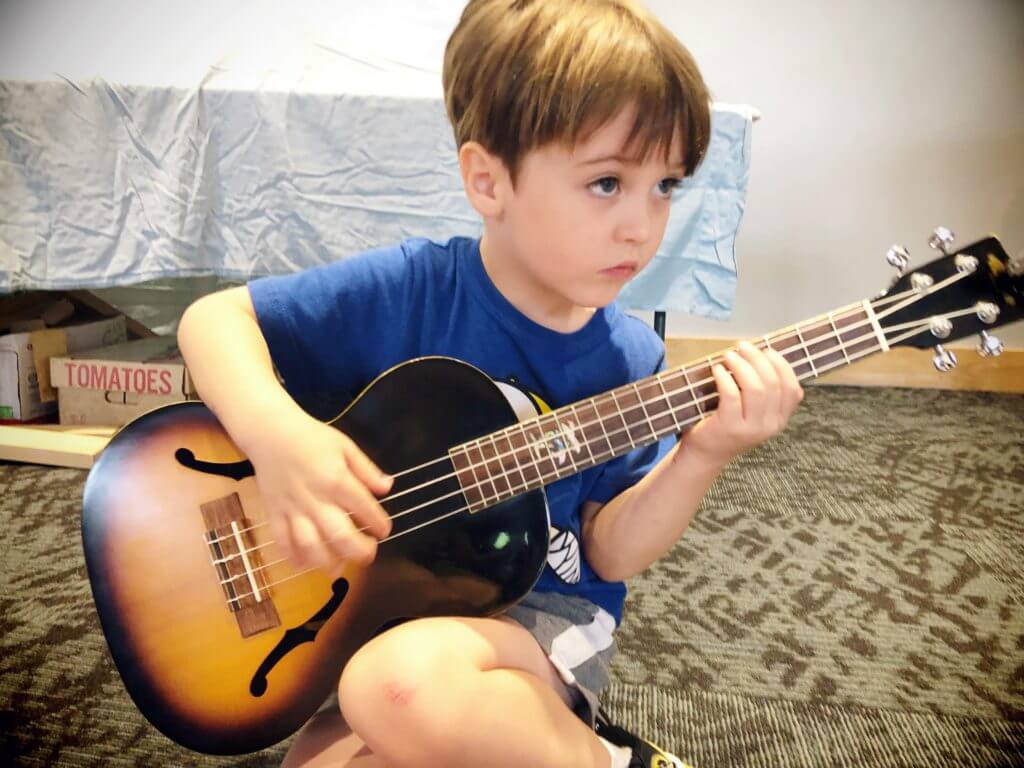
Our music leaders incorporated instruments, dance, and movements to hold the kids’ interest.
I learned a lot from watching them about how to guide the group’s energy level so that things didn’t get out of control.
Finally, the last day of camp included something every child loves: outdoor water play. Since our theme was the day was earth care, we did some activities first about clean water and recycling.
Related Post: 4 inspiring groups that teach kids about justice and activism
3. Mixing ages helped our younger kids learn from the older kids
One of my hopes for camp was that the kids would learn key ideas from doing the activities themselves, rather than adults having to always directly teach them.
I knew what they learned would stick with them longer if we could pull that off.
There’s a pretty big developmental spread between what 7 year olds are like and what 11 year olds are like. At times that was a challenge.
But mostly it was a blessing, because the older kids could share what they knew in a way that made sense to the younger kids.
One day we talked about living wages. I divided the older children into small groups, making sure we had at least one older child (as well as an adult) in each group.
We took turns reading an opinion peace written by custodians at the University of Memphis. They shared why they should be paid $15 an hour, a living wage.
I paused and asked the kids: “Does $15 an hour sound like a lot of money to you?”
Without hesitation, the two 7 year olds in my group nodded. One of them was my son. I could see visions of all the Pokemon cards he could buy dancing in his head.
But the 11 year old in our group, who was often quiet, leaned in all of the sudden. “I don’t think so,” he said.
When I asked why he told us, “I mow lawns and I charge people $25 a lawn.” When I asked him how long it took to mow a lawn, he said about 20 minutes.
As a group we talked about wants and needs, and the things grown ups have to pay for. Why the custodians weren’t being paid fairly was starting to click for them.

4. Peace Camp should equip parents to continue these conversations at home
One of the reasons some parents were asking for Peace Camp is that they knew they needed to be guiding their kids towards justice and peace, but they weren’t sure where to start.
We did three things to encourage families to take the spirit of Peace Camp home with them.
- I created “kid activist of the day” trading cards featuring a different child who has worked for justice. Our hope is that parents would also read these and chat about the kids with them.
- At the start of camp, we provided parents with a workbook. It included a daily reflection from an adult about what they had learned as children about the day’s topic, and what they wished they had learned. There were also questions to ask their children when they got home, and recommended resources like blog posts and articles for further learning.
- The night of the last day of camp, we held a family expo. Parents could see the children’s art, talk with camp volunteers, and learn a few of the songs and chants.
Now, the church is considering what year round activities or discussion groups could support parents who are engaging in the work of justice.
Related post: Are you making these mistakes when you talk to kids about race?
5. Hearing the stories of other children is powerful
As I mentioned above, the children got a “kid activist of the day” card. The first day, our activist was Rebekah Bruesehoff, a transgender girl who has helped get laws passed in New Jersey that support LGBTQ kids.
One of the 6 year olds was so interested in Rebekah that she asked me more questions about her at lunch. “How did she go from being a boy to a girl?” she asked.
I told her that when Rebekah was able to explain to her parents that she was a girl, not a boy, they helped her think about how to tell everyone else. She had a boy’s name, I explained, so she chose the new name Rebekah and her parents helped tell everyone that was her name now.
This camper’s mom told me that the conversation continued at home, with her daughter talking about how pretty Rebekah is and how much she likes her hair.
Related post: 7 inspiring young activists for social justice
On our water day, we read the book that kid activist Aslan Tudor wrote, Young Water Protectors: A Story about Standing Rock. This gave us a chance to talk about the importance of protecting our water. We also chatted about the rights of Native American nations to control their land.
When I chose books for us to read at Peace Camp, I tried to use stories featuring children whenever possible. On Sunday, even though camp had ended two days earlier, one of our campers was still able to remember the book La Frontera. He told the entire church about the story of young Alfredo crossing the U.S./Mexico border.
Morris Micklewhite and the Tangerine Dress was another big hit (it probably helped that our camp site coordinator wore a rainbow tutu while he read the book!)
Related Post: 15 picture books about social justice and human rights

6. Having guests and volunteers from diverse backgrounds adds to what children learn
Many of our activities were planned, but some of our best conversations and experiences were spontaneous. They happened simply because of who was in the room.
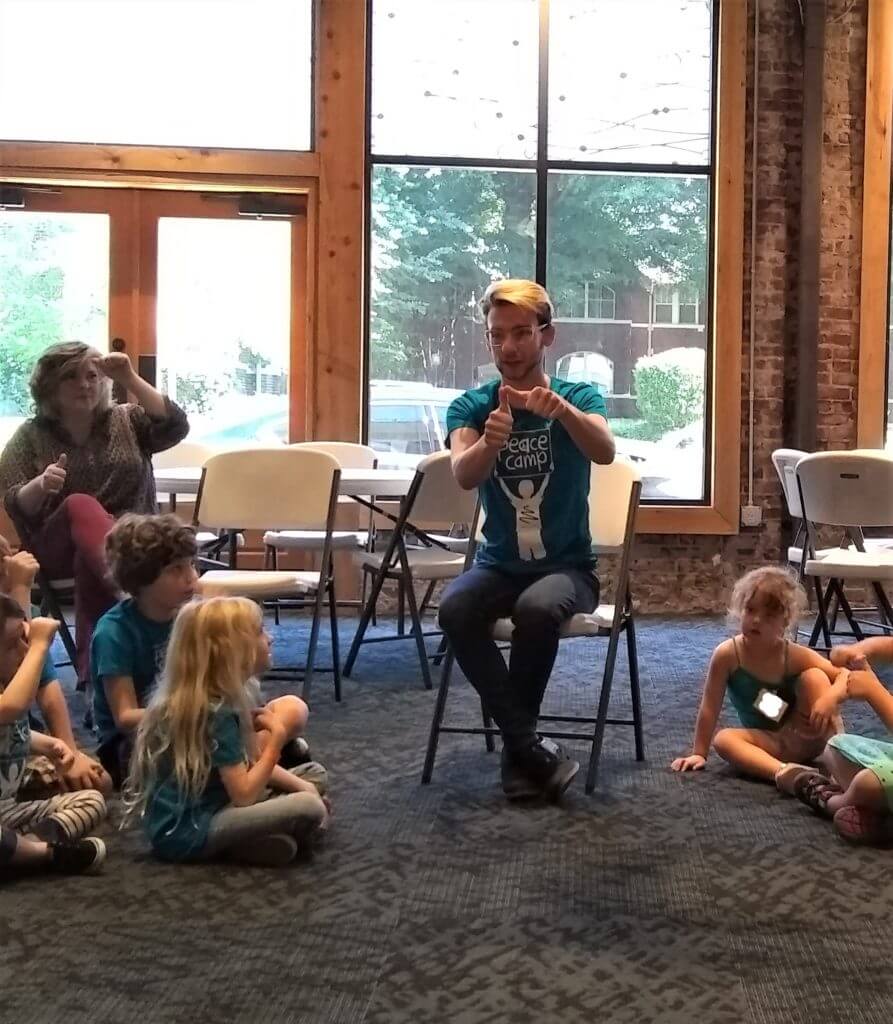
Twice a day, we sang the song “I am seeing you.” One of our volunteers was fluent in sign language. Mid-week, they offered to teach the children ASL to the song.
Another day, we made snack bags for the Mariposas Collective. Mariposas assists migrant families who’ve just been released from detention centers and are passing through the Greyhound bus station.
Because one our volunteers is a native Spanish speaker, she was able to translate phrases our kids wanted to write on the snack bags.
Each day, our last speaker was someone who came to share how their faith helps them work for peace. The children were particularly interested in the prayer rugs that a Muslim guest brought with her.
9 responses to “6 ways to make your children’s Peace Camp a success”
This is so cool, Rebekah! I’d love to have access to your curriculum for Peace Camp. I hope you do decide to offer it for sale.
Rebekah,
1. I love your blog and newsletters and the materials I’ve downloaded from your site.
2. I would looooove to see a peace camp curriculum from you. I am the religious educator of a Unitarian Universalist congregation and I have a little dream of holding a camp for this community next summer. I know that your curriculum will align with my congregation’s values, vision, and the messages we want to bring to our children.
Looking forward to your Peace Camp resources!
Carla
I would love to see your ideas for a Peace Camp curriculum. I am a Christian Educator in NJ and we have written our own VBS curriculum for the past two years on social justice issues. It is a lot of work especially for a smaller congregation. To have a good curriculum that we could purchase would be wonderful!
This sounds wonderful and I wish we had something similar in my area. I would love to see some sort of curriculum for this. Thank you!
Rebekah, this is fantastic. I wish I could’ve been a part to see it in action! I would definitely be interested in a Peace Camp curriculum you develop.
I would also love to consider bringing this to my congregation (First Universalist Church of Denver), and I would really appreciate learning more about the curriculum you’ve developed in hopes of my church’s religious education purchasing and adopting it… I do need to see if the Unitarian Universalist Association (UUA) already has something like this. Thanks!
Yes. I would be a part of purchasing this peace camp curriculum too. I have experience in curriculum development after working over a decade in refugee resettlement and in particular, non English speaking communities. If you need a reader or collaborator. Please reach out.
Hi,
I read your posts often and love to see all you are doing! I have run a peace and social justice camp at my church for ages 7 – 11 for a decade now and have some great ideas and resources it you are ever interested! Would love to collaborate as well between the churches if you would be interested. This year, sadly, our camp is online and “in a bag” but we still have some great stuff. Would love to hear more about your camp if you ever have time to connect. Thanks for all you do!
I am just now discovering your website. This is amazing! I can’t wait to read more of your posts. Very interested in lessons or curriculum ideas.