
As I write this post on helping children recognize and unlearn anti-fat bias, I feel some trepidation. Many people who embrace the ideals of antiracism and other forms of social justice don’t realize that discrimination against fat people is a justice issues.
This issue is also a very personal one because of my own relationship with my curvy body, and because of the experiences of several close family members.
But I also know how much children are harmed by the stereotypes, myths, and lies they are exposed to about body shape and weight. The dominant culture continually belittles fat people, implying that having a large body is a sign of moral failing and laziness.
Unlearning anti-fat bias is hard work, but it’s important work for people of all ages. .
Children are also being pressured to embrace diet culture at younger ages. By age 9, one of my boys was already expressing a desire to go on a diet.
This broke my heart. It also intensified my desire to heal my own relationship with my body, in part to help him feel more comfortable in his body.
In this post, I’ll first share some basic information about the history of anti-fat bias and how it’s harmful. Then, I’ll share six strategies parents and other adults can use to help kids recognize and reject bias against plus-sized people.


This post may include affiliate links. If you purchase items through these links, I may earn a small commission at no additional charge to you. You can read my full disclosure policy here.
Table of contents
- Important background information on anti-fat bias
- 6 ways adults can encourage kids to identify and reject anti-fat bias
- Commit to not speaking negatively about people’s weight (including your own)
- Stop talking about certain foods or food cultures negatively
- Interrupt when people comment on someone’s body size
- Talk about how weight and health aren’t the same thing
- Make meals a less stressful, more joyful experience for your family
- Point out anti-fat bias in children’s books and media
- Additional recommended resources
- Tell us how you challenge anti-fat bias with children
Important background information on anti-fat bias
First, before I get any angry emails, let me say something about my use of the word “fat.” The dominant culture uses the word fat as an insult. I am using the word in a neutral sense, simply as a descriptive word. I do NOT use the word fat as a signifer for unhealthy, lazy, or undisciplined. If this is a new concept for you, read this post by Aubrey Gordon.
Historical connections between anti-Black racism and anti-fat bias
In her groundbreaking book Fearing the Black Body: The Racial Origins of Fat Phobia, Sabrina Strings traces changing attitudes about body size to the institution of slavery. Strings found that by the 1700s, some European philosophers justified enslavement with arguments that Africans were overly sensuous. These philosophers pointed to larger African bodies as a sign of a their supposed lack of self-control. In contrast, Europeans were portrayed as rational and self-controlled. One way they could demonstrate these qualities was controlling what they ate and by being slender.
If you’re not up for reading an entire book, this NPR interview with Strings is a great introduction to her work.
Related post: How should we talk with children about enslavement?
The racist history of Body Mass Index (BMI)
Strings and others have also pointed out the racist ideas that were behind the development of Body Mass Index, which is still used today by many health professionals.
BMI is essentially a heigh to weight ratio. Belgian mathematician Lambert Adolphe Jacques Quetelet established what later was named the BMI in a time when social Darwinism was rampant. He saw the male European body as ideal and used sample height and weights of European men as “averages” for everyone.
BMI is touted by some as a measure of health, but as Strings points out in the NPR interview, BMI “does not account for…bone density, muscularity, any other type of genetic influences in your weight, or cultural, environmental influences in your weight.” Research dating back to the 1980s shows that African American populations are healthier at heavier weights than white populations, but BMI obscures this.
The harmful health effects of anti-fat bias
In an excellent Instagram post, anti-bias educator Liz Kleinrock highlights several studies that indicate how weight discrimination harms people physically and economically.
According to one study, weight discrimination has increased in American by 66 percent over the last 10 years. Other studies have found that nearly half of physicians categorize “obese” patients as “akward, unattractive, and noncompliant.” A third of doctors thought of fat patients as “weak-willed, sloppy, and lazy.”
Doctors who see their patients in this way are less likely to take their health concerns seriously. In one study of more than 5,000 adults, people who experienced weight discrimination had a 60 percent higher chance of dying, independent of what their Body Mass Index was.
As Kleinrock’s post points out, anti-fat bias also makes it more difficult for plus-size people, especially women, to get jobs.
The negative mental and physical effects of dieting and diet culture
When I first heard about the fat acceptance movement years ago, I didn’t understand it. Sure, no one should be belittled for their body size, I thought. But wouldn’t losing weight help people be healthier?
Years later, I now know that there’s plenty of evidence that dieting (artificially restricting your food intake in order to shrink your body) does more harm than good to health.
In their thorough, carefully-researched book Intuitive Eating, dieticians Evelyn Tribole and Elyse Resch show this again and again. They find that:
- chronic dieting teaches the body to retain more fat once the dieter starts eating normally again.
- dieting decreases metabolism. For some people this effect persists for years after a diet ends.
- yo-yo dieting increases the risk of premature death and heart disease, regardless of initial weight.
- dieting decreases people’s ability to perceive their bodies’ own fullness cues.
- dieters are eight times more likely to suffer from an eating disorder by age fifteen than non-dieters, according to one study.
- independent of body weight, dieting is correlated to feelings of failure, lower self-esteem, and social anxiety.
This doesn’t just matter for adults’ health. The pressure for kids to diet at young ages, including from healthcare providers and schools, is increasing. I encourage you to read this opinion piece by Aubrey Gordon on how fat shaming under the guise of health advice harms children.
6 ways adults can encourage children to identify and reject anti-fat bias
1. Commit to not talking negatively about people’s weight (including your own)
If you struggle with your body image and wish your body were smaller, I understand friend. I really do. I’m slowly letting go of weight stigma around my own body, and it’s not easy.
As a starting point can you commit to:
- not discussing weight loss, diets, calories, carbs, etc around children?
- not commenting on your own, your child’s, or anyone else’s body size (including media figures)?
- not complimenting people for weight loss, especially in front of children?
- when you slip up and do one of these things, acknowledge it to your child?
I know that without a doubt, our son who struggles with his body image does so in part because of the negative comments my spouse and I have made about our weight and bodies in the past. While we can’t change the past, we are changing what we do now.
This Instragram reel by What Dad Did is a beautiful example of shifting how we talk about eating (such as eating a lot at a holiday meal) to young children.
Related post: 15 children’s books about beauty that challenge stereotypes
2. Stop talking about certain foods or food cultures negatively
I know I’m about to step on some toes here, but I hate the phrase “clean eating.” It implies that if your food choices are not “clean,” then they are dirty. Pia Schiavo-Campo shares her thoughts on how this relates to white supremacy here.
Talking about particular foods like bread, beans, pork, or white rice as “not clean” or “unhealthy” stigmatizes cultures that use these foods as staples.

A step in neutral food talk that’s been harder for me is to stop calling certain processed foods “junk food.”
Why does this matter? Food like candy doesn’t have any nutrition that we need, right? Why not call it what it is?
Calling foods that likely some of your child’s favorites “junk” teaches them to be ashamed and confused about their cravings. I often talk about how shame is not an anti-racism strategy; it’s also not a health strategy.
Finally, if you’re an educator or work with children, remember that more highly processed foods are often more affordable and available in low-income neighborhoods. Children whose families struggle with food insecurity don’t need to be shamed on top of experiencing the stress of poverty.
3. Interrupt adults and kids when they comment on other people’s size or bodies
In her book Raising Antiracist Children: A Practical Parenting Guide, Britt Hawthorne shares how she “interrupts the cycle of body-shaming. When I hear loved ones making remarks about a person’s body, I immediately interrupt with, ‘Bodies are just bodies. All bodies are worthy bodies. It’s not okay to comment on someone’s body.”
Notice that Britt doesn’t just say when someone’s making negative comments about a person’s body. If I refrain from making negative comments about other people’s body size or shape, that’s a good start. But if I’m still talking a lot about thinner bodies as attractive, children will pick that up.
4. Talk to children about how weight and health are not the same thing
Our body size doesn’t tell us about more realiable health indicators like blood pressure, cholesterol, or blood sugar. (Older children or teens might be interested in learning more about what these are, but I’d skip that info with younger children.)
Talk about the different factors that we can influence, and those we can’t, when it comes to health. We can’t change our genetics, or some of the environmental factors where we live. We can’t change what disabilities we have, if any.
Stress has a big impact on health (include on blood sugar and cholesterol levels). Some stressors we can’t stop (especially if social injustices like racism, poverty, sexism, homophobia or ableism affect us.) But we can find ways to lower our stress, by:
- moving our bodies in ways that feel good
- practicing mindfulness and deep breathing
- doing things that make us laugh and bring us joy
- appreciating and celebrating our bodies
- spending time with people who make us feel good about ourselves.
When it comes to food, our family talks about gradually learning to eat a greater variety of foods. We have one child who is highly selective about what he’ll eat (more on that below), and the other three of us often reassure him that learning to enjoy different foods can take years.
5. Make meals a less stressful, more joyful experience with your kids
One of our boys has been particular about what he is willing to eat since about the age of three. A couple of years ago, he even began refusing to eat foods that had been previous favorites. At the same time, he gained a significant amount of weight over (what seemed to me) a fairly short amount of time.
I met several times with a nutritionist who specializes in intuitive eating. I learned so much during our sessions together, and this also became my starting point for rejecting diet culture for myself, not just my child.
First, she told me not to worry about my child’s weight, and reminded me that these kind of rapid body changes are common around the age my child was.
Most importantly, she introduced me to the idea of “division of responsibility in feeding.” This was developed by dietician Ellyn Satter, who stresses that:
- the parent is responsible for choosing what food comes into the home, preparing the meals, and setting the times and places for meals and snacks.
- the child is responsible for whether to eat these foods and how much of them to eat.
She encouraged me to make sure there was always at least one food that my child liked on the table, so that he wouldn’t feel anxious. If he chose not to eat any of the other foods, that was okay! We could stop nagging and engaging in power struggles and just enjoy our meals together.
If you’re interested in hearing more about what else we learned through this process, leave a blog post comment. If there’s enough interest, I’ll do an Instagram live on intuitive eating with children.
6. Point our anti-fat bias and stereotypes in the books and media that you consume with your children
There are so many books and cartoon shows where the bad guy or the bully is fat. Stereotypes that link large body size with laziness or stupidity are all around. And of course, the idea of who is beautiful in fairy tales to present day stories is highly influenced by anti-fat bias and white supremacy.
Sometimes mean-spirited teasing of fat characters is obvious and easy to point out. For example, while my son loved the Sherlock Sam series, I became increasingly uncomfortable with the comments Sam’s family members made about how much he ate and the roundness of his body. When we read a passage like that, I simply said things like “I don’t like how they’re talking about Sam’s size. There’s nothing wrong with enjoying eating.”
Related post: 12 body positive children’s books that celebrate plus size characters
In other books, you may need to point out the implications an author is making. In the picture book Runaway Wok, a magical wok takes away food, toys, and money from a wealthy family to give it to a poor family. The boy is the rich family is repeatedly referred to as “chubby Lan.” Lan is a selfish child, and there’s a scene readers are supposed to find humorous when Lan can’t run after the wok without losing his breath.
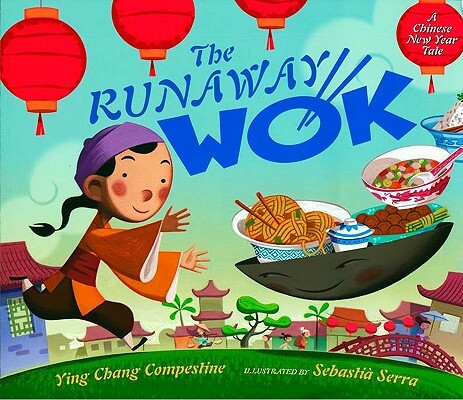
If you’re reading a book like this, you might say “hmm, I don’t like how the author keeps calling Lan chubby. I feel like she’s trying to say it’s a bad thing to have a rounder, heavier body. I don’t think it’s ok to make fun of someone for having trouble running.”
Be sure to read body positive children’s books that star plus sized characters. You’ll find a full list here. A few more of these are sprinkled in on this list of books about beauty.
Additional recommended resources for unlearning anti-fat bias and embracing a healthy body image
Besides the books, articles, and social media accounts I’ve already linked to, I also recommend:
The Body Is Not an Apology: The Power of Radical Self-Love by Sonya Renee Taylor
Helping Your Child with Extreme Picky Eating by Jenny McGlothlin
Sunny Side Up Nutrition podcast
Your Latina Nutricionist Instagram account
How do you challenge anti-fat bias with children?
Tell us in the comments! Also, if you’d like me to do an Instagram Live about our family’s intuitive eating journey, you can leave a comment about that too.

4 responses to “6 ways children can unlearn anti-fat bias”
A live session on intuitive eating would be great — thank you!
Accepting my own body was a big shift, and reiterating that all bodies are good bodies. I’m still learning, but it’s getting easier.
Thank you so much for the information you have brought to light in this post! I’d love to hear more about intuitive eating! I often feel dissatisfied with the way meals go in my house. I hate fighting with my children to eat, but I experience anxiety when I think they haven’t eaten enough. I’m concerned that I might be creating an environment where my children will develop unhealthy relationships with food or lose touch with their intuition (as I have). Help!
This all is very familiar to me Becca! I am going to do the IG live next week (will send out details in my regular Tuesday email), and I also recommend checking out any of Ellyn Satter’s books. They are a bit dated but still very much relevant to the struggles parents and kids have around food.