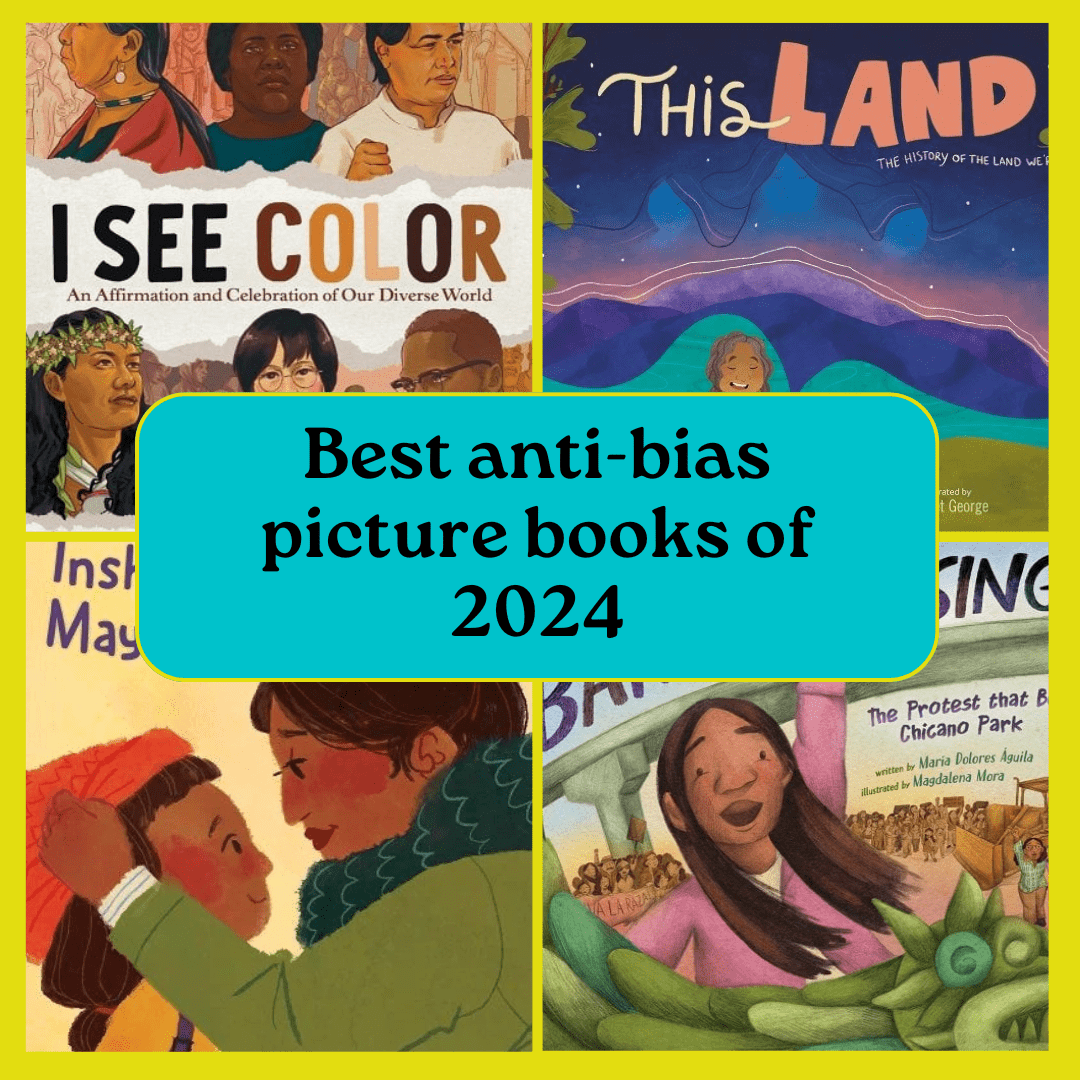
All throughout 2024, I’ve been on the lookout for the picture books that will go on my list of the best diverse and anti-bias books published this year. With book challenges and bans on the rise, this has been a difficult year for BIPOC, Queer, and Disabled authors, as well as authors who write about social justice issues. You can help by purchasing some of these books or requesting that your library carry them!


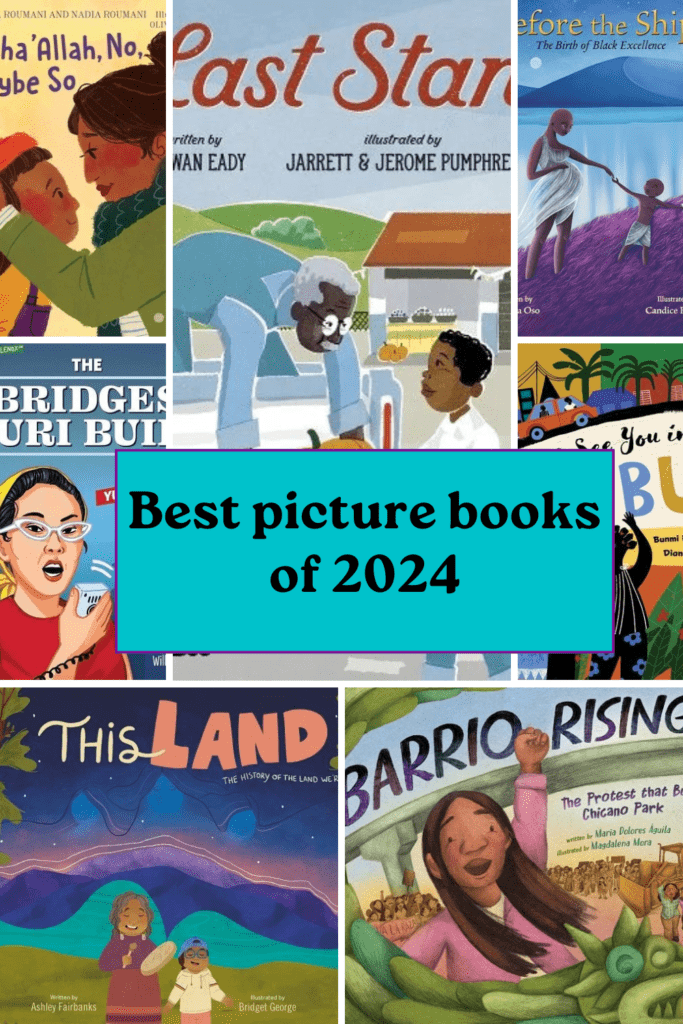
This post includes affiliate links. If you purchase items through these links, I may earn a small commission at no additional charge to you. I received free review copies of Insha’Allah, No, Maybe So, The Good Game, No More Señora Mimi, They Call Me Teach, and What Makes Us Human? from the publisher in exchange for my honest review. All opinions are my own. You can read my full disclosure policy here.
Best fiction picture books of 2024

The Last Stand by Antwan Eady. Illustrated by Jarrett and Jerome Pumphrey.
Purchase from Bookshop.org (supports independent bookstores and my business!)
In this “love letter” to Eady’s hometown of Garnett, South Carolina and the Black farmers who fed the community, Papa has the last remaining stand at a small farmer’s market. It’s a place where people not only get their fresh produce, but also keep community ties strong. Papa’s grandson always helps at the stand. But can he figure out what to do one Saturday when Papa is just too tired to make it to the market?
The book includes a thorough educational note about Eady’s hometown and the injustices Black farmers have faced. (Recommended for ages 3 – 7. Black author.)
Related post: 15 picture books filled with Black joy
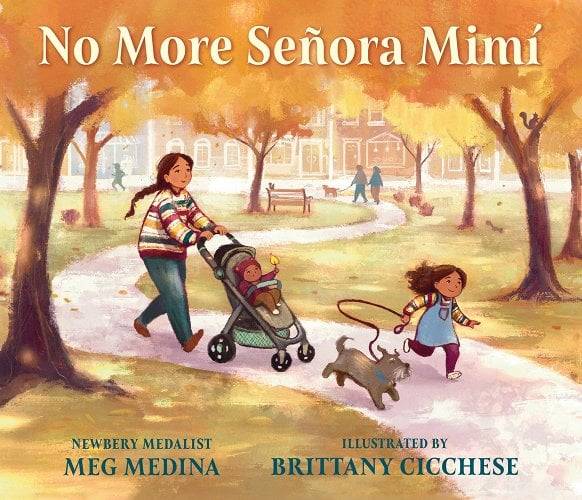
No More Señora Mimi by Meg Medina. Illustrated by Brittany Cicchese.
Purchase from Bookshop.org (supports independent bookstores and my business!)
In this pitch-perfect tale of a young girl’s last day under the care of her beloved babysitter, little Ana is first focused on how wonderful it will be to have her Abuela come live with her. When Abuela is taking care of her, she’ll let Ana play on the walk to school (unlike Señora Mimi.)
But when Ana realizes that Abuela’s arrival means she won’t see Señora Mimi every day, she’s overcome with sadness. Fortunately, Señora Mimi knows how to help Ana process her big feelings – even as she has some of her own about this change in their relationship. (Recommended for ages 3 – 7. Cuban-American author.)
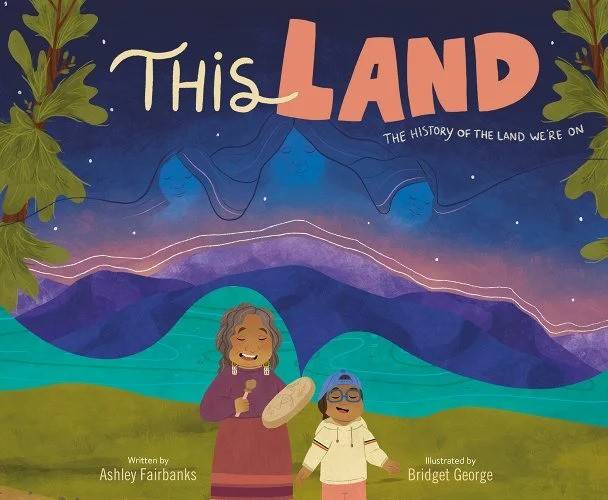
This Land: The History of the Land We’re On by Ashley Fairbanks. Illustrated by Bridget George.
Purchase from Bookshop.org (supports independent bookstores and my business!)
Talking to young children about the Native American history of the land you live on can be both straight-forward and meaningful, as this fantastic picture book demonstrates.
Told from the perspective of a non-Native child who is friends with an Anishinaabe boy, This Land traces the many families who’ve lived in a place before her. Eventually she arrives at Native American families who lived on the land in wigwams (even the “annoying little brothers.”) A brief explanation of the tragedy of Native Americans being forced onto reservations is included, before the girl shares all she’s learned from her friend’s Noko (grandma) about land history and acknowledgement.
This much-needed book is sure to prompt questions from children about whose land they are living on or traveling to. (Recommended for ages 4 – 8. Anishinaabe author.)
Related post: How to teach kids about whose land they live on
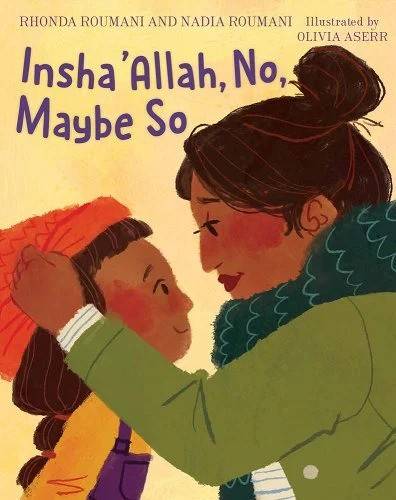
Insha’Allah, No, Maybe So by Rhonda Roumani and Nadia Roumani. Illustrated by Olivia Aserr.
Purchase from Bookshop.org (supports independent bookstores and my business!)
When Rayna asks her mother if they can do things like go to the park or bake cookies, Mama answers (like many Arab parents) “insha’Allah.” Though the phase means “God willing,” Rayna has decided it must mean “no,” since she can think of a string of things they haven’t done after Mama said “insha’Allah.”
Mama explains to Rayna that the phrase isn’t just an excuse; it’s a powerful expression for the things we want but which are out of our control. A thoughtful, love-filled conversation between parent and child about hopes, dreams, and how we communicate with each other filles the rest of the story. (Recommended for ages 3 – 7. Syrian-American Muslim author.)
Related post: 17 children’s books about Arab-American heritage
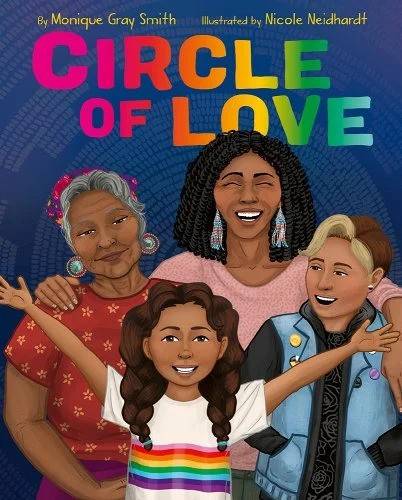
Circle of Love by Monique Gray Smith. Illustrated by Nicole Neidhardt.
Purchase from Bookshop.org (supports independent bookstores and my business!)
At an urban Intertribal Community Center, Molly and her family have arrived for a celebratory feast. As she introduces readers to a variety of family and friends, Molly tells us how each person and experience makes her feel. A number of the people who are special to Molly are two-spirit and/or part of the LGBTQ+ community, and the message “love is love” is repeated on each page spread.
Molly’s experiences at the community center also highlight the importance of ceremony, which is further explored in the excellent educational notes at the end of the story. The vibrant, expressive, colorful illustrations are sure to draw young readers into Molly’s story. (Recommended for ages 4 – 8. Cree, Lakota, and Scottish author who is two-spirit.)
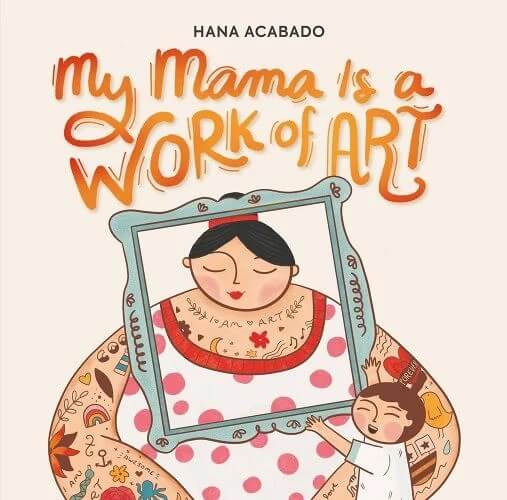
My Mama Is a Work of Art by Hana Acabado.
Purchase from Bookshop.org (supports independent bookstores and my business!)
In this sweet book, a little boy describes in rhyming text the ways his mother herself is a work of art. Each of her many tattoos has a special meaning that proclaims she is “proud, out, and unashamed.”
Mama sets the example of being kind to everyone. Though people look different, each of them are also works of art. I also love that Mama is a large woman, though no direct references are made to her size. (Recommended for ages 3 – 7. Filipino-American author/illustrator.)
Related post: Body positive children’s books
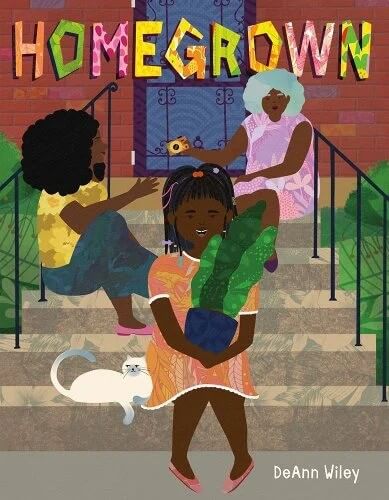
Homegrown by DeAnn Wiley.
Purchase from Bookshop.org (supports indepeddent bookstores and my business!)
The topics of home and family are wonderful ones for introducing anti-bias books in preschool, because young children love to tell you about theirs! In this story, a young Black girl learns from her family that “home” means a lot of things: joyful traditions, snack money from grandparents, big family sleepovers, and even Grandma directing chores on Saturday morning.
The bold digital illustrations have the feel of collage art. This would be a wonderful read aloud to introduce an art project about family and/or home. (Recommended for ages 3 – 7. Black, Queer, and Disabled author/illustrator.)
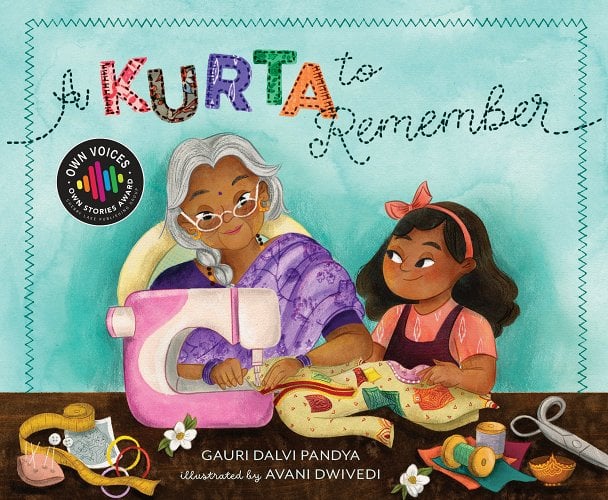
A Kurta to Remember by Gauri Dalvi Pandya. Illustrated by Avani Dwivedi.
Purchase from Bookshop.org (supports independent bookstores and my business!)
A young Indian girl prepares to move to a new country far away from her Aaji (Grandmother) and Ajoba (Grandfather.) While Mumma and Baba pack the essentials, she wonders about all the things they aren’t packing that her heart needs.
As Aaji sews her a new kurta, with lots of pockets, Aaji assures her there are many things she can take with her to remember home. But the girl worries the bangdya (bracelets) in the pockets might break; she might forget to light the deeva candles held in another pocket. When Aaji realizes the girl is really afraid she might forget them, she comforts her with a song. That song opens her granddaughter’s heart to another way she can stay connected with her beloved grandparents.
One bonus to the book educators will appreciate: the glossary of Marathi words included at the end includes realistic photographs that will help children recognize important cultural items when they encounter them in real life. (Recommended for ages 4 – 8. Indian-American author.)
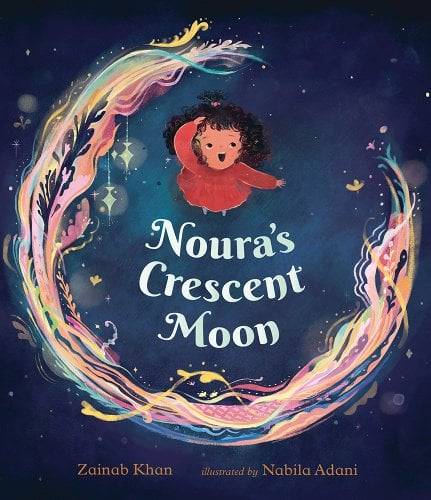
Noura’s Crescent Moon by Zainab Khan. Illustrated by Nabila Adani.
Purchase from Bookshop.org (supports independent bookstores and my business!)
In Noura’s Crescent Moon, Zainab Khan has perfectly captured the excitement and impatience that young children feel on the eve of their favorite holiday. It’s the 29th night day of Ramadan, possibly the last day, but only if the moon is sighted tonight. This will be the first time Noura has gone with her parents up the mountain to look for the moon.
Despite Mama and Papa’s reminders that it’s very rare to sight the new moon, and that other moon watchers may see it, Noura continually thinks about and whispers her hopes of seeing the moon on this her very first Ramadan fast. The dreamy illustrations capture the beauty and excitement of the night. (Recommended for ages 4 – 8. Muslim author. )
Related post: Children’s books about Ramadan and Eid-al-Fitr
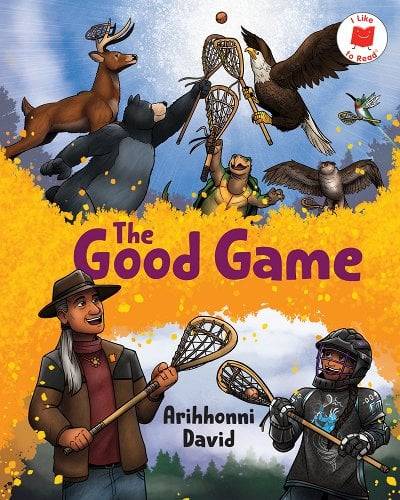
The Good Game by Arihhonni David.
Purchase from Bookshop.org (supports independent bookstores and my business!)
Back when my younger son needed easy reader books, I would have been delighted to find The Good Game! The simple text and energetic cartoon illustrations tell an interesting story without overwhelming new readers.
When a young boy thinks he’s too small to play stickball well, his Tota shares the story of an epic stickball game between the four-legged animals and the flying animals. Squirrell and Mouse loved being spectators, but when they ask to play, both teams at first reject them. Will they find a way to finally play? (Recommended for ages 5 – 7. Haudenosaunee-Kaniekehaka/Mohawk author.)
Related post: Diverse easy reader chapter book series
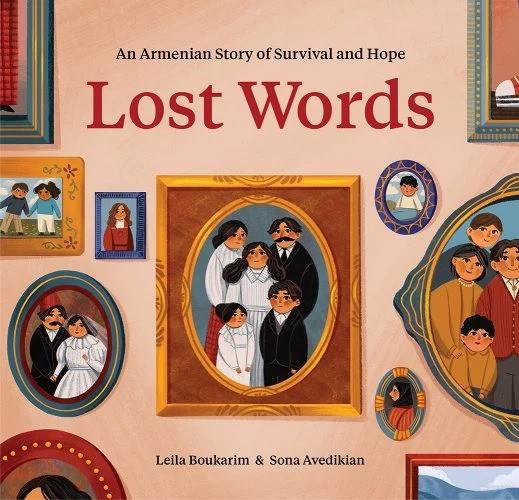
Lost Words: An Armenian Story of Survival and Hope by Leila Boukarim. Illustrated by Sona Avedikian.
Purchase from Bookshop.org (supports independent bookstores and my business)
When Boukarim’s children asked her “where are we from?,” she had the idea to write a book about a child surviving the Armenian genocide of 1915. Her husband’s grandfather was such a child, though he didn’t discuss his experience.
In Lost Words, a mother pleads with her son and daughters to leave with the others who must walk for months across the desert. The children are taken in at an orphanage, whether other children want to know the boy’s story. But without Mama, he finds that he has lost his words.
As he grows older and makes a life and family or his own, the hole that Mama’s absence has left grows smaller, though it’s still there. Yet she’s still present in many experiences, even if he doesn’t have the words to share those memories with others. (Recommended for ages 5 – 9.)
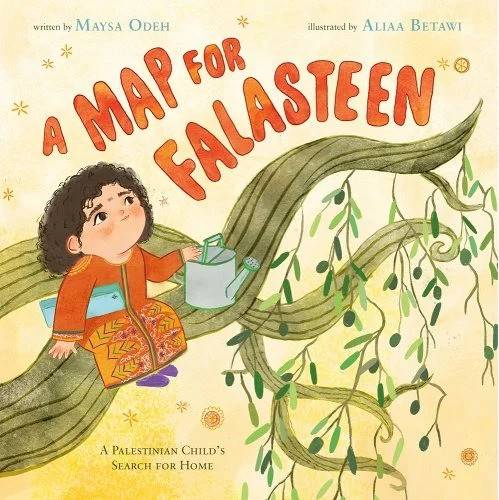
A Map for Falasteen: A Palestinian Child’s Search for Home by Maysa Odeh. Illustrated by Aliaa Betawi.
Purchase from Bookshop.org (supports independent bookstores and my business!)
Inspired by the author’s own childhood desire to learn of her homeland, A Map for Falasteen sensitively portrays the grief, longing, and hope of Palestinian refugee families.
When Falasteen’s teacher asks all the children to find the place their families are from on a map, Falasteen can’t locate Palestine. Speaking perhaps more from ignorance than unkindness, her teacher replies “I think there is no such place.”
At home, Falasteen asks questions of her Jido (grandfather), Teta (grandmother), and mother about their homeland. Jido draws her a beautiful and detailed map, and encourages her to share it with her teacher, “who needs teaching.” Teta tells the painful story of how her family had to flee their homeland and gifts Falasteen the key to her Palestinian house. Her mother reminds her that whatever maps say, Palestine lives inside each of them.
I especially recommend picking up a copy of the book for the thoughtful endnotes, which describe the author’s family story and what has happened to Palestinians since the creation and expansion of the Israeli state. (Recommended for ages 4 – 8. Palestinian-American author.)
Related post: Children’s books about Palestine
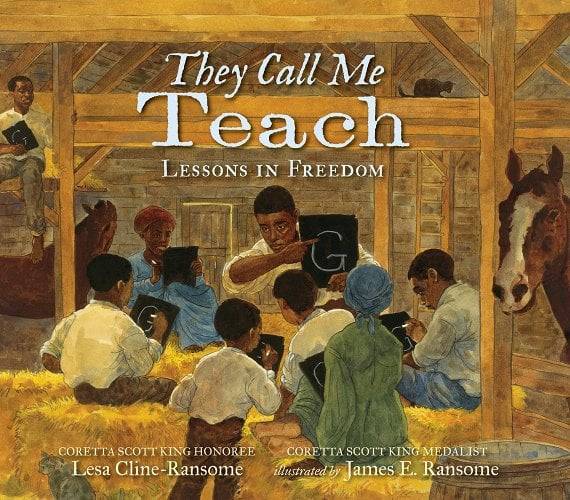
They Call Me Teach: Lessons in Freedom by Lesa Cline-Ransome. Illustrated by James E. Ransome.
Purchase from Bookshop.org (supports independent bookstores and my business!)
Inspired by the true stories of enslaved people who dared to learn to read and write and teach others as well, this moving account of a young man named Teach records a single week of his life.
Lyrical text and evocative watercolor illustrations capture Teach teaching a group of children and adults their letters in a whisper in a barn, as a horse looks on. Teach’s position working in his enslaver’s store allows him to use his literacy skills. But when the master finds out he’s also been reading a newspaper, he threatens to send Teach back to the fields. This harrowing incident only increases Teach’s resolve to use his skills to help others, but with greater secrecy.
I found both the visual and lyrical account of Teach reading the story of God freeing the Israelites from slavery to be incredibly moving. This is a wonderful book not only for classroom settings, but for churches as well. (Recommended for ages 6 – 10. Black author.)

I’ll See You in Ijebu by Bunmi Emenanjo. Illustrated by Diana Ejaita.
Purchase from Bookshop.org (supports independent bookstores and my business!)
Olu cannot wait to travel with her siblings and Mommy to the town of Ijebu, where her grandparents live. They’ll be lots of special foods and traditions to celebrate, especially since it’s Eid al-Adha, or Odún ilé yá as it’s called in Yoruba. Olu will even get to help prepare the feast now that she’s eight years old.
The striking, colorful illustrations capture the slow chaos of Lagos traffic as the family heads out from the city, which gradually turns into the lush calm of rural Ijebu. The text not only celebrates Muslim faith traditions, but talks about Christian traditions as well since Olu’s family is interfaith.
Universal messages of family, celebration, and food shine throughout the book. (Recommended for ages 6 – 10. Nigerian-American author.)
Related post: Engaging children’s books by African authors
Best non-fiction picture books of 2024

The Bridges Yuri Built: How Yuri Kochiyama Marched Across Movements by Kai Naima Williams. Illustrated by Anastasia M. Williams.
Purchase from Bookshop.org (supports independent bookstores and my business!)
When I was scouring the internet for potential books for my best picture books of 2024 list, I came across The Bridges Yuri Built and was instantly curious. Who was this tireless activist I’d never heard of?
Written by Yuri’s great-granddaughter, this in-depth yet accessible account of Kochiyama’s life demonstrates that even before Yuri became politically active, compassion and community were guiding values in her life. Like most west coast Japanese-American families, Yuri’s family was unjustly imprisoned in a harsh camp during World War II. Yuri continued to face discrimination and hostility as she tried to find work after she was released.
When Yuri and her husband moved to Harlem, she began to understand both the grave injustices African-Americans faced and the power of community organizing. Yuri gradually became involved in Black-led campaigns for better housing and schools and racial justice, serving in a variety of roles that built on her meticulous organization and writing skills. Yuri and Bill were known for hosting events in their home for an incredible array of activists, including Malcolm X. Malcolm’s words helped Yuri expand her understanding of the connections between global social movements, understanding that “we are all part of one another.” (Recommended for ages 8 – 12. Japanese-American author.)
Never struggle to find a diverse, anti-bias, or social justice book again with this searchable database filled with engaging stories for kids ages 3 to 14.
Click on the image below (or here) to learn more about my Anti-Bias Children’s Book Database

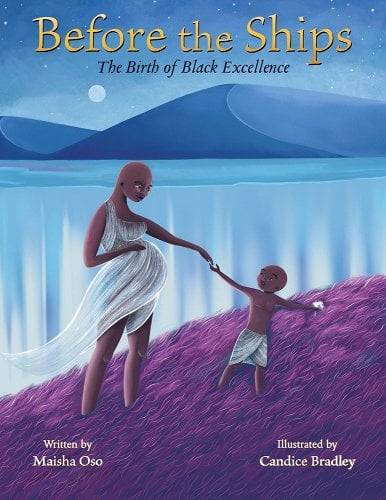
Before the Ships: The Birth of Black Excellence by Maisha Oso. Illustrated by Candice Bradley.
Purchase from Bookshop.org (supports independent bookstores and my business!)
This gorgeously illustrated poetic story of ancient and medieval African accomplishments was one of the first stories I had in mind for this best picture books of 2024 list.
A blend of affirmations for Black children and historical references, Before the Ships is a much-needed correction to Black history timelines that start with enslavement. Kings and queen, architects of stunning mosques and churches, astronomers, engineers, and many more are celebrated. (Recommended for ages 4 – 8. Black author.)
Related post: African history resources for kids

I See Color: An Affirmation and Celebration of Our Diverse World by Valerie Bolling and Kailei Pew. Illustrated by Laylie Frazier.
Purchase from Bookshop.org (supports independent bookstores and my business!)
This unique book is much more than a celebration of differences in skin tone; it also focuses on the antiracist activism of courageous Black, Latine/x, Asian American, Indigenous, Arab American, Pacific Islander, and white leaders. Notably, the book includes leaders and movements from the present and the recent past, rather than only focusing on the 1950s and 1960s.
The moving poetic text is simple enough to read to preschoolers, with leaders and movements who are pictured on the page spread indicated at the bottom. I recommend reading the book aloud all the way through, and then asking children to flip back through the pages to point out particular leaders or movements they want to know more about. You can then flip to the end pages to tell more about that person or group’s story. I highly recommend this book! (Recommended for ages 4 – 9. Black co-author and White co-author.)
Related post: 42 powerful books about race and racism for kids and teens
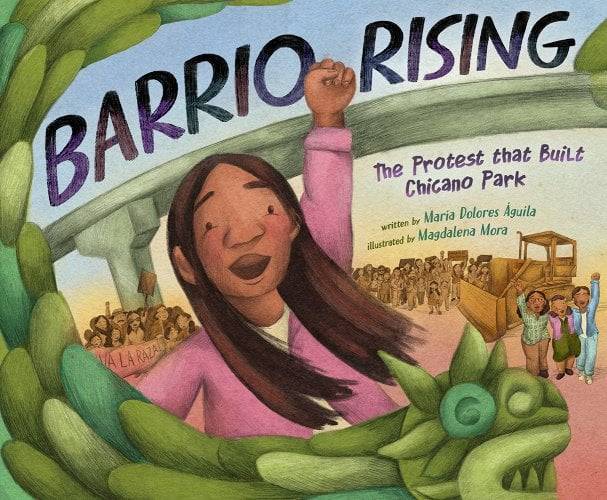
Barrio Rising: The Protest That Built Chicano Park by María Dolores Águila. Illustrated by Magdalena Mora.
Purchase from Bookshop.org (supports independent bookstores and my business!)
In 1970, residents of one of the oldest Chicano neighborhoods in San Diego discovered that construction crews in their neighborhood were not building the park they’d requested for years. They were instead building a police station.
In this moving account of the protests that followed, a young girl, repeatedly encouraged by her mother to “sé valiente” (be brave), joins the crowds of people who form a human chain around the construction equipment. Later they take part in many forms of protest, despite city officials’ scoffing.
Emotion-filled illustrations in shades of green, pinks, and purples bring both the city’s neglect of the neighborhood and the beauty the people create to life. I especially appreciate that unlike many children’s books about social change, this one focuses on the movement itself, rather than choosing one or two heroes to uplift. (Recommended for ages 5 – 9. Chicana author.)
Related post: Engaging picture books with Latine/x characters
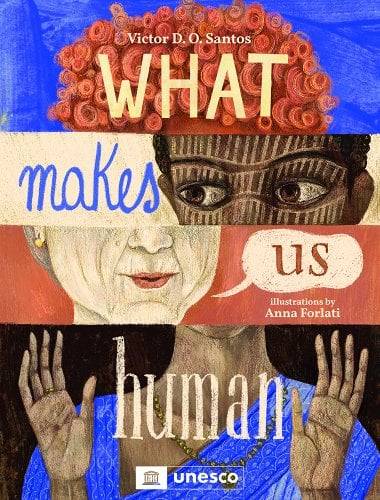
What Makes Us Human? by Victor D.O. Santos. Illustrated by Anna Forlati.
Purchase from Bookshop.org (supports independent bookstores and my business!)
Written as a riddle, this book is a powerful testament to how language shapes culture and is an essential part of what makes us human.
There are many evocative illustrations, my favorite of which is a baby and toddler holding a ball of yarn, followed by a child who knits a sweater that an adult wears. An older adult finds the sweater unravelling, while an elderly man holds the attached string. The text reads “When you were a baby, you hardly knew me. Over time, you have gotten to know me better and beter. But when you are old, you may start to forget me.” Language’s ability to express love and hurt, to be soft or harsh, are lauded.
Educational notes by the author and by UNESCO showcase the importance of preserving languages and how they are essential to understanding culture. (Recommended for ages 5 – 9.)
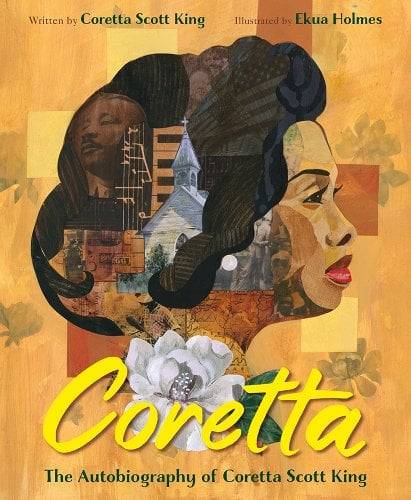
Coretta: The Autobiography of Coretta Scott King by Coretta Scott King with Rev. Dr. Barbara Reynolds. Illustrated by Ekua Holmes.
Purchase from Bookshop.org (supports independent bookstores and my business!)
Ekua Holmes’ distinctive mixed media illustrations accompany this thorough adaptation of Scott King’s memoir for adults. Ideal for older elementary and younger middle school children, the book makes clear Scott King’s gifts, dreams, and contributions before, during, and after the civil rights movement of the 1950s and 60s.
While most people only know of how Coretta supported the work of her husband Martin Luther King, Jr., readers will come away understanding her independence as well as her leadership within the broader peace movement. Small details, such as her insistence that her wedding vows omit traditional language about obeying and submitting to her husband, reveal her personality. (Recommended for ages 8 – 12. Black author.)
Related post: 17 children’s books about the civil rights movement

We Who Produce Pearls: An Anthem for Asian America by Joanna Ho. Illustrated by Amanda Phingbodhipakkiya.
Purchase from Bookshop.org (supports independent bookstores and my business!)
This sweeping poetic celebration of the the cultures, histories, experiences, and resistance of Asian American communities deserves to be read multiple times. The detailed, richly colored illustrations are filled with both human emotion and important cultural symbols.
Ho’s poetry and Phingbodhipakkiya’s illustrations bring together historical injustices and symbols of resistance, sometimes in surprising ways. For example, on one page spread, Ho writes “when they came for that which was not theirs, sowing toxic flowers that bloomed in midair, we held their injustice in our mouths.” Below this stanza, a mass of flowers takes the shape of a mushroom cloud next to a portrait of a woman who gazes on with fierce pride, even as her wrists are shackled.
There are extensive notes about the deeper meanings of each page spread at the end of the book, with reflection questions and specific historical topics for young people could research. I’m excited to use the book in our homeschool American history lessons next year because there are so many possibilities for my 12 year old to explore. This is a must-read for upper elementary and middle school age children! (Recommended for ages 8+. Taiwanese-Chinese-American author.)
