
Juneteenth is celebrated each June 19th to commemorate the end of slavery more than two and a half years after the Emancipation Proclamation was written. Some enslaved people in Texas knew that they were supposed to be free, but were forced by their enslavers to continue working until federal troops arrived in Galveston on June 19, 1865.
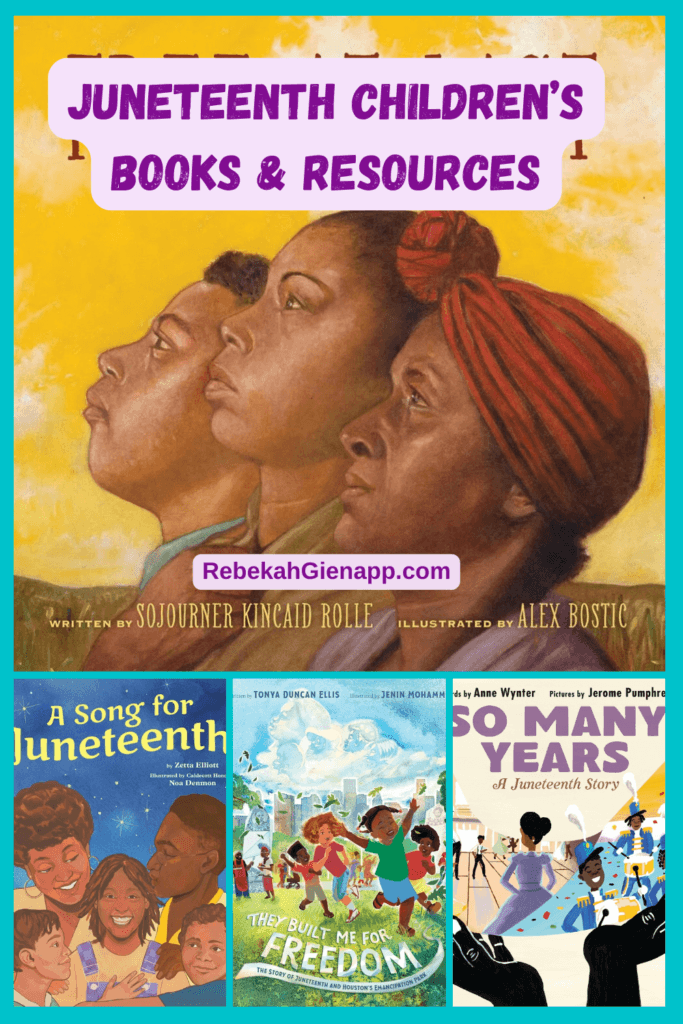
In this post you’ll find children’s books, videos, resources, and activity suggestions for observing Juneteenth and learning more about the holiday.


Disclosure: For your convenience, this post contains affiliate links. If you make purchases through these links, I may earn a small commission at no additional cost to you. You can read my full disclosure policy here.
Children’s books about Juneteenth

So Many Years: A Juneteenth Story by Anne Wynter. Illustrated by Jerome Pumphrey.
Purchase from Bookshop.org (supports independent bookstores and my business!)
There are so many good picture books about Juneteenth available. Wynter’s story stands out for the emotional chord it strikes with simple, yet profound, questions it asks the youngest readers to consider about early Juneteenth celebrations.
“How would you dress after so many years of mending your clothes with rags?” the story asks, accompanied by a page spread contrasting a family dressed in old beige clothes with fine, colorful dresses and suits. In a similar fashion, the words of pain-filled spirituals are contrasted with joyful freedom songs. Wynter and Pumphrey make it clear what it means to “celebrate so many years of a life fully yours, fully free.” (Non-fiction picture book. Recommended for ages 3 – 6. Black author.)
Related post: Talking to kids about hard history
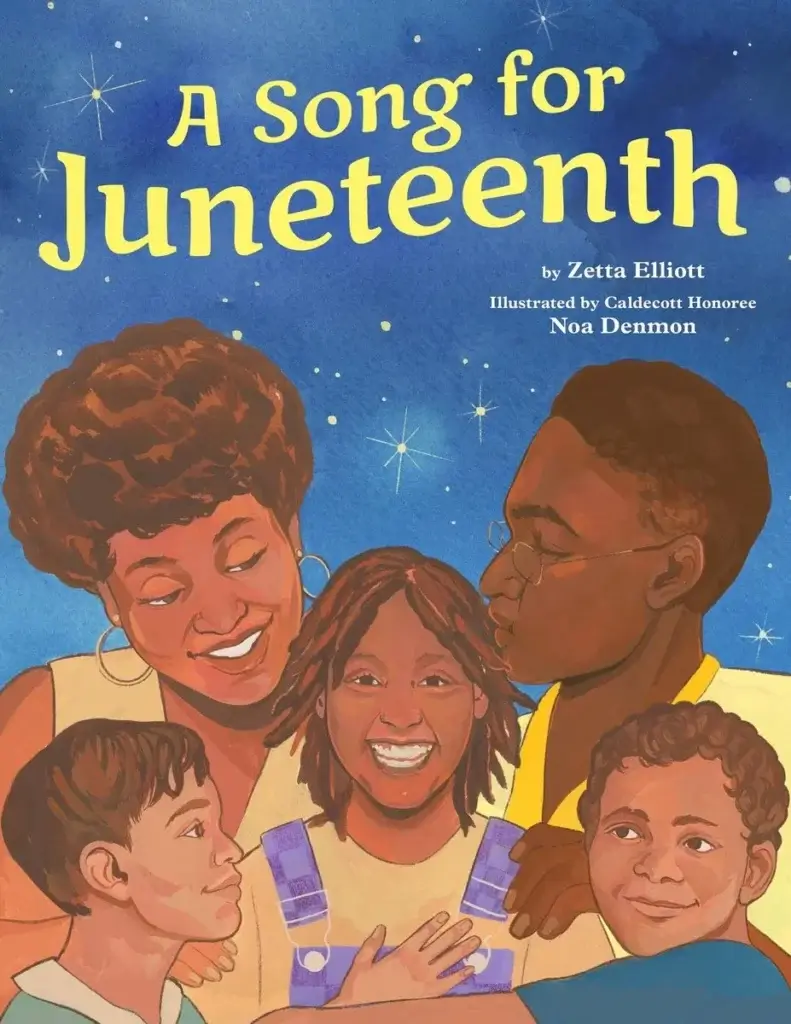
A Song for Juneteenth by Zetta Elliott. Illustrated by Noa Denmon.
Purchase from Bookshop.org (supports independent bookstores and my business!)
This moving poem by Zetta Elliott is a love letter to Black children. The poem is accompanied by Noa Denmon’s evocative illustrations of night skies, tender family scenes, and bold protests for justice. While the child who is the subject of the poem “grew to be Black and proud,” as their family intended, the text acknowledges that there will be people who inflict harm on them. When this happens, young readers are reminded that “liberation must be seized, claimed” in many different ways. (Fiction picture book. Recommended for ages 4 – 8. Black author.)
Related post: Picture books full of Black joy
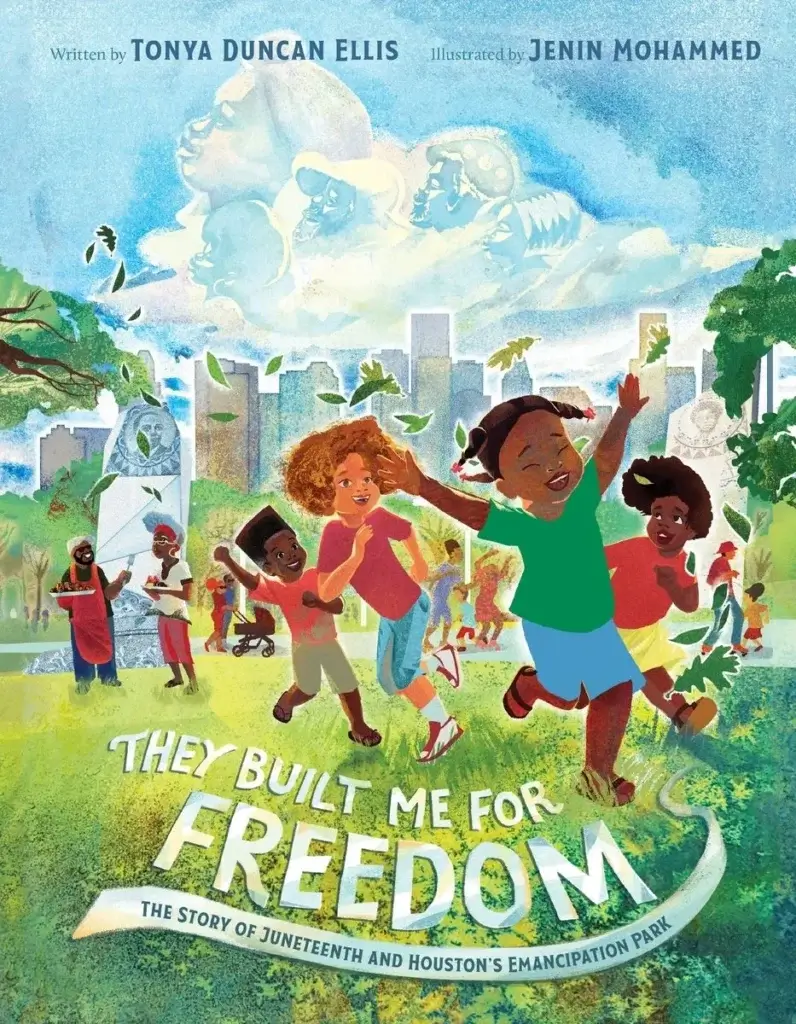
They Built Me for Freedom: The Story of Juneteenth and Houston’s Emancipation Park by Tonya Duncan Ellis. Illustrated by Jenin Mohammed.
Purchase from Bookshop.org (supports independent bookstores and my business!)
Emancipation Park is the oldest green space in Texas and was purchased by Houston church and community leaders in 1872 to commemorate Juneteenth. This unique book tells the story of Juneteenth, the park’s beginnings, its eventual neglect under desegregation, and its revitalization in the 2010s.
Both the detailed illustrations and the text emphasize that the park has always been a place where people are free. That freedom is expressed through play, celebration, thankfulness, and fighting for justice. (Non-fiction picture book. Recommended for ages 4 – 8. Black author.)
Related post: Picture books for Black History Month and beyond

Juneteenth for Mazie by Floyd Cooper
Purchase from Bookshop.org (supports independent bookstores and my business!)
When Mazie feels discouraged because her every request is met with a no, Dad lets her know that there will be a special celebration tomorrow. They’ll be celebrating the day that her great-great-great-grandpa Mose found freedom after being told no over and over. As Dad shares the stories of Grandpa Mose and their more recent ancestors, he invites Mazie to join in their tradition of celebrating and remembering. (Fiction picture book. Recommended for ages 4 – 8. Black author.)
Want to offer children something better than whitewashed American history? My guide From the Margins to the Center can help!
Click on the image below to learn more.


A Flag for Juneteenth by Kim Taylor.
Purchase from Bookshop.org (supports independent bookstores and my business!)
Through gorgeously-detailed quilted illustrations that communicate joy and liberation, Kim Taylor tells the story of the first Juneteenth from a child’s perspective. Huldah is a 10-year-old whose birthday falls on the same day that the Juneteenth proclamation is made. After hearing the announcement from the federal official, the entire community begins making jubilee flags. Women stitch, children gather flagpoles, which men carve into beautiful designs.
Huldah wants to make her own special contribution to the celebration, which she goes to great lengths to capture. Little does she know that her community has a special store in surprise for her. (Fiction picture book. Recommended for ages 4 – 8. Black author.)

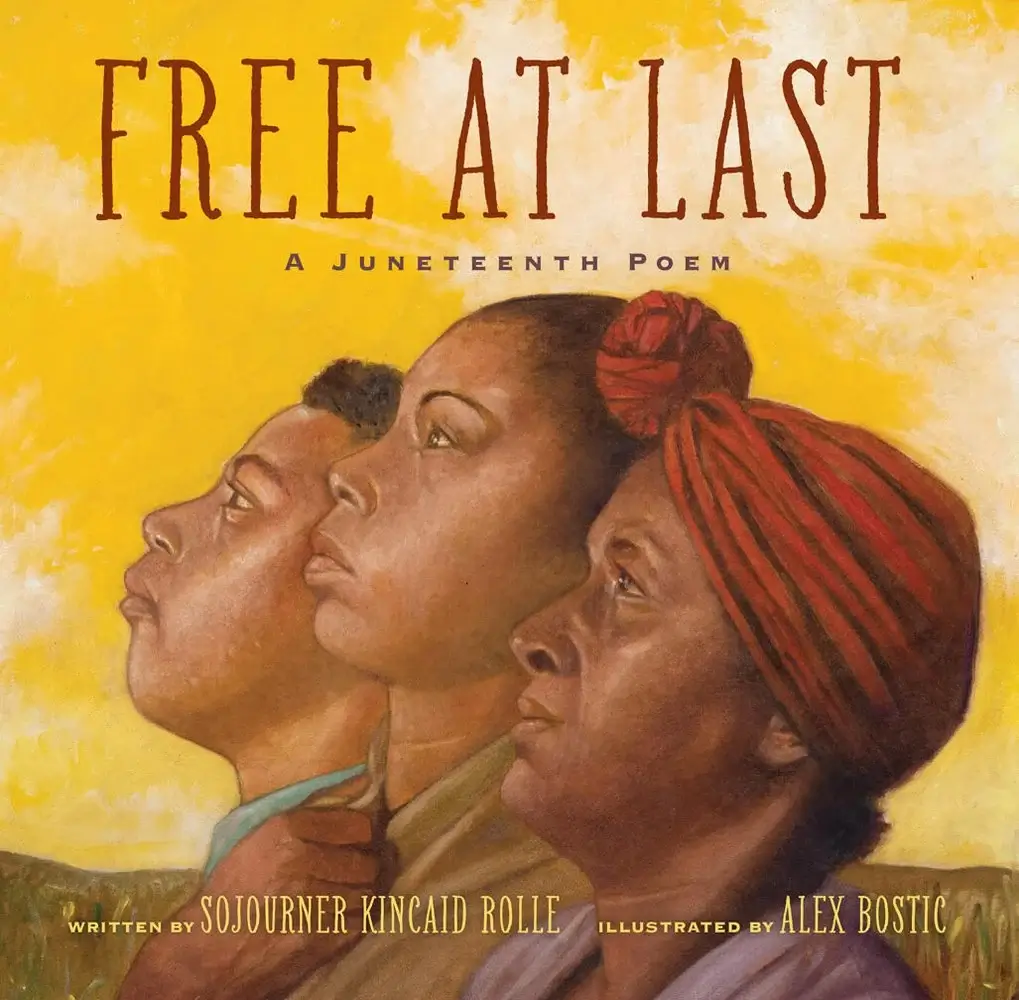
Free at Last: A Juneteenth Poem by Sojourner Kincaid Rolle. Illustrated by Alex Bostic.
Purchase from Bookshop.org (supports independent bookstores and my business!)
Rolle’s gripping poem and Bostic’s expressive watercolor illustrations point to the many different ways that newly freed people responded to the Juneteenth announcement. The moment was met with celebration at a dance hall for some, and the determination to make long journeys to a new home for others.
Yet the poem is also realistic that freedom didn’t end hardship, with others traveling “no further than the shack out back” or running “as far as they could go into the service of the man on the neighboring land.” No matter how their ancestors marked the day, today in Texas Black families remember the day when their ancestors declared “free at least! Hallelujah, I’m free!” (Non-fiction picture book. Recommended for ages 5 – 9. Black author.)
Related post: How should we talk with children about slavery?

Opal Lee and What It Means to Be Free by Alice Faye Duncan. Illustrated by Keturah A. Bobo.
Purchase from Bookshop.org (supports independent bookstores and my business!)
Opal Lee and What It Means to Be Free weaves together tragedy and triumph, injustice and resistance, through alternating stories of the first Juneteenth and the story of Opal Lee, the woman who fought to make the day a national holiday.
The story opens during a joyful present-day Juneteenth celebration, as Opal Lee gathers the children to tell them the story of the first Juneteenth. They learn how “slavery was a thief” – of learning, of justice, and joy. Even when the Emancipation Proclamation was signed, enslavers in Texas continued to force enslaved people to work. When U.S. troops finally arrive to enforce emancipation, Opal Lee in her striking purple dress is shown watching her ancestors celebrate as tears of joy are wiped away.
When her young listeners want to know how Opal Lee celebrated Juneteenth as a child, they learn how segregation and an angry white mob burning her family’s home led to her determination to always work for freedom. (Non-fiction picture book. Recommended for ages 5 – 9. Black author.)
Related post: Picture books about Black women leaders
Shop the entire list of Juneteenth books on Bookshop.org. (Supports independent bookstores and my business!)
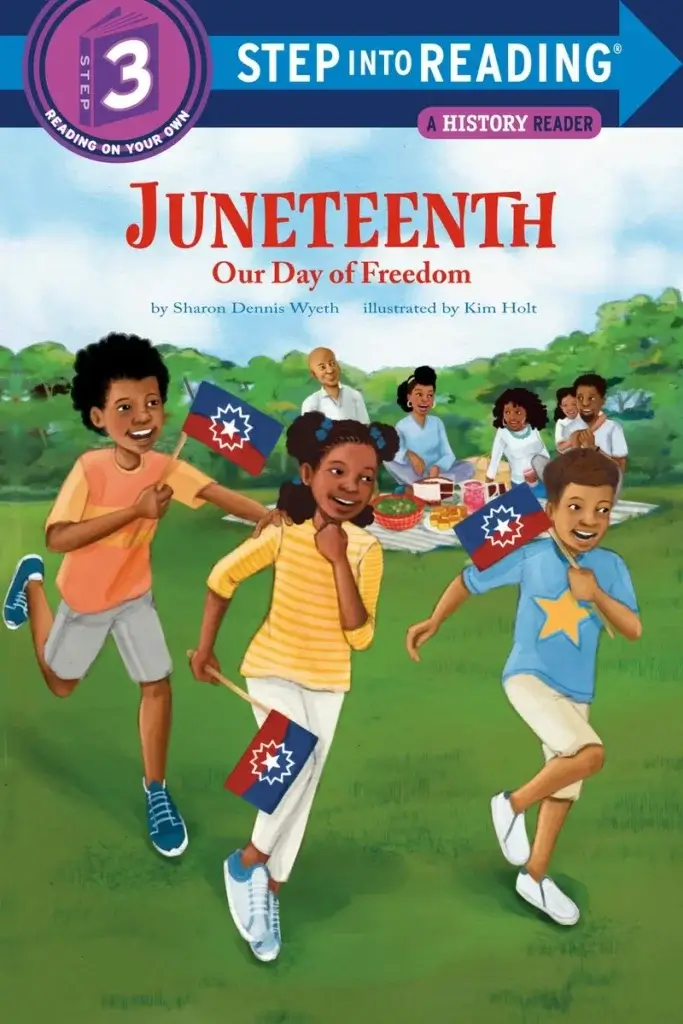
Juneteenth: Our Day of Freedom by Sharon Dennis Wyeth. Illustrated by Kim Holt.
Purchase from Bookshop.org (supports independent bookstores and my business!)
For children who want to read about Juneteenth’s history on their own, this Ready to Read Level 3 book is a great choice.
When sharing about the Union troops who arrived in Texas in June 1865, the book includes the important detail that a number of the soldiers were Black men who fought in the Civil War after escaping slavery. After explaining the events of Juneteenth, the text explores how newly freed people found work, education, and new homes. The final pages share the many ways that Black communities celebrate Juneteenth today. (Non-fiction early reader picture book. Recommended for ages 6 – 8. Black author.)
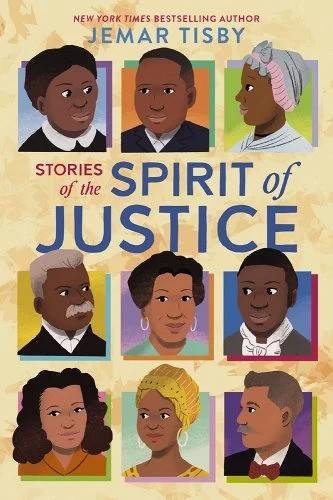
Stories of the Spirit of Justice by Jemar Tisby.
Purchase from Bookshop.org (supports independent bookstores and my business!)
I’ve recommended Stories of the Spirit of Justice before for its biographies of Black history leaders. One of the things that makes the book so useful is that Tisby puts the biographies into important historical context (unlike many compilations for youth that simply describe the leader’s life and work.) Each section begins with a short and accessible essay about the important events of that era.
The section on “The Emancipation Proclamation and Juneteenth” doesn’t shy away from Lincoln’s lack of interest in Black emancipation. Tisby explains that the Emancipation Proclamation did not end slavery and left slavery intact in both border states and Confederate states the Union did not yet control. Finally the short chapter shares the basic details of Juneteenth. (Non-fiction chapter book. Recommended for ages 10 – 14. Black author.)
Related post: Engaging chapter books about Black history
Juneteenth children’s activities and resources
Dance along with the Alphabet Rockers’ song “Juneteenth”
The Alphabet Rockers are my favorite group that not only makes music for children, but creates music with children!
Make a Juneteenth flag
This tutorial from African American Museum of Iowa includes helpful templates.
The Juneteenth flag was created in 1997 by Ben Haith of the National Juneteenth Celebration Foundation. The colors red, white, and blue are intended to show that formerly enslaved people and their descendants are Americans too. The arc symbolizes the new horizons that newly freed people sought. The star is both a symbol of Texas and freedom. The outline around the star symbolizes a nova or new star.
Watch the Molly of Denali episode on Juneteenth
Best for 4 – 8 years old, you can either watch the entire episode of Trini, Molly, and friends planning a Juneteenth celebration for their community or watch this short clip of Grandma Dorena explaining what Juneteenth is about.
Explore a Juneteenth timeline
The National Juneteenth Museum has a timeline of events from The Emancipation Proclamation to today on their website. Best for ages 9 to adult.
Watch a TedEd video about Juneteenth history
This video, best for middle and high school ages, uses the story of enslaved teen Charlotte Brooks as a starting point for understanding Juneteenth.
Little Justice Leaders’ suggestions for non-Black families
I love the Instagram account Little Justice Leaders! This video has recommendations for how people who are not Black can learn, reflect, and act in solidarity on Juneteenth.
One of the suggestions is to shop at Black businesses, including Black bookstores. If you’re not sure which Black bookstores may be located in or near your community, this directory can help.