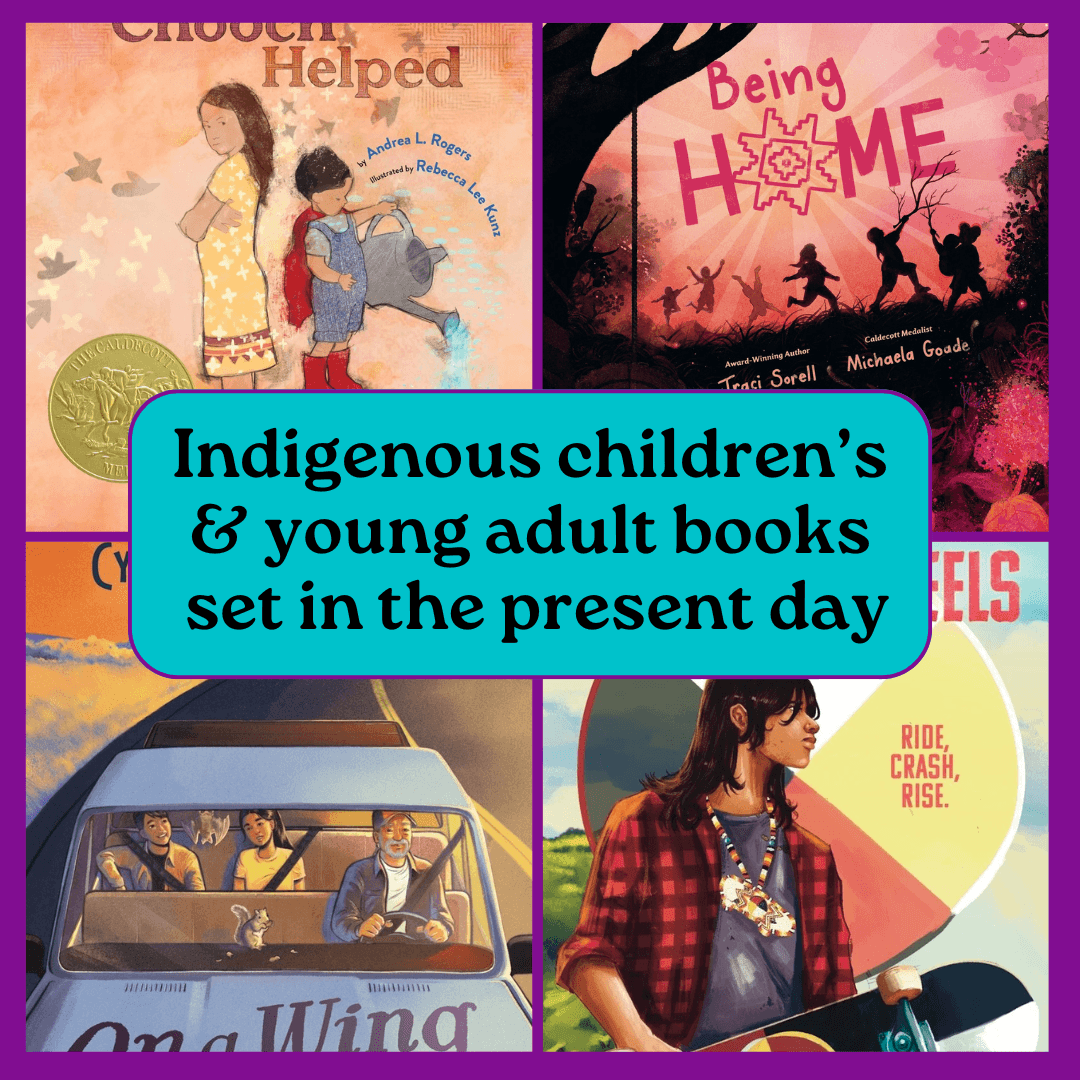
Dr. Debbie Reese, a Nambé Pueblo scholar of children’s literature, often begins her talks by explaining what you’ll see that if you do an online image search for “Native Americans.” Almost all of the top images will show images from Native peoples from the 19th century or earlier. This isn’t true for any other racial-ethnic group in the United States. To combat the mistaken, harmful idea that Native Americans and First Nations are only peoples of the past, it’s crucial to read Indigenous children’s books that are set in the present day.
Online images are not the only messages children see that will tell them Indigenous peoples are peoples of the past, not the present. As they learn U.S. history, historian Roxanne Dunbar-Ortiz explains how young people will likely be taught “terminal narratives,” implying the death of Indigenous nations and cultures.
Related Post: Unpacking myths and stereotypes about the “first Thanksgiving”
Instead, we should teach young people about the many ways Native nations and First Nations resisted and survived oppression, and are flouring today. Reading Indigenous children’s books and young adult books that take place in the present day and are written by Native and First Nations authors is a key part of this task.
Table of contents (click on the heading below to skip to that section)
- Picture books
- Chapter books (intermediate readers and middle grade books)
- Young adult books


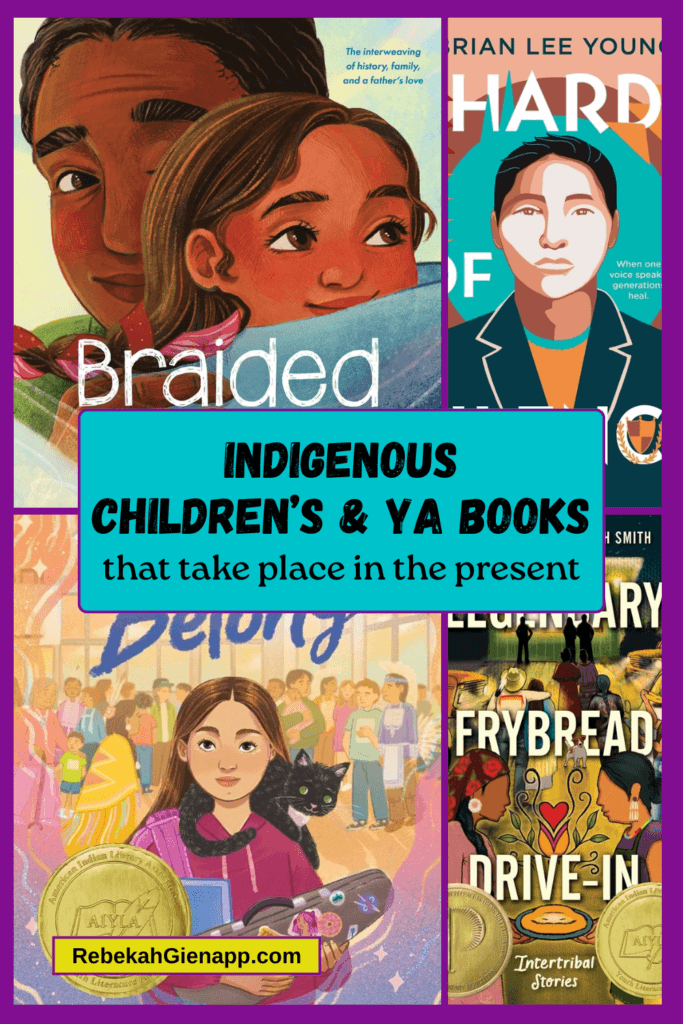
Disclosure: For your convenience, this post contains affiliate links. If you make purchases through these links, I may earn a small commission at no additional cost to you. I received a free copy of Medicine Wheels from the author’s publicist in exchange for my honest review. All opinions are my own. You can read my full disclosure policy here.
Engaging Indigenous children’s books set in the present day: picture books

We All Play/kimêtawânaw by Julie Flett.
Purchase from Bookshop.org (supports independent bookstores)
This joyful picture book celebrates the similarities between humans and other animals, without unrealistic anthropomorphism. The reader watches animals “hide and hop/and sniff and sneak/and peek and peep,” followed by the reminder that “we play too/kimêtawânaw” in English and Cree as children tumble and jump. The rich browns, blacks, and greens of the silhouette illustrations draw children’s attention to our loving connections with the earth and its inhabitants. (Recommended for ages 2 – 4. Cree-Métis author.)

When We Are Kind by Monique Gray Smith. Illustrated by Nicole Niedhardt.
Purchase from Bookshop.org (supports independent bookstores)
All aspects of kindness and the ripple effects of being kind are explored in this straight-forward and moving book for young children. Examples of being kind to family, friends, Elders, neighbors and the earth are accompanied by bright illustrations of First Nations families and children engaing in simple everyday activities. Receiving kindness from all of these same sources is another key theme of the book, as well as the joy and respect that wells up within us when we are kind. (Recommended for ages 2 – 4. Cree, Lakota, and Scottish author.)
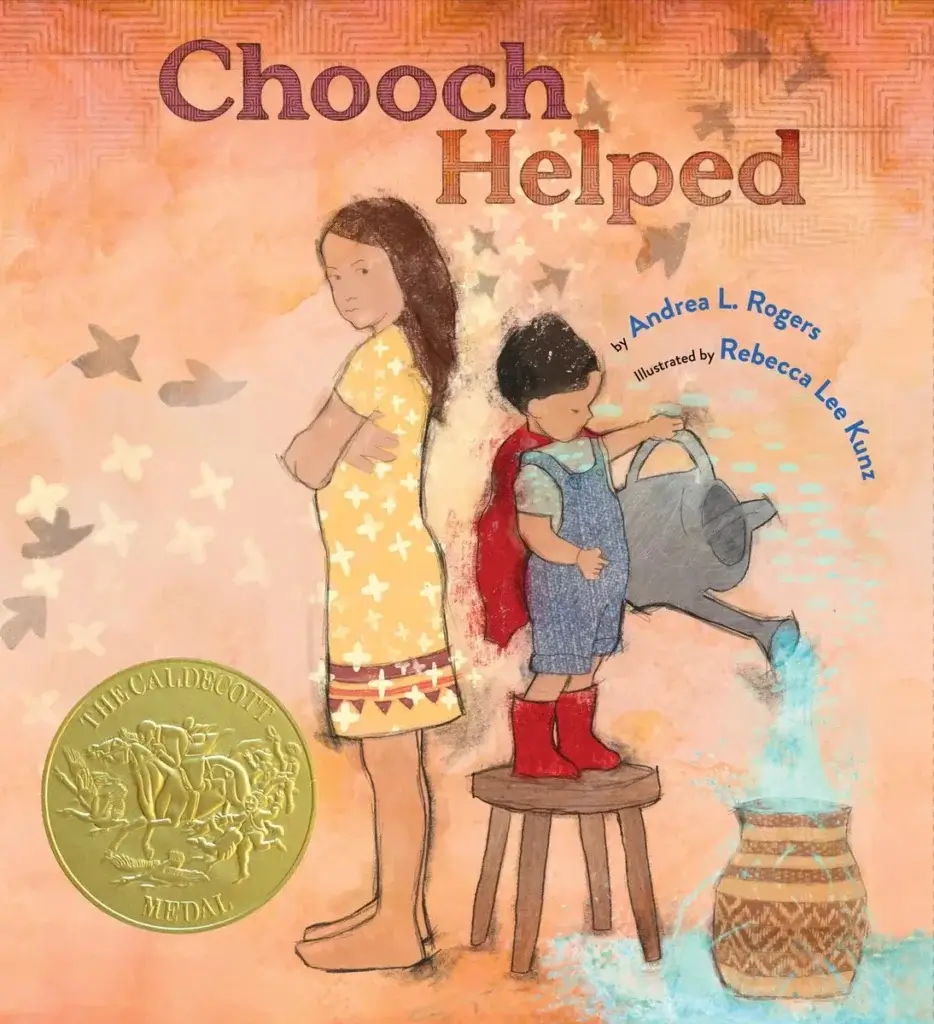
Chooch Helped by Andrea L. Rogers. Illustrated by Rebecca Lee Kunz.
Purchase from Bookshop.org (supports independent bookstores and my business!)
An older sister is frustrated that her toddler brother (who’s not a baby anymore!) is allowed to do whatever he wants under the guise of “helping.” Chooch helps Elisi paint her gorgeous mural by adding a red streak that clearly doesn’t below. When Etlogi plants the garden, Chooch “helps” by uprooting some of the plants. While none of the adults seem to mind, when Chooch ruins the pinch pot Sissy is making, she loses her temper.
It’s not hard to see why this book won the Caldecott medal. The illustrations are full of emotion, from Chooch’s glee as he “helpfully” yanks plants out of the ground, to Sissy’s alternating rage and tenderness toward her little brother. Traditional Cherokee symbols and cultural practices are woven throughout the story. (Recommended for ages 3 – 7. Cherokee author.)
Related post: Children’s books about adjusting to a new sibling
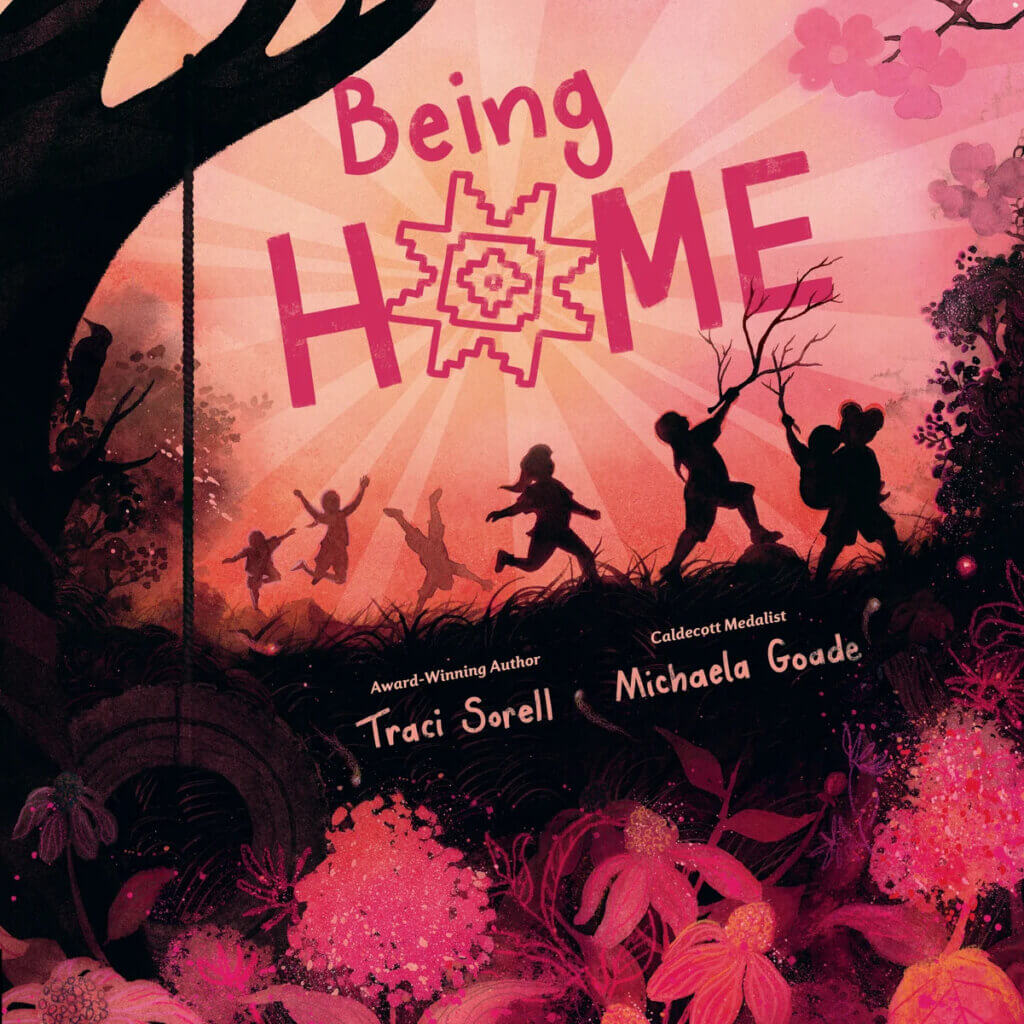
Being Home by Traci Sorell. Illustrated by Michaela Goade.
Purchase from Bookshop.org (supports independent bookstores and my business!)
With stunning, color-saturated illustrations, this book celebrates the excitement of moving home to the Cherokee reservation after life in a crowded city no longer fits. As a young girl says goodbye to her familiar house, she and her family are ready to settle into a different rhythm.
In her new home, she will be surrounded by “singing, shell shaking, storytelling, [and] stickball playing,” not to mention cousins to explore the outdoors with. This is a beautiful celebration of family, home, and rural life. (Recommended for ages 3 – 7. Cherokee author.)
Related post: Comforting picture books about home

I Sang You Down from the Stars by Tasha Spillett-Sumner. Illustrated by Michaela Goade.
Purchase from Bookshop.org (supports independent bookstores)
Love overflows from this gorgeous Indigenous children’s book about a mother preparing to welcome her baby into the world. As she and her extended family gather all the elements of the baby’s sacred medicine bundle, she prays for her child and wants the baby to know this is the land they belong to. As the mother wraps her new baby in the hand-stitched quilt her family made, she realizes that this baby too is a sacred medicine bundle. (Recommended for ages 3 – 7. Cree/Trinidadian author.)

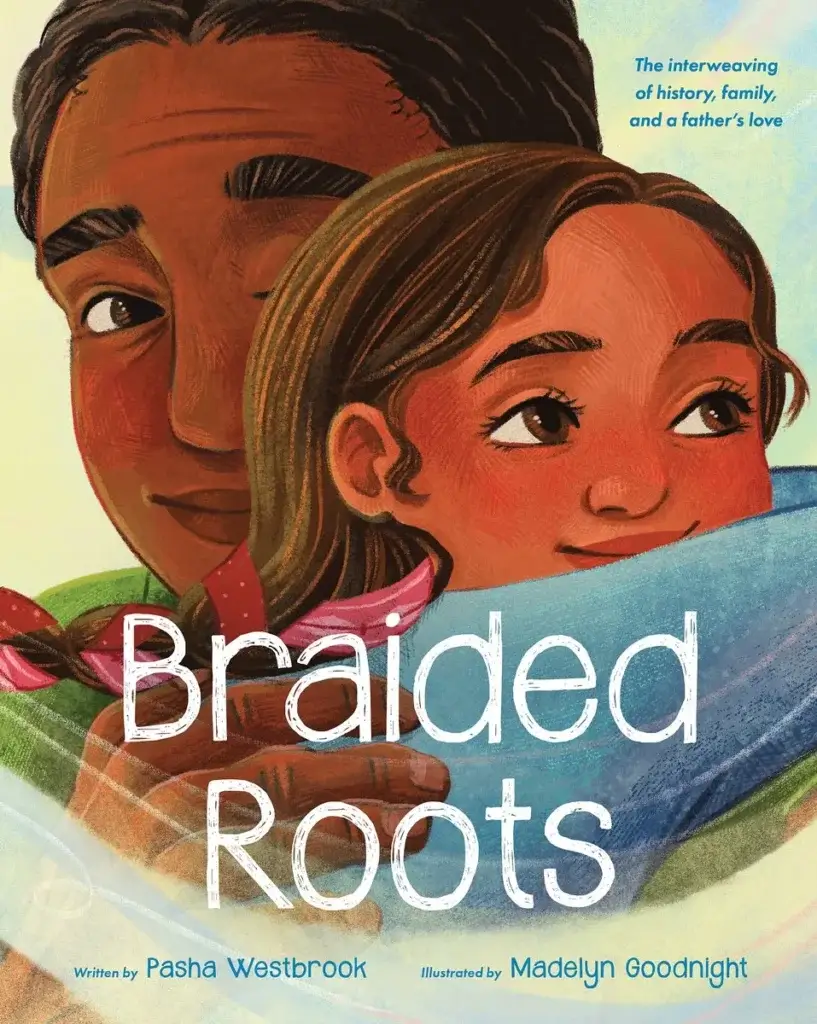
Braided Roots by Pasha Westbrook. Illustrated by Madelyn Goodnight.
Purchase from Bookshop.org (supports independent bookstores and my business!)
Each day a father braids his daughter’s hair with beautiful ribbons from the dollar store, while reminding her that their hair is their history. Family photos and daydreams by the girl show their ancestors, including Freedman, crossing the land on the Trail of Tears.
The girl’s braid reminds her of so many things: the strands of DNA, an unbreakable rope that attaches her to her family, and a sign of her own power to change the world. (Recommended for ages 4 – 8. Chickasaw, Choctaw, and Black author.)
Related post: Twenty #ownvoices picture books by Native American and First Nations authors
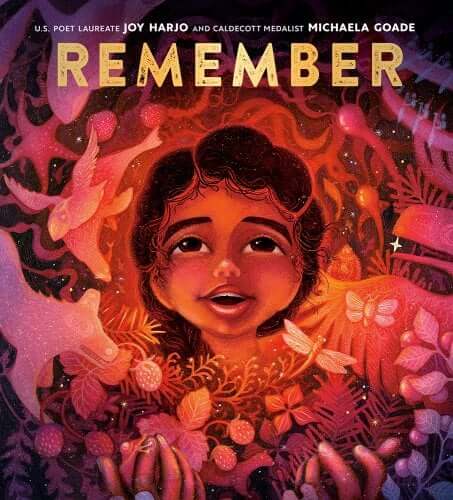
Remember by Joy Harjo. Illustrated by Michaela Goade.
Purchase from Bookshop.org (your purchase supports independent bookstores and my business!)
Harjo’s moving poem reminds young readers of all they are connected to: day and night, the mothers who formed them, “the earth whose skin you are,” and the universe itself. Goade’s stunning and dreamy illustrations are meant to be pored over, again and again. I hope that not only children, but adults too, absorb the book’s message that there is no separation from us and other living beings. This stunning picture book is a wonderful example of a contemporary setting for an Indigenous children’s book that is still closely tied to centures of culture and meaning. (Recommended for ages 4 – 8. Mvskoke author.)
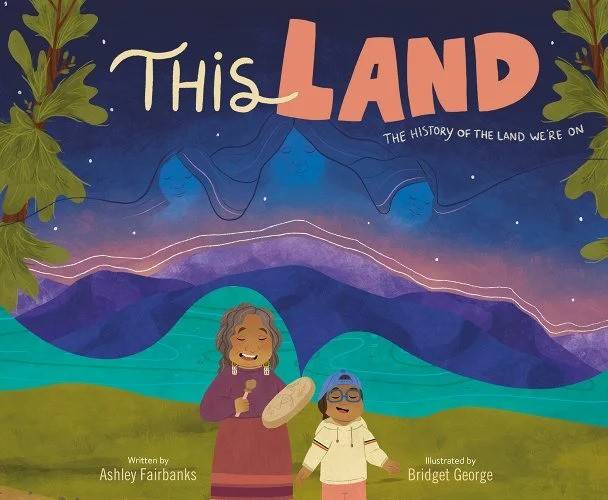
This Land: The History of the Land We’re On by Ashley Fairbanks. Illustrated by Bridget George.
Purchase from Bookshop.org (supports independent bookstores and my business!)
Talking to young children about the Indigenous history of the land you live on can be both straight-forward and meaningful, as this fantastic picture book demonstrates.
Told from the perspective of a non-Native child who is friends with an Anishinaabe boy, This Land traces the many families who’ve lived in a place before her. Eventually she arrives at Native American families who lived on the land in wigwams (even the “annoying little brothers.”) A brief explanation of the tragedy of Native Americans being forced onto reservations is included, before the girl shares all she’s learned from her friend’s Noko (grandma) about land history and acknowledgement.
This much-needed book is sure to prompt questions from children about whose land they are living on or traveling to. (Recommended for ages 4 – 8. Anishinaabe author.)
Related Post: 9 tips for teaching children about the Native American nations in your community
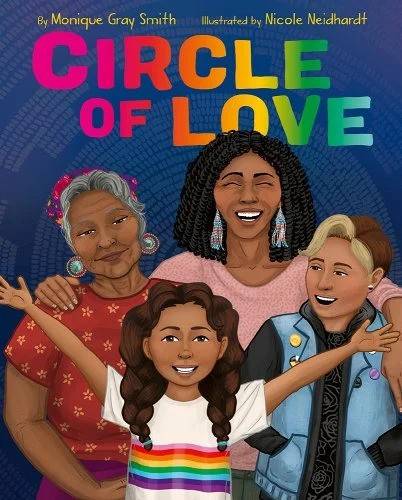
Circle of Love by Monique Gray Smith. Illustrated by Nicole Neidhardt.
Purchase from Bookshop.org (supports independent bookstores and my business!)
At an urban Intertribal Community Center, Molly and her family have arrived for a celebratory feast. As she introduces readers to a variety of family and friends, Molly tells us how each person and experience makes her feel. A number of the people who are special to Molly are two-spirit and/or part of the LGBTQ+ community, and the message “love is love” is repeated on each page spread.
Molly’s experiences at the community center also highlight the importance of ceremony, which is further explored in the excellent educational notes at the end of the story. The vibrant, expressive, colorful illustrations are sure to draw young readers into Molly’s story. (Recommended for ages 4 – 8. Cree, Lakota, and Scottish author who is two-spirit.)
Never struggle to find the right diverse, anti-bias, or social justice children’s book again!

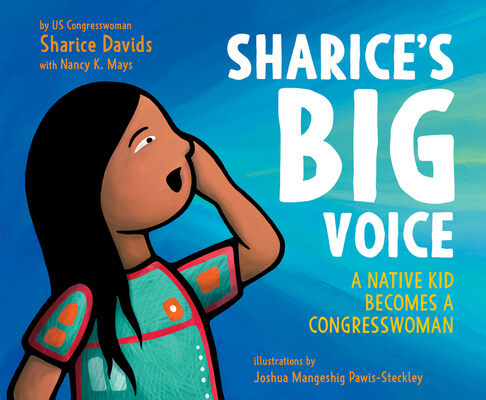
Sharice’s Big Voice: A Native Kid Becomes a Congresswoman by Sharice Davids with Nancy K. Mays. Illustrated by Joshua Mangeshig Pawis-Steckley.
Purchase from Bookshop.org (supports independent bookstores)
In this relatable autobiography, Sharice Davids shares how life prepared her to become one of the first Native American women and the first lesbian representing Kansas in Congress.
As a child Sharice loved to talk, and she was delighted to discover that her Ho-Chunk nation calls itself “people of the big voice.” But Davids also learned the power of listening to everyone, especially people whose voices were often ignored.
As a young lawyer working with Native nations, and later as a White house staffer, Davids saw how often people making laws didn’t notice their impact on ordinary people. She would use her gift of listening to people who many leaders ignored, and speaking her mind, as she made her ground-breaking run for Congress. (Recommended for ages 4 – 8. Ho-Chunk Two Spirit author.)
Related post: Affirming LGBTQ+ picture books
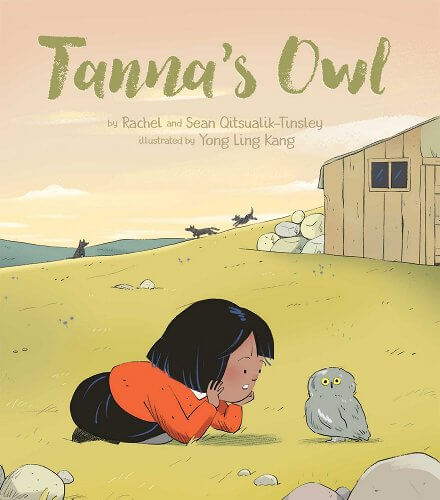
Tanna’s Owl by Rachel and Sean Qitsualik-Tinsley. Illustrated by Yong Ling Kang.
Purchase from Bookshop.org (supports independent bookstores)
Technically this isn’t an Indigenous children’s book set in the present day, since it reflects author Rachel’s childhood during the residential boarding school era. But since this is still the fairly recent past and the story transcends time, I’ve included it here.
When Tanna’s father brings her a motherless baby Ukpik (owl), she wonders why he would give her such an ugly thing. Ugly, and demanding, since Ukpik needs Tanna to constantly catch lemmings for it to eat. As Ukpik grows, she senses that it wants to fly. Maybe her days of feeding and caring for this sharp-clawed bird are almost done. But will Tanna miss Ukpik if the owl flys away? (Recommended for ages 4 – 8. Rachel is Inuit-Cree and Sean is Scottish-Mohawk.)
Related post: Do’s and don’ts for teaching about Native Americans in preschool and kindergarten

We Are Water Protectors by Carole Lindstrom. Illustrated by Michaela Goade.
Purchase from Bookshop.org (supports independent bookstores)
The powerful text and gorgeous illustrations of We Are Water Protectors make it a must read. A young Ojibwe girl has heard stories of a black snake that could destroy the land. Now that this snake (oil pipeline) has finally arrived, the girl rallies her people to stand for the water, because “water is the first medicine.” (Recommended for ages 4 – 8. Ojibwe author.)
Related post: Thoughtful children’s books about the environment
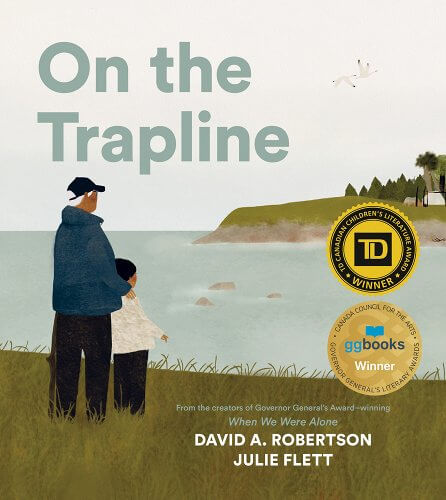
On the Trapline by David A. Robertson. Illustrated by Julie Flett.
Purchase from Bookshop.org (supports independent bookstores)
A young boy and his moshom (grandfather) fly to the northern reaches of what is today called Canada to visit the trapline where Moshom and his family lived off the land. The child makes mental comparisons between his own city life and how Moshom lived, fondly imagining the closeness of living together in one tent with his family. Robertson’s spare, precise text draws readers into the Moshom’s experiences, while Flett’s trademark earth tone illustrations make the land the star of the book. (Recommended for ages 4 – 8. Cree author.)

Josie Dances by Denise Lajimodiere. Illustrated by Angela Erdrich.
Purchase from Bookshop.org (supports independent bookstores)
Josie is an Ojibwe girl who’s eager to dance for the first time in her nation’s powwow. Even though the powwow is next summer, there are many preparations to be made (and most of these must be done by the women in her family.)
Mama has promised to sew her dress and fancy shawl. Aunty will bead her cape, and Kookum (her grandmother) will bead her moccasins and leggings. Grandma Greatwalker, a tribal Elder, pledges to dream her spirit name. But as the months go by, none of them are finished with their work. As people start to arrive for the powwow, Josie becomes anxious, wondering if she will have to wait another year to dance. (Recommended for ages 4 – 8. Ojibwe author.)
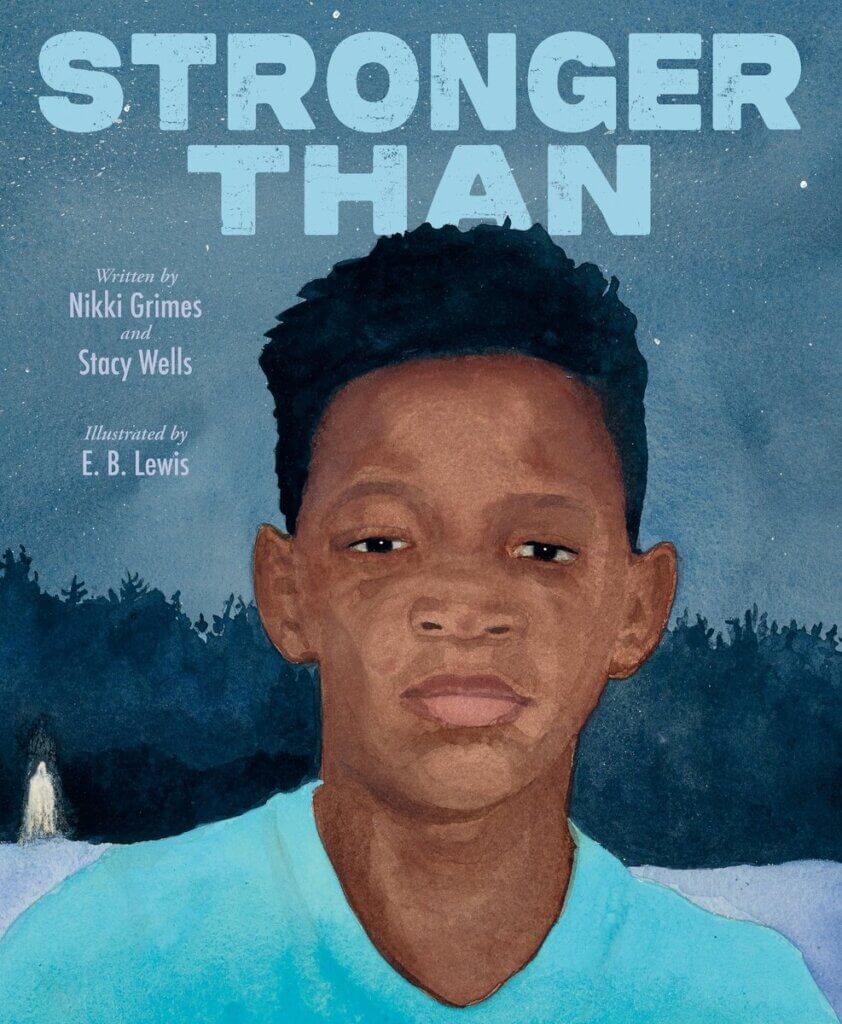
Stronger Than by Nikki Grimes & Stacy Wells. Illustrated by E.B. Lewis.
Purchase from Bookshop.org (supports independent bookstores and my business!)
During the daytime, there isn’t much that scares Dante Dawes, but at night he’s tormented by nightmares. One night when he screams himself awake, his mother shows Dante pictures of two of his ancestors. She tells Dante that like them, he is stronger than his nightmares. When she says that the two women, one Choctaw and one Black, were stronger than their daymares, Dante is curious.
The next day he heads to the local library to learn more about the Trail of Tears that one ancestor endured, and the Tulsa Race Massacre that his great grandmother survived. While learning about what they face brings Dante great sadness, he’s also reminded of their strength and bravery – as well as his own. (Recommended for ages 6 – 10. Black author; Choctaw author.)
Related post: Talking to kids about hard history
Indigenous children’s books set in the present day: chapter books

Jo Jo Makoons: The Used-to-be Best Friend by Dawn Quigley. Illustrated by Tara Audibert.
Purchase from Bookshop.org (supports independent bookstores)
It’s not easy to write an Indigenous children’s book series for independent readers that’s funny, charming, and teaches children about Ojibwe culture all at the same time. But Dawn Quigley has done it, with basic Ojibwe vocabulary and pronunciation hints. Jo Jo Makoons is a confident, quirky kid I would love to meet!
Jo Jo’s best friend is her cat Mimi, and her school best friend is Fern. She tends to see the world in a unique way that other kids don’t understand. Maybe that’s why it’s so hard for her to make friends, which is a real problem since it seems like Fern doesn’t want to be best friends anymore. Maybe she’ll just sneak Mimi into school instead? As you might imagine, hijinks ensue. (Prose novel with illustrations. Recommended for ages 6 – 9. Series. Ojibwe author.)
Related post: 9 diverse chapter book series for intermediate readers
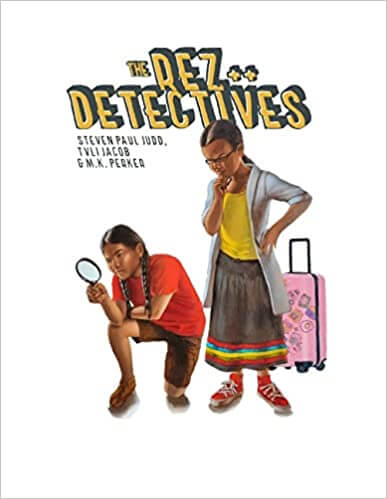
The Rez Detectives: Justice Served Cold by Steven Paul Judd, Tvli Jacob, and M.K. Perker
Purchase from Bookshop.org (supports independent bookstores)
In this laugh-out-loud funny graphic novel, Tasembo knows something fishy is afoot when the ice cream man doesn’t show up on the rez. To impress a Okcanlush (a girl so pretty that he “bathes” by dousing himself with cologne and spit-smoothing his hair), Tasembo pulls his neighbor Nuseka in to the investigate the case. Nuseka is a scientist in training, and she provides most of the detective skills in the plot, while Tasembo provides the comic relief. While this is the only volume that has been published so far, the ending of the book seems to be setting up Rez Detectives to be a series. (Graphic novel. Recommended for ages 7 – 10. Judd is Kiowa & Choctaw. Jacob is Choctaw.)
Related post: 8 middle grades books by Native American authors
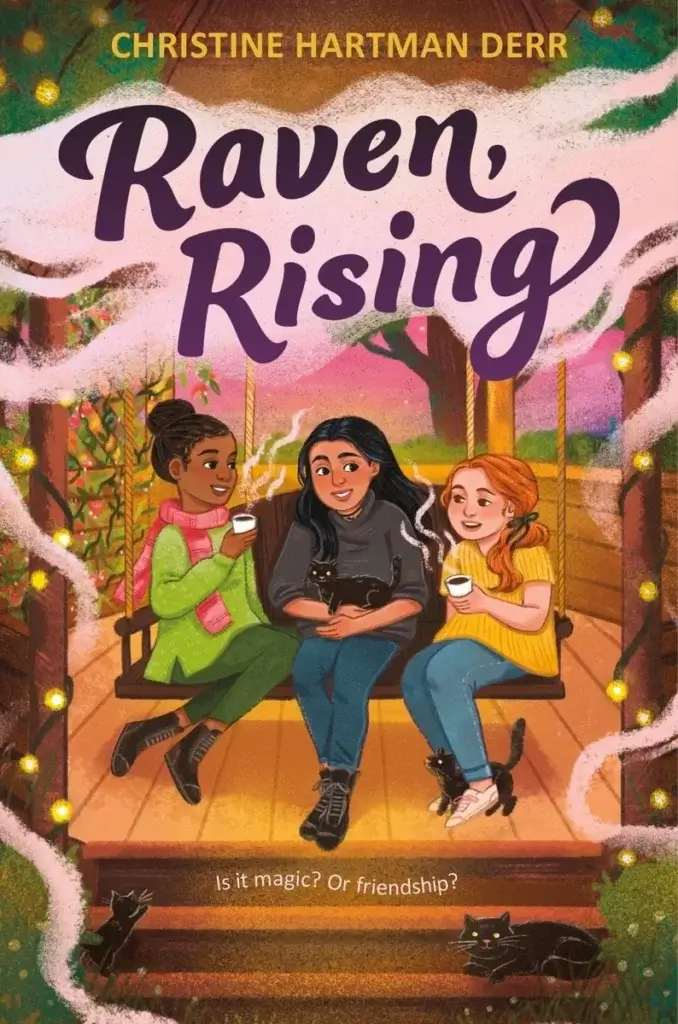
Raven, Rising by Christine Hartmann Derr
Purchase from Bookshop.org (supports independent bookstores and my business!)
Raven and her Aunt Coral have moved from Oklahoma to a mountain town far from their family and Cherokee community. They’re both still grieving the death of Raven’s parents in a tragic accident that Raven blames herself for. At her new school, Raven’s outsider status and her black clothing quickly make her a target of the VIBES, a group of popular girls who accuse her of being a witch. Raven becomes increasingly frustrated, and pretends to curse VIBES member Stella by stringing together a series of Cherokee words.
While Raven knows she’s not a witch, bad things do start to happen to Stella, some of which Raven suspects may have something to do with her new friends Hazel and Laurel. Raven can’t find the courage to ask them directly, and she also doesn’t want to tell them that she’s a gifted baker. She’s refused to bake since her mother’s death because that’s something they always did together, but Raven can’t deny that lately, baking ingredients have been calling out to her in a way that seems almost supernatural. While dealing with all of this, Raven becomes increasingly frustrated by the school’s strict dress code policy and the creepy vice principal who enforces it.
Raven, Rising thoughtfully addresses themes of grief, bullying, and friendship through a protagonist who has to learn to trust herself and her community again. (Prose novel. Recommended for ages 8 – 12. Cherokee author.)
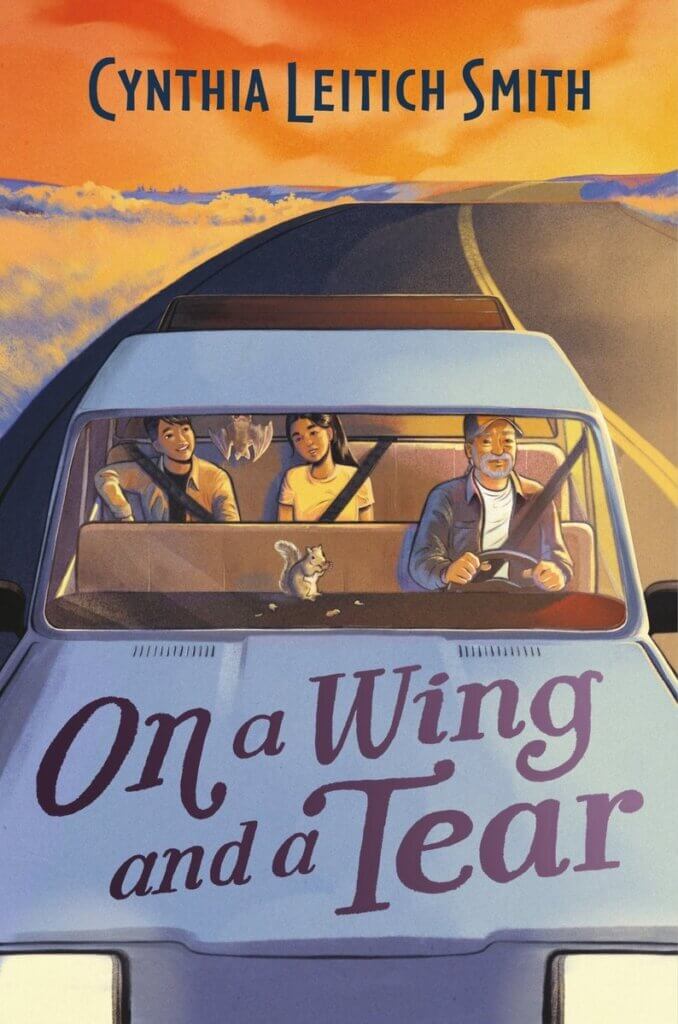
On a Wing and a Tear by Cynthia Leitich Smith
Purchase from Bookshop.org (supports independent bookstores and my business!)
This modern folktale is the perfect book to read on a road trip. On a Wing and a Tear brings together beloved characters Ray and Grandpa Halfmoon, who first appeared in Smith’s book Indian Shoes and Grandfather Bat, who long ago helped the Animals win the Great Ball Game against the Birds. Humor, adventure, and exploration of themes including Indigenous identity and family change come together in this engaging story.
When Ray and his best friend/roommate Mel hear Grandfather Bat calling to them from their backyard, they’re shocked that he can talk. Grandfather Bat needs to get to the ball grounds in the southeastern United States in just a few days. He can’t fly there from Ray and Mel’s Chicago home because a tear in his wing is still healing. But Grandpa Halfmoon and Bat are old friends, and he agrees to drive Bat to his match.
Ray and Mel beg to come along, and a young Squirrel who wants to assist Bat joins their crew as well. They make many detours along the way, visiting Cherokee and Muscogee relatives and (to Mel’s excitement), Grandpa Halfmoon’s high school sweetheart. When a pair of aspiring social media stars take Bat from Grandpa, claiming he’s harming a wild creature, everyone must do their part to ensure the road trip doesn’t become a disaster. (Prose novel. Recommended for ages 8 – 12. Muscogee author.)
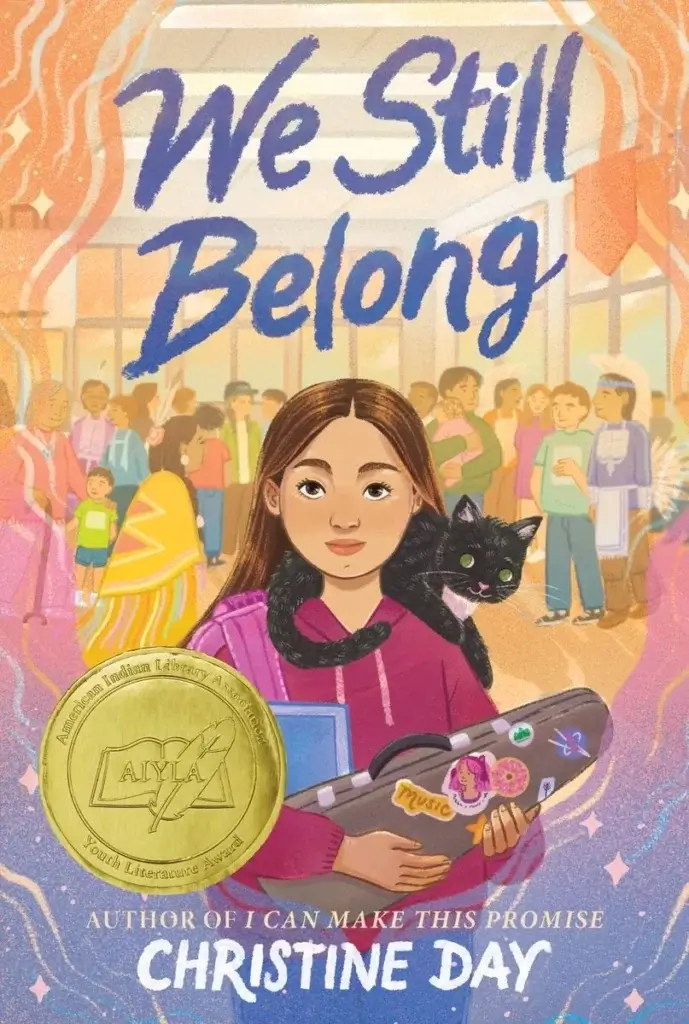
We Still Belong by Christine Day
Purchase from Bookshop.org (supports independent bookstores and my business!)
The entirety of We Still Belong takes place on just one day (with a few flashbacks): Indigenous Peoples’ Day. Seventh grader Wesley Wilder is nervous and excited for two reasons. First, her poem for Indigenous Peoples’ Day is going to be printed in the school newspaper and she’ll be able to read it in English class. Second, she’s going to ask her crush Ryan to the Tolo school dance.
An Indigenous People’s Day livestream and fundraiser by her favorite gamer adds to Wesley’s high hopes for the day, but during her school day she realizes no one is aware that today is special. As one of the few Native students, Wesley is eager to talk about her poem, but her English teacher tells her it didn’t have a strong enough point of view. While Wesley wants to celebrate her identity, Mr. Holt wants an argumentative essay.
Meanwhile, some of the popular kids have launched a social media account to predict who will go to the dance together. Ryan is paired with another popular kid, and Wesley’s confidence begins to waver.
After such a crummy day, her family is luckily planning to go to an intertribal powwow. There, Wesley finally has some surprises that lift her spirits, rather than weigh her down. (Prose novel. Recommended for ages 9 – 12. Upper Skagit author.)
Related post: 9 ways kids can observe Indigenous Peoples’ Day

Blue Stars: The Vice Principal Problem by Kekla Magoon and Cynthia Leitich Smith. Illustrated by Molly Murakami.
Purchase from Bookshop.org (supports independent bookstores and my business!)
The moment my kid finished reading Blue Stars, he asked me to get him the next graphic novel in the series. (Unfortunately for him, it has been written yet but I share his enthusiasm for this collaboration between two of my favorite children’s authors!)
Cousins Riley and Maya haven’t seen each other since they were little, and now both of them are moving to Urbanopolis to live with their grandma. Extroverted Riley can’t wait, but Maya’s having a much harder time with the move since her military parents won’t be coming with her.
Maya interprets Riley’s enthusiasm as an invasion of her privacy, and at first it seems the cousins won’t be getting along at all. Soon, however, their shared frustration at their vice-principal’s desire to throw every student into detention unites them. (Recommended for ages 8 – 12. Graphic novel. Black author and Muscogee author.)
Related post: Diverse graphic novels for middle grade readers
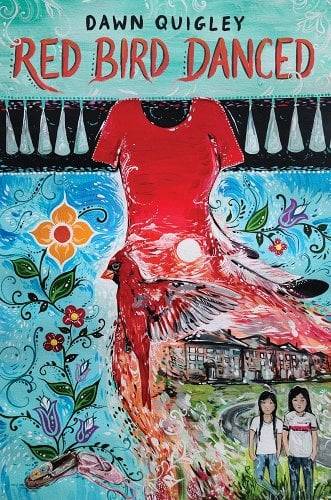
Red Bird Danced by Dawn Quigley.
Purchase from Bookshop.org (supports independent bookstores and my business!)
Red Bird Danced is a novel-in-verse that alternates between the voices of two Native children, Ariel and Tomah, who live in an urban intertribal housing complex. Ariel has to let go of her beloved ballet lessons because the family needs the funds to search for her missing Auntie Bineshiinh. But her aunt is the one who first inspired her love of dance, and family members encourage her to learn to traditional jingle dance as a way to find healing for both the community and herself.
Ariel’s friend Tomah is a lovable jokester, but what most people don’t realize is that he uses humor to distract from the truth that he can barely read. Tomah struggles with feeling invisible, but his desire to support Ariel in her aunt’s absence gives him newfound courage to step into the spotlight. (Recommended for ages 8 – 12. Novel-in-verse. Ojibwe author.)
Find even more Indigenous children’s books set in the present day in my list on Bookshop.org!
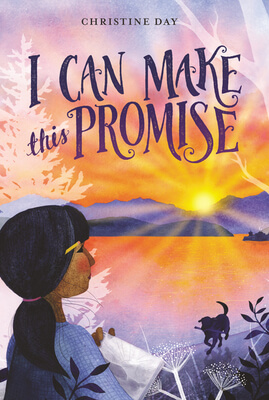
I Can Make This Promise by Christine Day.
Purchase from Bookshop.org (supports independent bookstores)
Ever since she was little, strangers have asked Edie “what are you?” She knows her mother is Native American, but since her mom was adopted by a white family, she doesn’t even know what nation her birth grandparents belonged to. Her mother doesn’t seem very interested in talking about her childhood or re-discovering their culture.
When Edie finds a box full of pictures and letters signed by a woman named Edith, she realizes this could be the key to finding out who she is. Her two best friends give her opposite advice about what to do with the box. Serenity urges her to talk to her parents about it, while Amelia wants her to keep it a secret and use the material to create a short film for the contest the girls are entering. (Prose novel. Recommended for ages 8 – 12. Upper Skagit author.)
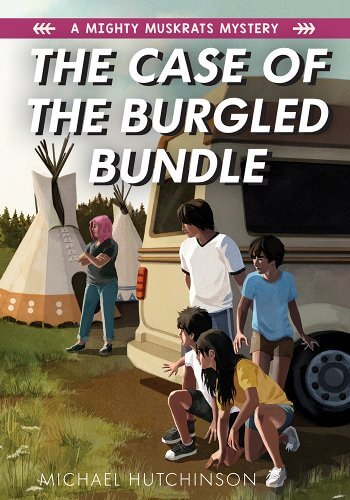
The Case of the Burgled Bundle by Michael Hutchinson.
Purchase from Bookshop.org (supports independent bookstores)
In the Mighty Muskrats’ latest case, they have to figure out who stole the sacred treaty bundle from the National Assembly of Cree Peoples being held on their reservation. There has already been some tension between the Cree peoples of different lands, and the four cousins are determined to save their reservation’s reputation by locating the bundle thief.
Could teenage Pearl and her group of petty thieves have taken the treaty bundle to the city to sell it? Or maybe it was the braggart Guy, who claims to be Métis and has said he wants to disrupt the Cree Assembly. Could it be one of the four young men selected to guard the treaty bundle overnight? While their Uncle Levi officially investigates the case for the tribal police, the Mighty Muskrats quietly work the case too. (Prose novel. Recommended for ages 8 – 12. Series, but not necessary to read the books in order. Misipawistik Cree author.)

Healer of the Water Monster by Brian Young
Purchase from Bookshop.org (supports independent bookstores)
Nathan is so determined not to spend the summer with his Dad’s new girlfriend that he decides to stay with his Nali (grandmother) on the Navajo reservation. For a kid who loves playing video games, staying in Nali’s mobile home, which has no electricity or running water, is a big change.
One night, Nathan gets lost in the nearby desert, and discovers a sacred being – a water monster – who is very sick. As Nathan tries to discover the cure for Pond the water monster, his uncovers gifts he did not know he had. At the same time, both he and Nali struggle with how to help Nathan’s Uncle Jet, who has struggled with alcoholism ever since returning from overseas.
There are so many reasons to recommend Healer of the Water Monster. Nathan is an incredibly relatable character. He shows both a generous nature and a stubborn ability to shut out people who are trying to help him. Young has created a mirror for young Navajo readers, infusing language and Diné culture throughout the entire story (yet in a way that non-Navajo readers can understand if we put in some effort.) Finally, even though there is plenty of heartbreak in this book, it’s also very funny at times. (Recommended for ages 9 – 13. Diné author.)
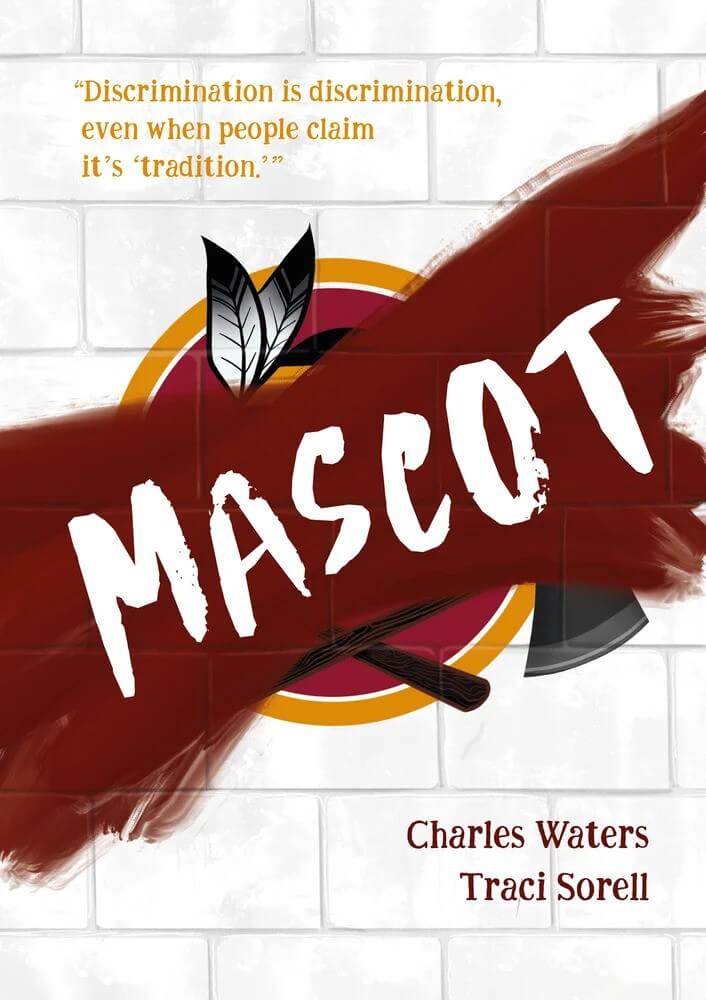
Mascot by Charles Waters and Traci Sorell.
Purchase from Bookshop.org (supports independent bookstores and my business!)
When Callie Crossland moves to suburban Washington, DC, she immediately recoils from the prominent Native American “Brave” mascot of her new middle school. As a Cherokee Nation citizen, the fake war cries and tomahawk chops that fill the school pep rallies are a gut punch. When her honors English teacher decides to assign a semester long project debating the pros and cons of Native American mascots, all the students are soon grappling with their varying passionately-held beliefs on the topic.
This novel-in-verse is told in six voices of kids who are from a range of race and social class backgrounds. While the overall tone and direction of the book is anti-mascot, the characters who want to keep the mascot have some complexity and nuance. This is a thoughtful story that will help young readers delve into an issue that’s likely present in their communities but which many non-Indigenous youth have not thought about. (Recommended for ages 11 – 15. Black author and Cherokee author.)
Indigenous books set in the present day: Young Adult books
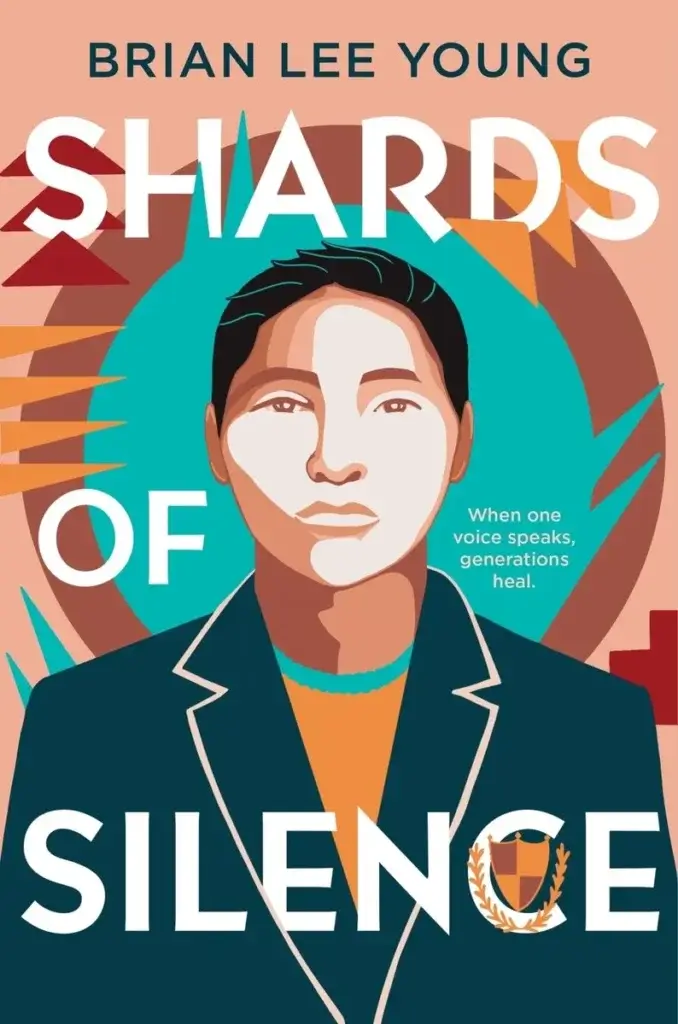
Shards of Silence by Brian Lee Young
Purchase from Bookshop.org (supports independent bookstores and my business!)
I highly recommend this thoughtful and nuanced novel that explores the pressures of being the only Native student at an elite boarding school. Inspired by the author’s experiences and family history, Shards of Silence is also a story that sheds light on how the impacts of the Native American boarding school era lasted for generations.
Fifteen-year-old Derrick Hoskie is the only student from his Navajo Reservation who’s been accepted into the elite Sagefield Academy in Connecticut. Derrick must juggle the pressures of keeping his scholarship in a school with extremely high academic expectations and competing in both football and wrestling. He battles homesickness and guilt for being so far away as his great grandmother Másání Mildred’s health deteriorates. If all that isn’t enough to deal with, as the only Native student at Sagefield, he gets continual questions from ignorant students about whether he lives in a tepee and why he has short hair.
Whenever Derrick talks with Másání Mildred, she tells him that he doesn’t have to stay at the boarding school. Her questions about whether anyone is hurting him make Derrick wonder what her childhood experience at a Native American boarding school was like. Family members discourage him from asking her both because of her heart condition and because of the Diné principle of doo ‘ajínída that discourages talk about negative things.
Then a Sagefield alum who is Native introduces Derrick to the meaning of Orange Shirt Day. His need to understand Másání Mildred’s experience prompts Derrick to ask his elders to break their silence.
Content note: Prescription drug abuse. (Recommended for ages 13+. Prose novel. Diné author.)
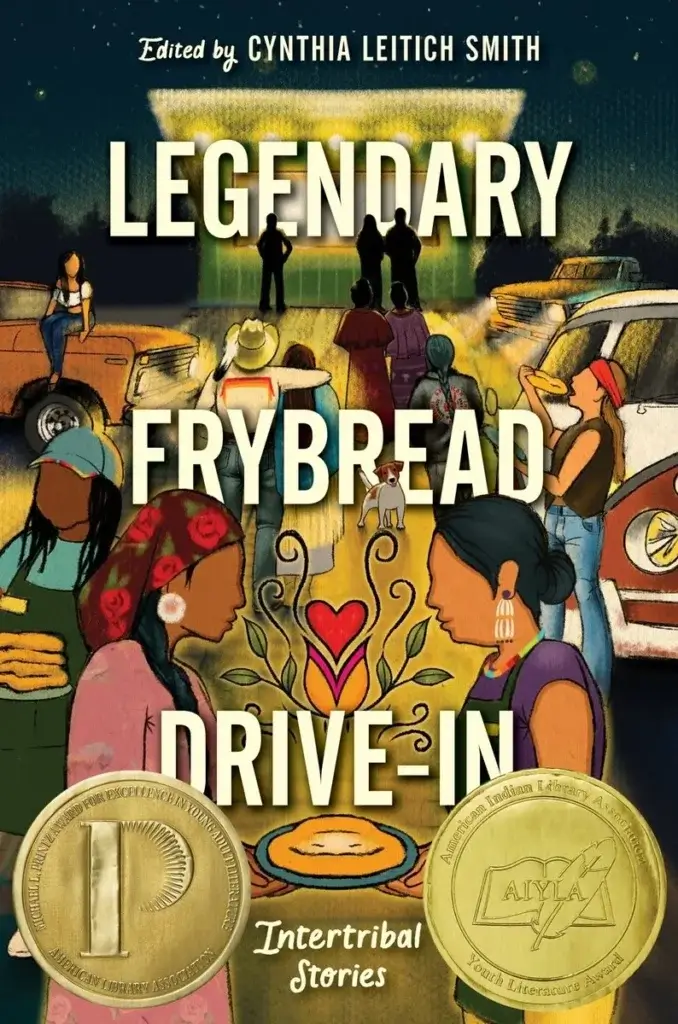
Legendary Frybread Drive-In: Intertribal Stories edited by Cynthia Leitich Smith
Purchase from Bookshop.org (supports independent bookstores and my business!)
Unlike many Young Adult books, this short story anthology is age-appropriate for young teens. The interconnected stories written by 17 different Indigenous authors all take place in part at Sandy June’s Legendary Frybread Drive-In. The rustic outdoor restaurant moves around but will always appear when a Native person needs it most. Staffed mostly by “Legendary Grandparents,” the restaurant dishes out support, wisdom, and reality checks as often as it does a variety of foods, from “tradish” meals to fast food favorites.
Teens might discover Sandy June’s with a friend or a crush, their Dungeons and Dragons group, a relative who wants to support them, or even a rude stranger from an airplane. No matter which portal they use or who they meet there, each character discovers that the drive-in, the frybread they serve, and the elders they meet there make the place feel like home. Serious topics and challenges like Native identity, family members with addiction, and grieving the death of loved one are mixed with light-hearted stories about first kisses, debut band performances, and making friends.
With open mic nights, late night movies, and Battles of the Bands, this book is perfect for reading in summertime. (Prose short story collection. Recommended for ages 13+. Stories by Indigenous authors of various nations.)
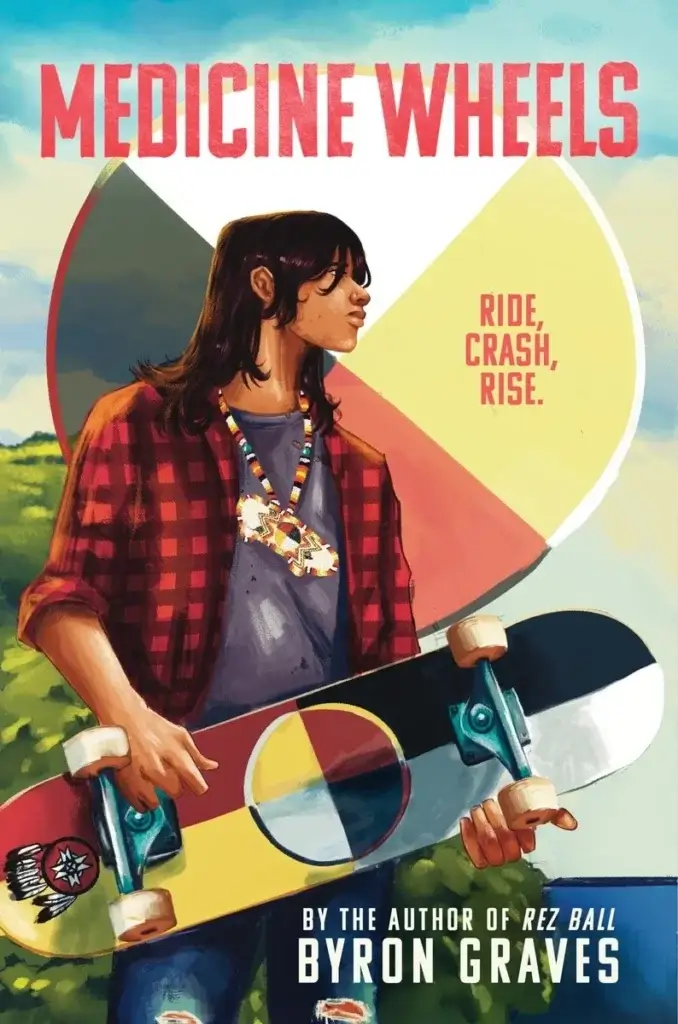
Medicine Wheels by Byron Graves
Purchase from Bookshop.org (supports independent bookstores and my business!)
This introspective novel explores how learning a complex skill, along with being surrounded by a close-knit community, helps a teen navigate trauma, grief, and uncertainty.
Bryce’s father died in an accident when he was eight years old, and ever since then his mother has struggled with addiction and getting caught up in abusive relationships. When she decides to break things off with Doug and takes Bryce back to his dad’s Ojibwe reservation, Bryce is hopeful they’ll stay. He may have lost all his belongings, but at least he has his grandparents and his best friend Robbie.
His mom soon lands in jail for breaking her probation. Bryce’s grandfather also has advanced cancer, and Bryce is shocked by how much weaker he’s become. To keep Bryce from spinning out of control, Robbie offers to teach him how to skateboard. Robbie is incredibly skilled, but their old friend Mikayla is legendary in comparison. Bryce realizes he’s falling in love with her, but doesn’t know what Mikayla, who is wealthy and a star student, would ever see in him.
As Bryce navigates visits with his mom in prison and with Grandpa at the hospital, he also gets involved in an anti-pipeline effort led by two of Mikayla and Robbie’s friends. Whenever he struggles with any of these painful subjects, he finds that skating helps him find his way.
Content notes: Marijuana use; underage drinking. (Recommended for ages 14+. Prose novel. Ojibwe and Lakota author.)