
This month our Global Citizen Kids Club is exploring Kenya (one of the countries that’s on my bucket list to visit!) Dive into Kenyan culture with the delightful children’s books we found. Make a kid-friendly dessert that even my super picky eater loved. We’ll also learn some basic greetings in Kiswahili, and talk about ways kids can be a friend to the people of Kenya.
If you love helping kids learn about cultures around the world, be sure to download my free Around the World in 11 Kids’ Activities booklet, which you can access in my free Resource Library.
.You may also want to visit our past editions of Global Citizen Kids Club, when we visited China, Colombia, and Iran and Greece.


Copyright: paulrommer / 123RF Stock Photo
Disclosure: For your convenience this post contains affiliate links. If you purchase items through these links, I may earn a small commission at no additional cost to you. You can read my full disclosure policy here.
Children’s Books About Kenya
Whenever I want to introduce our 5 year old to a new place, we start with books. I think this is the simplest way for him to start developing a connection with children in another country.
We found some wonderful tales set in Kenya! That said, I was a little disappointed to find that, other than some non-fiction guides to Kenya, I could not find any books that were set in urban Kenya. While 80% of Kenya people do live in rural areas, I wanted to give him an understanding of the many different ways that people live. I tried to do that through our conversations as we read.

Mama Panya’s Pancakes
For over a year, our little guy has loved this story of food, community, and friendship (though he didn’t remember that Adika and Mama Panya lived in Kenya.)
As the mother and son travel to the market to buy the ingredients for Adika’s favorite meal, he keeps inviting every friend he meets. Mama Panya worries that there’s no way there will be enough for everyone. Adika isn’t worried, repeating Mama Panya’s phrase that “we’ll have a little bit, and a little bit more.
We also enjoyed exploring the 9 pages of bonus educational pages in the back. These teach Kiswahili greetings and share Mama Panya’s recipe for savory pancakes. There’s also a map and a list of facts about Kenya. (Recommended for ages 4 – 9).
Related Post: Learn about South Africa – Best Children’s Books and Activities

Cultural Traditions in Kenya
I always include at least one non-fiction book in our Global Citizen Kids Club because it’s a great way to quickly give kids a glimpse of the many different cultures within a country. Even if we only look at the photographs and read a few of the interesting facts, it adds something to our understanding.
Cultural Traditions in Kenya mostly explores festivals and holidays. Children will also learn a bit of Kenyan history through the accounts of Madaraka (“Self-Determination”) Day and Independence Day. (Recommended for ages 5 – 10).
Related Post: Let’s Learn about Ethiopia: Best Children’s Books and Resources

14 Cows for America
I was excited to learn about this true story for a couple of reasons. First, the compassion shown by a group of Maasai people towards the United States after the September 11 attacks is moving. Second, it turns stereotypes upside down about all African people being needy and the recipients of help.
This gorgeously illustrated story tells of how Kimeli, a Maasai young man attending graduate school in New York, returns to Kenya. He tells his people of the 2001 terrorist attacks. (The reference to the attack is muted, which I appreciated because my 5 year old is easily frightened.)
Because “to the Maasai, the cow is life,” Kimeli and the elders of the tribe decide to set aside 14 of their cattle for America. When the U.S. Ambassador comes to witness the blessing of the cattle, all are reminded that “there is no nation so powerful it cannot be wounded, nor a people so small they cannot offer might comfort.” (Recommended for ages 5 – 10).
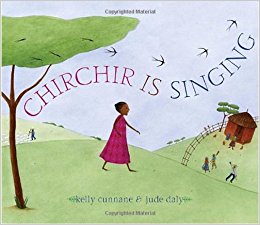
Chirchir is Singing
Any child who’s ever felt frustrated that she’s not big enough to help will identify with Chirchir. Chirchir tries to assist each member of her family in their chores on the farm. Each time, she’s eventually told “little one, this work is not for you.” From hoeing potatoes to helping build the fire, something always seems to go wrong.
Chirchir, and her whole family, discover that there is one thing she can do that brings peace and comfort to her baby brother. It’s also the gift that soothes them all while they work. (Recommended for ages 4 – 9)

For You Are A Kenyan Child
This lighthearted book follows a little boy whose curiosity makes him forget his job of watching Grandfather’s cows. He keeps intending to return to them, but there are just so many interesting things to see! Kids will also learn some basic Kiswahili as the little boy pops into place after place. (Recommended for ages 4 – 9).
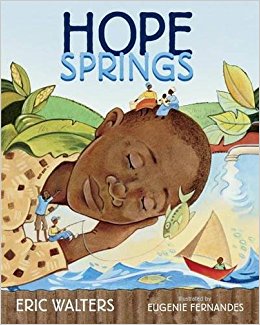
Hope Springs
Hope Springs is based on a true story of children in a Kenyan orphanage who wanted to share their water with the neighboring community. Some of the women in this village had tried to deny water to the children before the orphanage built its own well.
Boniface, one of the oldest children, learns from their houseparents that when people are afraid there will not be enough for their own children, they can be mean to others. This is why the villagers tried to deny them water.
After the well at the orphanage is finished, Boniface tells his houseparent Henry that “we are not desperate, so perhaps we can be kind.” (Recommended for ages 5 – 10).
Additional Books
As you learn about Kenya, I also encourage you to take a look at these books about Nobel Peace Prize winner Wangari Maathai, which I’ve reviewed in earlier blog posts:
Mama Miti: Wangari Maathai and the Trees of Kenya
Children’s Activities About Kenya
Make a Kenyan Dessert
I wanted to incorporate Kenyan cooking into our explorations of the country. I found lots of meal ideas that looked delicious. Since our 5 year old has very strong opinions about what he won’t eat, I decided our best bet was to make a dessert together.
We made this recipe for coconut and sweet potato pudding. It was very simple and there were lots of ways our son could help me make it. I also appreciated that it was a dessert that didn’t have too much sugar in it.

A couple of notes about the recipe. I didn’t know what “mixed spices” was (I later learned it’s similar to pumpkin pie spice.) So, I substituted 1/4 t. nutmeg for that. Also, I didn’t use fresh coconut, though I’m sure that would have made it far more delicious!
Play the Kenyan Game of Mbao (Mancala)
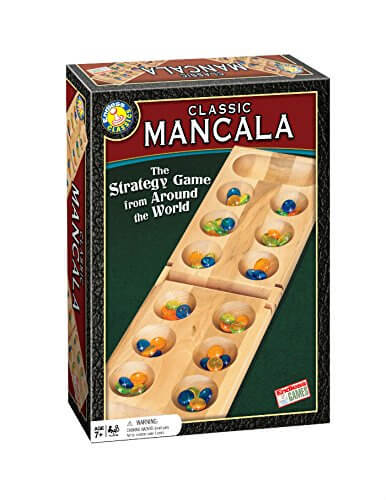
In many different African countries, children and adults alike play a game where players move seeds around a wooden board. You may know this game by the name mancala. It Kenya it’s called mbao.
Two players sit across from each other with a wooden board in between them, which has two rows of holes. The holes can also be carved into the dirt. Players start with an equal number of seeds and place them in a row of holes that is closest to them.
On each turn, the players take all the seeds in one hole and place them in other holes, one at a time and in clockwise order. If the last seed lands in an opponent’s hole, the first player captures all the seeds in it. The two players take turns moving the seeds until one player does not have any seeds left in the holes on his or her side.
Facts About Kenya
- Children in Kenya generally learn to speak at least three languages. They begin with their tribal language (for example Kikuyu, Kamba, or Dholuo.) In the first three years of school, children are taught in Swahili. In later years of school, they are taught in English. Both English and Swahili are the official languages of Kenya.
- Paleontologists have discovered that the first humans (homo sapiens) lived in eastern Africa, in what is today Kenya and Tanzania.
- Kenya is home to more than 50 reserves and parks that protect animals such as lions, elephants, and rhinos.
- Coffee and tourism are the biggest sources of income for Kenya.
How to be a Friend to Kenya
This month I decided to add a new feature to Global Citizen Kids Club: suggestions on how to be a friend and neighbor to people who live in the country we’re exploring.
Learn basic Swahili greetings
As of 2015, there were about 136,000 people born in Kenya who now live in the United States. Some of them may be living in your community. Although English is one of the official languages of Kenya, being able to greet your neighbor in Swahili shows that you care about their culture.
Purchase a fair trade gift made by a Kenyan artisan
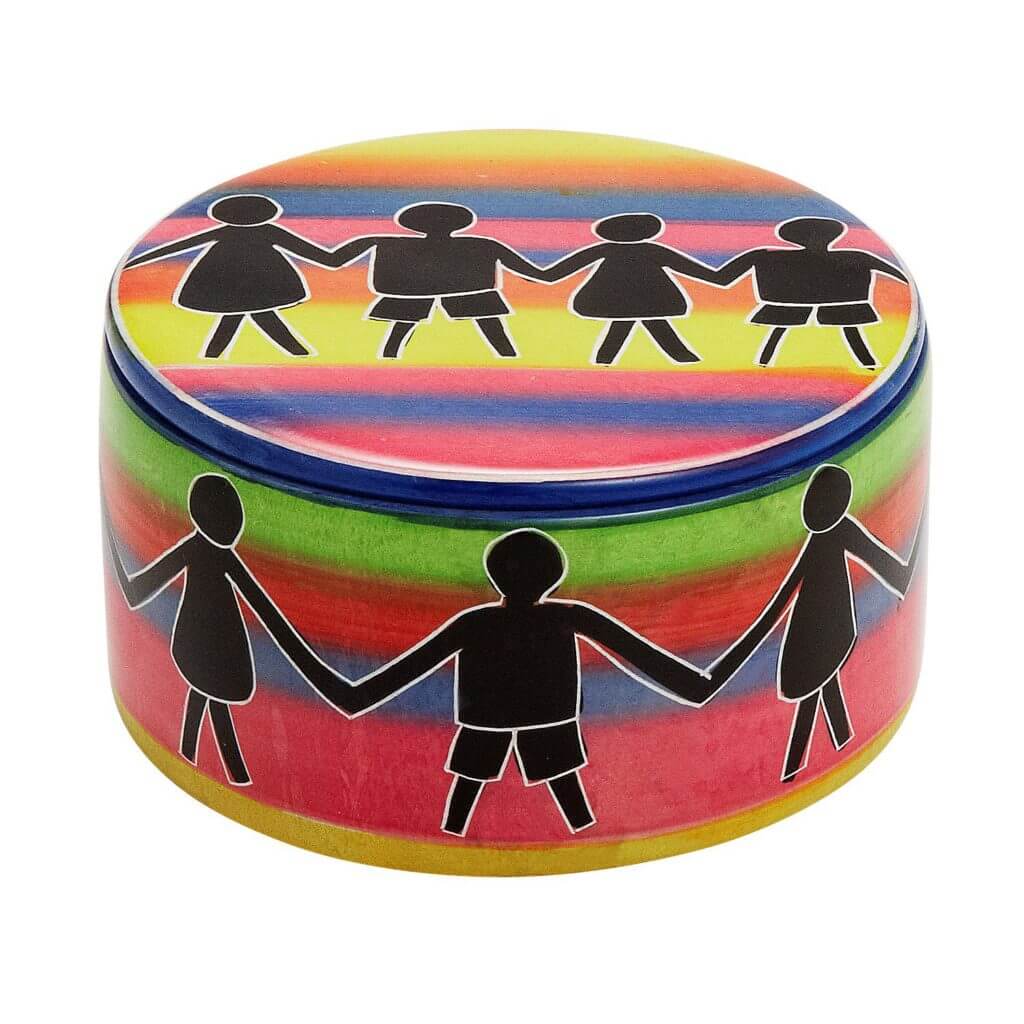
Your family can fight poverty, climate change, and economic crisis by shopping fair trade. When you choose fair trade items, you know that the person who made the item was fairly compensated for their work. One of our family’s favorite sources of fair trade gift items is Ten Thousand Villages. You can find a variety of gift items made by Kenyan artisans from Ten Thousand Villages here.
Give to fight famine in Kenya
Severe drought in eastern Africa has caused more than 16 million people, including many in Kenya, to be on the brink of starvation. Kids can help by giving to organizations responding to this crisis, and by asking others to join them. There are many different groups fighting famine in Eastern Africa. Two that our family supports are UNICEF and Oxfam.
Be an activist
Here at The Barefoot Mommy, we’re big believers that kids can be young activists for a better world. This summer, the U.S. Congress is considering a budget that includes deep cuts to life-saving foreign aid. These programs support basic health and nutrition programs that affect children in many countries, including Kenya.
In this blog post, I have a printable letter template/coloring activity. You can use it to write a letter to your members of Congress as a family about protecting foreign assistance.
