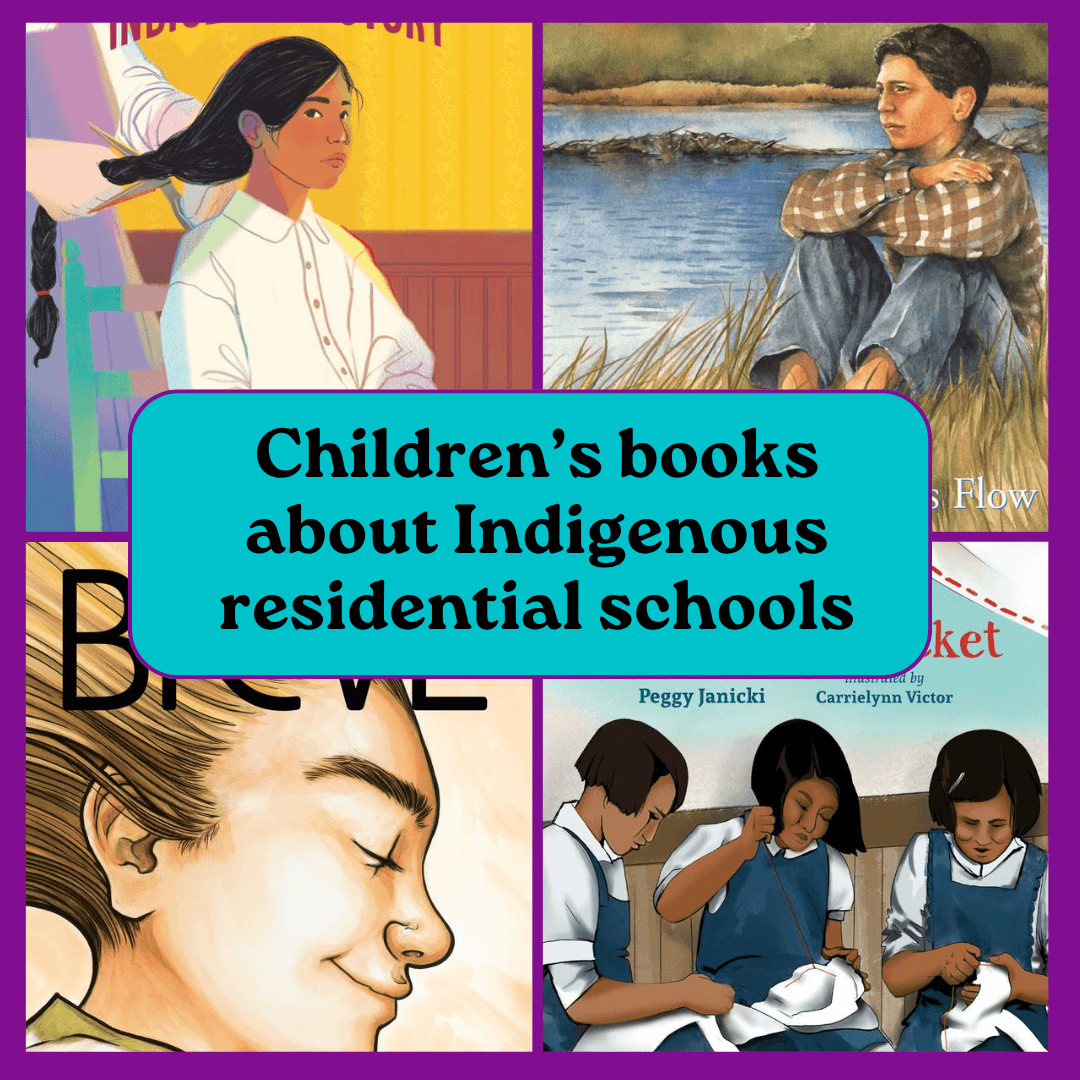
In recent years, Indigenous peoples in Canada and the United States have called on both these countries to confront their history of abusive residential schools (called boarding schools in the U.S.) for Indigenous children. For 130 years in Canada and 100 years in the U.S., many Indigenous nations and families were required to send their children to these schools.
Students at residential schools were separated from their families (sometimes for years at a time). They were punished for speaking their languages and practicing their cultures, and frequently suffered malnutrition, poor health, and emotional and physical abuse. Residential schools in Canada and boarding schools in the United States played a key role in both governments’ goals of stripping entire peoples of their cultures and assimilating them into white society. Some of these schools were run directly by governments, and others were operated by churches.
Talking about such a painful topic with children and youth is not easy. It is a part of our history, however, that cannot be ignored. Fortunately there are many sensitive and age-appropriate books available to guide these discussions.
In this post I share children’s books and young adult books about the history of residential schools in both countries.
Orange Shirt Day
In addition to reading a book on this list, young people can also participate in Orange Shirt Day, held annually on September 30th. To make an even wider impact, students can ask their schools to officially participate in Orange Shirt Day.


Disclosure: For your convenience, this post contains affiliate links. If you purchase items through these links, I may earn a small commission at no additional cost to you. You can read my full disclosure policy here.
Children’s books about Indigenous residential schools in Canada
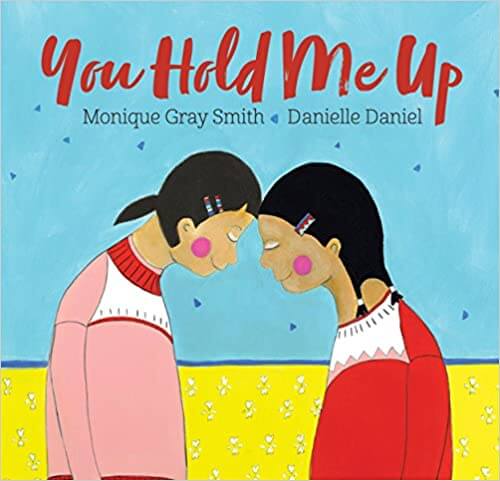
You Hold Me Up by Monique Gray Smith. Illustrated by Danielle Daniel.
Purchase from Bookshop.org (supports independent bookstores and my business.)
How do we support each other and show compassion to one another? This simple but profound book shows children all the ways that their loved ones care for them (and how they can, in turn, care for others.)
We see Indigenous children and families sharing a meal, picking flowers, and snuggling in a cozy chair. The text tells the youngest readers that “you hold me up” when you comfort, respect, and listen to others. The author’s note mentions that this book is written in a “spirit of reconciliation and healing” within the context of residential schools. (Recommended for ages 2 – 5, Cree, Lakota, and Scottish author.)
Related post: Anti-bias books for preschool and kindergarten
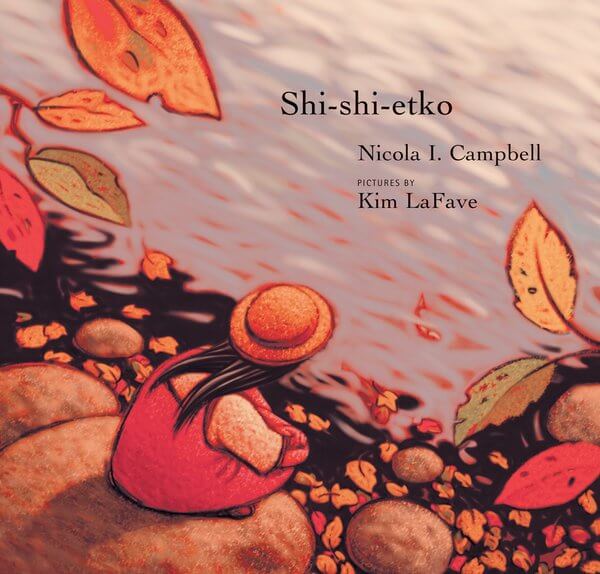
Shi-shi-etko by Nicola I. Campbell. Illustrated by Kim LaFave.
Purchase from Bookshop.org (supports independent bookstores and my business.)
This tender picture book follows a young girl in her final days with her family before going to residential school.
Shi-shi-etko’s parents and Yayah encourage her to to remember their people, their land, and their songs and dances because it will be so long until she can experience them again. The child takes in the details of as many insects, rocks, and fish as she can, trying her best to memorize them. Her father takes Shi-shi-etko out in their canoe, where she soaks in every aspect of the experience as he sings a paddle song. Her Yayah gives her a leather bag to keep all her memories safe.
While this is a somber book, it is not frightening, making it a good choice for preschool-age children. An author’s note at the beginning explains more about residential schools. (Recommended for ages 4 – 8. Nłeʔkepmx, Syilx, and Métis author.)
Related post: Do’s and don’ts for teaching about Native Americans in preschool and kindergarten
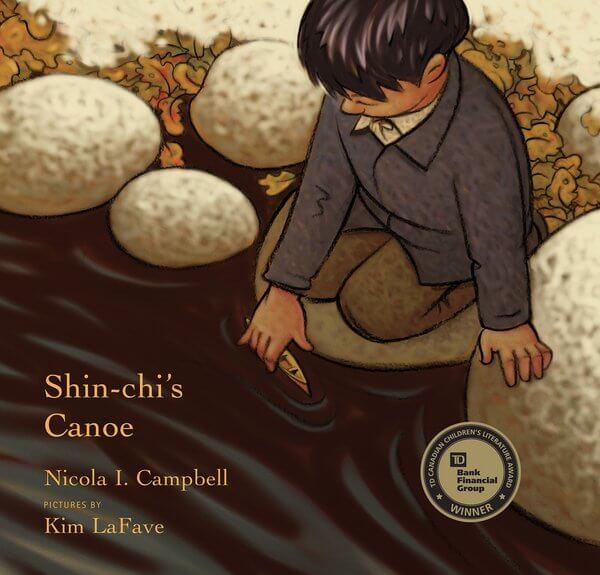
Shin-chi’s Canoe by Nicola I. Campbell. Illustrated by Kim LaFave.
Purchase from Bookshop.org (supports independent bookstores and my business.)
In this follow-up book to Shi-shi-etko, her young brother Shin-chi is preparing to attend residential school for the first time. Their parents tell them that if they had any say at all, they would keep them at home with them. Shi-shi-etko reminds her brother that they aren’t allowed to talk to each other at school, and they have different names there too.
Shin-chi isn’t used to sleeping alone, and each night he clutches the tiny dugout canoe his father made for him. He longs for the end of the school year, so that he can return to the people and place that he loves. (Recommended for ages 5 – 9. Nłeʔkepmx, Syilx, and Métis author.)
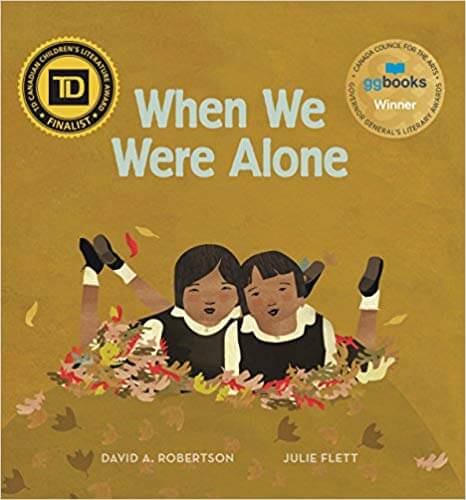
When We Were Alone by David A. Robertson. Illustrated by Julie Flett.
Purchase from Bookshop.org (supports independent bookstores and my business.)
As a young girl spends the day with her Nókom (grandmother), she has many questions about why Nókom does the things she does. Why does she dress so colorfully? Nókom tells her that when she was a girl and was sent to a school far away from home, they had to wear dark clothes. But sometimes, when the children were alone, they would roll around in the fall leaves, so they could be colorful again.
Each question reveals another aspect of the tragic history of residential schools, but in a way that is age appropriate for young children. Nókom always shares a way that the children resisted their oppression and remembered who they were, when they were alone. (Recommended for ages 4 – 8. Cree author. )
Related post: 11 ways to observe Indigenous Peoples’ Day with children
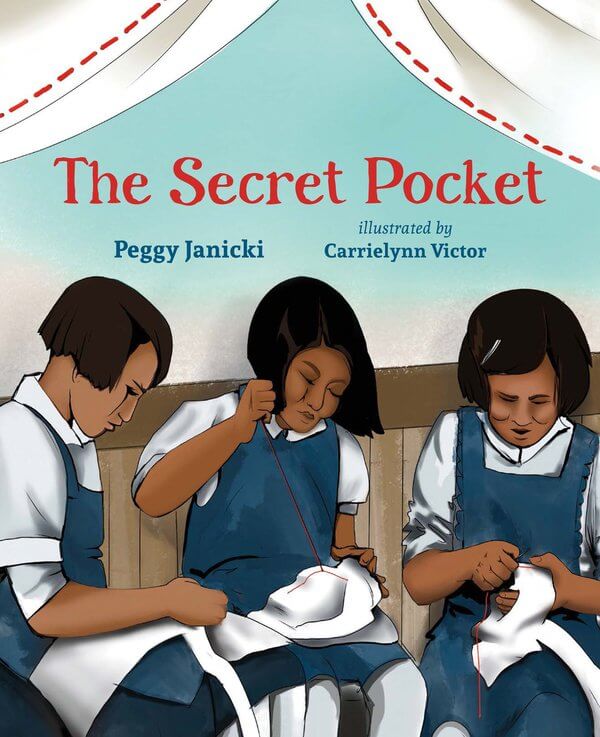
The Secret Pocket by Peggy Janicki. Illustrated by Carrielynn Victor.
Purchase from Bookshop.org (supports independent bookstores and my business.)
This moving true story shares how the author’s mother and her friends resisted abusive treatment at the Catholic Lejac residential school in the ways that they could.
Mary is so young when she and her two siblings are taken to Lejac that there aren’t even any classes for her age group. Hunger, cold, and homesickness become her constant companions. The joyful moments in the book all have to do with her family, especially when her father surprises her by picking her up for Christmas break in a horse-drawn sleigh.
Over time, Mary and the other children find ways to sneak food out of the kitchen, but the most difficult aspect was hiding the food. When they spot a rag bag, the girls realize they can sew secret pockets into their clothes to ensure they won’t go hungry. This becomes a symbol of their ingenuity and their will to survive. (Recommended for ages 6 – 10. Dakelh author of the Nak’azdli Whut’en First Nation.)
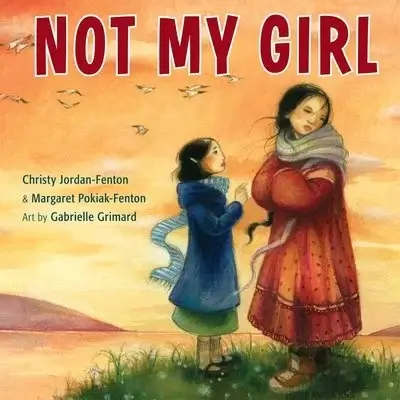
Not My Girl by Christy Jordan-Fenton and Margaret Pokiak-Fenton. Illustrated by Gabrielle Grimard.
Purchase from Bookshop.org (supports independent bookstores and my business.)
What was life like for Indigenous children who spent years in residential schools once they returned home? This picture book is an adaptation of the longer chapter book A Stranger at Home. Both books detail the difficulty that Margaret Pokiak-Fenton had being accepted back into her community after returning home.
With her hair cut short and thin from poor nutrition, Margaret’s mother doesn’t even recognize her when her boat arrives. Margaret used to love whale blubber muktuk, but the first time she tries eating it again, she can’t swallow it. Even the family dogs bark at her, because she’s lost her family’s scent.
Over time, Margaret finds ways to reconnect with her family, her people, and her culture. She becomes skilled at commanding the sled dogs, finding a special purpose within her family. (Inuvialuit author. Recommended for ages 6 – 10.)
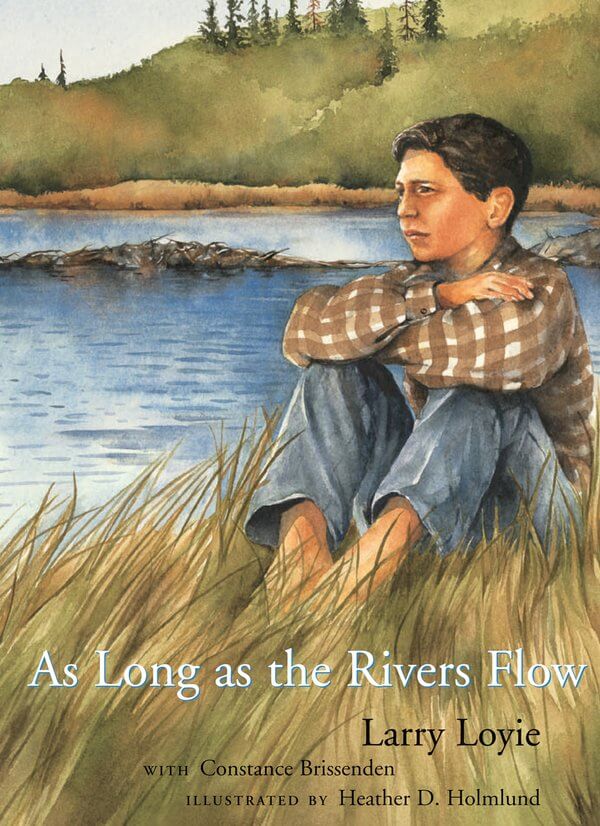
As Long as the Rivers Flow by Larry Loyie with Constance Brissenden. Illustrated by Heather D. Holmlund.
Purchase from Bookshop.org (supports independent bookstores and my business.)
This short illustrated chapter book is an autobiography of the author’s last summer with his family before being forced to attend residential school. It’s an ideal book for helping children understand the close-knit family networks and rich cultures that so many Indigenous children were separated from.
In the summer of 1944, Lawrence overhears his mother and Kokom whispering about children being taken from their families. He’s worried and confused, though his many summer activities keep him from dwelling on these thoughts. Lawrence and his siblings care for an abandoned baby owl until it’s time to go to their family summer camp near the river. He’s so excited about fishing, berry gathering, and swimming that he can’t decide which to do first. At the end of a memorable summer that even includes an encounter with a grizzly bear, Lawrence’s parents share the awful news that he will have to attend residential school.
After the story, educational notes and photographs about Lawrence’s experience at residential school are included. (Recommended for ages 7 – 10. Cree author.)

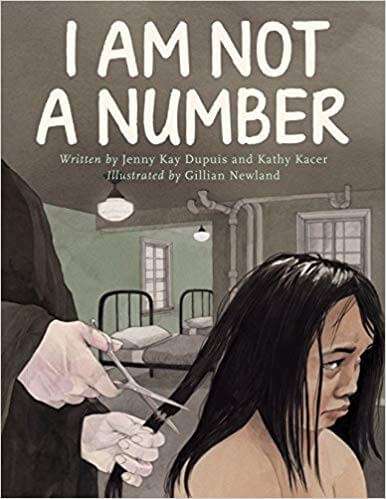
I Am Not a Number by Jenny Kay Dupuis and Kathy Kacer. Illustrated by Gillian Newland.
Purchase from Bookshop.org (supports independent bookstores and my business.)
In this painful and courageous story, Dupuis tells the true story her grandmother’s suffering at a residential school. As she’s taken away from her family, her mother cries out that Irene should never forget her family, or who she is.
Irene soon discovers the meaning of her mother’s cries. Sister Mary tells Irene that she no longer has a name, and will be known as student 759. She cuts off Irene’s long hair, a great source of pride in her culture. Irene is abused when she speaks her native language to another child. Insider herself, Irene continues to resist how she is being treated, remembering her name, family, and culture. When she and her brothers come home for the summer, her parents are determined to keep the children from going back to boarding school, no matter what. (Recommended for ages 8 – 12. Ojibway and Anishinaabe author. Content note: mentions of physical abuse.)
Shop the entire list on Bookshop.org! (Supports independent bookstores and my business.)
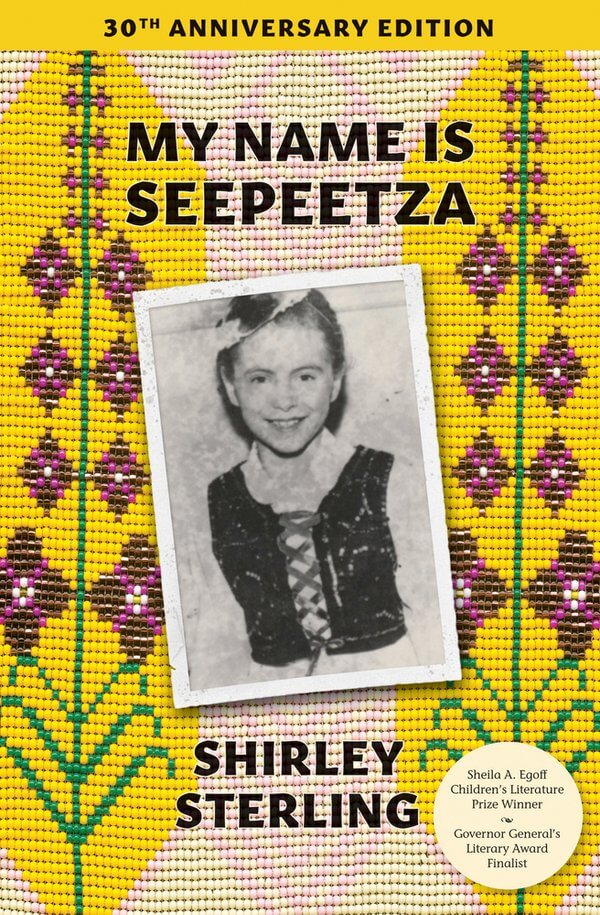
My Name Is Seepeetza by Shirley Sterling.
Purchase from Bookshop.org (supports independent bookstores and my business.)
This short but powerful novel is inspired by the author’s experience of attending the Kamloops Indian Residential School in British Columbia during the 1950s. The book is made up of journal entries by Seepeetza, who is forced to go by the name Martha Stone at school. She frequently details the many ways the students must endure terrible conditions, disrepectful treatment, and the threat of physical abuse. Seepeetza, who has light skin and blue eyes, is also bullied by a classmate for “looking white” when adults aren’t around.
There are also moments of happiness, especially when she gets to check out her favorite books from the library, or another child risks using their Indigenous language at playtime. Her visit home for Christmas is the highlight of her year. While many of the details are hard to read, the author captures a child’s voice and matter-of-fact manner so well that readers will feel connected to Seepeetza. (Recommended for ages 9 – 12. Nlaka’pamux author. Content note: mentions of physical abuse.)
Related post: Uplifting resistance to injustice when we teach kids hard history
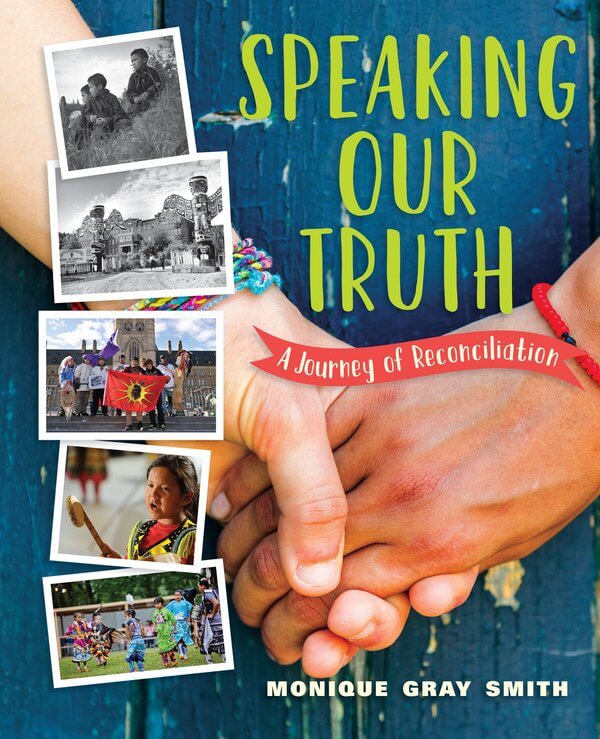
Speaking Our Truth: A Journey of Reconciliation by Monique Gray Smith.
Purchase from Bookshop.org (supports independent bookstores and my business)
From 2008 to 2015, the Truth and Reconciliation Commission of Canada conducted extensive interviews and community events to document the impact of residential schools and ground the commission’s Calls to Action. Monique Gray Smith’s book draws from and mirrors their process to help older children and youth understand this history and how they can act on what they’ve learned.
There are three primary chapters, which Smith explains are based on a three-strand braid of sweetgrass. Chapter 2, “Honesty”, uses Survivors’ stories, along with a brief history of First Nations, to explore the wide-ranging impact of residential schools. Chapter 3, “Love,” helps young people understand the process that the Truth and Reconciliation Commission used and what they learned. The final chapter, “Kindness and Reciprocity,” prompts readers to reflect on what they’ve learned and to take action. Specific suggestions are included as well as reflection questions.
The use of both elders’ stories and young peoples’ voices throughout the book makes this difficult topic accessible. There are full color illustrations throughout that will also draw reluctant readers into the book. (Recommended for ages 12+. Most of the book is appropriate for ages 10+, but adults may want to preview chapter 2, which has some disturbing details of physical abuse and neglect. Cree, Lakota, and Scottish author.)
Children’s books about Indigenous boarding schools in the United States
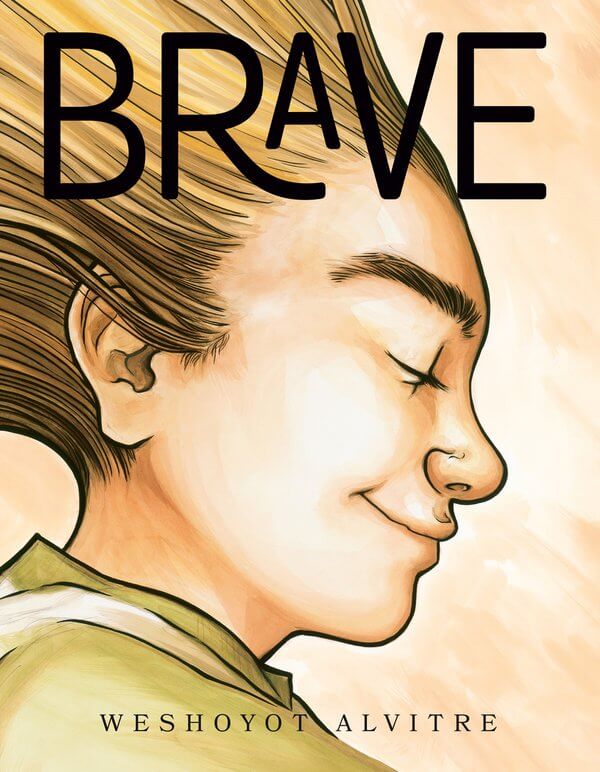
Brave by Weshoyot Alvitre.
Purchase from Bookshop.org (supports independent bookstores and my business.)
While this book doesn’t directly tell much about boarding school experiences, it is key for understanding the meaning of long hair in many Indigenous cultures. Because boarding schools cut students’ hair as soon as they arrived, this context about the meaning of hair is important.
An Indigenous boy loves having long hair, but he has to be brave when his mother untangles the knots in it each day. He hopes that one day his hair will be as long as his father’s, or as long as the dancers at the intertribal powwows he attends. He has another moment of bravery when other boys at school tease him for his braid, and he speaks up for himself.
After his mother contacts the school, the boy’s father tells him how he had to be brave when his hair was cut at private school. Detailed, evocative illustrations show the child’s father, grandfather, and great-grandfather practicing bravery even as schools and the military force them to cut their hair short. Finally, his father reminds the child that having long hair is a sign of pride in himself, his ancestors, and his traditions. (Recommended for ages 4 – 8. Tongva and Scottish author.)
Related post: Indigenous children’s books that take place in the present day
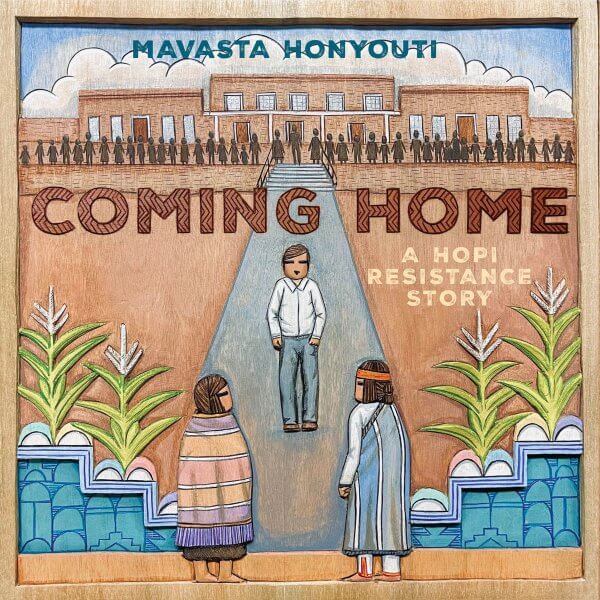
Coming Home: A Hopi Resistance Story by Mavasta Honyouti. Translated by Marilyn Parra.
Purchase from Bookshop.org (supports independent bookstores and my business.)
Woodcarver Mavasta Honyouti shares the experiences of his kwa’a (grandfather) at boarding school in this uniquely illustrated book. Kwa’a’s parents resisted sending him to school, even when government agents threatened them with jail. Eventually the agents found Honkuku and took him to a school 50 miles from home. There he was forced to choose a new name, cut his hair, and stop speaking Hopi. Clyde, as Honkuku was now named, and his friends tried running away more than once. They were punished harshly.
The book’s emphasis is the life that the author’s kwa’a chose once he was allowed to return home. It’s clear that despite the school’s attempt to separate him from Hopi lifeways, he chose to embrace them. (English & Hopi bilingual picture book. Recommended for ages 6 – 10. Hopi author. Content note: Mention of physical abuse.)
Want to offer children something better than whitewashed American history? My guide From the Margins to the Center can help!
Click on the image below to learn more.

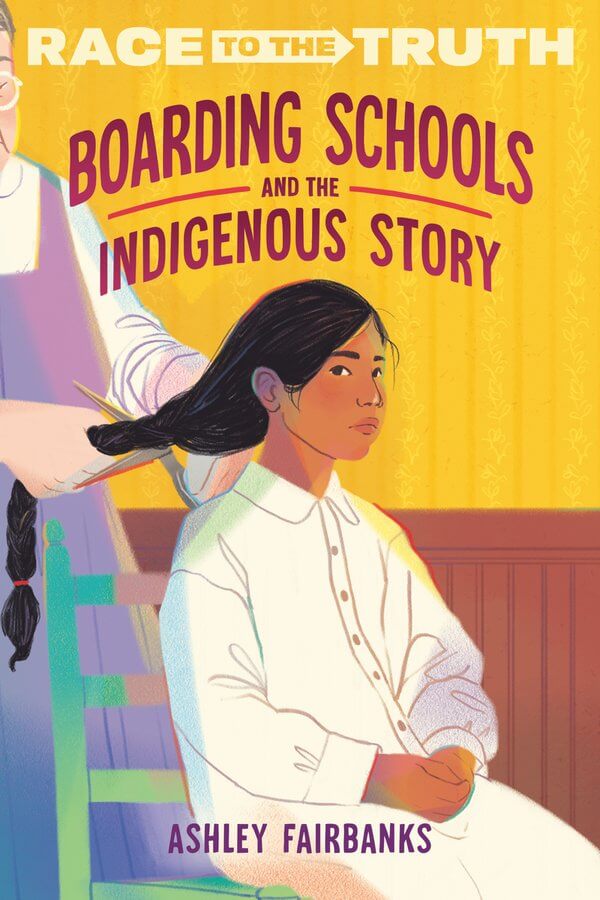
Boarding Schools and the Indigenous Story by Ashley Fairbanks.
Purchase from Bookshop.org (supports independent bookstores and my business.)
I wish this book had been available last year when I was pulling together a homeschool U.S. history curriculum for my middle schooler. It sensitively portray the generations-long impact of boarding schools on Indigenous communities. Fairbanks also provides a solid and accessible history of tribal nations from pre-colonization through present day. This is important for understanding why and how boarding schools were central to the goal of colonizing Indigenous nations and stripping people of their cultures.
Fairbanks explains important concepts and terms like genocide and resilience, frequently encouraging young readers to imagine how they would feel if they were forced to give up important parts of who they are. Readers will learn how boarding schools impacted people long after they left them, affecting parenting practices and the ability to fit into their communities. While the history shared in the book will challenge readers and likely stir up a number of emotions, it is sensitively written in a way that’s appropriate for most middle schoolers.
(Recommended for ages 10+ if reading with adult support, or 12+ for reading independently. Anishinaabe author. Content notes: mentions of the topics of physical abuse and sexual violence, though details are avoided.)
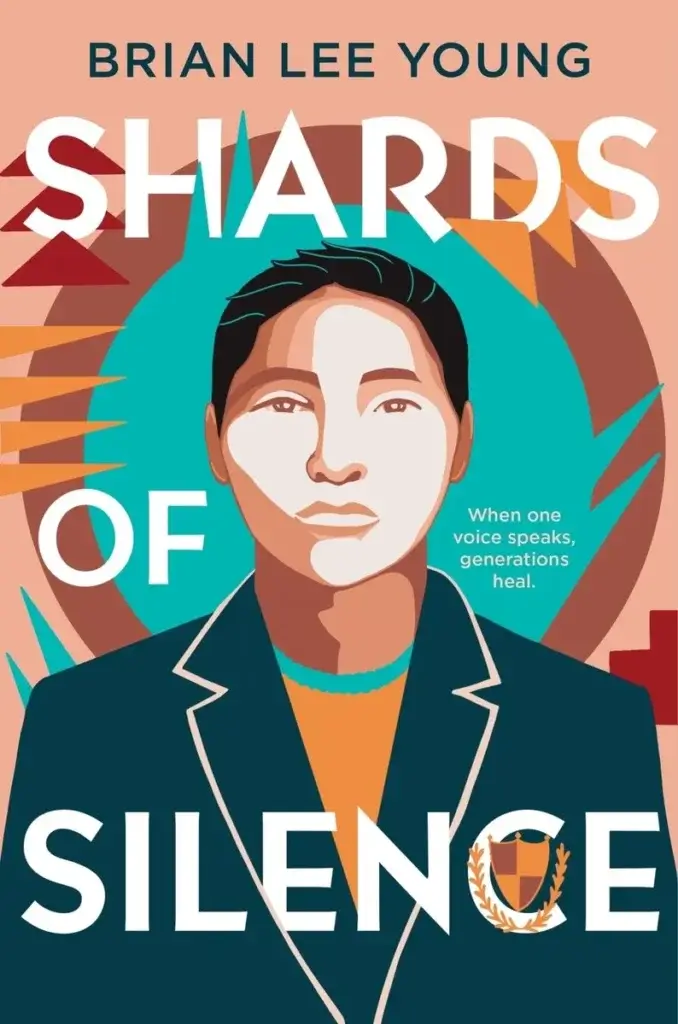
Shards of Silence by Brian Lee Young.
Purchase from Bookshop.org (supports independent bookstores and my business)
This thoughtful novel takes place in the present day, while also shedding light on how the boarding school era impacted Indigenous elders.
Fifteen-year-old Derrick Hoskie is the only student from his Navajo Reservation who’s been accepted into the elite Sagefield Academy in Connecticut. Derrick must juggle the pressures of keeping his scholarship in a school with extremely high academic expectations and competing in both football and wrestling. He battles homesickness and guilt for being so far away as his great grandmother Másání Mildred’s health deteriorates. If all that isn’t enough to deal with, as the only Native student at Sagefield, he gets continual questions from ignorant students about whether he lives in a tepee and why he has short hair.
Whenever Derrick talks with Másání Mildred, she tells him that he doesn’t have to stay at the boarding school. Her questions about whether anyone is hurting him make Derrick wonder what her childhood experience at an Indigenous boarding school was like. Family members discourage him from asking her both because of her heart condition and because of the Diné principle of doo ‘ajínída that discourages talk about negative things.
Then a Sagefield alum who is Native introduces Derrick to the meaning of Orange Shirt Day. His need to understand Másání Mildred’s experience prompts Derrick to ask his elders to break their silence.
(Recommended for ages 13+. Prose novel. Diné author. Content note: Prescription drug abuse.)