
Over the past decade, immigrants and refugees in the U.S. have faced increasingly cruel treatment and hateful rhetoric. I’ve felt angry, heartbroken, and sick at how many political leaders (from both parties) are scapegoating migrants for all kinds of problems they are not responsible for. I first wrote a version of this post in 2017, and I’m updating it the day after Trump’s inauguration as 47th president. Within hours of becoming president again, he signed a flurry of hateful executive orders that will endanger immigrant families. As we consider how our families can support immigrant children, it’s clear that this is no short-term crisis.
Resisting to these cruel policies will be a marathon, not a sprint. While the headlines about immigrant children and their families will eventually fade, we must not give up seeking justice with them.


Disclosure: This post includes affiliate links for your convenience. If you make a purchase through these links, I may earn a small commission at no additional cost to you. You can read my full disclosure policy here.
How families and educators can support immigrant children and parents
1. Talk with your children about what’s happening to immigrants in our country
What you decide to share will depend on your child’s age and their unique personality. But especially if you are citizens, I think it’s important to let children know in no uncertain terms that other kids are being hurt right now. It’s also vital that kids know good people are fighting back and standing with these kids and families.
Several years ago I shared my conversations with my 6 year old about participating in the Families Belong Together rally in our city.
If you’re not sure how much to say, I recommend this podcast (also available as a transcript) from Embrace Race. Although the interview was done at the beginning of the first Trump presidency, it’s very relevant as you talk with your kids about the current immigration crisis.

Talk with children about the different reasons people migrate, including poverty, violence, climate change, and persecution for being a political, ethnic, or religious minority. If you’re not sure where to start, try reading A Kids Book About Immigration together. (Full disclosure, I haven’t read this particular book yet, but I have read many other books in this series and found them helpful.)
2. Read books that help children develop empathy for immigrants and refugees
I have a list on Bookshop.org of 34 books about refugee and immigrant children, with titles for ages as young as 3 and as old as 14.
Discussing these books with children is as important as reading them. Let children’s questions and comments guide you, and look for their nonverbal reactions as you read. Make plenty of space to process feelings as well as build their knowledge.
3. Roleplay speaking up when others say misleading or racist things about immigrants
When political leaders are cheered for spreading hate and disinformation about immigrants, the effects are widespread. An increase in racist incidents, including those in elementary schools, has been reported after both the 2016 and 2024 elections.
It may feel a little stilted at first, but it’s so helpful to brainstorm with kids what they can do or say when a fellow student says something racist.
Model phrases such as:
- “I don’t like words like that.”
- “What you said is hurtful.”
- “What do you mean?”
- “There’s some history behind that word. Do you know it?”
- “When you say things like that, you’re talking about me.” (or, “you’re talking about people I care about.”)
- “Everybody deserves to be safe.”
Help young people think through who the other adults and kids are who they can go to, whether they’re at school, sports practice, or somewhere else.
Learning for Justice suggests a 4 part model when someone makes a bigoted remark. First, interrupt the prejudiced remark. Second, ask a simple question to find out more about why the speaker said what they did. Third, educate by explaining why a word or phrase is offensive. Fourth, echo anyone else who is speaking up. You can use their pocket guide with the four steps, or dive deep into the process in this PDF for educators.
To get my resource pack on talking immigration with children, just request access to my free Resource Library using the form below!
4. Speak up (with your children) to your members of Congress and local elected officials
Even if you’ve written, called, or emailed before now, keep the pressure up. Include your children in the process, and they’ll see that democracy is about so much more than voting. (But on that note, make sure you’re registered to vote!)
Enter your email in the box above to receive my free immigration resource pack, which includes a child-friendly letter writing template with a Keep Families Together graphic that kids can color. Years ago, one of the classes at my church’s Vacation Bible School used this to send messages to President Trump.
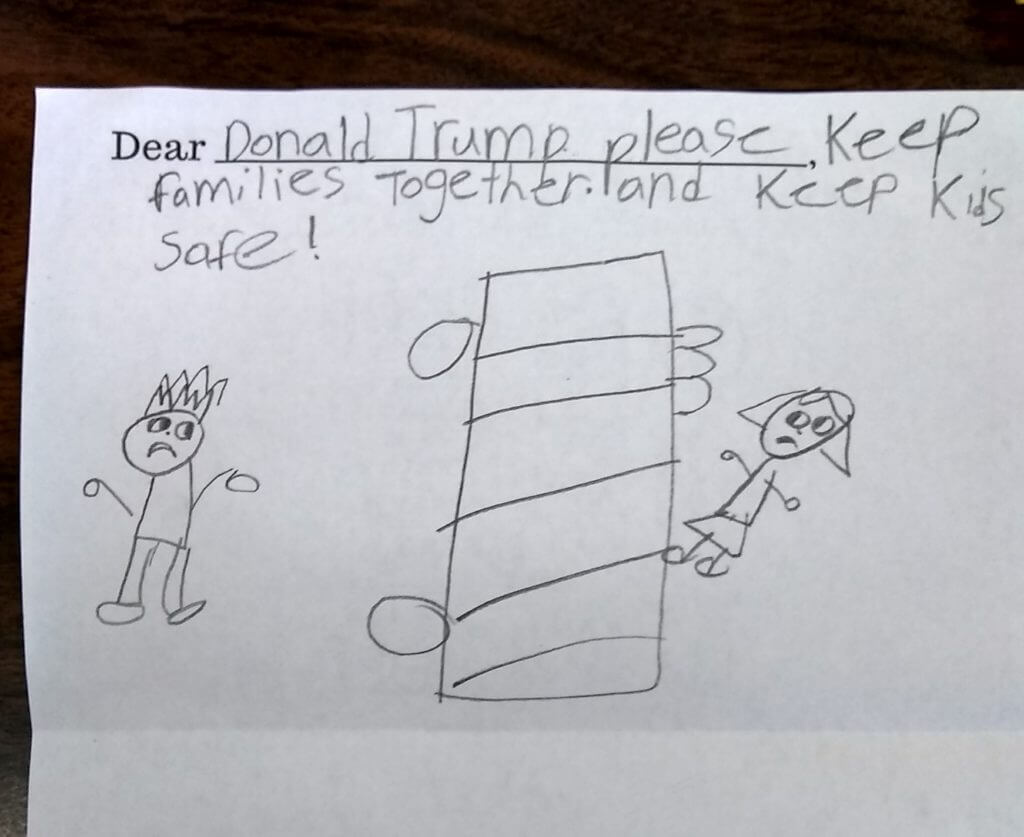
Even if your child doesn’t want to write their own letter, let them see you writing, emailing, or making a phone call. If you’re sending a letter, ask them if they’d like to sign their names too.
Ways you can ask your member of Congress to support immigrant children:
- Urge them to stop funding family detention. Call on them to demand that the Trump administration end this policy.
- Ask them to visit the U.S./Mexico border to learn first hand about the crisis.
- Ask them to attend immigration court when children have to represent themselves without a lawyer, to understand the obstacles and trauma children face.
I encourage you to also connect with an immigrant rights organization in your state. Join their email list so that you’ll know when you should contact your state legislators.
5. Post the action you’re taking on social media and ask friends to join you
When I post on social media letters I’ve written and calls I’ve made, so many friends have joined me in the days after. Your action will inspire others to act. It will also keep this issue from fading from our minds as other new crises are sure to flood the news.
Because of social media algorithms, it’s best to post your own personal text with a picture, rather than only sharing links or re-sharing an organization’s post. You can always include a link to a petition in the first comment of your post.

6. Encourage your school to share “know your rights” resources with all families
ICE agents will likely conduct raids and detain people in places that used to be relatively safe spaces. Some immigrants don’t know that they do not have to give information to police or ICE agents.
The ACLU has know your rights flyers available in a variety of languages. Local and statewide immigrant rights groups can also guide schools as to how to best support their learners and their families.
Learning for Justice has compiled a large number of resources for schools here to help them support immigrant families.
This guide from Colorin Colorado about what schools can do after an immigration raid provides important steps schools can take NOW to be prepared in the face of potential raids in their local communities.
7. Donate to justice organizations that support immigration children and provide legal aid
I recommend starting with local and statewide groups, as these often have the hardest time raising funds compared with national organizations.
Ask your children if they’d like to help raise money. They might set up a real or virtual lemonade stand, like Shannon Cofrin Gaggero’s activist kid, who raised $13,000 to support immigration children at the border through his lemonade stand.
8. Make protest art
Make posters that express your love and hope for immigrant families. You can hang them in your house, take them to a protest, or send pictures of them to your elected officials. Maybe you’ll want to get more ambitious and make lunchbox art like Nora Valdez.
The Butterfly Effect: Migration Is Beautiful is a youth-led project that has made origami butterfly displays and sent handmade friendship bracelets to youth at the border. (I’m not certain if the project is still active, so I suggest emailing them before making friendship bracelets to see if they’re still distributing them.)
9. Engage with your faith tradition

Are you a person of faith? Dive deeper into what your religion teaches about support for immigrants. Share powerful stories from your scriptures or traditions with your children. Encourage your congregation to engage with the needs of immigrant families and speak about how your faith tradition supports their rights.
10. Think about how you can express your values to friends and family who you deeply disagree with about immigration
I think it’s a waste of time to try to engage with strangers online about heated issues like immigration. However, you may be able to impact the people who are close to you. You also owe it to yourself to be true to who you are and what you believe around them.
United We Dream gives examples of conversation tips that are written for immigrants, but that can easily be adapted for those of us who are not.
If you’re white, I highly recommend Jennifer Harvey’s book Anti-Racism as Daily Practice. Jen is quite vulnerable and honest about the steps she’s taken (including a few missteps) with family members who don’t agree with her political beliefs.

2 responses to “Support immigrant children: what parents and educators can do”
Thank you very much for helping me find a way to help.
This is so, so important. Thank you so much for sharing these links- I’ve got lots of ideas and am sharing them with friends. Thank you! ✌🏻