I homeschool my son, and he loves Greek mythology. I suggested that he take World Mythology as an elective, and he enthusiastically agreed. While I was hoping I could find a curriculum to use, it turned out that most of what was available only featured Greek mythology.
So, we surrounded ourselves with a ton of books, including many of those in this post. We also used the Crash Course World Mythology video series, which is great for high school age. (Due to its fast pace, advanced vocabulary, and frank discussions of sexuality in myths, it’s not a great fit for most kids younger than 9th grade.)
Most of the books you’ll find in this world mythology book post are chapter books, though many of them are illustrated in full color. I’ve also included a few pictures books and a couple of graphic novels so that there’s something for every age and reading preference.
I also want to offer an explanation of the use of the word “myth.” Some of the stories that are featured in these books are from religions that are no longer largely practiced, while others are from living religions that are practiced today by many people. Calling the stories “myths” does not imply that they are untrue or unworthy of respectful reading and consideration.


Table of contents (click on the bolded words to go straight to that section.)
- Global anthologies and encyclopedias
- Tales from Africa and the African diaspora
- Tales from the Americas
- Tales from Asia
- Tales from Europe
Disclosure: This post may include affiliate links. If you purchase items through these links, I may earn a small commission at no additional charge to you. You can read my full disclosure policy here.
World mythology: global anthologies and encyclopedias
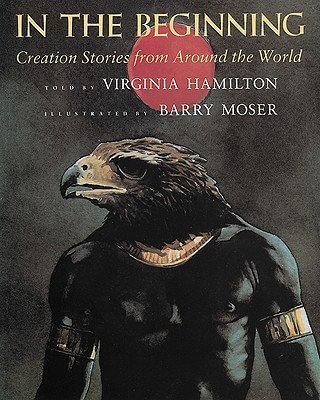
In the Beginning: Creation Stories from Around the World by Virginia Hamilton. Illustrated by Barry Moser.
Purchase from Bookshop.org (supports independent bookstores and my business!)
I loved using this book as a read aloud with my son in elementary school, when we would start our year off with the Montessori “Coming of the Universe” story. There are creation stories from many parts of the world, and Hamilton always includes notes at the end about which culture the story is from and other relevant points. (Recommended for ages 7+. Black author.)
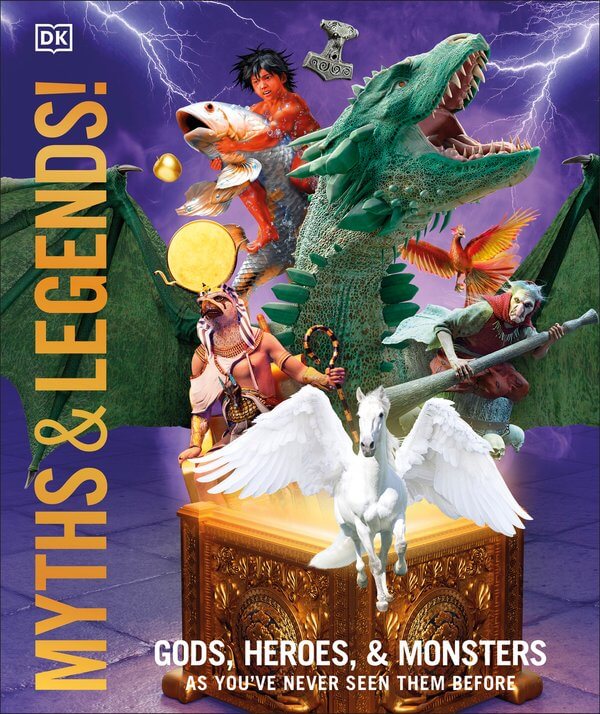
DK Myths and Legends! Gods, Heroes, and Monsters As You’ve Never Seen Them Before
Purchase from Bookshop.org (supports independent bookstores and my business!)
This vibrantly illustrated encyclopedia is truly global, with myths, legends, and sacred stories from every part of the world. Each entry is short, so it’s best used as a starting point for discovering stories that a child would like to find out more about in another source. It could also be used for comparing myths across cultures, such as similarities and differences in creation stories. (Recommended for ages 8+).
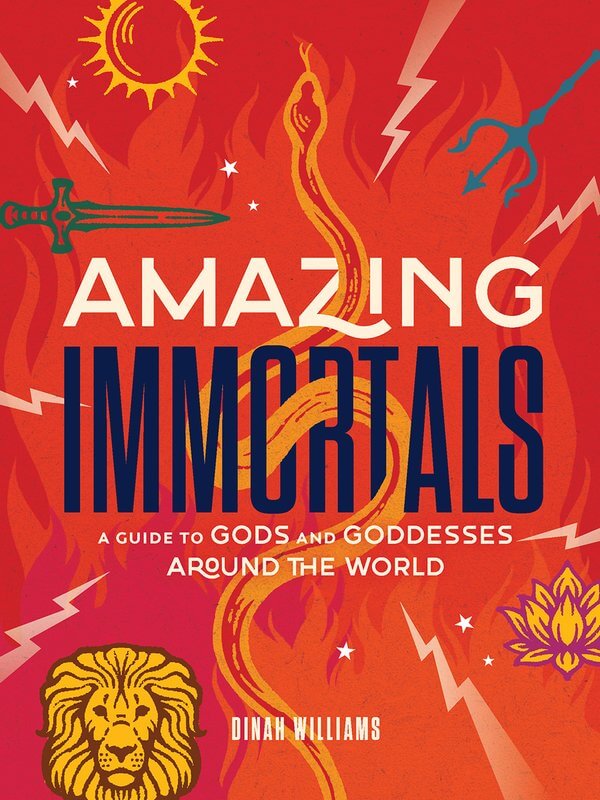
Amazing Immortals: A Guide to Gods and Goddesses Around the World by Dinah Williams.
Purchase from Bookshop.org (supports independent bookstores and my business!)
While the entries in this encyclopedia are fairly short, the striking full page color illustrations will make it popular with many children. The entries are organized by themes including creation, weather, tricksters, demigods, and animals. (Recommended for ages 8+. White author.)
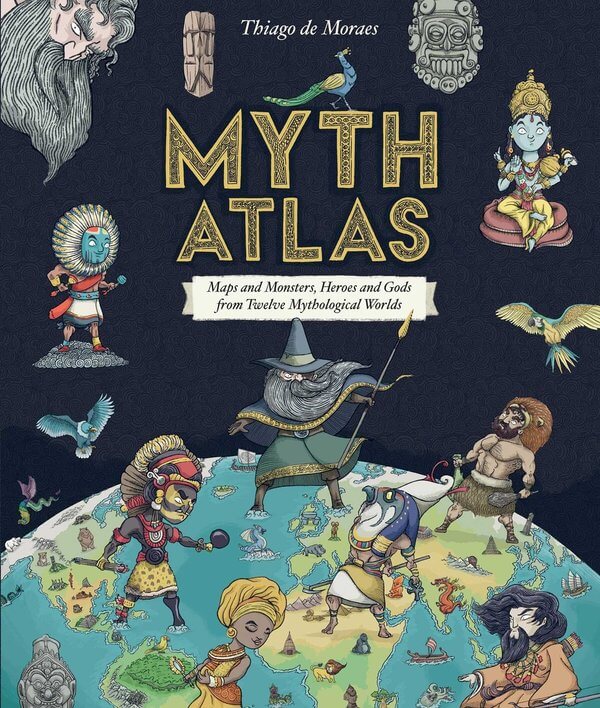
Myth Atlas: Maps and Monsters, Heroes and Gods from Twelve Mythological Worlds by Thiago de Moraes.
Purchase from Bookshop.org (supports independent bookstores and my business!)
This playful illustrated guide includes an introduction to mythology from twelve cultural groups (Polynesian, Japanese, Hindu, Slavic, Norse, Egyptian, Yoruba, Greek, Irish, Yanomami, Aztec, and Native American.) Each map might better be described as a diagram of how the culture envisioned the world (including its supernatural aspects), with key gods, human leaders, and mythical creatures included. A couple of short myths are also for each culture.
I am puzzled and disappointed that the author grouped hundreds of Indigenous nations with diverse cultures under one heading of “Native American.” He acknowledges their diversity in his introduction to that section, but it would have been better to focus on the sacred stories of one nation or a handful of nations that share language and cultural roots. (Recommended for ages 8+. White author.)
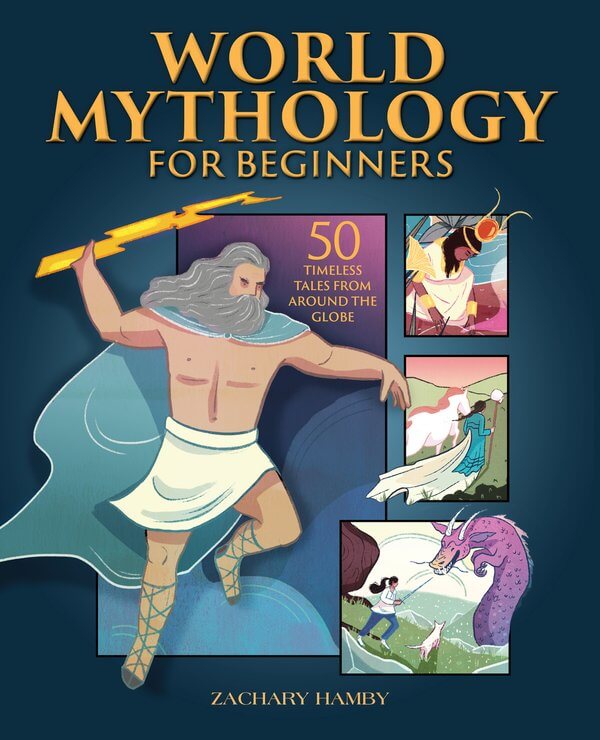
World Mythology for Beginners by Zachary Hamby.
Purchase from Bookshop.org (supports independent bookstores and my business!)
When I was piecing together a World Mythology elective for my son to go with the Crash Course World Mythology video series, we often used this book. It has a wide variety of myths told in two to three pages. I particularly appreciated the “big picture” boxes that put the myths in context and describe different ways a myth is sometimes told. This is a good choice for a read aloud, or for a child who doesn’t need illustrations to read on their own. There are illustrations, but they are simple and not very interesting. (Recommended for ages 10+. White author.)
Never struggle to find the right diverse, anti-bias, or social justice children’s book again!

World mythology: tales from Africa and the African diaspora

Anansi and the Talking Cloth by Caroline Brewer with Kwasi Asare. Illustrated by Ekua Holmes.
Purchase from Bookshop.org (supports independent bookstores and my business!)
In this modern spin on an Anansi tale, playful rhyming text and stunning collage illustrations share the story of kente cloth. Much more than a fabric, kente is “the talking cloth” that is closely linked to storytelling. After all, Anansi is known both for his storytelling and his weaving. Yet as the town’s Chief Griot, Anansi doesn’t always follow his own stories’ advice on how to “be good and wise.”
When Anansi starts purchasing machine-made kente cloth, he doesn’t seem to care that there are no stories woven into the fabric. But when the weavers close up shop because their businesses are being neglected in favor of the “mock kente cloth,” Anansi must figure out how to bring them back.
This color-saturated, visually engaging book deftly weaves together themes of culture, the value of artisans, and the need for community support. It’s a delightful read aloud. (Recommended for ages 5 – 9. Black American author with Ghanian author.)
Related post: Children’s books about weaving, sewing, and knitting
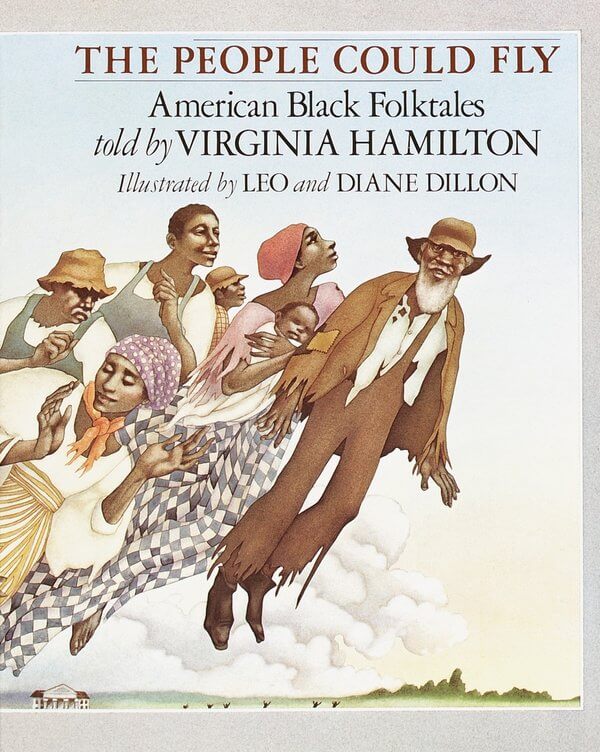
The People Could Fly: American Black Folktales by Virginia Hamilton. Illustrated by Leo and Diane Dillon.
Purchase from Bookshop.org (supports independent bookstores and my business!)
While Hamilton labelled these stories folktales, many of them were likely influenced by African trickster stories and spiritual beliefs that enslaved peoples brought to the United States. Hamilton brings her considerable gifts of storytelling to these traditional tales about animals who always outsmart those trying to catch them, supernatural tales, and fantasical stories of how enslaved people found freedom. (Recommended for ages 7+. Black author.)
Related post: Chapter books about Black history
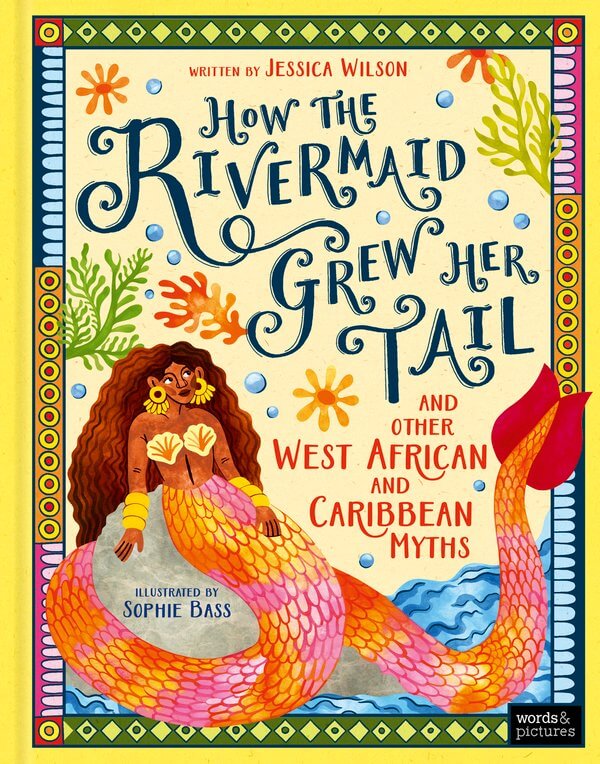
How the Rivermaid Grew Her Tail and Other West African and Caribbean Myths by Jessica Wilson. Illustrated by Sophie Bass.
Purchase from Bookshop.org (supports independent bookstores and my business!)
This collection of 13 West African and Caribbean myths is lavishly illustrated in bright colors, and each myth is introduced with information about the culture and location it comes from.
Wilson’s retellings are absorbing and come from a variety of cultural settings (Akan, Jamaican, igbo, Yoruba, Gullah, Wolof, and more.) Many readers will know about Anansi the spider, but “How Anansi Became King of All Stories” will also introduce them to the spider trickster’s mother and siblings. “Why the Sun and Moon Live in the Sky” provides an intriguing explanation for how the celestial couple went from sharing a home to living in two different places. Readers who want to see a cruel person face consequences for their actions will enjoy “The Evil Butcher Who Became a Calf,” a myth from Jamaica. My favorite tale in the collection was a moving reinterpretation of the Flying Africans myth that imagined George Floyd as a child drawing on this secret power when accused of theft by an angry store owner. (Recommended for ages 8+. Jamaican British author.)
Related post: Engaging children’s books by African authors
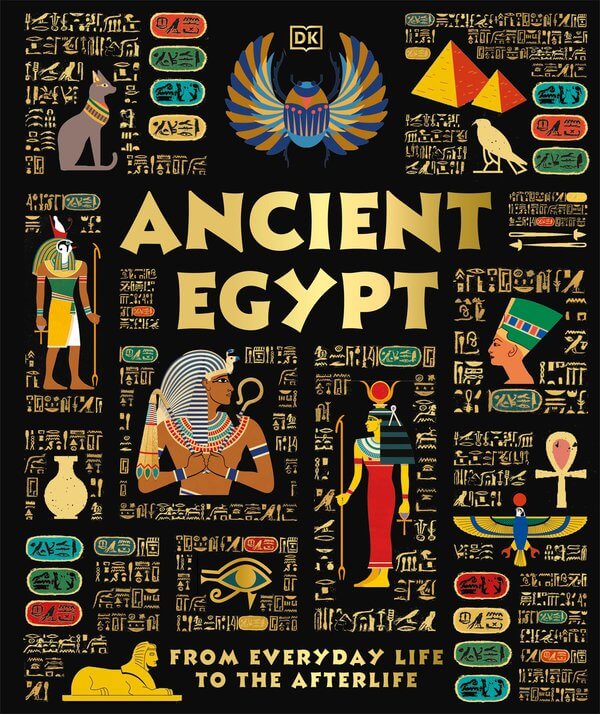
DK Ancient Egypt: From Everyday Life to the Afterlife.
Purchase from Bookshop.org (supports independent bookstores and my business!)
Like all DK guides, this one is jam-packed with illustrations and photographs of artifacts. The book is part guide to Egyptian mythology and part introduction to ancient history. Children interested in mythology will especially want to read the sections on gods and goddesses and the afterlife. (Recommended for ages 8+).
World mythology: tales from the Americas
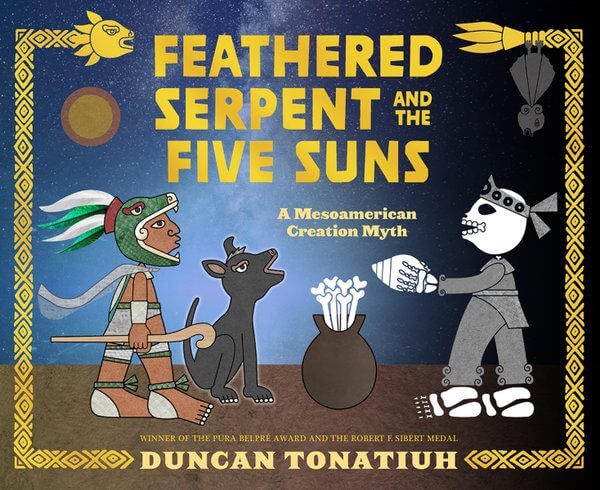
Feathered Serpent and the Five Suns: A Mesoamerican Creation Myth by Duncan Tonatiuh.
Purchase from Bookshop.org (supports independent bookstores and my business!)
Tonatiuh is one of my favorite illustrators, and he’s also a gifted storyteller. In this creation story passed down through the Aztec and Nahua civilizations, the feathered serpent god Quetzalcóatl must recover the bones of humans. After three failed attempts at creating people, the gods threw their bones into the underworld. His journey through the underworld is guided by Xólotl a spirit guide who has the appearance of a dog. (Recommended for ages 6+. Mexican American author.) Related and recommended read by Tonatiuh: The Princess and the Warrior: A Tale of Two Volcanoes.
Shop this entire list of world mythology books for kids and teens at Bookshop.org (supports independent bookstores and my business!)
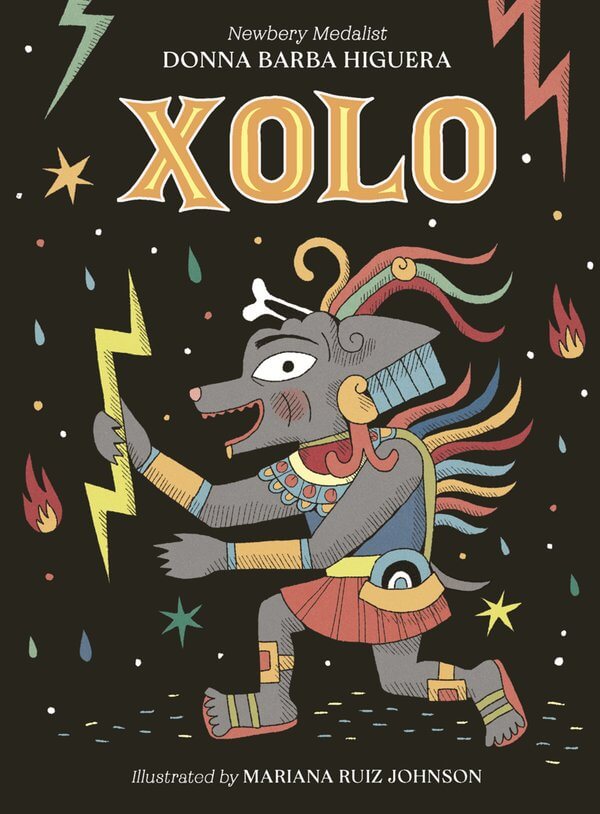
Xolo: How One Good Dog Saved Humankind by Donna Barba Higuera. Illustrated by Mariana Ruiz Johnson.
Purchase from Bookshop.org (supports independent bookstores and my business!)
In this reimaging of the myth about the creation of humans that Tonatiuh’s book above shares, Higuera wonders if Quetzalcoatl’s twin brother Xolotl might have been the true hero of the story, rather than the monster people spoke of.
The god of the underworld, Mictlantecuhtli, who the other gods have shunned, threatens their plans to bring humans back to earth. The timid Xolo, who longs for his brother’s affection, hopes for humanity’s return. Yet when the other gods decide to sacrifice themselves in a volcano in order to bring back humans, Xolo is too afraid to join them. While he cowers, Mictlantecuhtli steals all the human bones and takes them to the underworld.
The twins’ mother Chimalma is tired of their disagreements and orders Quetzalcoatl to carry the sun across the sky during the day. Xolo will carry the sun across the underworld during the night. This gives Xolo the unique opportunity to recapture the bones and bring humans back, if only he can find the courage. (Recommended for ages 7+. Mexican American author.)
Related post: Children’s books about Mexico
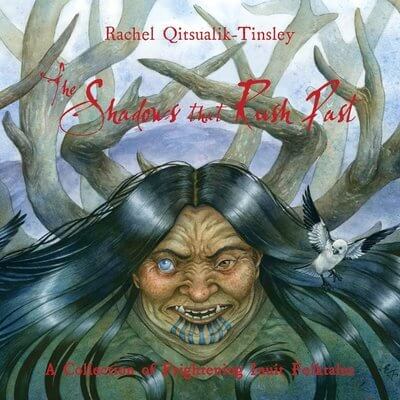
The Shadows That Rush Past: A Collection of Frightening Inuit Folktales by Rachel A. Qitsualik.
Purchase from Bookshop.org (supports independent bookstores and my business!)
This picture book re-telling of four Inuit stories about human confrontations with monsters is indeed frightening, so it’s best for readers who enjoy being scared a bit. A short introduction encourages children to think about how these tales of narrow escapes reveal insights about Inuit peoples over thousands of years. Qitsualik’s retellings are compelling and suspenseful and enjoyable to read aloud. (Recommended for 8+, though not for sensitive 8 – 9 year-olds. Inuit, Scottish, and Cree author.)
Related post: 11 ways kids can observe Indigenous Peoples Day

The Sea-Ringed World: Sacred Stories of the Americas by María García Esperón and David Bowles
Purchase from Bookshop.org (supports independent bookstores)
This collection of sacred stories spans 17 different Indigenous nations and peoples whose homelands stretch across what is today known as North and South America. The stories explore how people have understood their place in their land and the larger universe, and how humans and the divine relate to each other. This is a moving collection that helps readers understand a small portion of Indigenous wisdom that was passed down for centuries before European contact. (Recommended for ages 8 – 12. Mexican author.)
World mythology: tales from Asia
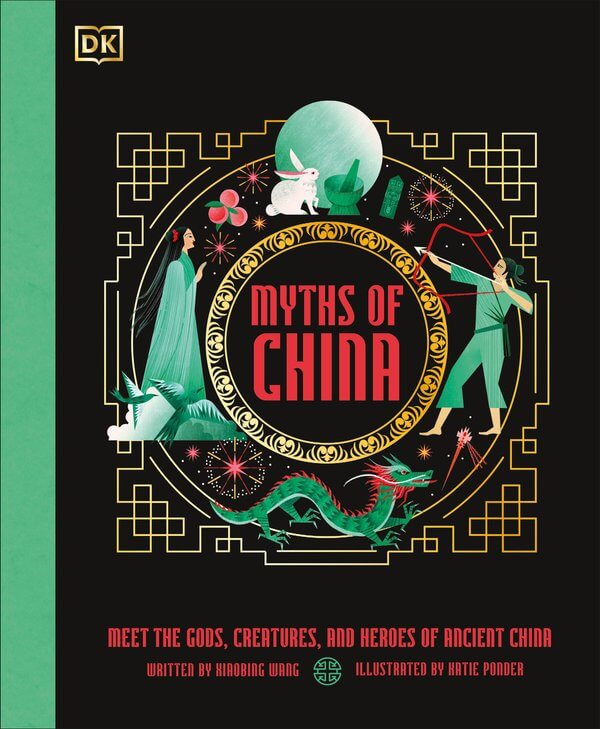
Myths of China: Meet the Gods, Creatures, and Heroes of Ancient China by Xiaobing Wang. Illustrated by Katie Ponder.
Purchase from Bookshop.org (supports independent bookstores and my business!)
The stylized, full-color illustrations in bright tones will immediately draw younger readers into this collection of short retellings of Chinese myths. Most of the myths are just two pages long. The tales are interspersed with one-to-two-page profiles of particular gods, goddesses, and topics like the zodiac. The tales are gathered under the categories of beginnings (primarily about creation), magical creatures, journeys and adventures, and love and friendship. (Recommended for ages 6 – 12.)

Prince of Fire: The Story of Diwali by Jatinder Verma. Illustrated by Nilesh Mistry.
Purchase from Bookshop.org (supports independent bookstores and my business!)
The Prince of Fire is a short chapter book adaptation of a portion of the Hindu epic The Ramayana. Ravana, the demon king of Lanka, has covered the earth in darkness. Husband and wife team Prince Rama and Princess Sita, along with Rama’s brother Prince Lakshamana are determined to stop him. When Ravana kidnaps Sita, they must rely on Hanuman, god of the wind, and Jatayu, king of the birds, to win their struggle. This chapter book is sprinkled with a generous number of full-color illustrations as well as a cast of characters to help readers keep track of who’s who. (Recommended for ages 7 – 11. South Asian author.)
Related post: Children’s books about India
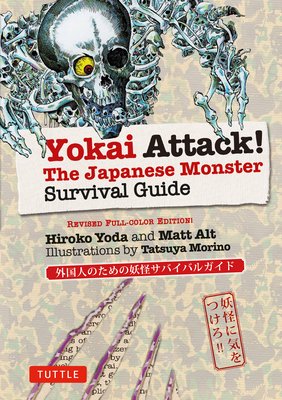
Yokai Attack! The Japanese Monsters Survival Guide by Hiroko Yoda and Matt Alt. Illustrated by Tatsuya Morino.
Purchase from Bookshop.org (supports independent bookstores and my business!)
Yokai are supernatural creatures from Japanese mythology that are often referred to as monsters, but that term is not particularly precise. As the author states “yokai are yokai.” This encyclopedia contains three pages of text and one page of illustrations about each featured yokai, including their typical attacks and how to survive them. (Recommended for ages 11+. Japanese author.)
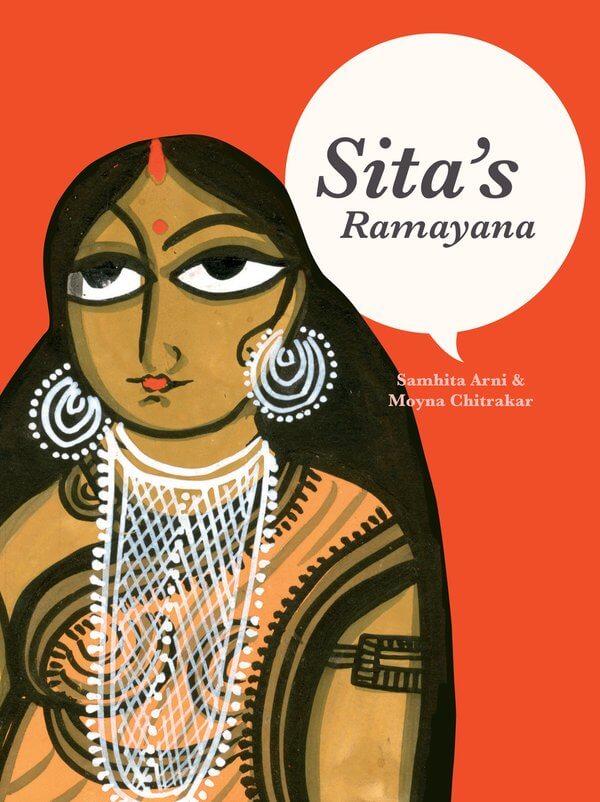
Sita’s Ramayana by Samhita Arni. Art by Moyna Chitrakar.
Purchase from Bookshop.org (supports independent bookstores and my business!)
This graphic novel retelling of the Ramayana is more detailed and thematically complex than Prince of Fire. Sita tells her perspective of how she came to be kidnapped by Lanka, placing blame not just on the demon king but on her brother-in-law Lakshmana’s impulsivity. Readers also see how the actions taken by the gods and their families impact entire communities. The striking, powerful illustrations are inspired by Patua scrolls painters of Bengal. (Recommended for ages 12+. Indian author.)
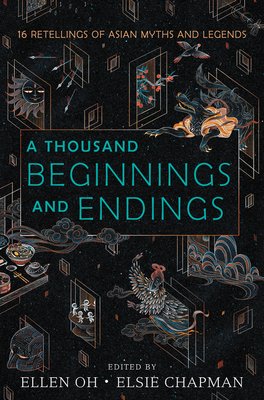
A Thousand Beginnings and Endings: 15 Retellings of Asian Myths and Legends, edited by Ellen Oh and Elsie Chapman.
Purchase from Bookshop.org (supports independent bookstores and my business!)
This unique volume contains retellings of Asian myths in a broad variety of settings, written by award-winning children’s and YA authors. Roshani Chokshi shares how the Filipina goddess Maria Makiling believed was betrayed by her human lover, changing people’s relationship to her mountain. In “Olivia’s Table,” the Chinese hungry ghost festival takes place among Chinese immigrants in Arizona, where a teen must take on her mother’s role of feedings the never-ending stream of ghosts in a tourist town. If you wonder how world mythology and a robot uprising might intersect, read Lori Lee’s “Steel Skin.” (Recommended for ages 13+. Asian American authors of various ethnicities.)

World Mythology: Tales from Europe

Echo, Echo: Reverso Poems About Greek Myths by Marilyn Singer. Illustrated by Josée Masse.
Purchase from Bookshop.org (supports independent bookstores and my business!)
I was surprised when, at age five, my son fell in love with this book of poems about Greek myths. It’s intended for a bit older audience but he was intrigued. Each page has two poems about the same Greek myth, each written from the perspective of one of the main characters. What makes the poems especially remarkable is that they are reverse versions of one poem.
At the bottom of each page there is a short description of the myth that inspired the poem. The gorgeous illustrations also help children perceive the different ways these myths can be understood. (Recommended for ages 7 – 12.)
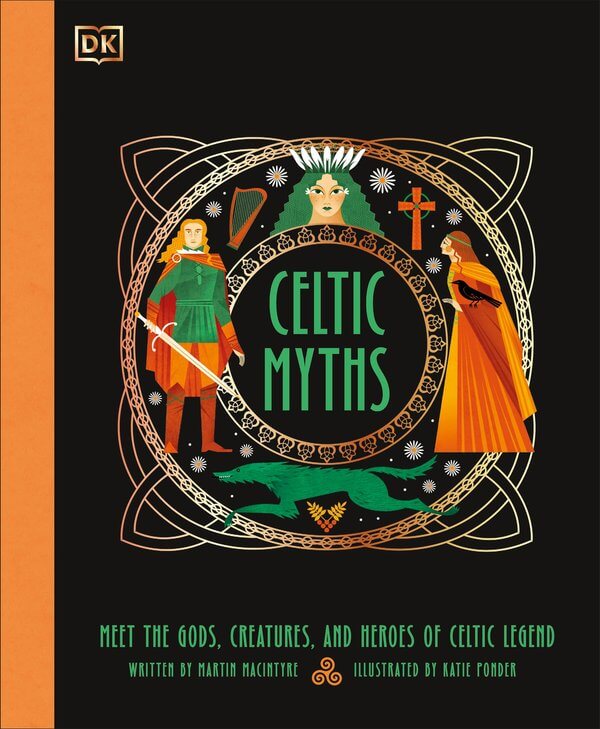
DK Celtic Myths: Meet the Gods, Creatures, and Heroes of Celtic Legend by Martin Macintyre. Illustrated by Katie Ponder.
Purchase from Bookshop.org (supports independent bookstores and my business!)
This guide to Celtic mythology is from the same DK series as the book on Chinese Myths that I reviewed above. Most of the tales are 3 to 4 pages long and include lots of colorful illustrations. Major sections include “heroes, warriors and rulers,” “love and loyalty”, “magic and mystery,” and “poetry and places.” (Recommended for ages 6 – 12.)
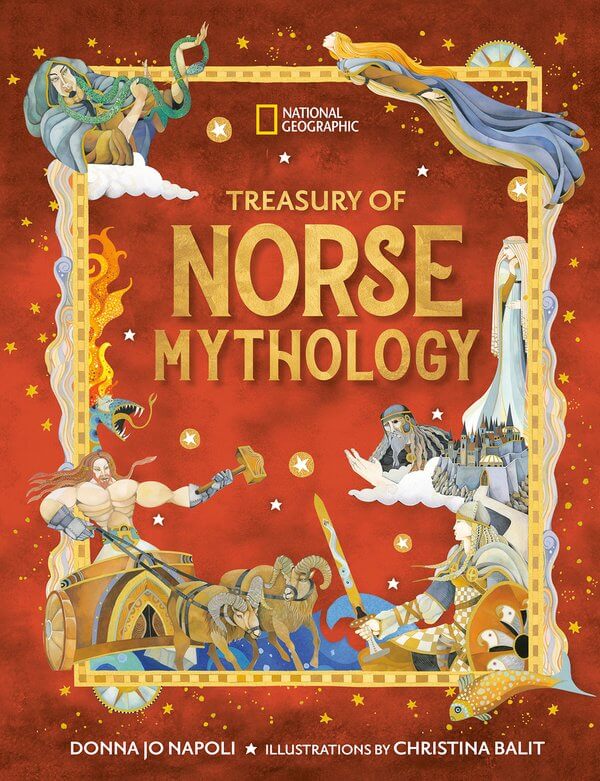
Treasury of Norse Mythology: Stories of Intrigue, Trickery, Love, and Revenge by Donna Jo Napoli Illustrated by Christina Balit.
Purchase from Bookshop.org (supports independent bookstores and my business!)
When I was putting together my son’s World Mythology course, this became our go-to resource for Norse mythology. It has stunning illustrations that communicate the might and power that the Norse gods were known for. While it’s a collection of stories, each one builds on previous stories, providing an orderly guide from creation to the apocalyptic Ragnarok (and everything in between.) (Recommended for ages 8+. White author.)
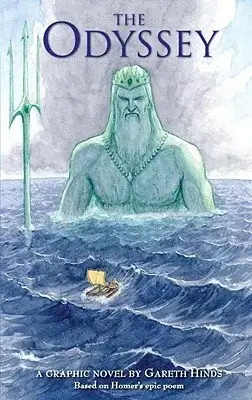
The Odyssey: A Graphic Novel Adaptation by Gareth Hines.
Purchase from Bookshop.org (supports independent bookstores and my business!)
If you have a young teen who isn’t quite ready to tackle to epic poem by Homer, this graphic novel is a great place to experience its key events and characters. Hinds is faithful to the original text, and the characters’ speeches are long enough to convey the meanings of the story. The vivid illustrations show the dangers of Odysseus’s journey and the scheming of the suitors that Penelope must battle on the home front. (Recommended for ages 11+. White author.) Hines has also written graphic novels of The Iliad and Beowulf. He will be releasing a graphic novel of The Aeneid in early 2027.
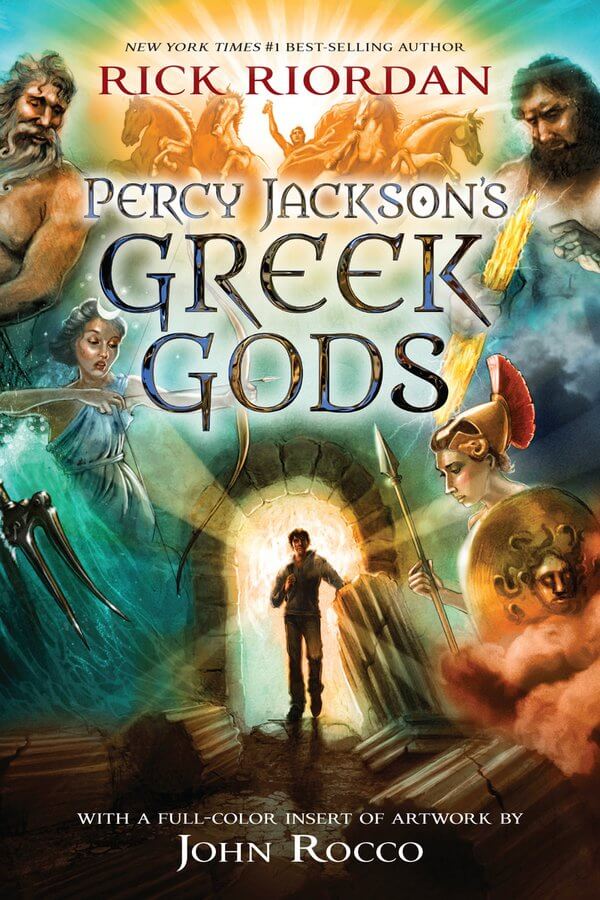
Purchase from Bookshop.org (supports independent bookstores and my business!)
This is a funny and informative read for tweens and teens who want to know more about the Greek myths behind the popular Percy Jackson series. Thorough and beautifully illustrated, Percy’s trademark voice is within each story of the Kronos and the twelve Olympians. Many of the chapters are inter-related so they are best read in order. This was by far my son’s favorite book in our World Mythology course. (Recommended for ages 11+. White author.)