“Land has been at the center of virtually every significant interaction between Natives and non-Natives since the earliest days of European contact with the indigenous peoples of North America.” – Kelli Mosteller (Potawatomi)
Do you ever talk to children about whose land you live on? All of us who live in the Americas are living on indigenous lands. But for most of us who are not Native, it’s not something we think much about.
Over the past year, I spent a lot of time asking two things. 1) How could I educate myself about the Chickasaw people, whose traditional hunting grounds I live on in Tennessee? 2) How I could help my son understand the Chickasaw people’s history – and their present?
What responsibilities do we have as white people living on Native American land?
These are questions our family will be wrestling with for a long time, but we took one concrete step to learn more this summer.
We planned our family vacation to Oklahoma, so that we could spend some time in the Chickasaw Nation. In this post, I’ll share some pictures and stories about what we learned.


Disclosure: For your convenience, this post includes affiliate links. If you purchase items through these links, I may earn a small commission at no additional cost to you. You can read my full disclosure policy here.
Our family’s trip to the Chickasaw Cultural Center in Oklahoma
Over the past 6 months, we’ve been reading (and re-reading!) several children’s books published by Chickasaw Press to get ready for our trip. Our 7 y ear old developed a vivid interest in the game of stickball after playing an electronic version on the C is for Chickasaw app.
The Chickasaw Cultural Center in Sulphur, Oklahoma is located on a big, beautiful campus, and we spent almost an entire day there.
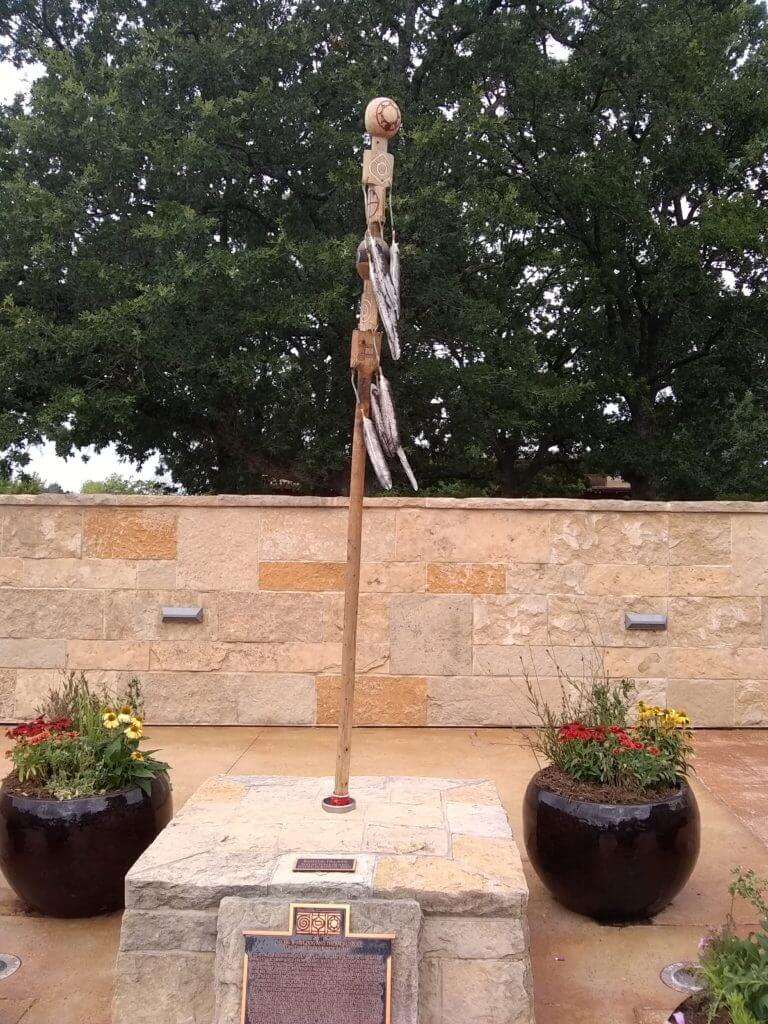
The first thing that got our kiddo’s attention was this replica of the kohta falaya.
The kohta falaya has a prominent role in the origin stories of the Chickasaw and Choctaw nations, who are closely related. The long pole was given to them by Ababinili (Creator) to guide them as they searched for their homeland thousands of years ago. When they crossed what is now called the Mississippi River into present day north Mississippi, the pole stood straight, indicating this was to be the Chickasaws’ homeland.
Related Post: 8 ways kids can observe Indigenous Peoples’ Day
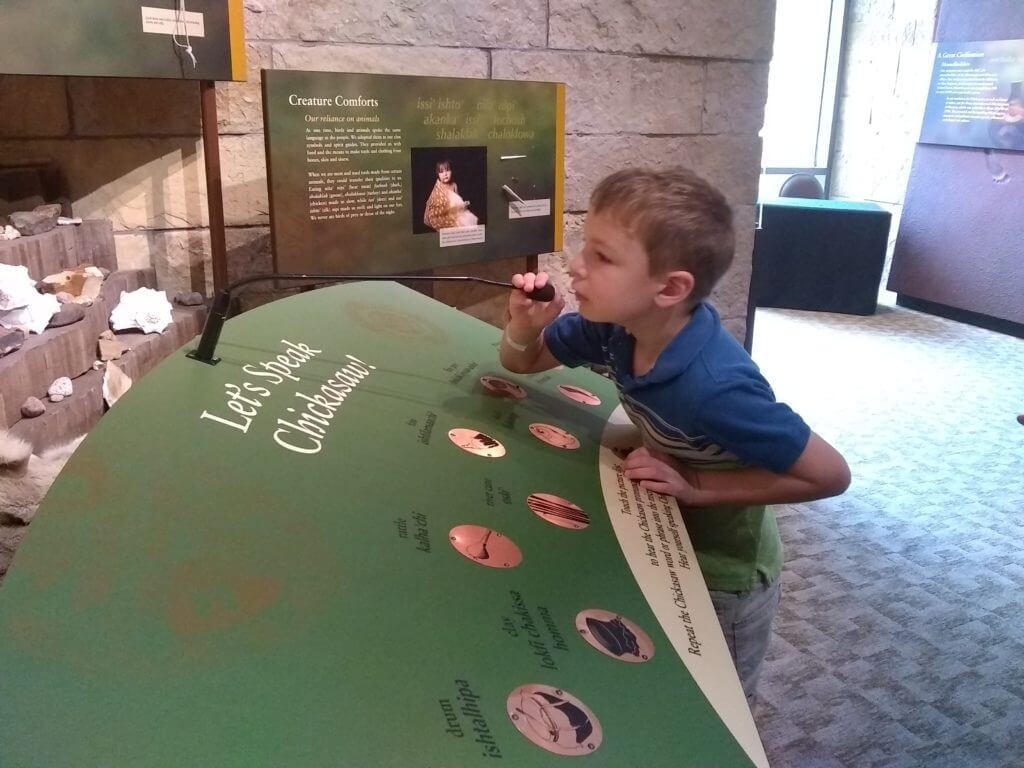
Inside the exhibit hall, there were several interactive displays that let our kiddo practice speaking Chickasaw words. We had already learned several animals’ names from reading Little Loksi before our trip. It was fun to build on that knowledge.
His favorite part of the exhibit hall was a large forest area full of animal statues. As you walked up to each animal, you could hear a storyteller tell a story about that animal. (Unfortunately, since it was dimly lit, I didn’t get any good pictures of that area!) Stories about how animals got the appearance they have today are some of his favorites, so I made sure to pick up a copy of Chickasha Stories: Volume 1 in the center’s gift shop.
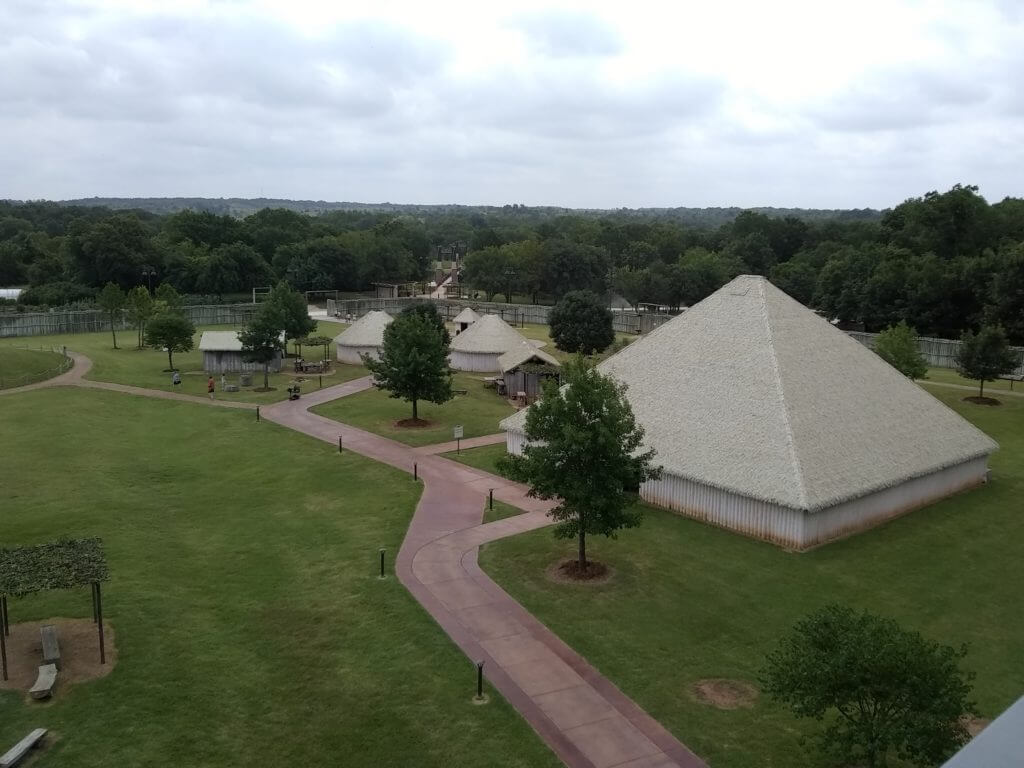
Outside, there was a large replica of a Chickasaw village, similar to what existed in the Mississippi homelands in the 1700’s. The council house (the largest building), the summer house, and the winter house all were furnished and included recordings telling us more about how each building was made and what activities took place there.

Chickasaw Stomp Dance Demonstration
One of the things I looked forward to most was the stomp dance demonstration. One of the dancers shared that for many years, these dances and other sacred traditions of Native Americans were outlawed by the U.S. government.
Stomp dances traditionally take place starting around midnight, around a fire. As you can see in my video (I apologize for the quality), men lead the singing, while women keep the rhythm through the jingles they wear on their legs.
The earliest jingles were made from deer toes, but as the Chickasaw began trading deer hides for European goods, deer became more scarce. Today jingles are often made from tin cans with river rocks inside. Some of the dancers were wearing 20 tomato paste cans on each leg (and it was a very hot, humid day.)
Traditional jingles made from deer toes.
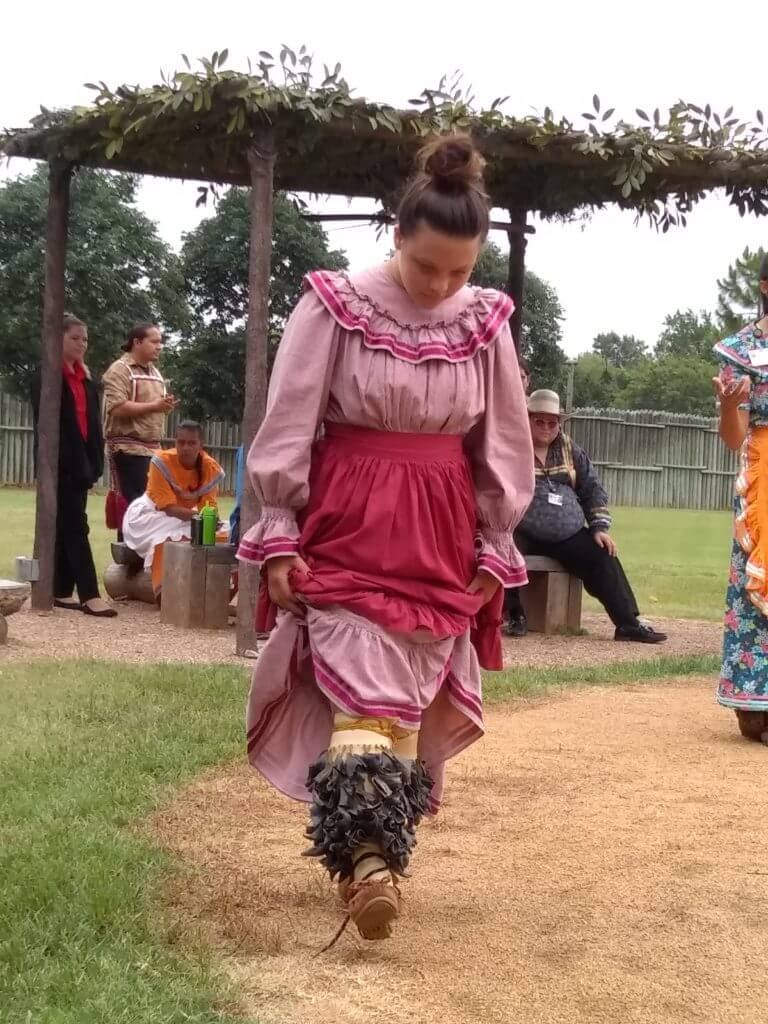
Modern jingles made from tomato paste cans.

After the stomp dance demonstration, we had a chance to talk with several of the dancers. Our kiddo talked a long time with a young man about stickball.
When he heard that we lived in Tennessee, he encouraged us to go to the World Stickball Tournament that takes place in Mississippi each summer on the Choctaw reservation.
As they talked together, I thought about how far our son’s understanding had come in the past year. When I first told him months ago that we would be visiting the Chickasaw Nation, he told me he was afraid of people with bows and arrows. Because our cultures is so full of false stereotypes of Native Americans rooted in the long ago past, that was all he could think about at the time.
Related Post: Unpacking myths and stereotypes with kids about the “first Thanksgiving”
I wanted him to understand that in most ways, Chickasaw people today live very similarly to how our family lives. Our trip showed me that he has learned that. At the same time, he could see why it’s so important to Native American nations maintain their traditions. For example, another cultural center worker told us that while her mother spoke fluent Chickasaw, she could understand Chickasaw but not really speak it.
Visiting Sequoyah’s Cabin in the Cherokee Nation
Because of the United States’ history of forced removal, 39 Native American nations are located in Oklahoma today. That gave us the chance to visit sites in both the Cherokee and Citizen Potawatomi Nations.
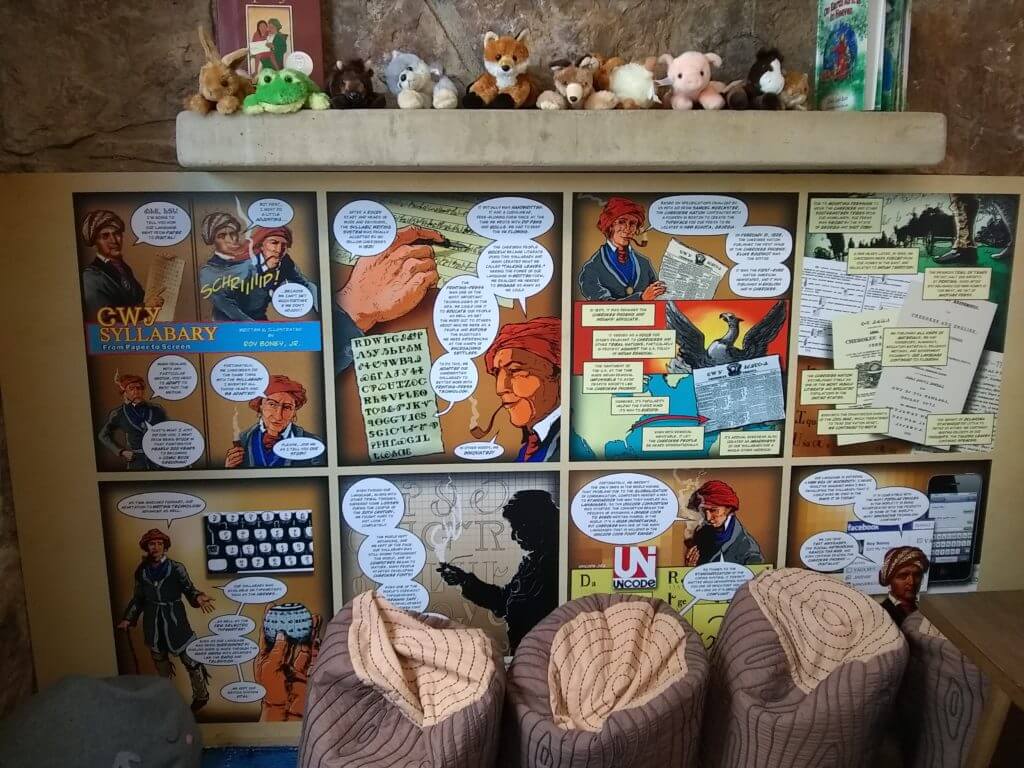
In Sallisaw, we visited the original cabin that Seqouyah built in 1829. Seqouyah is credited with inventing the Cherokee syllabary, allowing literacy to spread rapidly among his people.
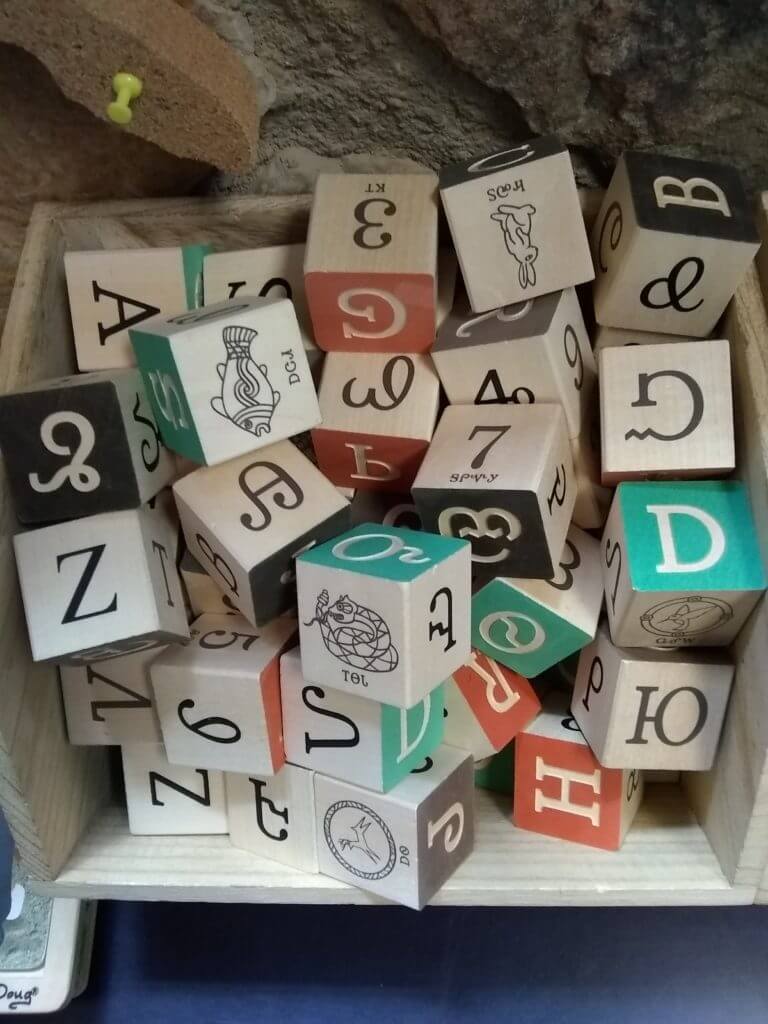
The museum included a small children’s play area. I especially loved the alphabet blocks! This comic strip showed how the syllabary has modernized as technology has changed.
Visiting the Citizen Potawatomi Nation’s Cultural Heritage Center
One of my readers who is Potawatomi suggested we try to visit her nation’s Cultural Heritage Center in Shawnee, and I’m so glad we did. (Thanks for reaching out Tiffany!)
This center itself is modest in size, but they packed so much history into a small space. Since the Potawatomi’s homelands are in the Great Lakes region, their culture differed quite a bit from Southeastern nations like the Chickasaw and Cherokee. I was glad to be able to talk to our son about this, since many non-Native people spread the mistaken idea that there is a single Native American culture.
The cultivation of wild rice was central to Potawatomi culture before removal, and it is considered their sacred food, as this display shows.
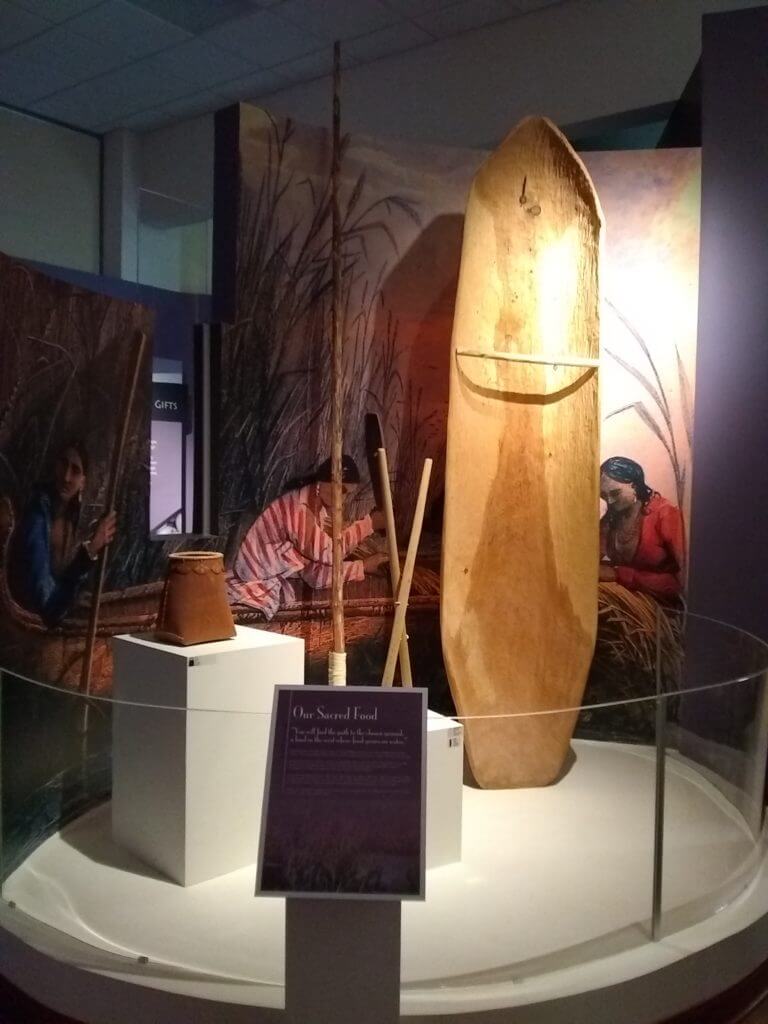
The model of a traditional Potawatomi wigwam was where our 7 year old spent the most time. There were lists of items for kids to try to spot in the display, and he loves a challenge!

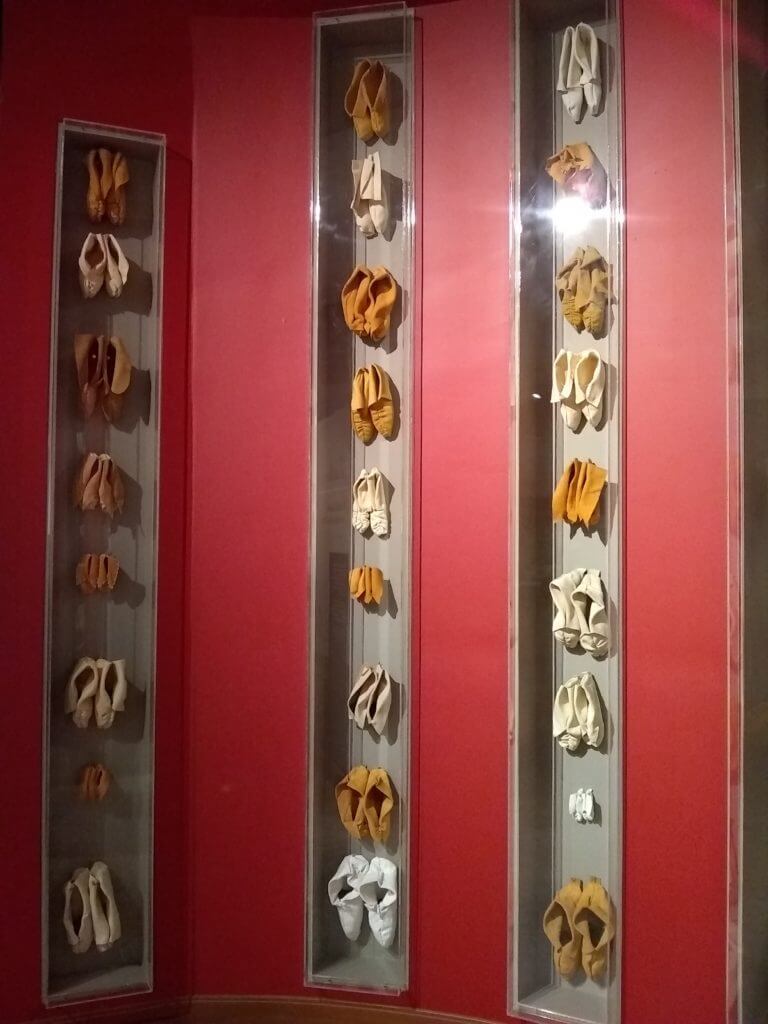
The ancestors of the Citizen Potawatomi Nation experienced force removal twice in a roughly 30 year period. In 1838, on the Trail of Death from the Great Lakes region to Kansas, 859 Potawatomi lost their lives. In the 1860’s, they were again forced to move when Kansas became a state, this time to Oklahoma.
These moccasins were handmade by members of the Citizen Potawatomi Nation, with each pair representing 10 people who perished on the Trail of Death.
9 tips for teaching children about the Native American land they live on
1. Find out which nation(s) original lands you live on
This interactive map is my go-to source for finding out who land belonged to before European colonization. It includes information for North, Central, and South America, as well as Australia.
Our son was six years old when I first started telling him that where we live is the Chickasaw people’s homeland. I made sure to tell him (more than once) that the United States government unfairly took their land and forced them to leave. I also stressed that today many of them live in Oklahoma, so that he wouldn’t think that the Chickasaw people have vanished.
2. Encourage your child’s school to practice land acknowledgment
Land acknowledgment is a formal statement that pays tribute to the original inhabits of the land. Land acknowledgment is much more widespread in Canada than in the U.S. As this article explains, by itself it’s not a sufficient education for kids about indigenous history and challenges today.
But it is an important place to start. I’ve been thinking about how uncommon land acknowledgment is in the South, especially as my city celebrates it 200th anniversary. These celebrations have had little (if any) acknowledgment that Memphis could only be created by forcing the Chickasaw to leave the land where they’d hunted and traded for centuries.
In the article linked above, Rachel Mishenene encourages parents and teachers to ” research your community the same way you might research the culture, customs and languages of the places you travel.”
3. Teach children specifics about the particular Native American nation your land is connected to
Help your child understand that there are hundreds of Native American nations, each with their own language and cultural traditions, by being specific.
Before our trip, we talked a lot about the Chickasaw. When our kiddo would accidentally confuse them with other Native American nations, I always corrected him.
Because kids tend to think that all Native Americans lived in tipis, I made sure to tell him that the Chickasaw lived in a different type of house (a local museum had a model that we visited.) And I emphasized often that Chickasaw people today live in apartments and houses that are similar to ours, not the traditional house we saw at the museum.
When we read books, I also make sure to be specific. When we read the book We Are Grateful, for example, I remind our son “this book is about the Cherokee people.”
4. With very young children, focus on the present
Preschool and kindergarten aged children are not able to distinguish the present from the past. (Just ask a 4 year old what happened yesterday and you’ll see what I mean.)
To prevent young children from developing stereotypes that are rooted in the past, it’s best to focus on the present. As they move into the elementary years, you can teach them more about the history of the people whose land you live on.
You can find more tips for teaching young children about Native Americans in this post.
Related post: 15 Indigenous children’s books set in the present day
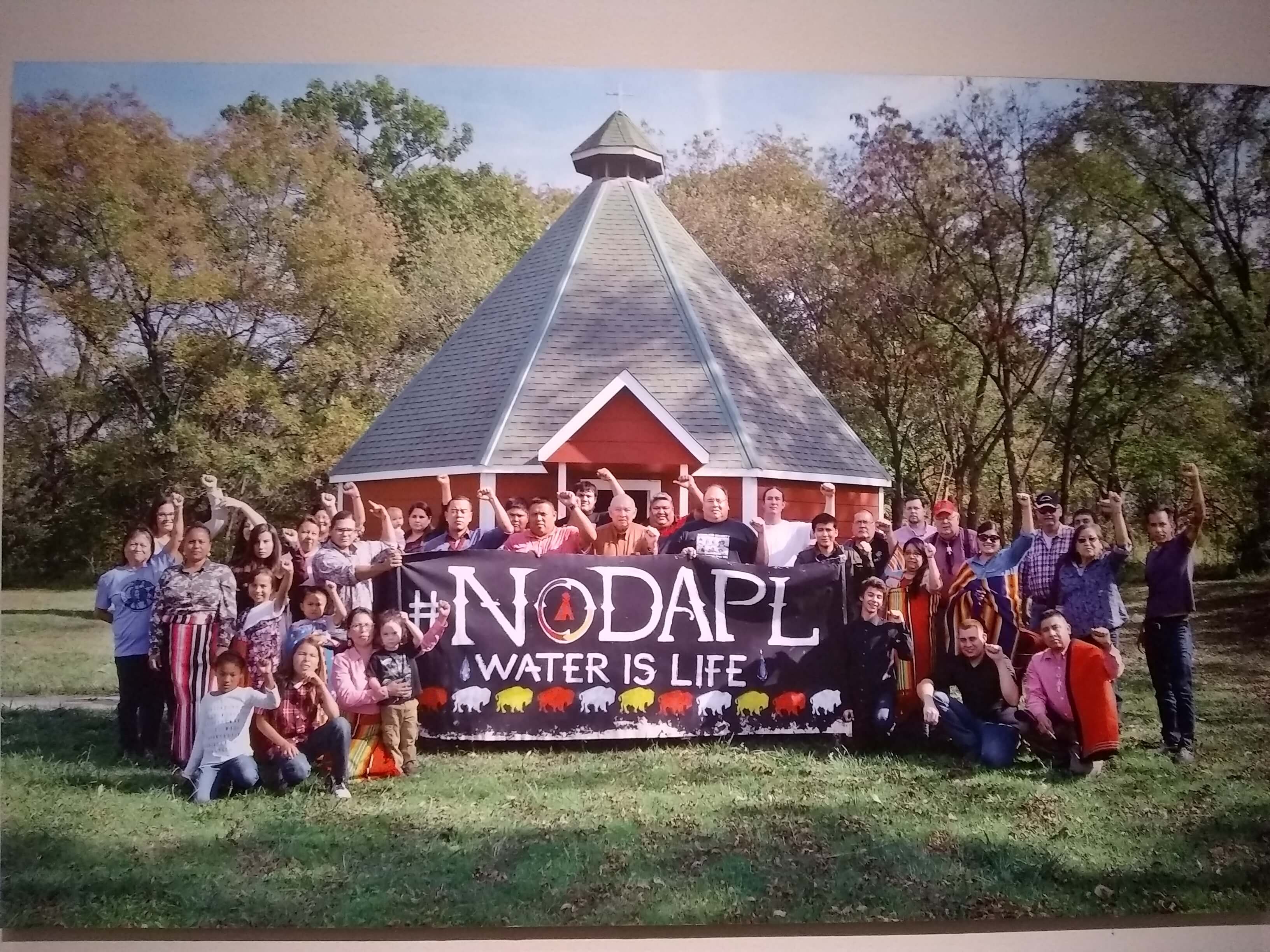
5. Look for local cultural events and sites (but travel if you need to!)
You can find a calendar of Pow Wows in the U.S. and Canada here.
There are many small and medium sized cultural centers and museums featuring Native American history throughout the country. When possible, visit ones that are directly sponsored by a particular nation (or where the museum has worked in collaboration with that nation to develop exhibits.) If you’re not sure where to start, search for your state name + Native American cultural sites.
That said, I’m so glad we also made our the trip to Oklahoma. The sheer number of nations there meant that we learned about Native American history even in places where we didn’t expect to.
6. Educate yourself so that you can pass along what you learn
Over the past 9 months, I’ve spent a lot of time reading up on Native American history and present day issues, as well as Chickasaw history in particular. I’ve felt a deep hunger to know more, as well as anger that I learned very little of this history when I was in school.
I also know that learning more makes it possible for me to sprinkle what that knowledge into conversations with our son.
Soon, he’ll be old enough to be learning American history in school. I want to make sure learns the truth about how the struggles over Native Americans rights and land have been at the heart of our nation’s history (and not just during the period of forced removal.)
The book I found most helpful in educating myself was An Indigenous Peoples’ History of the United States by Roxanne Dunbar-Ortiz. The book includes many truths that are hard to read, but Dunbar-Ortiz writes in a such a compelling way that I finished the book in just a few days.
Other books I recommend include:
Everything You Wanted to Know About Indians But Were Afraid to Ask by Anton Treuer (the Q&A format makes this a good first book to read)
Mankiller: A Chief and Her People by Wilma Mankiller and Michael Wallis
Walking the Choctaw Road: Stories from Red People Memory by Tim Tingle
The Woman Who Watches Over the World by Linda Hogan
Recommended podcast and news site:
All My Relations (podcast)
Indian Country Today (news site)
7. Add #ownvoices Native American children’s books to your child’s collection
It’s not easy to find children’s books with Native American characters that are written by Native authors, but it’s so important! In 2018, only three such books were published.
So how can you find them? I have two lists to help you get started building your collection:
17 #ownvoices children’s books about Native Americans and First Nations in Canada
8 #ownvoices middle grades novels by American Indians
The blog American Indians in Children’s Literature is an excellent source for reviews (both of recommended books and those that are not recommended because of inaccuracies and stereotypes.) Often when I hear about a book, I will check the site to see if Deb Reese has a review of the book. (The easiest way to do this is to scroll down on the right side menu and look for the author’s name under “labels.”)
And when I’m deciding whether to buy a particular book, I always look at the author’s bio to see if they are either a member of the nation they are writing about or at least have a lasting connection to that nation.
8. Tell your children the complicated truth about historical figures
Children tend to see people, including historical figures as heroes or villains, all good or all bad.
When we only tell kids the accomplishments of people like the founding fathers or U.S. presidents, we’re not being truthful with them about how racism and colonialism have shaped U.S. history.
In her book Raising White Kids, Jennifer Harvey gives a great example of how she helped her daughter see a more complicated version of who George Washington was. Her daughter had been learning about Washington at school and repeatedly told Harvey about all the wonderful things he’d done. Harvey felt uncomfortable, but wasn’t sure of the best way to respond.
One day, a radio news story was playing about a politician who’d been charged with an ethics violation. When her daughter asked what that meant, she told her that a government leader had done something wrong. Her daughter seemed shocked that an adult who was a leader could do something bad.
This gave Harvey an opening to share that “a lot of our country’s leaders have done bad things.” When her daughter asked for an example, Harvey told her that the same George Washington who fought for some people’s freedom also owned Black people as slaves.
Related post: 7 mistakes to avoid when you talk to kids about race
9. Look for resources that tell kids’ history from the perspective of indigenous peoples
Again, finding these isn’t easy, but they are slowly becoming more available!
While I was at the Chickasaw Cultural Center, I watched First Encounter, a short documentary that tells of the encounter between Spanish colonizer Hernando DeSoto and the Chickasaw nation. The documentary is ideal for middle and high school students. It got me thinking about how rare it was to hear colonial history told from the perspective of indigenous people.
On our trip I was able to pick up copies of 4 Chickasaw Adventures comic books. These tell important events in Chickasaw history by transporting a present day Chickasaw teen back in time. My 7 year old loves graphic novels, and he got engrossed in these even though they’re probably intended for a tween/teen audience.
One way to look for these resources it to find the official website of the nation that you want to know about, and look for headings that say “history” or “culture.” On the Chickasaw Nation website, for example, teachers can find extensive sets of lesson plans covering Chickasaw history.
Now I’d love to know
Do you ever talk with kids about the Native American land you live on? If you haven’t started yet, which idea do you think will work best with the kids in your life?
4 responses to “How to teach kids about whose land they live on”
Hi Rebekah! I found your website through your post you shared in the facebook group, Montessori for Social Justice, this is amazing, thank you!! I had a question I was wondering about that maybe you might have some insight. My son is in kindergarten and he has read both with me and at his previous co-op several books on Native Indians in Oregon, though reading your blog, they were not specific to our area of Oregon. I haven’t been able to find any children’s books specifically on the Kalapuya tribes, except for a reference book at the library. I am going to put the book you mentioned for adults on hold at the library, but wondering if you had any recommendations? Thank you!
Brinda, it could be that there aren’t any yet that have been published. One idea would be to contact the tribal government (it looks like from my quick search that the Kalapuya are part of the Confederated Tribes of Grand Ronde) to see if they know of any books that have been published.
Thank you for your conscientiousness. It is truly beautiful and especially needed in our present existence. You have given a very heartfelt and detailed accounting of how to respect the Original people. Thank you, thank you, and thank you!
Rebekah, I wanted to thank you for your article. It is important that we teach our children about the cultures that came before us and not teach them about the stereotypes that are out there. Or teach them how to recognize the stereotypes and that they are wrong. However, there is one comment that I would like to make. Indigenous means existing, growing, or produced naturally in a region or country. Since it has been established that all civilization started in the Middle East then it stands to reason that there were no people here to begin with and all of the civilizations that have existed here are transplants.
As a Christian I believe that the land belongs to God. Deuteronomy 10:14 says: Behold, to the Lord your God belong heaven and the highest heavens, the earth and all that is in it. Also in Psalm 89:11 it says: The heavens are Yours, the earth also is Yours; The world and all it contains, You have founded them.
Even many of the tribal customs say that the land does not belong to people.
I believe that respecting all cultures is VERY important and will continue to make every effort to teach my children and grandchildren to respect everyone. So again I say thank you for this wonderful article that teaches respect for others.