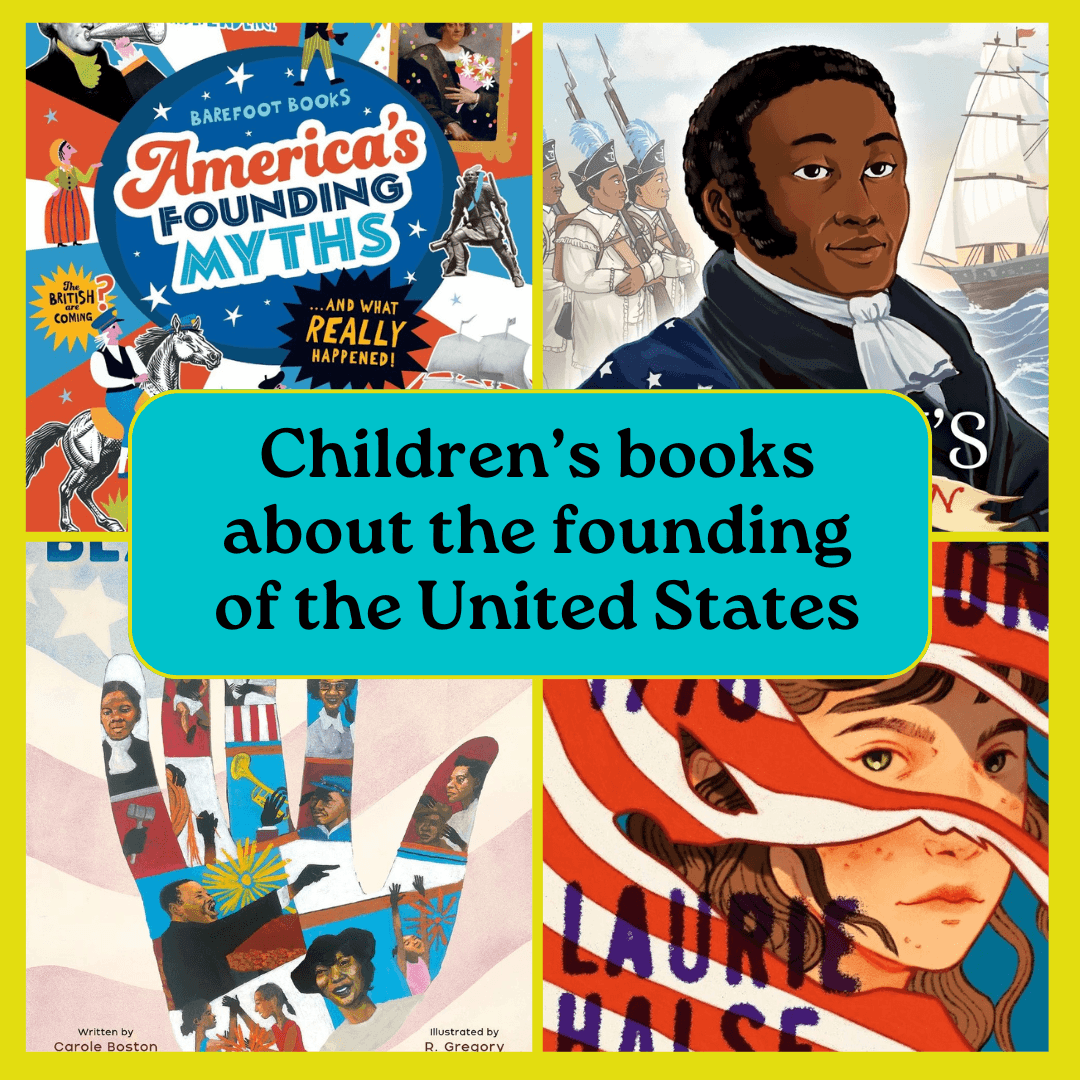
As the United States approaches the 250th anniversary of the signing of the Declaration of Independence, children and youth need accurate and inclusive history. Instead of tidy narratives about the countries founding that leave out hard truths, we can offer learners complexity.
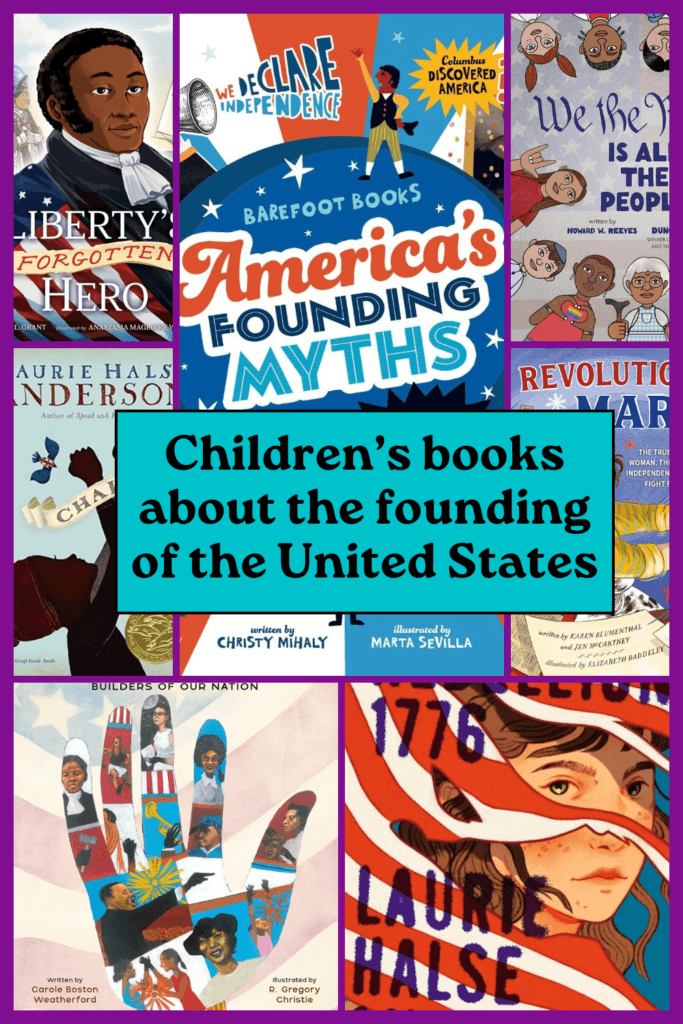
In this post, you’ll find non-fiction and historical fiction books about the founding of the United States and the country’s earliest years. Some books examine the experience of Black and Native American leaders. Others share the experiences of white working class people and women. You’ll also find books that unpack myths about the American Revolution and how the United States Constitution came to take the form it did.
If you enjoy the books in this post, be sure to take a look at my guide From the Margins to the Center: A People’s History of the United States Told Through Children’s Books. You’ll find lots of reads for every era of U.S. history, as well as the history of this land before colonization.


Disclosure: For your convenience, this post contains affiliate links. If you make a purchase through these links, I may earn a small commission at no additional cost to you. I received free digital copies of Liberty’s Forgotten Hero, America’s Founding Myths…And What Really Happened and We the People Means All the People in exchange for my honest review. All opinions are my own. You can read my full disclosure policy here.
Picture books about the United States’ founding and the Revolutionary Era
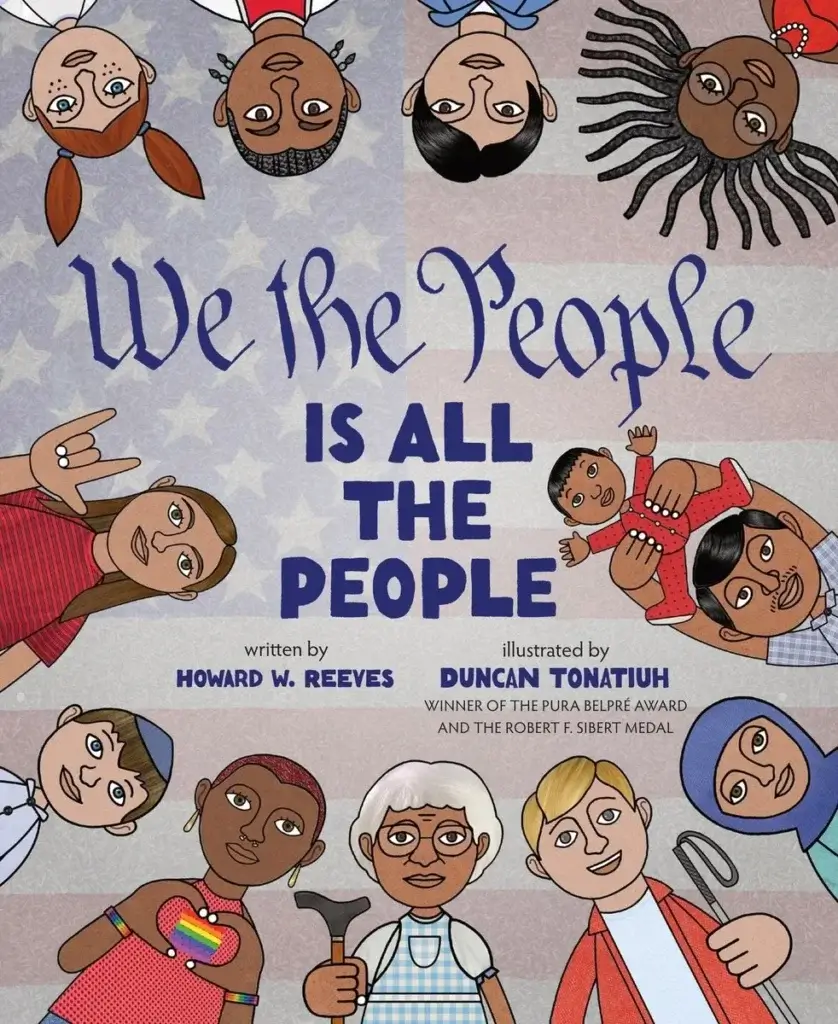
We the People Is All the People by Howard W. Reeves. Illustrated by Duncan Tonatiuh.
Purchase from Bookshop.org (supports independent bookstores and my business!)
With so many current efforts to deny the rights of immigrants, disabled people, People of Color, and Queer people, this book’s message that “we the people” includes everyone is timely and important. Tonatiuh’s illustrations bring the incredible diversity of the United States to life, with people of many races, religions, ethnicities, genders, and social classes portrayed.
The opening page shares the preamble to the U.S. Constitution. The text goes on to draw attention to who “the people” are, making it clear that no one should be left out. This includes “people living in houses, apartments, and in shelters, who worship in churches, mosques, and temples.” Issues of justice are highlighted, with children holding signs about ending war and recognizing that “love is love.”
While I recommend the book overall, I do wish that it acknowledged that when the Constitution was written, it was explicitly not written for all people. The author’s note includes this information, but most children will not read that part of the book. (Recommended for ages 4 – 7.)
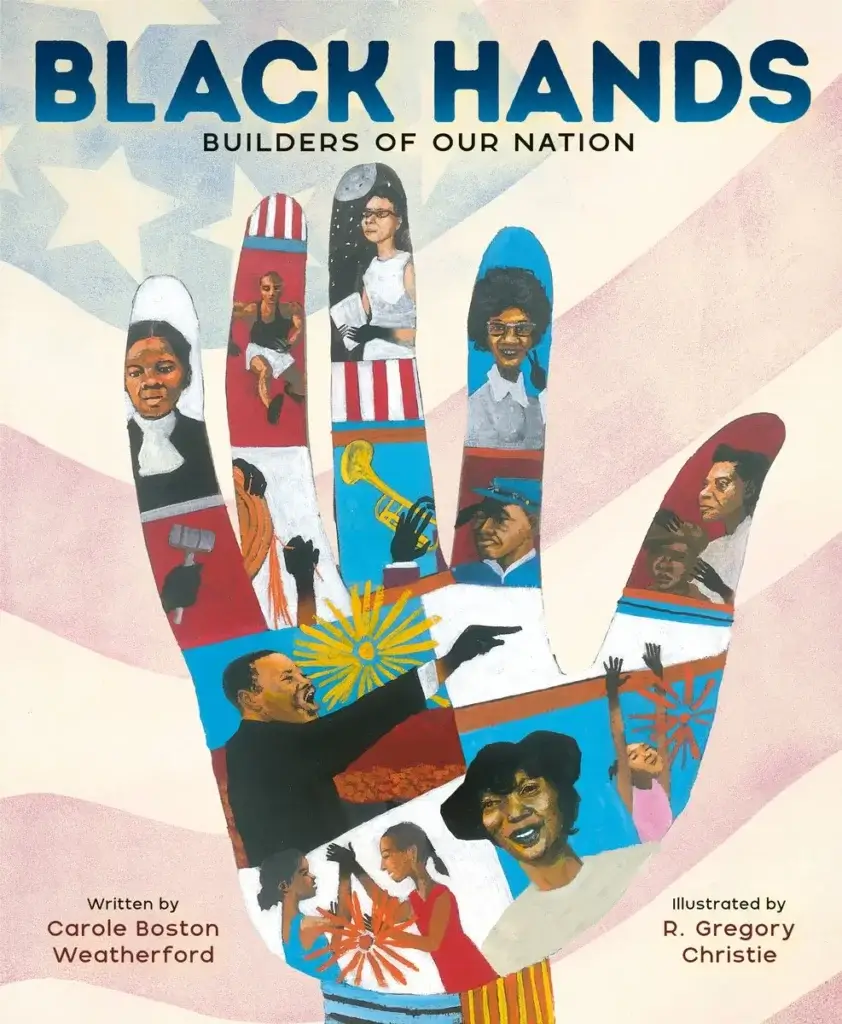
Black Hands: Builders of Our Nation by Carole Boston Weatherford. Illustrated by R. Gregory Christie.
Purchase from Bookshop.org (supports independent bookstores and my business!)
Weatherford’s stirring poem and Christie’s vivid, colorful illustrations make it clear that the United States is built on the work of Black hands.
Beginning with the Middle Passage and how Black hands built the White House and clothed First Ladies, the story also shows how Black hands provided sustenance for themselves. The work of Black men and women to free themselves from slavery, fight in every war, work the land, make remarkable music, write “literary testaments,” and more shows the entire span of U.S. history.
This visually stunning book is a must-read for understanding that Black history is truly American history. (Recommended for ages 4 – 9. Black author.)
Related post: Picture books about Black history
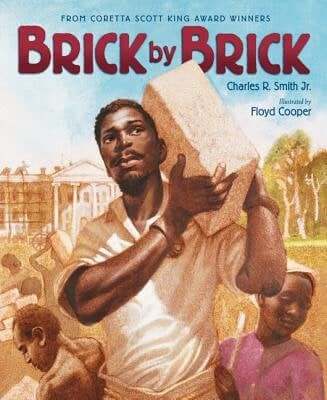
Brick by Brick by Charles R. Smith, Jr. Illustrated by Floyd Cooper.
Purchase from Bookshop.org (supports independent bookstores and my business!)
When it was time to build a home for the first American president, immigrant workers and free Black workers were hired, but there still weren’t enough laborers. Enslaved workers were brought onto the job of constructing the White House. While some who had coveted skills were paid a shilling a day, for the most part it was enslavers who were paid for their difficult and complex work.
Smith emphasizes this in refrains about labor that enslaved hands do, “but slave owners take slave hands’ pay.” Cooper’s stunning illustrations help readers imagine how much risky and sophisticated work had to go into the construction of the White House, while the injustice of enslaved people building a residence for the president of a newly “free” country is clear. (Recommended for ages 4 – 8. Black author.)
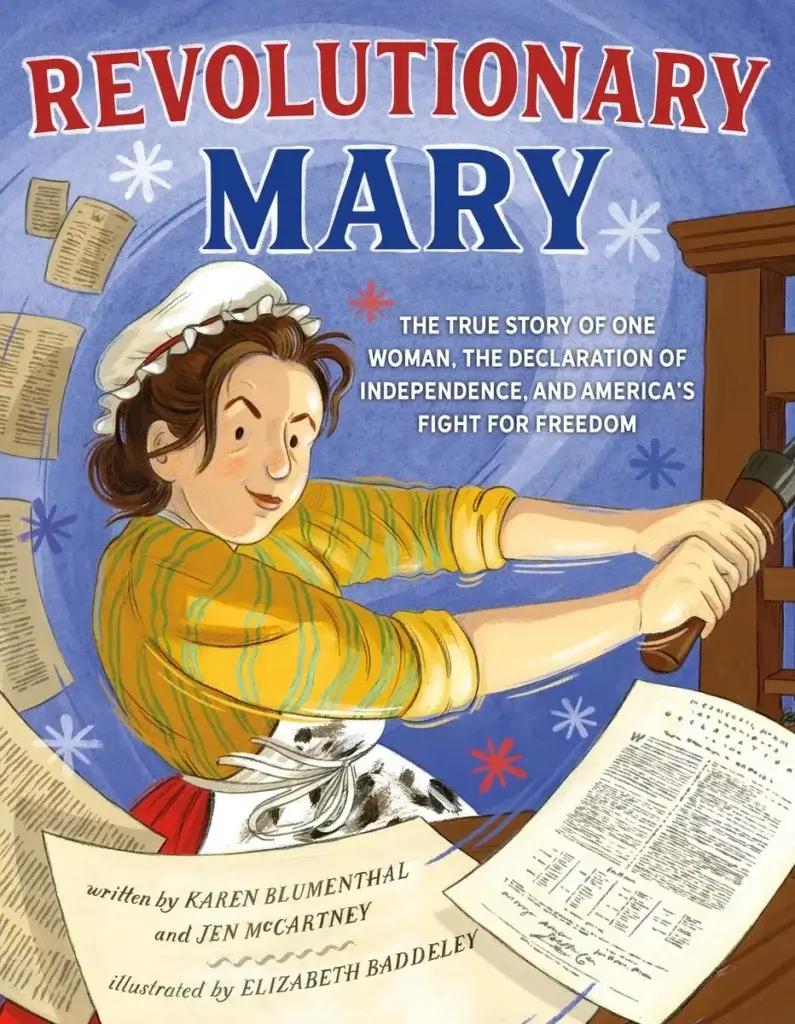
Revolutionary Mary: The True Story of One Woman, the Declaration of Independence, and America’s Fight for Freedom by Karen Blumenthal and Jen McCartney. Illustrated by Elizabeth Baddeley.
Purchase from Bookshop.org (supports independent bookstores and my business!)
Children may be surprised to learn that one woman signed the Declaration of Independence.
Mary Katherine Goddard joined her brother William in running his printing press business, frequently printing newspapers, pamphlets, books, essays, and posters. In 1774, the siblings relocated to Baltimore to start a new print shop, with William leaving the business under Mary’s management. At a time when printing information about the growing rebellious spirit against Britain could be dangerous, Mary frequently did so. She always signed her name, M.K. Goddard, on every paper she published.
In December 1776, the delegates of the Continental Congress arrived in Baltimore, carrying with them the only copy of the Declaration of Independence, which had been signed by all the Congress’s members. When it was time to distribute the document to each of the states, Mary was asked to print it. Mary signed her name at the bottom as she always did, but this time she wrote her full name: Mary Katherine Goddard. (Recommended for ages 6 – 10. White authors.)
Related post: 31 children’s books for Women’s History Month
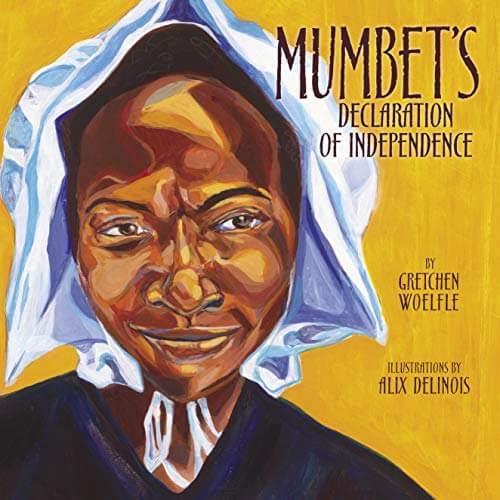
Mumbet’s Declaration of Independence by Gretchen Woelfle and Alex Delinois
Purchase from Bookshop (supports independent bookstores)
For many years before she chose her own name, Elizabeth Freeman lived in slavery and was called Mumbet. Her spirit was as strong as a mountain, and she dreamed of freedom as she endured verbal and physical abuse from her enslavers, the Ashleys.
When the Ashleys hosted men who were working to free the colonies from Britain, Mumbet heard their words about freedom and equality. She wondered how those words could apply to her. Years later, after the war was over, she boldly told a lawyer who supported the American Revolution that she should also be free. Despite his skepticism, Mumbet would not be deterred, and he eventually agreed to pursue her case in court. Her courage and determination made history, with slavery abolished in Massachusetts just a few years later. (Recommended for ages 6 – 10)
Related post: How should we talk with children about slavery? (includes recommended children’s books)
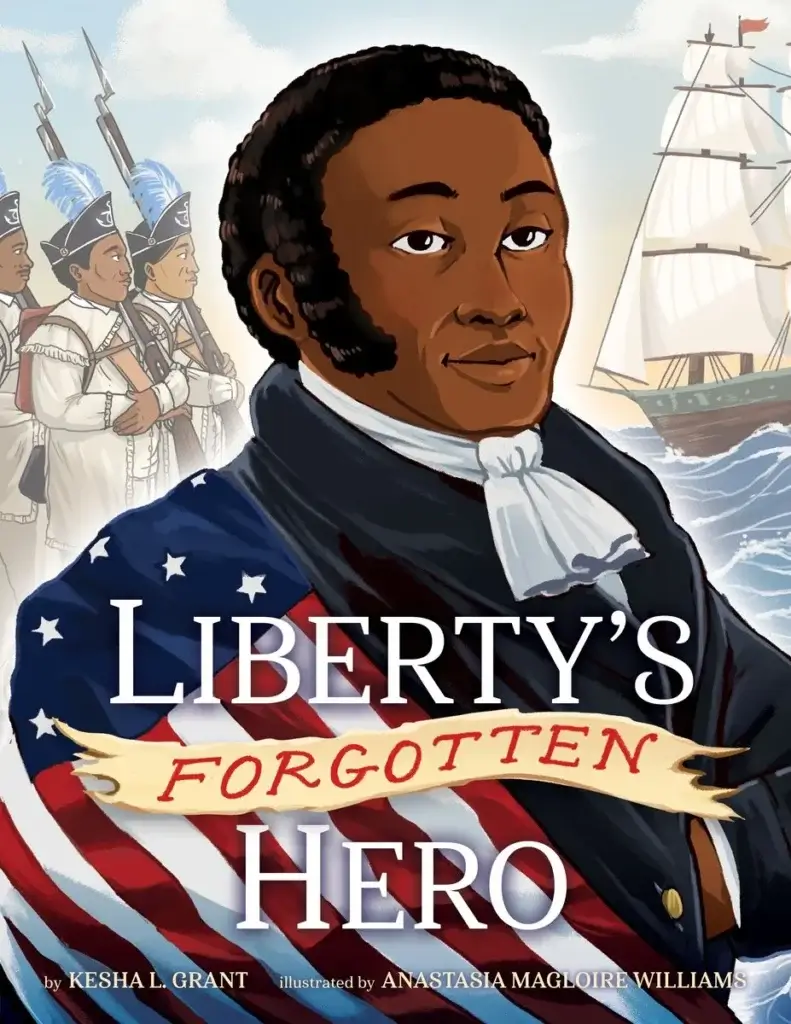
Liberty’s Forgotten Hero by Kesha L. Grant. Illustrated by Anastasia Magloire Williams.
Purchase from Bookshop.org (supports independent bookstores and my business!)
Liberty’s Forgotten Hero is a great pick for commemorating the founding of the United States because it’s honest both about the promise of the new nation and the government’s commitment to racial inequality.
Born to a free Black family with a father who was an expert sailmaker, James Forten was just 9 years old when he heard the Declaration of Independence read from the statehouse in Philadelphia. Forten was excited by the possibility of a nation in which all people would truly be free and equal. As a young teen, he joined the crew of the Royal Louis, which attacked British ships during the Revolutionary War. He was eventually captured and held as a prisoner of war.
As the United States began its journey as a young country, Forten’s hopes of equality and fairness were dashed. Citizenship would be limited to white people. He turned towards the work of abolition, while also building a successful sailmaking building. While his name is not as well-known as some other abolitionists, James Forten played a crucial role in the Underground Railroad, funding William Lloyd Garrison’s newspaper, and organizing against attempts to colonize free Blacks Americans in Liberia. (Recommended for ages 7 – 11. Black author.)
Want to offer children something better than whitewashed American history? My guide From the Margins to the Center can help!
Click on the image below to learn more.


Independent Dames: What You Never Knew about the Women and Girls of the American Revolution by Laurie Halse Anderson. Illustrated by Matt Faulkner.
Purchase from Bookshop.org (supports independent bookstores and my business!)
This spirited, engaging picture book asks why accounts of the American Revolution only focus on the actions of men. Each page spread provides an easy-to-understand overview of a particular ways women supported the Revolution, with two or three specific women highlighted. A timeline of events of the Revolution runs across the bottom of the pages for those who want to learn more.
From fundraising campaigns for the cash-strapped Patriot cause to camping with the Army (and in some cases dressing as men so they could fight), Anderson makes it clear women were not incidental to the Revolution. Most of the accounts are of white women (perhaps because there were more written records of them), though the role of Oneida women in supporting the Patriots is made clear. Poet Phillis Wheatley is the only Black woman featured in the main text.
I highly recommend adults read through the end notes so that they can provide context for children on how enslaved people were treated by both the Patriots and the British, as well as to provide background on why many Native American nations did not support the Patriots. (Recommended for ages 7 – 11. White author.)
Related post: Children’s books about women in politics
Shop this entire list on Bookshop.org (supports independent bookstores and my business!)
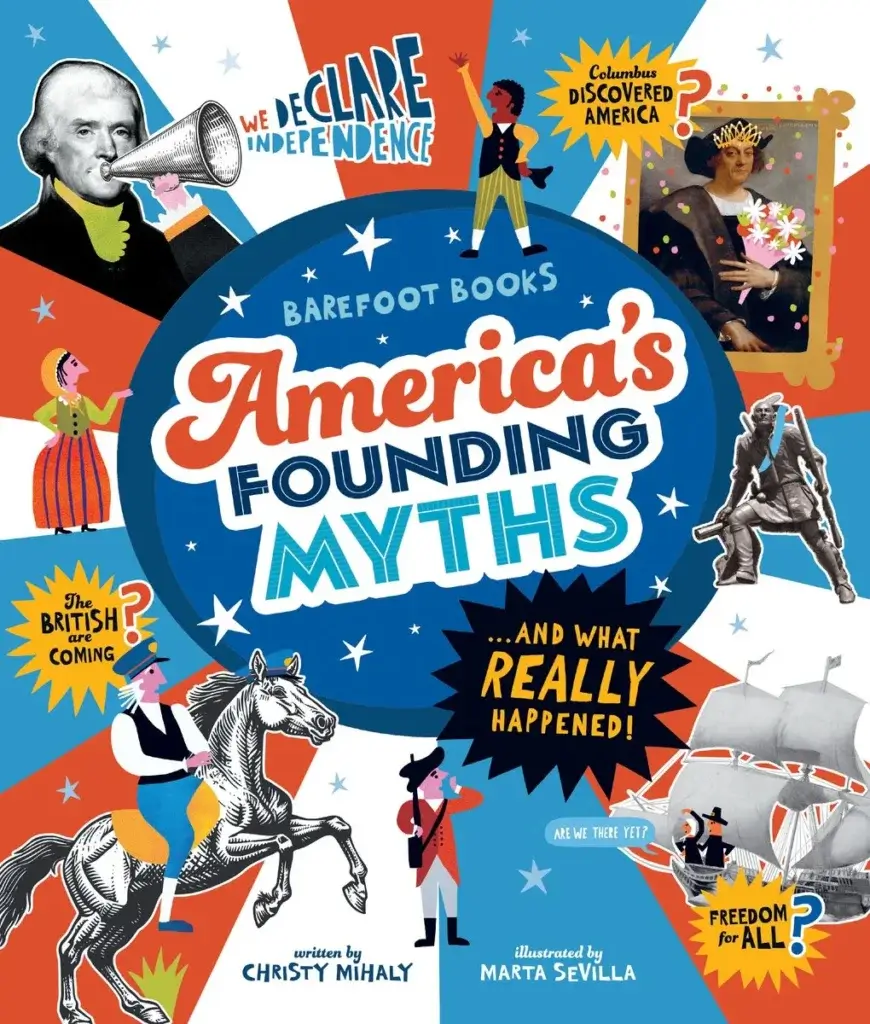
America’s Founding Myths…and What Really Happened! by Christy Mihaly. Illustrated by Marta Sevilla.
Purchase from Bookshop.org (supports independent bookstores and my business!)
This energetic and colorful book shares a lot of detailed information through engaging infographics and lift-the-flap elements. It’s ideal for kids who like history, but who don’t have patience for long blocks of text.
Mihaly corrects myths about the “empty wilderness” of the “New World,” Pocahontas, the Pilgrims, the Declaration of Independence, the Boston Tea Party, as well as misunderstandings about the roles of Black people, Indigenous nations, and women in the Revolutionary Era. Not only will readers learn what the historical evidence actually shows; they’ll also examine why these myths have been so popular. Several pages also help young people think about how they can evaluate stories from history and whether they are true.
This is an essential resource for anti-bias history collections. (Recommended for ages 8 – 12. White author.)
Chapter books about the United States’ founding and early history
Rebellion 1776 by Laurie Halse Anderson.
Purchase from Bookshop.org (supports independent bookstores and my business!)
Anderson’s newest historical fiction novel set during the Revolutionary Era examines the tumultuous time through the eyes of a white working-class girl living in Boston in 1776. Elsbeth longs to become an apprentice to a seamstress, but when her Pappa suddenly disappears, she must focus on keeping her job as a kitchen maid. When the Loyalist judge she works for flees the country, she relieved that Mr. Pike, the Patriot gentleman who moves into the judge’s house agrees to keep her on. Otherwise, she could end up in the poorhouse since she has no family.
When the entire Pike family moves in, along with their wealthy ward Hannah and their vicious housekeeper Widow Nash, Elsbeth’s life changes dramatically. Elsbeth’s best friend Shube is trying to quietly search for her father, since Elsbeth lied to the Pikes about where he was. Shube’s decision to enlist in the army, Widow Nash’s constant harassment, and the trickery of one of the men Pappa worked with combine to push Elsbeth near the breaking point. Will she ever be able to find Pappa and realize her dream of becoming a seamstress? (Recommended for ages 10 – 14. White author.)
What the Eagle Sees: Indigenous Stories of Rebellion and Renewal by Eldon Yellowhorn and Kathy Lowinger.
Purchase from Bookshop.org (supports independent bookstores and my business!)
Of course, we can’t talk about the founding of the United States without grappling with the Native nations whose land we colonized.
When mainstream history texts discuss Indigenous people in U.S. history, they often promote “terminal narratives” that imply Native peoples were completely wiped out by colonization. This short volume is packed with specific stories of how different Indigenous nations resisted the illegal seizure of their lands, enslavement by Europeans, cultural assimilation, and more.
For the colonial era and the early years of the United States, sections on the Haudenosaunee Confederacy and the Tecumseh Confederacy are particularly relevant.
The final chapters discuss how tribal nations are renewing their cultures and asserting their sovereignty by reclaiming language, practicing traditions once outlawed such as the potlach, and exposing truths about abuse at boarding schools. (Recommended for ages 10 – 14. Piikani author and white author.)
Related post: Teaching kids about the Haudenosaunee Thanksgiving Address
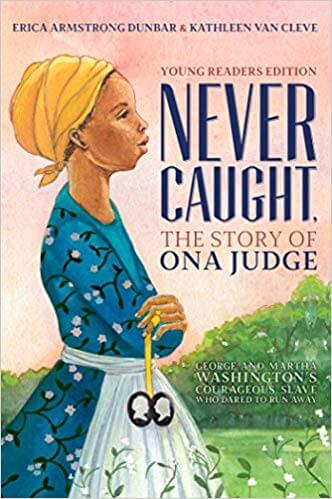
Never Caught: The Story of Ona Judge (Young Reader’s Edition) by Erica Armstrong Dunbar and Kathleen Van Cleve.
Purchase from Bookshop.og (supports independent bookstores and my business!)
More than 50 years before Harriet Tubman escaped slavery and years before the Underground Railroad began, Ona Judge did something remarkable. This enslaved young woman, who was First Lady Martha Washington’s personal attendant, escaped to freedom.
Even after President Washington sent associates to find her in New Hampshire, Judge calmly told one that “I am free now and choose to remain so.” Judge then temporarily went into hiding to protect herself and her infant daughter from being captured.
This outstanding book not only tells middle school readers Judge’s courageous story. It also clearly explains the national debate over slavery as the United States began, and how that debate was changing. This book also adds much needed complexity to how the story of President Washington is usually told to students. (Recommended for ages 10+. Black author and white author.)
Related post: 12 children’s books about unsung heroes for social justice

Chains by Laurie Halse Anderson (series).
Purchase from Bookshop.org (supports independent bookstores and my business!)
This emotionally captivating and extensively researched book tells the story of Isabel, an enslaved young teen seeking her freedom as the Revolutionary War begins. Her previous enslaver, Miss Fulton, had written Isabel and her little sister Ruth’s freedom into her will. But when she’s on her deathbed, Miss Fulton’s greedy nephew shows up and sells the girls to the Locktons, a wealthy and cruel Loyalist couple in New York City.
As signs of war are looming, Isabel meets Curzon, an enslaved teen who’s eager to fight for the Patriot cause. Curzon and his enslaver Bellingham want Isabel to spy on the Locktons and pass information along to them. She doesn’t want to do anything that could make her awful conditions at the Locktons worse. When Mrs. Lockton claims Ruth’s seizures are a sign she’s possessed by the devil, Isabel decides the risk of spying is worth it.
Educators will especially appreciate that each chapter begins with a quote from Loyalist or Patriot documents, shedding light on the complexity and harshness of the Revolutionary War.
I can’t recommend Chains and the entire Seeds of America trilogy enough. When we used the first volume for our homeschool history lessons, my young teen demanded we read the other books. He’s not even generally a fan of historical fiction!
There are two more books in this series that are just as informative and riveting: Forge and Ashes. Both novels follow Curzon and Isabel throughout the remainder of the Revolutionary War. (Recommended for ages 10+. White author.)

Fault Lines in the Constitution: The Framers, Their Fights, and the Flaws that Affect Us Today by Cynthia Levinson and Sanford Levinson.
Purchase from Bookshop.org (supports independent bookstores and my business!)
In contrast to whitewashed history books that hold up the Constitution’s framers as near-perfect, this insightful guide traces many of today’s most urgent problems to the way the framers wrote the Constitution.
True stories taken from recent history introduce the chapters in a way that shows the impact of potentially dry concepts like the Electoral College and gerrymandering.
The authors discuss the influence of slavery on fundamental aspects of U.S. government, such as the Senate and the Electoral College. For each chapter, they offer information on the debate among the framers about a particular issue, as well as how other countries and sometimes states handle a particular aspect of government. (Recommended for ages 12+. White authors.)