
Often, when adults talk to children about racism, they only talk about the words and actions of individual people. It can be easy for kids to get the false impression that racism is just something “mean people” do. No matter what age children are, caregivers and educators can help them understand that racism is also about systemic injustice. Below, I share ten examples of systemic racism that children can understand.
Before I share the examples, let me offer a couple more ideas on how to sprinkle talk about systemic racism into your conversations with children:
1) Especially with upper elementary age children and older, have the news on from time to time when they’re within earshot. If your child is likely to be upset by images from TV news, listening to news podcasts or NPR on the radio while you’re eating breakfast or preparing dinner is a good alternative.
From time to time, you can initiate conversations about news items and how they reflect systemic racism. Your child may also start to ask you questions about what they’re overhearing.
2) Read books together that show institutional racism from both the past and the present. I mention a few books below, and you can find a full list of books here that are ideal for sparking conversations about systemic racism.

Helping kids understand systemic racism: 10 examples to use
Disclosure: For your convenience, this post includes affiliate links. If you purchase items through these links, I may earn a small commission at no additional cost to you. You can read my full disclosure policy here.


Please note, not all of these examples are appropriate for all ages levels. In general, I’ve listed the examples that are easiest for young children to understand first. The final few examples are best for tweens and teens.
1. How few children’s books are written by authors of the Global Majority
This example is best brought home to kids by looking at actual books. The next time you’re at a bookstore or the library, randomly pick a number of books off one shelf and try to figure out the race of the authors by using book jacket photos and/or internet searches. Even many books that star Black kids and other children of the Global Majority are written by White authors.
Wonder together about why this might be. (Hint: it has more to do with being able to get published than anything else!)
You can also talk about this graphic created by Sarah Park Dahlen and David Huyck. How are the various children pictured here feeling, and why?

Related Post: 5 types of anti-bias children’s books that belong on your shelves
2. The under-representation of People of the Global Majority in children’s learning materials, media, and toys
Even young children can identify examples of this pattern of systemic racism, if adults around them regularly talk about ethnicity, race, and fairness with them. For example, Nancy Spangler, who was teaching a multiracial class of 3 and 4 year olds, noticed that the people in an occupations matching game were all white.
Nancy asked her group of learners “do the people on these cards look like all the people you know?” The children identified skin color, age, and pregnancy status as reasons the cards did represent the world they knew. After children identified that this wasn’t fair, Nancy helped them write a letter to the game’s makers about what they saw. (Learn more about this story and many more practical examples in the second edition of Anti-Bias Education for Young Children and Ourselves.)
Parents and caregivers can also encourage this type of awareness when shopping the toy section of a store or browsing for shows and movies to watch. See for example, this blog post by EmbraceRace co-founder Melissa Giraud about her daughters’ response to an all White doll shelf at Target.
3. School dress code policies that discriminate about popular Black hairstyles
Over the past few years, many school districts have made the news for banning Black hairstyles as “inappropriate.” This Georgia elementary school even posted photographs of Black children with box braids and fades on the school wall and labelled them as inappropriate.
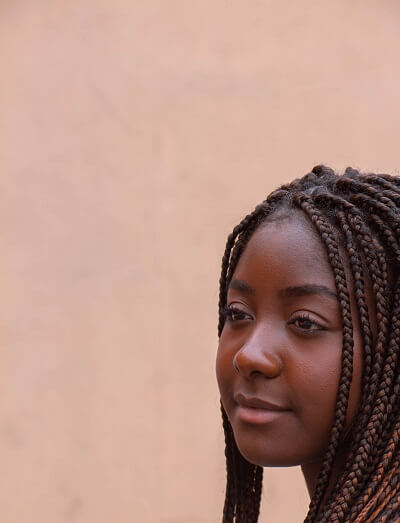
Children who aren’t Black may need help understanding that many of these hairstyles allow people to wear their hair naturally, without having to use harsh chemicals. Hairstyles are also an important part of expressing cultural pride. Try reading the picture book I Love My Hair! by Natasha Anastasia Tarpley.
As you talk about the systemic racism taking place with these dress codes, ask kids “who do you think it deciding what is ‘appropriate’? Whose culture is being used to make these decisions?”
Related Post: 18 powerful children’s books about race and racism
4. How there are many more white teachers in public schools than white students
In A Kids Book About Systemic Racism, author Jordan Thierry, who is Black, tells kids that he didn’t have a Black teacher until he went to college. His experience isn’t unique.

While 48% of public school students are White, 79% of public school teachers are White. Latine students make up 27% of public school students, yet only 9% of teachers are Latine. See stats about teachers here and students here.
Talk about how it might feel to never have a teacher who looks like you or understands your culture. Could it affect how you felt about going to school?
5. Racial disparities in who receives harsher school discipline
A 2016 study by Kristen Weir in the Monitor on Psychology found that Black students are much more likely to receive out of school suspensions than White students in situations where their behavior was similar.
Ask children what patterns they’ve noticed at their own school. Systemic racism in school discipline can run the gamut, from Black and Latine students being verbally reprimanded wearing “hoods up” on their sweatshirts more often than white students, to suspensions and even expulsions.
6. White human resources professionals screening out job candidates with “Black sounding” names.
In her memoir I’m Still Here: Black Dignity in a World Made for Whiteness (highly recommended for adults!) Austin Channing Brown shares the story of how she got her name. At age seven, Austin wanted to know why her parents gave her a name that people often didn’t think was REALLY her name.
After many questions, her mother admitted that part of the appeal of the name Austin was that it’s often a White boy’s name. “We knew that anyone who saw it before meeting you would assume you are a White man. One day you will have to apply for jobs. We just wanted to make sure you could make it to the interview.”
A research study in the early 2000s brought this point home by assigning identical resumes with White sounding and Black sounding names. Researchers Marianne Bertrand and Sendhil Mullainathan found that job applicants with White names needed to send out about 10 resumes to get 1 callback from a potential employer, while applicants with Black names had to send out 15 resumes to get 1 callback.
7. How common housing discrimination still is even though it’s against the law
Anti-discrimination laws are an important way to fight systemic racism. But often the way these laws are written, or a lack of governments resources to enforce these laws, patterns of discrimination stay intact.
Housing discrimination – when a landlord refuses to rent to a person because of their race, disability, or family type – is still common.
The children’s book The Fair Housing Five and the Haunted House provides a great introduction to the problem.

8. The growing number of book bans and laws restricting how history is taught.
Systemic racism has had an immeasurable impact on U.S. history. Yet the way children are taught history often reflects racist ideas by centering White people and providing whitewashed accounts of their actions.
For example, children often learn little to nothing about the thousands of years of history of Indigenous people in what we now know as North America. Why do children only learn about Native Americans once Europeans have arrived? When describing encounters between Indigenous people and Europeans, whose perspective are history texts using? Are the accounts accurate, or do they erase acts of racism committed by White people? Do they describe People of the Global Majority in stereotypical ways?
Related post: 15 books to help kids understand that Black Lives Matter
First grade teacher Bret Turner asks students whenever they read a text “whose story is being told here?” This helps children build the critical skills that help them recognize – and speak up – when White people’s stories and perspectives are being overrepresented.

While educators and advocates have been making inroads on de-centering White perspectives in school history books, there has been a fierce backlash in the past several years. Tweens and teens who have experience thinking about race can quickly grasp the racism that underlies Florida’s ban on the AP African American History course, for example.
The American Library Assocation has noted that a growing number of children’s books that are being banned or challenged deal with racism or Black American history. With elementary age children, one of the best ways to explore this issue is actually reading one or two banned books. Wonder with children why some lawmakers don’t want kids reading this particular book. What are they afraid that children will learn or be exposed to?
9. The ways systemic racism shows up in the health care system
A 2016 study found that half of white medical students and residents surveyed believed at least one racist idea about Black people’s bodies. These myths included that Black patients have less sensitive nerve endings than white patients and that Black skin is thicker than white skin.
The result is that Black patients often don’t receive adequate pain medication when in the hospital. Other white doctors ignore or downplay Black patients’ complaints about symptoms that show something is seriously wrong.
Dr. Susan Moore, a Black doctor who died of COVID-19 in 2020, made headlines with her heart-breaking story. Shortly before her death, she recorded videos complaining that her white doctor didn’t believe her complaints about shortness of breath. When she asked for pain medication, the doctor “treated me like a drug addict,” Moore said.

10. Disproportionate numbers of Black, Indigenous, and Latine people being stopped by police
In 2010, Arizona legislators passed SB 1070, which racial justice activists refer to as the “show me your papers” law. It required state law enforcement to make people they suspected of being undocumented prove they were legally in the U.S.
While some of the law was later struck down, some portions are still in effect. Activists have criticized law enforcement throughout Arizona for racially profiling Latine people during traffic stops. One analysis in Phoenix found that over 60% of the people who police contacted ICE about turned out to be in the U.S. legally.
We can ask kids what kinds of “clues” they think law enforcement is using to question if someone is undocumented. How does racism affect their ideas?
In Houston, an extensive review of data found that in 2020, Latine people were more likely than any other group to be searched by police during stops, even though these searches turned up far less contraband than searches of White people.
While there is growing awarness of the dispoportionate violence that Black Americans face from police, less noticed is the rates that Native Americans are killed by police.
Related Post: Resource hub on talking to kids about police violence and race

One response to “10 examples of systemic racism kids can understand”
Thanks. The examples above show a similar situation to here in the UK. Things move but slowly. Attitudes change and slowly.