
My child has been educated using the Montessori method for the past six years, first in two different schools and now in homeschooling. I’ve gained so much understanding about how children learn and what they need from Montessori guides (aka teachers). Dr. Montessori understood how children change greatly at each plane of development (or developmental stage.) Each stage requires a different form of support from the adults in a child’s life.
When I talk to parents about doing antiracism work with their children, I often hear that they’re not sure what approach is best for their child’s age. What are they capable of understanding? How might we move beyond talk into action with them? How do we honor the fact that they are children, not adults, while engaging in topics like race and racism?
I realized recently that it would be helpful to talk about what antiracism work with children looks like at each Montessori plane of development. Whether Montessori is part of your life or not, there’s still so much to glean from this frame of reference.
Disclosure: For your convenience, this post includes affiliate links. If you purchase items through these links, I may earn a small commission at no additional cost to you. You can read my full disclosure policy here.


What are the Montessori planes of development?
Maria Montessori differed from most educators of her time in how she thought about children development. Other educational methods treated children as if they went from slow, steady, and predictable growth from birth to adulthood. But Dr. Montessori believed that children went through specific stages of childhood and young adulthood. There were dramatic peaks and declines in each plane, rather than a slow and steady line upward to accomplish one developmental goal.
Each stage, or plane of development, differs dramatically from the others. She compared it to the metamorphosis of a butterfly, where each stage is so different than the others that it’s hard to recognize they are the same insect. (If you’re interested in learning more about the planes of development, I recommend the book Montessori Today by Paula Polk Lillard.)
There are four planes of development. The first plane is birth to 6 years of age. The second plane is 6 to 12 years of age. The third plane is 12 to 18 years of age. The fourth plane is 18 to 24 years of age. You’ll notice there is overlap between each plane because when a child will transition to the next plane will differ. (In this post, I’ll only be focusing on the first two planes.)
As the child moves from one plane of development into the next, parents and guides must change how they relate to the child.
If you are a Montessori educator, I highly recommend Britt Hawthorne’s online course Introduction to Anti-Bias Education. There’s so much goodness in the course, including in-depth interviews with educators who work with toddlers, preschoolers, elementary, and middle school age children.

Overview of the first plane of development (birth to age 6)
Babies, toddlers, and preschoolers are all in the first plane of development even though so much change happens during the first six years. That’s because children at this age have what Dr. Montessori called an “absorbent mind.” They soak up knowledge from everything that is around them, both people and their environment.
They explore and learn from their environment primarily by using their senses. First plane children are constantly observing, which prompts them to copy the adults and older children around them. Children in this plane are egocentric, and Dr. Montessori considered the goal of this stage to develop the self as an individual being.
Children in the first plane have a limited capacity to reason. I noticed that while my son was enrolled in the primary environment (ages 3 – 6) at his first Montessori school, the guide corrected behavior through setting straightforward limits without a lot of explanation. When he moved into the elementary environment (ages 6 – 12), the guide devoted lots of time to reasoning through why a behavior wasn’t helpful with the children.
Related post: Introducing children to antiracist activism with Tiffany Jewell
First plane children also don’t yet understand how time passes. They are likely to mix up the present, past, and future. Because they are trying to understand the environment around them, Montessori at this stage focuses on the practical rather than fantasy.
What can antiracism work look like in the first plane?
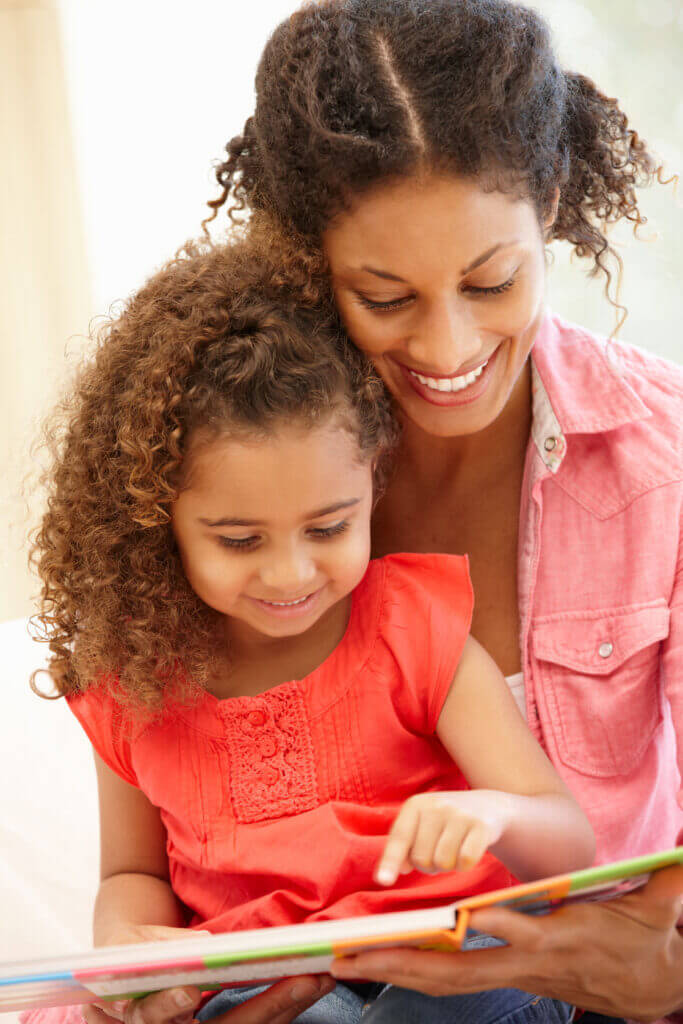
Young children need positive representations of their identities; this is perhaps the most crucial task of antiracism work at this age. In Britt Hawthorne’s anti-bias education course (see link above), educator Aundrea Tabbs-Smith talks about how Black and Brown children need these mirrors because society so often does not affirm them.
Mirrors come in the form of books, media, and toys that center positive representations of a child’s identity. But they also come in the form of the caregivers who are part of their world.
Related Post: 15 children’s books about beauty that challenge stereotypes
White children in the first plane will see their identities affirmed by society without any special effort being made by parents or teachers. They will also observe Black and Brown children’s identities being stereotyped and inaccurately portrayed.
So it’s crucial for young white children to regularly experience positive representations of Black and Brown people, through books, media, toys, caregivers, and the friendships that parents hold with other adults.
Related Post: Best multicultural games and toys for kids
It’s especially helpful to start with positive representations of racial or ethnic groups who live in your neighborhood or wider community, because kids will encounter people from these groups in places like school, the grocery store, or the park.
Because children in the first plane of development are constantly observing and imitating, adults need to take time to examine their own word choices and body language. Are there neighborhoods or groups of people you avoid or feel uncomfortable around? Your child is likely noticing.
When children engage in biased behavior, at this stage it’s important to set clear limits without shaming. First plane children need to explicitly hear that we don’t ever make fun or exclude someone because of their race, skin tone, gender, or disability.
First plane children also need accurate language for what they’re observing, so that misconceptions don’t harden into prejudice.
Related Post: 5 examples of race conscious conversations between children and parents
Overview of the second plane of development (ages 6 to 12)
Children in the second plane of development have a “reasoning mind,” rather than an absorbent mind. (I remind myself of this when my 9 year old wants to engage in endless negotiations. He’s practicing using his reasoning powers!) Dr. Montessori believed the goal of this plane of development was to develop as a social being.
Second plane children are just as interested in exploring the world as first plane children, but they do this primarily through reasoning and abstraction, not their senses. They use their impressive intellectual curiosity as a way to develop their own minds. While first plane children often prefer to work and play alone, second plane children have an inherently social nature.
In terms of knowledge, children at this stage want to grasp the big picture, not just the individual pieces. They can understand the passage of time.
They have a strong sense of fairness and are continually trying to work out what is fair and why. At the same time, anti-bias Montessori educator Tiffany Jewell points out, second plane children tend to be binary thinkers who assume someone must either be this or that.
What can antiracism work look like in the second plane?
I admit I have a preference. I think doing antiracism work really starts to get interesting in the second plane! Because of second plane kids’ desire use their reasoning skills and grasp the big picture, adults can introduce more about the systemic aspects of racism.
Rather than simply telling them something they’ve said about race isn’t accurate, like we would with first plane children, we can now go deeper. We can share further resources for kids to explore on their own, like videos or books, that will give them a more complete, accurate understanding.
Related Post: 9 examples of systemic racism kids can understand
Especially as second plane children grow older (9 – 12 year olds), they are very action and solution-oriented. They will sometimes become impatient with adults who only want to tell them about racism but not what they can do about it. Creating space for your child to imagine and dream an antiracist world is important work. They may especially be interested in taking action if it can involve their friends or other children.
If you’re talking regularly to children regularly about racism, you’ll notice them trying out labelling things as racist. Sometimes they’ll be accurate and sometimes they won’t.
Tiffany Jewell often asked her students to show her how the thing they labelled as racist fits with a definition of racism they had learned in class. She defines racism as “personal prejudice and the systemic misuse and abuse of power by institutions.” (Jewell discusses this more in her excellent book for ages 10+, This Book Is Anti-Racist and provides activities for kids in the companion journal.)
Want to dive deeper into doing antiracism work with white children in developmentally appropriate ways?
My Nurturing Antiracist White Kids course can help! It takes parents and educators on a deep dive into topics including:
- examining our own racial identities as adults
- talking to kids about race in developmentally appropriate ways (toddlers through teens)
- correcting racism without shame
- understanding how whiteness shapes our homes and classrooms
- guiding children towards healthy racial identity development
- equipping kids for resistance and action
- creating your own antiracist support network
- special considerations for antiracism work in the classroom
Learn more about the course here.
