Age-by-age guides to talking about race with kids are a helpful starting place. I have no doubt about that. After all, I’ve written a book that’s an age-by-age guide to antiracism for parents of white children!
But age isn’t always the best indicator of what conversations a particular child needs to have, or what actions they’re ready to take.
Let’s take a look at what we can learn from age-by-age guides, and what we can’t. I’ll also share more about one of the most helpful frameworks I’ve found for understanding how kids (and adults) understand race.

Disclosure: For your convenience, this post includes affiliate links. If you purchase items through these links, I may earn a small commission at no additional cost to you. You can read my full disclosure policy here.


What age-by-age guides to talking about race can teach us:
I wrote Raising Antiracist Kids: An age-by-age guide for parents of white children because I knew many adults weren’t sure how to be age appropriate as they talked about race. Some parents and teachers didn’t realize ways that young children were capable of understaing racism. Others were going into too much detail that frightened their kids.
Age-by-age guides keep adults from talking over kids’ heads
Especially for parents and teachers who’ve been doing a lot of their own antiracism work, it’s easy to go into too much detail when we talk to younger kids.
I speak from experience! When my son was four years old, I took him to the National Civil Rights Museum. Instead of letting him experience the museum in his own way, I talked too much about civil rights leaders who had been killed for their activism. He became withdrawn and asked to leave.
Age-by-age guides keep us grounded in child development. Preschool age children can best understand concrete examples of racism that are related to their own lives. They aren’t ready for detailed discussions of violence.
We should wait to have abstract discussions that require children to imagine what it’s like to be a person they don’t know until the elementary years. (We can, however, “wonder” aloud in front of young kids about how someone would feel hearing a racist remark. It’s just that little ones can’t yet place themselves in someone else’s shoes, especially a person they’ve never met.)

Another important thing I’ve learned from child development is that kids under age six can’t distinguish between the recent past and long ago. That’s why a four year old will tell you something happened “yesterday” that was actually a year-and-a-half ago.
What does that have to do with talking about race? In depth conversations about history can be confusing to young children. Most conversations about race with preschoolers should stick to the present day.
Related Post: How should we talk with children about slavery?
Children’s social environments can change dramatically as they get older
Another reason I appreciate age-by-age guides is because the ways kids are influenced by peers changes as they grow older.
Kids of all ages care about what their friends say and do. But peers are much more important to middle schoolers than they are to six-year-olds.
As Dr. Beverly Daniel Tatum points out in Why Are All The Black Kids Sitting Together in the Cafeteria?, the start of dating often results in kids’ self-segregating more at school. Tracking also increases around the same time in kids’ lives.
Academic tracking separates children by perceived ability, and research has found tracking is racially biased. (See sociologist Margaret Hagerman’s book White Kids for details.) The older children are, the stronger tracking – and segregation – becomes in most schools.
So a child whose 2nd grade class was highly racially diverse may find themselves in an almost all white Advanced Placement class in 9th grade. These experiences influence how kids understand race, and they make antiracist conversation and action all the more urgent.
The older kids are, the more conversations they’re having with peers when no adult is around. That means that parents and teachers have to listen for more subtle clues about what may be happening when adults are out of earshot.
Age influences how kids want to take antiracist action
I love profiling kids and teens who take action against racism. Kids of all ages can go beyond learning into action. But the ways they take action often changes as they age.
It’s always important to get children’s ideas about what we can do to challenge racism before diving in.
But younger children usually need more help brainstorming possibilities. They may be more comfortable adding on to something you’ve done, such as drawing a picture at the bottom of your letter to the Mayor.
In watching young activists, I’ve noticed that around age 10 or 11, many kids become particulalry primed to take action. They may get restless with all this “talk” that grownups want to have, and they’re ready to do something about racism.
With older elementary and middle school children, adults need to spend more listening to them before offering our own ideas. Our role as adults becomes more about support, and less about leading.
Related Post: 12 unsung activists for social justice (and the children’s books that tell their stories)
What age-by-age guides CAN’T tell us about kids and race
All 8 year olds (or 3 year olds or 13 year olds) don’t experience race in the same way. A Black 8 year old child whose older brother has been harassed by police will perceive race differently than a white 8 year old who lives in an almost entirely white suburb and has had only positive interactions with law enforcement.
But it’s not just children’s own race that shapes how much they understand – or don’t understand – what racism looks like.
It’s also the racial conversations and experiences they’ve had in their lives so far.
A white twelve-year-old who knows few people of color and has been discouraged from talking about race may need to start with basic ideas that some white preschoolers have already mastered.
Racial identity development is a crucial tool for doing antiracism work with kids (and adults)
When I first started reading about Dr. Janet Helms’ work on racial identity development, I realized it explained so much!
I no longer wondered how my 8 year old could understand some things about race that a 40 year old friend didn’t get.
Dr. Helms developed models for how Black and white youth and adults understand race and what it means for their own lives. Other scholars have since expanded on her work to create models for non-Black people of color. (A good place to get summaries of all these models is Why Are All the Black Kids Sitting Together in the Cafeteria?)
Helms’ work shows how a person’s age generally matters less than their experiences when it comes to how they understand race.
For example, most white children don’t have to think often about race, especially what it means to be white, unless adults guide them. That means they can hold onto the false idea that race doesn’t really matter all the way into adulthood if they don’t personally witness racism.
But a white child who talks often about race and has attended a couple of protests with their parents might feel guilty about being white.
This is a typical part of white racial identity development, and it can be worked through to help kids to move to a healthier place.
A white child who has worked through this guilt understands that challenging racism can and should be a part of what it means to be white. They know that the problem is not being white. The problem is when white people accept the unfair privileges given to them and refuse to actively confront racism.
Related Post: How kids think about race: what research says
The goal of white racial identity development, according to Helms, is for white folks to develop a positive racial identity that is rooted in reality, not assumed white superiority.
In my raising antiracist white kids caregiver reflection circle, we spend a significant amount of time exploring racial identity development together.
Many of the participants have found it’s a valuable way to explore what their children can understand about race right now, and what parents can expect in the future if they continue to do antiracism work with their kids.
It’s also an important way to understand ourselves as adults.
When we can identity the areas where we need to keep growing on our antiracist journeys, we’re much more effective guides for the children in our lives.
Find community and get support in the raising antiracist white kids caregiver reflection circle
As a white person, one of the most important things I learned from racial identity development is that white people who are committed to antiracism need to support and challenge each other on this journey.
Too often, as we learn more about racism and our own participation in racist systems, we burden friends of color with our guilty or defensive feelings. As Dr. Tatum points out, this can cause further trauma for Black folks and people of color who are trying to heal from their own experiences of racism.
But listening to stories of racism “and problem solving about them is a job that White people can do for each other,” Tatum says in Why Are All The Black Kids Sitting Together in the Cafeteria?
That’s why I’ve created a space for caregivers and teachers of white kids who want to go deeper into their antiracism journeys.
My raising antiracist white kids caregiver reflection circle is a live series that’s intentionally small so that it can be highly interactive.
Past participants have continued to reach out to each other after the series ended to share successes and brainstorm solutions to challenges in their families or classrooms.
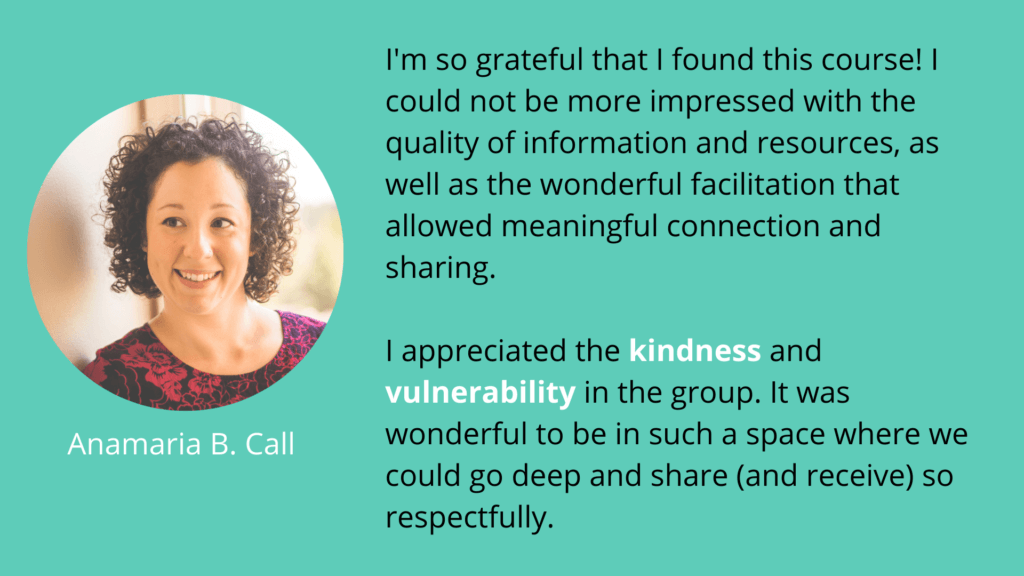
The next reflection circle series begins in October. Learn more or join the waitlist for the reflection circle here.