
It’s so important for biracial children to be able to see multiracial families like theirs in the books they read. Children who are not biracial can be prone to think that families’ skin tones should “match,” or that people can only belong to one culture, not two or more. They need to read books about multicultural families as well to help counter these assumptions.
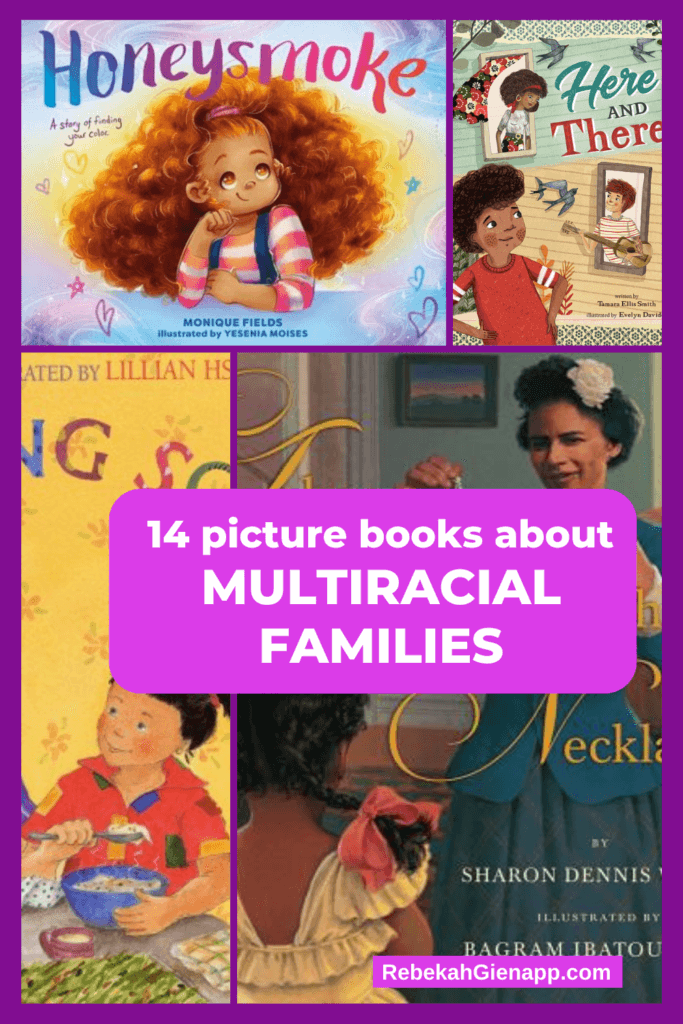
In this blog post, I share 14 wonderful picture books that center multiracial families. Some of them specifically address children’s questions about what it means to be biracial or bicultural. Others simply star biracial kids as they live their everyday lives.
Looking for chapter books starring biracial characters? Head here.


This post may include affiliate links. If you purchase items through these links, I may earn a small commission at no additional charge to you. I received a free copy of Sir Morien from the publisher in exchange for my honest review. All opinions are my own. You can read my full disclosure policy here.
Picture books about what it means to be part of a multiracial family

Honeysmoke by Monique Fields. Illustrated by Yesenia Moises. Main character is Black and white.
Purchase from Bookshop.org (supports independent bookstores)
Simone wants to know what color she is. First she asks her parents about whether she is Black like her mother or white like her father. Then, she wants to find a precise name for her skin tone. She tries mixing different crayon colors as she draws, and also compares her hands to those of different brown teddy bears. Nothing is quite right. Finally, by thinking about what each of her parents’ skin tones remind her of, she comes up with her unique color word: honeysmoke. (Recommended for ages 3 – 7. Black author and mother of biracial children.)
Related post: Talking to children about skin tone

Marisol McDonald Doesn’t Match/Marisol McDonald no combina by Monica Brown. Illustrated by Sara Palacios. Main character is Peruvian and Scottish.
Purchase from Bookshop.org (supports independent bookstores)
Other kids are continually pointing out to Marisol McDonald the ways that she doesn’t match. Her Latino cousin comments about how they both have brown skin, but Marisol has red hair. Other people comment on her unusual clothing combinations, or her favorite foods like a peanut butter and jelly burrito.
At first, Marisol happily shrugs off these comments, but when a classmate challenges her that “she couldn’t match if she tried,” things change. As Marisol begins to dress, eat, and paint in the ways everyone else does, her world goes flat. An affirming note from her teacher about all the things she loves about Marisol help her get back in touch with who she is. (Recommended for ages 4 – 8. Peruvian-Scottish-American/Jewish author and mother of biracial children.)
Related post: 20 engaging picture books starring Latine characters

Sir Morien: The Legend of a Knight of the Round Table by Holly Black and Kaliis Smith. Illustrated by Ebony Glenn. Main character is North African and English.
Purchase from Bookshop.org (supports independent bookstores)
Graphic novel fans and adventure lovers will enjoy this light-hearted retelling of the tale of Sir Morien, one of the lesser known figures associated with King Arthur’s Round Table. Prince Morien enjoys a number of adventures with his mother, a North African princess who joins him in taming dragons and surfing crocodiles (and even vanquishing dinner-time vegetables.)
His disappointment at having never met his questing father motivates Morien to make the epic journey from Northern Africa to England. He meets many knights along the way who want to fight (and are easily defeated by Morien), but no one had news of his father. Can a meeting with the famed Sir Lancelot provide the information Morien needs? (Recommended for ages 4 – 8. White author – Holly Black. Black author – Kaliis Smith.)

Grandfather Counts by Andrea Cheng. Illustrated by Ange Zhang. Main character is Chinese and white.
Purchase from Bookshop.org (supports independent bookstores)
When Helen’s Gong Gong arrives from China to live with her family, at first the idea is exciting. But Gong Gong seems disappointed that Helen and her siblings don’t speak Chinese, and he doesn’t speak English. He doesn’t seem to know what to do with himself in his new country.
One day, Helen notices that Gong Gong is just as interested in the train that passes behind their house as she is. As the pair sit on a brick wall waiting for the train to pass by, Helen and Gong Gong teach each other to count in Chinese and English. Soon, Gong Gong is teaching her other traditions, such as the Chinese names he gave each of the grandchildren. (Recommended for ages 5 – 9. Hungarian-American author and mother of biracial children.)
Related post: 29 children’s books about Asian American history and culture
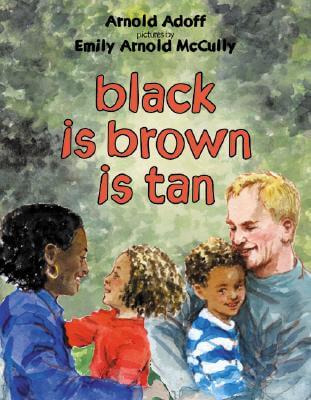
Black Is Brown Is Tan by Arnold Adoff. Illustrated by Emily Arnold McCully.
Purchase from Bookshop.org (supports independent bookstores)
Adoff wrote this now-classic book in 1973 about he and Virgina Hamilton’s multiracial family at a time when “miscegenation” laws had only recently been struck down.
The poetic text repeats the phrase “this is the way it is for us/this is the way we are” as readers experience the skin tone colors of the family, and the daily rituals that make family life beautiful and sometimes frustrating. (Recommended for ages 4 – 8. White author and father of biracial children.)
Related post: 21 powerful books about race and racism for kids and teens
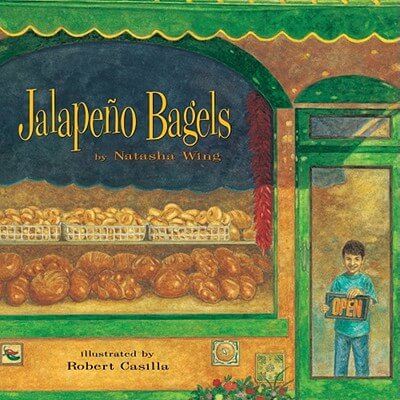
Jalapeño Bagels by Natasha Wing. Illustrated by Robert Casilla. Main character is Mexican and white/Jewish.
Purchase from Bookshop.org (supports independent bookstores)
International Day is coming up at school, and Pablo is supposed to bring a food to share from his culture. Since his parents own a bakery, he has lots of options. As he helps his Mama make pan dulce, empanadas de calabaza, and chango bars, each one seems like a good possibility. Then he helps Papa make the bagels and challah, and those seems like delicious options too. Finally, when the family makes the last batch of baked goods together, Pablo knows which food best represents both of the cultures he comes from. (Recommended for ages 4 – 8. White author.)
Related post: 15 picture books starring Jewish characters

The Favorite Daughter by Allen Say. Main character is Japanese and white.
Purchase from Bookshop.org (supports independent bookstores)
Yuriko used to love art class and her name. But after the new art teacher calls her “Eureka,” all the kids call her that too. When blond Yuriko shows them a baby picture where she is wearing a kimono, the other kids insist that Japanese dolls have black hair.
It’s time for an “American” name, Yuriko tells her father. Father doesn’t tell her what to do. He does, however, know the places to take her that will help her remember what she loves about her Japanese heritage. (Recommended for ages 5 – 9. Japanese-American author and father of a biracial child. )

I Love Saturdays y domingos by Alma Flor Ada. Illustrated by Elivia Savadier. Main character is Latina and white.
Purchase from Bookshop.org (supports independent bookstores)
In this cozy book, a little girl shares about her special time with her grandparents that happens every weekend. On Saturdays, she spends time with Grandpa and Grandma, who are white. On domingos, she is with her Abuelito y Abuelita, who are Latine.
Each page spread offers parallel descriptions about what she does with each side of her family, from the pets she plays with to the family history she learns. The pages about her Abuelito and Abuelita are sprinkled with Spanish words and phrases. (Recommended for ages 4 – 8. Cuban-American author.)

Real Sisters Pretend by Megan Dowd Lambert. Illustrated by Nicole Tadgell. Main characters are part of a family that is both Black and white.
Purchase from Bookshop.org (supports independent bookstores)
The conversations between two sisters in this book sounds exactly like the way kids talk to each other in real life! In this multiracial family with two moms, outsiders sometimes ask the girls if they are “real” sisters.
During a rowdy game of pretending to be princesses (hiking princesses, the older sister clairifies), the younger sister suggests they pretend that they’re sisters. The older sister quickly and lovingly reminds her that they are real sisters, through adoption that made them a forever family.
The ways the girls’ describe the younger sister’s adoption ceremony in court made me laugh out loud. This is a beautiful affirmation of adoption that explains things to kids without being the least bit boring. (Recommended for ages 4 – 8. White queer author, mother of a biracial family.)
Related post: 14 picture books about welcoming a new sibling
Picture books that star multiracial families having everyday experiences
Being part of multiracial families is not the main focus of these books; children’s biracial families are simply normalized in the stories.
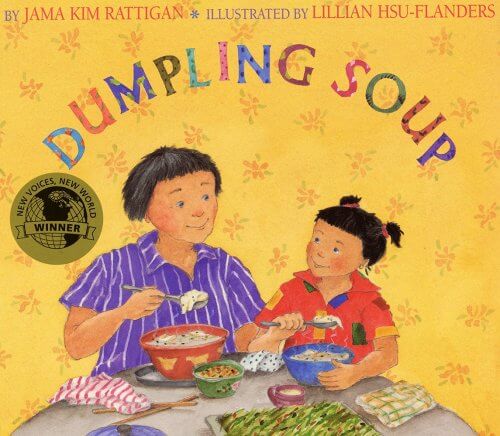
Dumpling Soup by Jama Kim Rattigan. Illustrated by Lillian Hsu-Flanders. Main character’s family is Korean, Japanese, Chinese, Native Hawaiian, and white.
Purchase from Bookshop.org (supports independent bookstores)
It’s almost New Year’s Eve, and everyone in Marisa’s large multiracial family will be gathering at Grandma’s house to celebrate. All the aunties are helping Grandma make dumplings for the special soup that Grandma is very particular about, and Marisa wants to help.
She tries her best, but her dumplings don’t look like anyone else’s. Will the other relatives avoiding eating her mandoo? As everyone floods into the house, there are delicious mochi to eat, and elaborate games to play as they wait for midnight. As soon as the New Year arrives, it’s time to eat the dumpling soup. Will Grandma include Marisa’s mandoo in the soup, or will she hide them in the kitchen? (Recommended for ages 6 – 10. Korean-American author.)
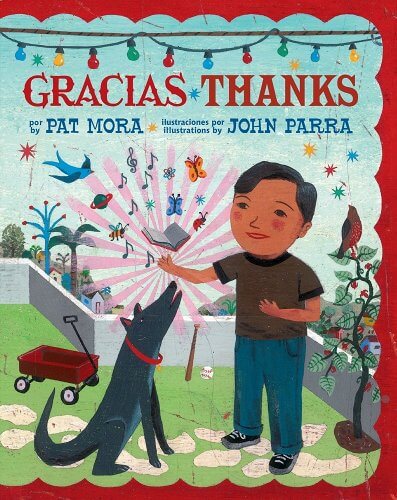
Gracias/Thanks by Pat Mora. Illustrated by John Parra. Main character is Latino and white.
Purchase from Bookshop.org (supports independent bookstores)
In Spanish and English, a little boy shares all the ordinary yet magical things he is thankful for. There’s the sun that “wakes me up so I don’t sleep for years and years and grow a long, white beard.” He also says gracias for “the bees that didn’t sting me and turn me into a pincushion.” Family members make many appearances in his list of gratitude, from the humor of a little sister who throws peas to Tío’s guitar music that makes the dogs howl. This is a wonderful book for prompting discussions about the little things that make life special. (Recommended for ages 4 – 8. Mexican-American author.)
Related post: 11 fun children’s books with Spanish vocabulary
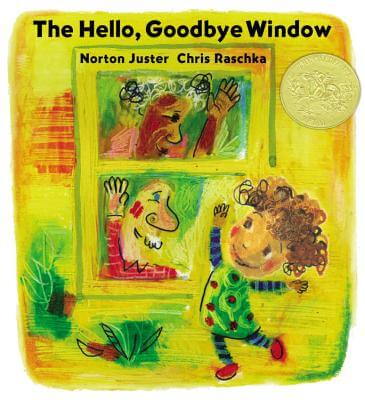
The Hello, Goodbye Window by Norton Juster. Illustrated by Chris Raschka. Main character is Black and white.
Purchase from Bookshop.org (supports independent bookstores)
At Nanna and Poppy’s house, there is a window that looks ordinary, but it is certainly not in the eyes of their granddaughter. It’s in the kitchen, where Poppy and Nanna spend a lot of time. That makes the window perfect for making silly faces, peek-a-boo, and looking at your reflections when it’s dark outside. This joyful book captures the magic so many young children experience when they go to their grandparents’ houses. (Recommended for ages 3 – 7. Romanian-Polish-American/Jewish author.)

Baby’s First Words/Mis Primeras Palabras by Christiane Engel. Main character is part of a Black and white multiracial family.
Purchase from Bookshop.org (supports independent bookstores)
Babies and toddlers are eager to label their worlds. This word book, featuring a multiracial family made up of a curious baby with two dads, helps little ones do just that. Another reason to love this word book is that it includes both adjectives and nouns (for example “loud fire engine”), as well as feeling words. (Recommended for ages 6 months – 3 years. White author.)
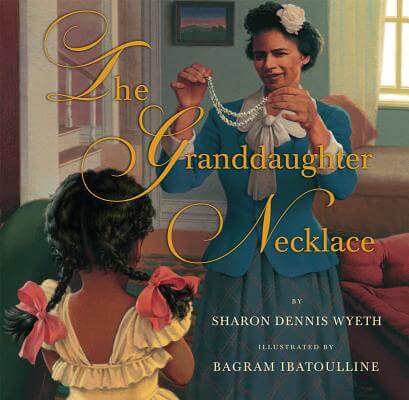
The Granddaughter Necklace by Sharon Dennis Wyeth. Illustrated by Bagram Ibatoulline. Main character is Black and Irish.
Out of print – check your local library
Inspired by the stories of her own matrilineal heritage, Dennis Wyeth has written a heart-warming story of how women in a family have passed down a necklace to their daughters in times when they needed encouragement or had achieved important things. When little Sharon asks her mother where she got such a pretty necklace, she learns that her grandmother Mildred gave it to her on the day she played Cinderella in the school play.
Sharon’s mother traces the necklace through times when a mother and daughter were separated from each other by poverty and when parents were encouraged by a child’s generous heart. Finally Sharon learns that her mother’s beautiful necklace belonged to an ancestor named Frances, who brought it on her voyage to the United States from Ireland, and that today, her mother is passing the necklace on to her. (Recommended for ages 6 – 10. Black and Irish author.)
Related post: Why social justice education starts with self-identity

Here and There by Tamara Ellis Smith. Illustrated by Evelyn Daviddi. Main character is Black and white.
Purchase from Bookshop.org (supports independent bookstores)
Now that Ivan’s parents don’t live together anymore, he’s always having to go from Here to There, whether he wants to or not.
Ivan wants to stay Here (Mama’s house) where he can climb the tree and feed his favorite birds. But he has to go There (Dad’s new house) where nothing feels quite right. A noisy kid by nature, Ivan grows quiet until Dad starts to play his guitar. As familiar birds join in the song, Ivan begins to see how both Here and There can feel like home. (Recommended for ages 3 – 7. White author.)
